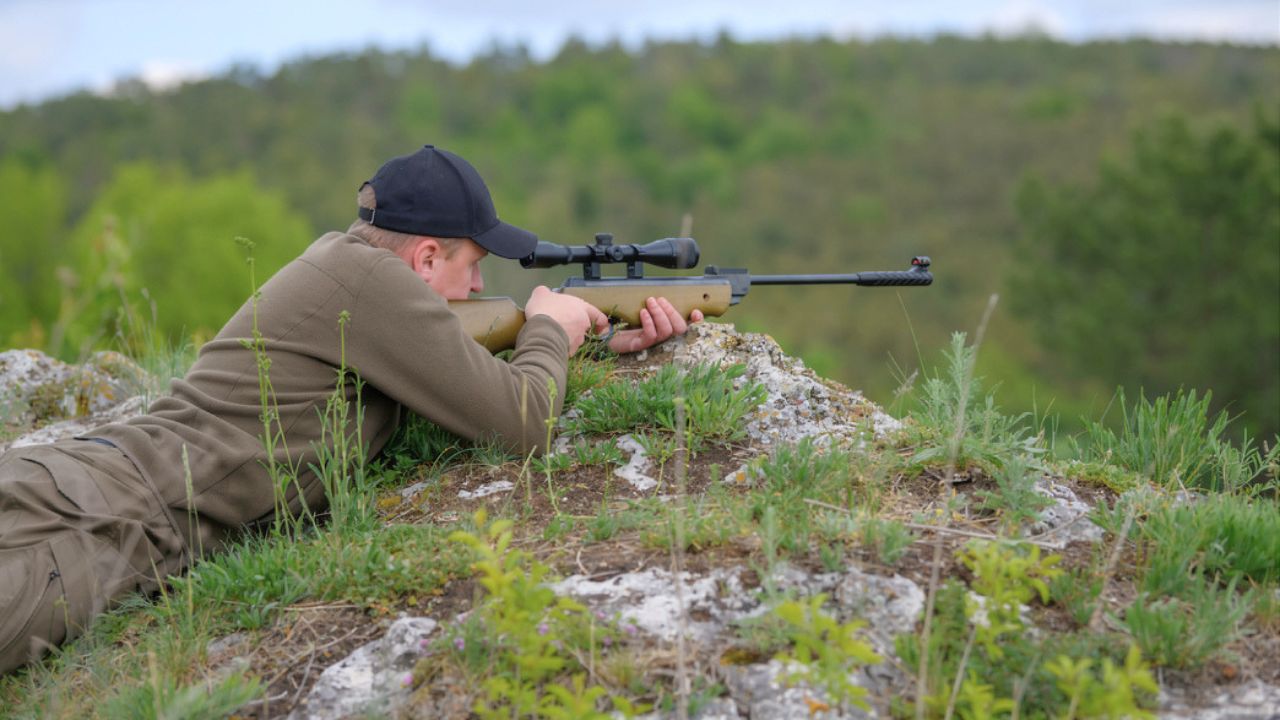
Photo credit: Volodymyr Burdiak/Shutterstock.com
Anybody who hunts public land long enough is going to run into it sooner or later. You ease into a spot before daylight, get set, start feeling good about the morning, and then another hunter shows up way closer than you expected. Maybe he hangs a stand inside earshot. Maybe he starts calling from the next ridge. Maybe he slips in with a headlamp and acts like nobody was there first. However it happens, experienced hunters usually do not treat it like a contest of stubbornness. They treat it like a safety problem first and a hunting problem second. Hunter-ed safety guidance emphasizes maintaining a safe zone of fire, never swinging or shooting outside that zone, and keeping hunters aware of each other’s positions.
The reason seasoned hunters stay levelheaded is simple: once another person is too close, the hunt has already changed. It is no longer only about wind, movement, or where the deer might come from. Now you have to think about muzzle direction, shot angles, visibility, and whether the other hunter is going to do something careless. New York’s DEC also advises hunters to avoid crowding other hunters and to have backup locations in mind if an area turns out to be too busy. That is a smart mindset because trying to “win” a crowded setup can turn a decent morning into a dangerous one fast.
First, they figure out whether “too close” is actually unsafe or just annoying
Experienced hunters do not automatically blow up every time they hear another person nearby. Sometimes the other hunter is aggravating but still far enough away that the real issue is pressure, not danger. Other times the setup is flat-out unsafe. That difference matters. If someone is inside the area where you cannot confidently maintain a safe shot direction, or if you do not know exactly where he is moving, the situation has crossed out of “rude” and into “time to leave or speak up.” Hunter-ed guidance is clear that safe hunting depends on always knowing where companions or nearby hunters are and shooting only within a safe zone of fire.
That is why good hunters stop and assess instead of reacting on pride. Are you both on the same side of a trail, road, or draw? Is this deer woods where a rifle bullet could travel a long way, or thick bow cover where the main issue is crowding? Can you see him, hear him clearly, or tell where he is set up? Turkey hunting is even touchier. New York DEC specifically warns hunters not to stalk sounds or movement and says that if you see another hunter, you should talk clearly and not wave or use a turkey call to alert him. That is the kind of rule that exists because bad assumptions in tight setups have hurt people before.
If it feels dangerous, they leave ego out of it and make contact the right way
A lot of inexperienced hunters think the right answer is to stay put out of principle. Sometimes that is exactly the wrong move. If the other hunter is close enough that you are worried about being seen as game, being inside someone’s shooting lane, or dealing with crossfire potential, experienced hunters usually either make calm, unmistakably human contact or back out clean. They do not creep around trying to outmaneuver the other guy. DEC guidance for turkey hunting says to speak clearly if you see another hunter and not to wave or call, which tells you how seriously wildlife agencies take mistaken-identity risk in close encounters.
That contact should be simple and direct. Something like, “Hunter here,” in a normal voice does a lot more good than trying to teach a lesson. The goal is not to argue over who deserves the spot more. The goal is to make sure both people know exactly where the other is and avoid a bad decision. If the person keeps pushing in, seasoned hunters usually make a quick call: either the spot is still huntable and safe, or it is not worth staying. New York’s DEC advice about crowded public land is practical here too—if a preferred location is too crowded, have another option ready instead of forcing the issue.
They care more about safety and wind than about “who was there first”
This part bothers people, but it is true. Plenty of hunters get so hung up on being there first that they ignore the bigger reality: once somebody crowds a setup, the odds of that spot hunting the way you wanted have usually dropped anyway. Even if you are morally in the right, that does not mean staying is the best decision. Noise changes. Movement changes. Deer pattern differently. And if the other hunter is clueless enough to set up that close, he may also be clueless enough to make things unsafe. Experienced hunters would rather preserve the day than burn it down proving a point.
That does not mean letting bad behavior slide in your mind. It means understanding that your best move is often the one that keeps you in control. A backup tree. Another draw. Another side of the property. Another plan for the morning. DEC’s public-land guidance to identify an alternative location ahead of time is exactly the kind of habit veteran hunters rely on, because crowded land is not rare anymore. The hunters who stay successful are usually the ones who adapt fastest instead of stewing the longest.
They do not escalate a rude setup into a bigger mess
A hunter crowding you can absolutely be in the wrong, but not every bad setup becomes a law-enforcement issue. Experienced hunters know the difference between unsafe behavior, illegal behavior, and plain bad etiquette. If the other hunter is trespassing, threatening, firing unsafely, stalking sounds, or doing something that breaks local rules, that is different. Then you document what you can and report it the right way. But if he is just inconsiderate on legal public ground, most seasoned hunters are not going to turn the woods into a shouting match. They know that yelling, stomping around, or trying to wreck the other guy’s hunt usually makes the whole area worse for everybody.
There is also the reality that some places have special rules layered on top of general etiquette. Certain wildlife management areas and state forests regulate where people can park, where they can hunt relative to roads, or how controlled access works. In New York, for example, some specific hunting areas impose registration or location restrictions, and Stewart State Forest rules include hunting only on the same side of the road as your parked vehicle. That matters because a close setup is sometimes more than annoying—it can involve area-specific violations.
The best hunters think about this before it happens
Most experienced hunters handle crowded setups well because they have already decided how they are going to react before it ever happens. They know their minimum comfort distance. They know when they will speak up and when they will pull out. They know which backup spots are worth shifting to with a bad wind or too much pressure. And they know that no buck, gobbler, or duck strap is worth gambling with another person’s poor judgment. Hunter-ed materials repeatedly hammer the same basic idea: know where other hunters are, control your zone of fire, and never fire outside it. That is not abstract classroom talk. It is exactly what keeps an irritating morning from becoming a disaster.
So what do experienced hunters do when someone sets up too close to them? They get human, get calm, and get honest about whether the hunt is still safe and worth continuing. They do not let pride make the call. They do not assume the other guy will suddenly get smarter. And they do not forget that the woods get dangerous fast when ego starts steering the plan. Most of the time, the best move is the one that keeps everybody seen, understood, and pointed away from trouble.
Like The Avid Outdoorsman’s content? Subscribe to our newsletter so you never miss an article.
Here’s more from us: