Photo credit: Fly 4Fun/YouTube
Anybody can shoot a nice little group on a calm day, off a bench, with a fresh barrel and the one load their rifle likes, then start talking like they’ve got a laser. That’s not me being cynical—it’s just how rifle marketing and rifle ego work. “Sub-MOA” has become this badge people chase, and the industry knows it. The problem is that the claim almost always lives in a perfect bubble: perfect rest, perfect ammo, perfect tempo, perfect conditions, and usually a short string that flatters the gun. Then real weather shows up—cold, wind, wet, dust, mirage, changing light—and suddenly that same rifle is printing groups that don’t match the story. Guys start blaming themselves or blaming the scope, when the truth is simpler: the “sub-MOA” claim was never a real-world guarantee in the first place.
What most people don’t want to admit is that “sub-MOA” is often a math trick plus a best-case scenario. A rifle that can occasionally cough up a tight three-shot group is not the same thing as a rifle that holds a true minute across a reasonable round count, from field positions, in ugly conditions. Even from a bench, lots of rifles will give you a “hero group” if you shoot enough groups and only remember the best one. Real weather doesn’t care about your hero group. Real weather turns little inconsistencies into big misses, and that’s where the claim falls apart—because the rifle isn’t built or set up to be consistent when everything gets less comfortable.
“Sub-MOA” usually means “with the right ammo, on the right day”
The first thing you have to understand is how loosely that term gets used. Some companies mean “this rifle can shoot sub-MOA with premium match ammo in ideal conditions.” Some mean “one group, at 100 yards, with a three-shot string, when the barrel is happy.” Some hide behind language like “capable of” or “tested with” or “average” without telling you the sample size. And even when a rifle truly does shoot tight, that doesn’t mean it stays tight when you drag it through a season of temperature swings, bump it around in a truck, and hunt with it in rain and dust. That’s not because the rifle is junk; it’s because the claim is usually made in a controlled environment that doesn’t resemble your life.
Ammo sensitivity is a huge part of this. A rifle that prints half-inch groups with one specific load might shoot an inch and a half with a different load that has the same bullet weight on the box. Throw in cold temps that change powder burn, or a wet day that changes barrel fouling, and your “one load” isn’t the same load anymore in terms of how the system behaves. If the rifle is picky—and a lot of them are—weather exposes that pickiness fast. The guys who never see it are the guys who only shoot when it’s comfortable, and only shoot from a setup that hides a lot of variables.
The field doesn’t look like a bench, and weather adds variables you can’t ignore
Wind is the obvious one, but it’s not the only one. Wind doesn’t just push the bullet; it also pushes you. It changes how steady you are behind the gun, especially in awkward positions. Cold changes how your body feels the rifle, how your trigger finger moves, and how well you can spot your own impacts. Rain changes how you grip, how your cheek weld feels, and how your scope picture looks. Mirage can make you swear your reticle is floating. And changing light—bright snow glare, dark timber, overcast—can make your aiming point fuzzier than you realize. If your accuracy standard comes from clean bench groups on sunny days, you’re measuring a different sport than hunting.
Then there’s the rifle itself under weather. Cold can thicken lubricants, stiffen plastics, and make some actions feel “tight.” Heat from rapid shooting can change point of impact on lightweight barrels faster than people want to believe. Wet can creep into stock channels, sling studs, bedding areas, and scope mounts if something isn’t sealed or torqued right. Dust can get under turrets, into bolt raceways, and between stock and metal where it starts acting like sandpaper. None of that has to be dramatic to open your groups. You don’t need a catastrophic failure for a “sub-MOA” rifle to start shooting like a normal hunting rifle. All it takes is small changes stacking up.
The setup is usually the weak link, not the barrel
When a “sub-MOA” claim falls apart, a lot of guys assume the barrel is the problem. Sometimes it is, but more often it’s the setup around it. Lightweight factory stocks can flex. If your fore-end is contacting the barrel in certain positions—like when you load a bipod, cinch a sling, or rest on a pack—your point of impact can shift. That’s the classic “shoots great off bags, shoots weird in the field” story. Weather makes it worse because materials move. A stock that’s barely stable in August might be touching the barrel in January. A sling tension that didn’t matter in calm weather can matter a lot when you’re fighting wind and trying to steady up.
Scope mounts and ring torque are another big one. A rifle can shoot perfectly until a mount settles, a screw backs out a hair, or a ring starts slipping under recoil. That doesn’t always show up as a dramatic “my scope fell off.” It shows up as groups that slowly open, or a zero that seems to drift, or one random flyer that ruins an otherwise good group. Weather adds vibration, temperature changes, and moisture—great conditions for marginal mounting jobs to reveal themselves. If your torque is “hand tight plus vibes,” that rifle isn’t holding anything consistently. The rifle didn’t stop being accurate; your system stopped being stable.
“Sub-MOA” and three-shot groups: the fastest way to fool yourself
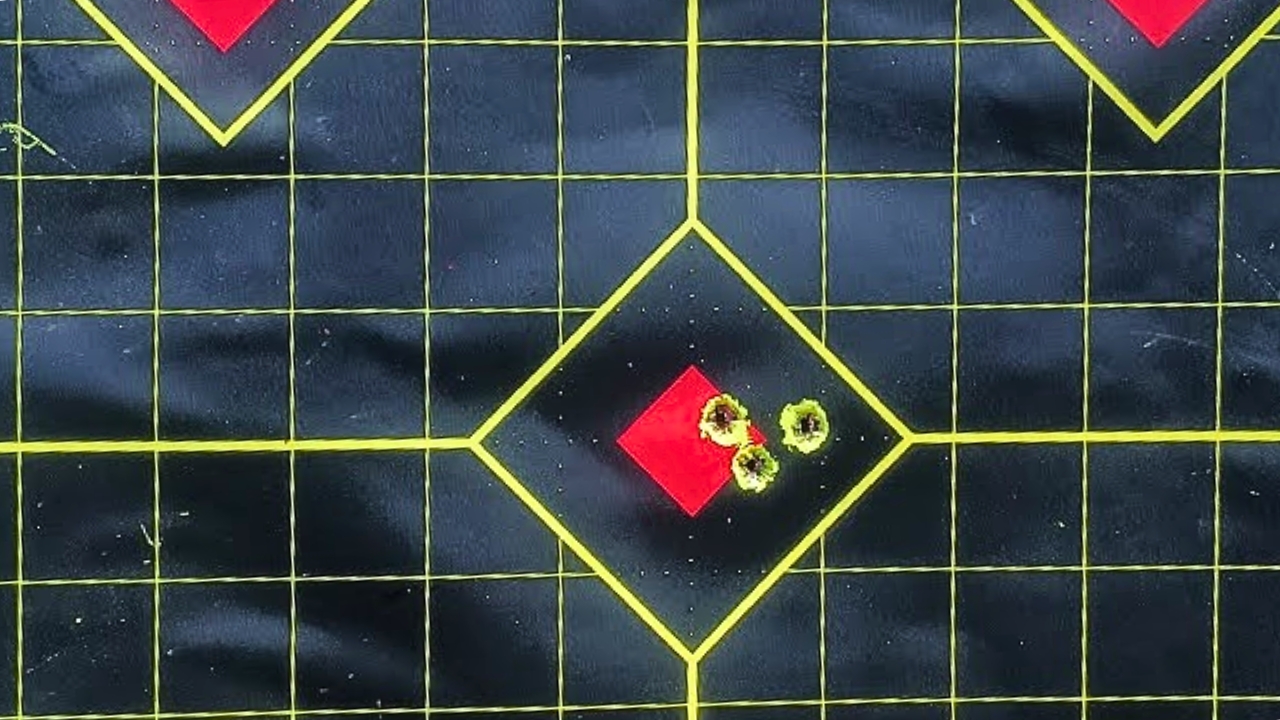
Three-shot groups are the currency of gun-counter bragging, and they’re a terrible way to judge consistency. They tell you something, sure, but they don’t tell you enough. With three shots, you can get a tight cluster by luck, by rhythm, by a moment where everything lined up. Stretch it to five or ten shots and you start seeing the truth: heat, fouling, shooter fatigue, tiny aim changes, and little rifle quirks that don’t show up in a short string. Real weather basically forces you into the longer-string reality, because you’re not as comfortable and you’re not as repeatable. Your breathing is different, your hands are colder, your position is less perfect, and your sight picture is not as clean. That’s why “sub-MOA” claims that live on three shots can collapse fast when the conditions aren’t flattering.
There’s also the temptation to call the flyer “shooter error” every time. Sometimes it is. But if you’re being honest, a rifle system that is truly consistent should be boring. It should repeat. If you keep getting “one random flyer” across different days and different conditions, that’s not random forever. That’s a pattern you haven’t identified yet. It might be a stock contact issue. It might be a scope mount issue. It might be ammo. It might be a crown problem. But weather tends to make that flyer show up more often, because weather stresses the weak point.
Temperature swings change more than people think
Cold weather can change your point of impact even if nothing is “wrong.” Powder burn rates shift with temperature. Some ammo handles it better than others, but very few loads behave identically across big temperature changes. Your barrel steel is also a different temperature, which changes harmonics. Your scope can behave differently in the cold, especially cheaper optics. Your cheek weld can shift when you’re layered up and your face is half numb. Your trigger control changes when your hands are stiff. The rifle doesn’t need to turn into a pumpkin; it just needs to shift enough that your “sub-MOA” expectation becomes unrealistic.
Heat does the same thing, just in the other direction. A lightweight hunting barrel that prints a pretty group with a cool bore can start walking as it warms. If you’re doing load testing or “proving” a rifle on a warm day, you might see the first group look great and the next two open up. That’s not because the rifle is trash; it’s because it’s a hunting rifle with a hunting barrel profile. Some rifles are built to handle heat better. A lot of rifles aren’t. Real weather includes heat, and it includes you shooting more than three rounds when you’re trying to confirm a zero or when you’re practicing the way you should.
The practical truth: “minute of deer” isn’t the insult people act like it is
A hunting rifle that holds around an inch to an inch and a half at 100 yards with hunting ammo, in mixed conditions, is doing what it needs to do for most real hunts. People get offended by that because they’ve been trained to chase tiny groups like it’s a moral virtue. I’d rather have a rifle that holds a predictable 1.25 MOA across different temps and field positions than a rifle that prints a 0.6 MOA group once, then acts moody the rest of the year. Consistency kills. Predictability builds confidence. Weather punishes fantasy.
If you want to know if your rifle’s “sub-MOA” claim is real, test it like a hunter, not like a brochure. Shoot on different days. Shoot in wind. Shoot with a cold bore. Shoot from a pack, from sticks, from a bipod with some load, and from kneeling if that’s realistic for you. Shoot five-shot groups, not just three, and don’t cherry-pick the best one. Track your point of impact when temps change. Watch for drift that correlates with weather or shooting tempo. That’s where the truth lives, and that’s where you either build trust in the rifle or you learn what needs to be tightened up.
The fix is usually boring, but it works
Most of the time, the “sub-MOA” rifle that falls apart in real weather doesn’t need a new barrel. It needs the boring stuff done correctly. Verify action screw torque. Make sure the barrel channel is truly free-floated if that’s the design. Check scope mount torque with a real wrench, not vibes. Use known-good rings and base hardware. Confirm your ammo and don’t assume “same bullet weight” equals “same performance.” If you’re hunting across big temperature swings, consider ammo that’s known to be more temperature stable, or at least confirm your zero when the season changes. And practice in less-than-perfect conditions so you’re not shocked when your body and your rifle behave differently.
The “sub-MOA” claim isn’t useless—it’s just incomplete. It’s a snapshot, not a promise. Real weather is the full movie. If you want a rifle that performs when it matters, stop chasing the best group you’ve ever shot and start building a system that repeats when everything around you gets harder. That’s the kind of accuracy that actually counts.
Like The Avid Outdoorsman’s content? Subscribe to our newsletter so you never miss an article.
Here’s more from us: