Photo credit: Jaroslaw Kurek/Shutterstock.com
We may earn revenue from products featured on this page through affiliate links.
Recoil management is one of the most misunderstood parts of shooting because people confuse effort with control. They think if they’re strong enough, aggressive enough, or willing to “man up,” recoil will take care of itself. Then they watch a smaller shooter run the same gun flatter, faster, and more accurately—and they don’t understand why. The reason is simple: recoil management isn’t about strength. It’s about mechanics, timing, and consistency. Strength can help at the margins, but skill decides whether the gun tracks predictably or beats you up and drags your hits off target.
If recoil were a strength problem, big guys would always shoot best and small shooters would always struggle. That’s not how it works. The shooters who manage recoil well tend to look relaxed, boring, and almost lazy. The gun moves, but it moves the same way every time. That’s not muscle. That’s technique.
Recoil is physics, and physics doesn’t care how strong you are
When the gun fires, it moves. That movement is dictated by mass, impulse, bore axis, grip leverage, and how the shooter interfaces with the gun. None of those variables improve just because you squeeze harder. In fact, squeezing harder often makes recoil worse because it introduces tension in the wrong places. Over-gripping with the firing hand causes sympathetic movement in the trigger finger, which pulls shots. Over-tensing the shoulders makes the upper body rigid, so recoil transfers into instability instead of being managed and returned to center.
Good recoil management starts with accepting that the gun will move. The goal is not to stop recoil. The goal is to control the direction and return of that movement. Skilled shooters don’t fight recoil. They guide it. That guidance comes from structure—how the hands are placed, how the wrists are locked, how the arms create a repeatable path for the gun to move through. Strength alone can’t create that structure. Skill does.
Grip mechanics matter more than grip force
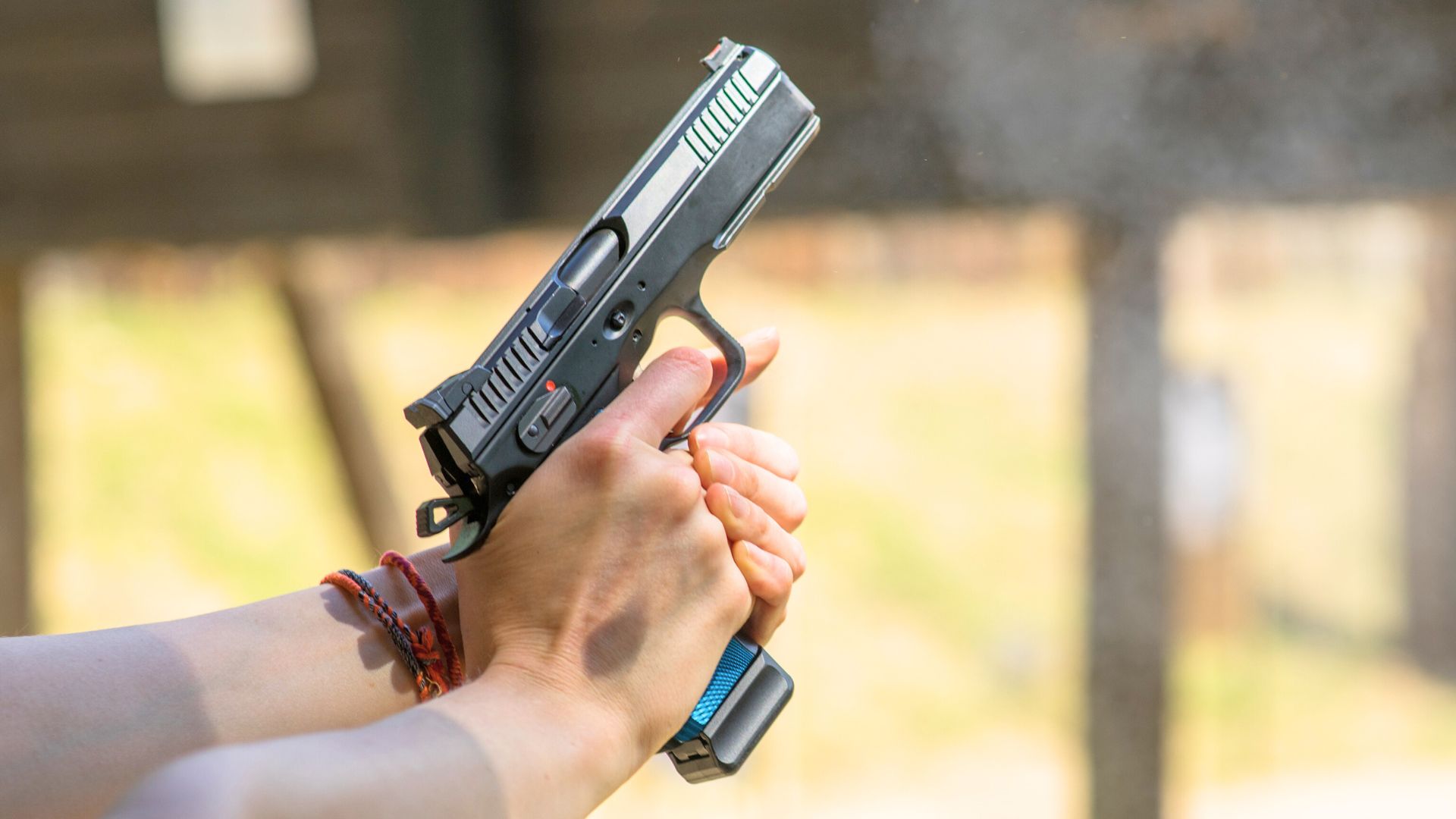
Most recoil problems start at the hands. People hear “grip harder” and take it literally, crushing the gun with their firing hand while the support hand becomes passive. That’s backwards. Effective recoil control comes from a firm but controlled firing hand and an aggressively engaged support hand. The support hand provides most of the clamping force and directional control, while the firing hand focuses on a clean trigger press.
Grip angle, hand placement, and wrist lock matter more than raw force. A high grip that minimizes leverage above the bore axis reduces muzzle rise. Locked wrists create a stable platform so the gun tracks up and back instead of flipping unpredictably. Consistent hand placement ensures the gun returns to the same index point after every shot. None of this requires exceptional strength. It requires repetition and attention to detail. That’s why shooters with smaller hands or less upper-body strength can still run recoil-heavy guns well if their mechanics are sound.
Body position and balance decide whether recoil works for you or against you
Recoil doesn’t just move the gun; it moves the shooter. If your stance and balance are poor, recoil knocks you off alignment and forces you to recover between shots. A good shooting stance isn’t about looking aggressive. It’s about putting your center of gravity in a place where recoil pushes into your structure instead of tipping you over it.
Leaning slightly forward, engaging the core, and keeping weight balanced allows recoil to be absorbed and redirected. Locked knees, upright posture, or leaning back turn recoil into a destabilizing force. This is why shooters who “muscle through” recoil often fatigue quickly and lose consistency as a string goes on. Their strength is fighting physics instead of working with it. Skillful shooters build a stance that lets recoil flow and settle naturally, which makes fast follow-up shots possible without rushing.
Timing beats power when it comes to fast follow-up shots
One of the clearest signs of good recoil management is timing. Skilled shooters don’t rush the trigger as the gun is still moving. They let the gun complete its cycle and press the trigger as the sights return to alignment. This timing is learned, not forced. Strong shooters who lack timing often try to outrun recoil, slapping the trigger while the gun is still climbing or settling. That creates misses and inconsistent shot placement.
Timing is also why lighter recoil doesn’t automatically mean better shooting. A low-recoil gun shot poorly will still produce misses. A heavier-recoil gun shot with good timing will produce tight, repeatable hits. The shooter who understands when to press, not just how fast to press, will always outperform someone relying on strength or aggression.
Equipment can help, but it can’t replace skill
Certain equipment choices can make recoil easier to manage, but they don’t solve bad fundamentals. Grip texture can help prevent slippage. A properly weighted gun can track more smoothly. Muzzle devices or compensators can reduce muzzle rise. But none of those things work if the shooter doesn’t know how to interface with the gun.
That said, good equipment can support good technique. A stable shooting rest or training aid can help isolate mechanics during practice. For example, many shooters use the Caldwell DeadShot Shooting Bag, available at Bass Pro, to remove wobble during practice and focus on trigger control and recoil tracking. The bag doesn’t manage recoil for you—it gives you a consistent platform so you can observe how the gun moves and learn to work with it. Tools like this are valuable when used to reinforce skill, not replace it.
Recoil management changes with platform, but the principles stay the same
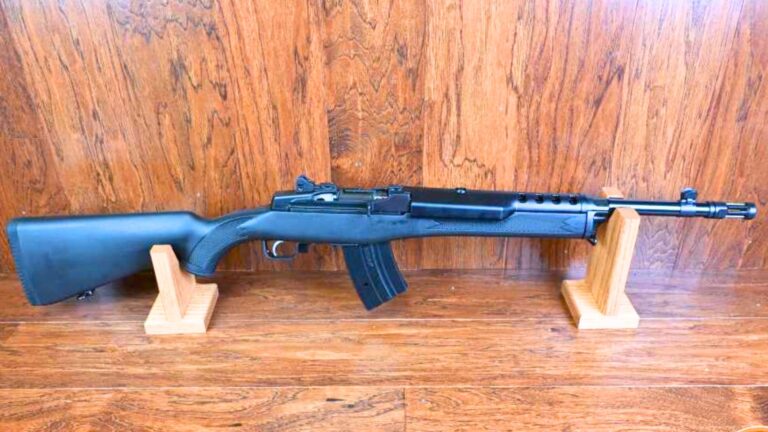
Rifles and handguns handle recoil differently, but the underlying principles don’t change. With rifles, recoil management is about stock fit, shoulder pressure, and maintaining a consistent cheek weld so the rifle tracks straight back. With handguns, it’s about grip, wrist lock, and stance. In both cases, inconsistency is the enemy. A rifle that jumps off your shoulder or a pistol that rotates in your hands creates recovery work you didn’t need. Skilled shooters aim to eliminate surprises. The gun moves, but it moves the same way every time.
This is also why lighter guns often feel “harder” to shoot. Less mass means less forgiveness. That doesn’t make them bad. It makes skill more important. Shooters who rely on strength struggle more as guns get lighter. Shooters who rely on technique adapt more easily.
Fatigue exposes whether recoil management is skill-based or strength-based
One of the fastest ways to tell if someone is managing recoil with strength instead of skill is to watch them when they’re tired. Strength fades. Skill holds. If recoil control falls apart as fatigue sets in, the shooter was relying on muscle. If performance stays consistent, the shooter built a system that works even when energy drops.
This matters in real-world scenarios. Hunting, defensive use, and extended range sessions all involve fatigue. Recoil management that only works when you’re fresh isn’t reliable. Skill-based control scales better across conditions because it relies on structure and timing, not raw output.
Training recoil management the right way
Improving recoil management starts with slowing down and paying attention to what the gun is doing. Watch the sights or dot during recoil. Does it track straight up and down, or does it jump diagonally? Does it return to the same spot, or does it wander? Those answers tell you what needs work. Dry fire helps build grip consistency and trigger control without recoil masking errors. Live fire should focus on short strings where you can observe behavior instead of blasting rounds and hoping improvement happens.
One useful way to diagnose recoil issues is filming yourself from the side. You’ll often see excessive upper-body tension, locked elbows, or awkward stance choices that feel normal but don’t work. Fixing those issues rarely requires getting stronger. It requires changing habits.
Like The Avid Outdoorsman’s content? Subscribe to our newsletter so you never miss an article.
Here’s more from us: