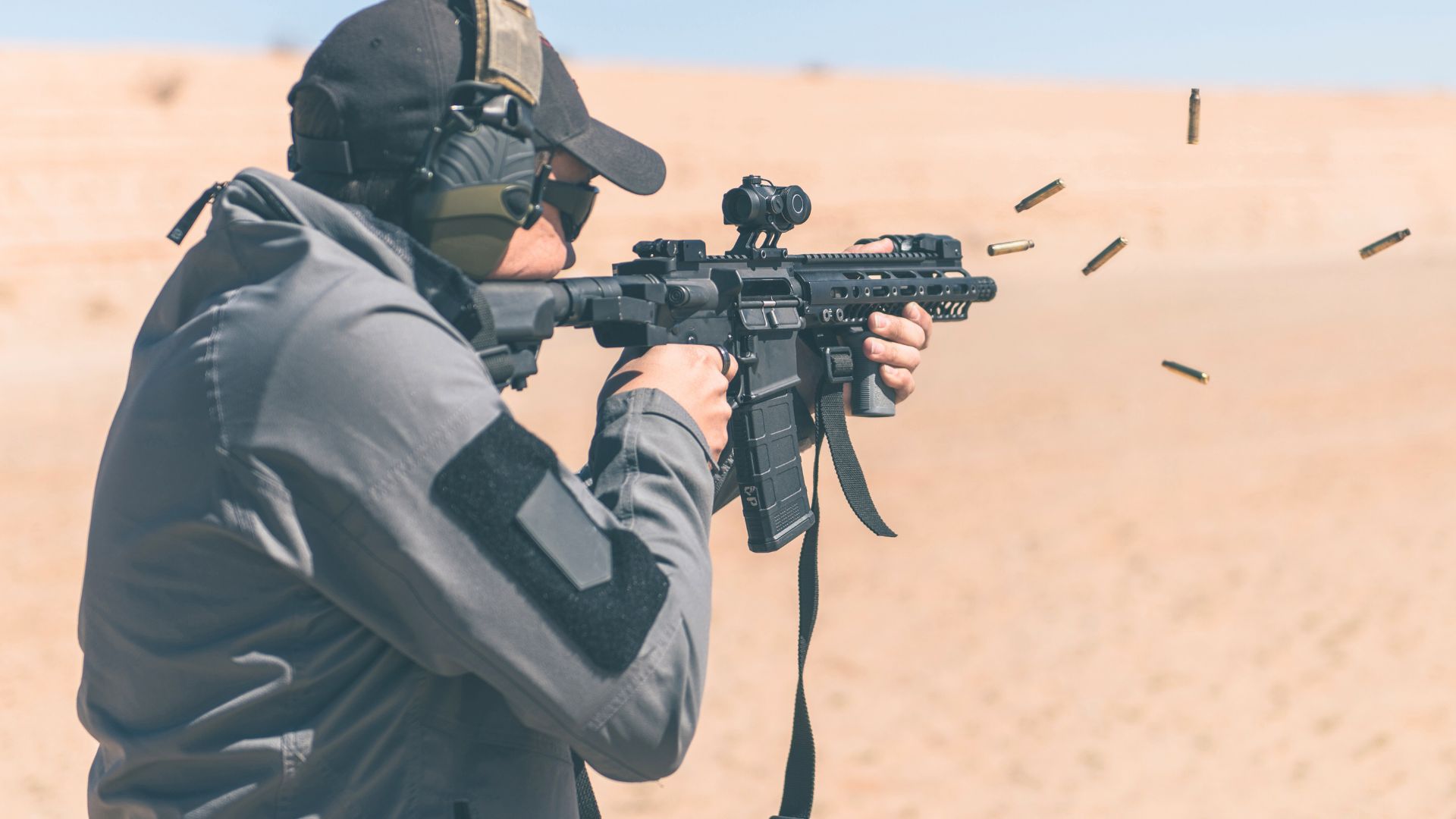
Photo credit: Ambrosia Studios/Shutterstock.com
The Supreme Court’s next big fight over guns is not just about the Second Amendment in the abstract. It is about how one dense federal statute, 18 U.S.C. § 922, will shape what kinds of people and products you can lawfully arm in an era of legal marijuana, ghost guns, and expanding carry rights. If you follow firearms policy, you are really following a running argument over how far that statute can stretch before the justices say it snaps.
The statute in the spotlight: why § 922 matters so much
You cannot understand the coming Supreme Court clash without starting with the basic architecture of 18 U.S.C. § 922. This law is the backbone of federal gun regulation, spelling out who may not possess a firearm, which weapons are covered, and what conduct turns a gun purchase into a felony. When you hear about prosecutions tied to drugs, domestic violence, or prohibited buyers, you are usually hearing about some subsection of § 922 doing the heavy lifting.
One of the most contested pieces is the provision that makes it a crime for anyone “who is an unlawful user of or addicted to any controlled substance” to have a gun, language that sits alongside other bans on categories like felons and people convicted of certain misdemeanors. As analysts of an off-ramp have noted, that phrase has become a flashpoint as state cannabis laws collide with federal drug schedules. Another subsection, cited in detailed Analysis of Marijuana, Guns, and the Implications of the Supreme Court Hemani Case, carries penalties of up to 15 years in prison, which shows you how much leverage prosecutors have when they decide to bring a federal gun charge under § 922.
From Bruen to the present: how history tests modern gun laws
When you look at § 922 today, you are not just reading a statute, you are reading it through the lens of New York State Rifle & Pistol Association v. Bruen. That 2022 decision told judges that modern gun regulations must align with historical firearms rules, turning every challenge into a hunt for analogues from the 18th or 19th century. Instead of weighing contemporary public safety data, courts now ask whether a restriction resembles something the founding generation would have recognized.
A detailed account of this shift explains that after Bruen, judges have become “reluctant antiquarians,” combing through discriminatory and often uncomfortable laws from the founding era to justify or strike down modern rules, and that a review of more than 2,000 challenges shows outcomes now hinge on dueling readings of that past, a pattern highlighted in a post about Hemani The Supreme Court and the United States Hemani Second Amendment landscape. For you, that means every word in § 922 is now vulnerable to arguments that it lacks a proper historical twin, whether the issue is drug use, age limits, or the definition of a firearm itself.
Ghost guns and Garland v. VanDerStok: defining “firearm” under the Gun Control Act
Before the Court turns to who may own a gun, it has been forced to clarify what counts as a gun in the first place. In Garland v. VanDerStok, you see that fight play out over so called ghost guns, weapons assembled from parts kits or unfinished frames that lack serial numbers. The core question is whether these kits and incomplete receivers fall within the Gun Control Act of 1968, or whether they slip through a statutory gap that Congress never anticipated.
The official case summary frames the Issues as, “Are weapons parts kits or incomplete frames or receivers regulated by the Gun Control Act of 1968,” and explains that the dispute asks whether the Bureau of Alcohol, Tobacco, Firearms and Explosives can treat those components as firearms at all, a point laid out in the Gun Control Act of briefing. A separate account of Garland v. VanDerStok notes that the Facts of this Case center on how technological advances like 3D printing have made it easy to build untraceable weapons at home, and that the litigation focused on whether the ATF’s rule properly interpreted the statutory definition of “firearms,” as described in the Facts of the Case.
Bondi v. VanDerStok and the Court’s appetite for gun regulation
If you are trying to gauge how the justices might treat § 922 in the next round, you should look closely at Bondi v. VanDerStok. In that dispute, the Supreme Court upheld a federal rule that treats ghost gun kits as firearms, siding with the Bureau of Alcohol and Tobacco and confirming that regulators can require serial numbers and background checks for these build it yourself weapons. The decision signaled that at least some members of the Court are willing to read federal gun statutes broadly when they see a direct link to public safety.
Advocates for stricter gun laws have emphasized that the ruling in Bondi v. VanDerStok was a major victory for gun safety, because the Supreme Court agreed that the Bureau of Alcohol’s authority extends to ghost gun kits that would otherwise be untraceable, a point underscored in an explainer on why VanDerStok matter and why those rules are “absolutely essential to public safety.” A companion analysis of what the Court decided notes that on March 26, in a 7 to 2 vote, the justices upheld the 2022 ATF rule that interprets the Gun Control Act of 1968 to cover “frames or receivers” and “firearms,” including ghost gun kits, as described in a breakdown of What did the Supreme Court decide.
The new wave of Second Amendment cases the Court has agreed to hear
Even as it resolves ghost gun disputes, the Court is stocking its docket with fresh Second Amendment fights that will test how far § 922 can go. On a recent Monday, The Supreme Court added another case on the scope of the right to bear arms, agreeing to review a lower court decision that had upheld a federal gun regulation and setting up a new round of briefing on how Bruen’s history test applies, as reported in a dispatch that opened, “The Supreme Court on Monday morning added another dispute over the scope of the Second Amendment right to bear arms,” and detailed how the 5th Circuit had upheld Judge Mazzant’s decision, a sequence captured in the note that The Supreme Court acted on Monday.
At the same time, you are seeing the justices take a particular interest in age based and drug related gun restrictions. A broader overview of the term notes that The Supreme Court Is More Interested in Second Amendment Cases Than Ever Before, pointing to two significant disputes on its calendar and explaining that the outcomes could reshape how courts judge whether firearm regulations are constitutional, a trend described in detail in a feature on how The Supreme Court Is More Interested in Second Amendment Cases Than Ever Before. For you, that means the next major gun case is likely to be one of these already accepted disputes, not a hypothetical challenge waiting in the wings.
Marijuana, guns, and the contested meaning of “unlawful user”
Nowhere is the tension inside § 922 sharper than in the rule that bars “unlawful” drug users from owning guns while dozens of states legalize cannabis. You are watching a collision between federal classifications that still treat marijuana as a controlled substance and state level reforms that invite adults to buy it over the counter. For gun owners who use cannabis legally under state law, that gap can turn a routine background check into a potential felony trap.
One detailed review of Historical Context and Constitutional Questions explains that the Supreme Court’s consideration of marijuana users’ gun rights hinges on whether the government can disarm people based on their status as intoxicated or merely habitual users, and whether there is any founding era tradition of such broad disarmament, a debate laid out in a piece titled Historical Context and Constitutional Questions from The Supreme Court’s perspective. Another report describes how Attorneys general for 19 states and Washington, D.C. have urged the justices to uphold the federal gun ban for marijuana users, arguing in a brief that allowing people who are “unlawful users” of controlled substances to arm themselves increases danger to communities, a position summarized in coverage that began with “Published. 54 seconds ago. December 23, 2025,” and stressed that Published arguments from those Attorneys and Washington officials frame the ban as a necessary safeguard.
State pushback and advocacy around drug users’ gun rights
As you weigh the stakes, you should also watch how state level actors and advocates are framing the same statute. In Colorado, for example, a prominent Second Amendment advocate has accused the state government of treating voters as naive while it defends restrictions on gun ownership for drug users, arguing that officials are clinging to an outdated and overly expansive view of who should be disarmed. That rhetoric is part of a broader campaign to persuade the Court that § 922’s drug user ban sweeps far beyond any historical analogue.
A Spanish language report on the coming case quotes a Second Amendment advocate saying, “The government of Colorado thinks the people are stupid,” and identifies the speaker as Second Amendment advocate Col, who contends that the law reflects an “expanded view of gun rights” that should favor broader access rather than tighter controls, a framing captured in the description of how Colorado officials and Col clash over the Second Amendment. That kind of messaging is aimed directly at you if you are a gun owner who uses cannabis, inviting you to see yourself as part of a class unfairly targeted by a vague federal label like “unlawful user.”
How the Court could sidestep a sweeping Second Amendment ruling
Even with all this pressure, you should not assume the justices will use the next case to rewrite the entire relationship between § 922 and the Second Amendment. The Court has a long history of resolving big constitutional questions on narrow statutory grounds when it sees an exit ramp. In the context of drug user gun bans, that could mean focusing on how prosecutors prove someone is an “unlawful user,” or whether the government has shown a tight enough fit between the law and any historical tradition of disarming dangerous individuals.
One detailed preview of the litigation strategy notes that Last year, federal prosecutors obtained a conviction against Hunter Biden under 18 U.S.C. § 922(g)(3), the federal statute that bars unlawful users of controlled substances from possessing guns, and suggests that the justices might look for ways to decide the case on evidentiary or procedural grounds rather than issuing a broad Second Amendment ruling, a possibility explored in a discussion of how Last year’s prosecution of Hunter Biden under 922 could give the Court an off ramp. A companion analysis of the same statute underscores that 922 is woven through a wide array of criminal laws, which means any sweeping Second Amendment decision could ripple far beyond drug cases and into other categories of prohibited persons.
Why the next major gun case will turn on statutory interpretation
When you step back from the docket, the pattern is clear: the Supreme Court’s next major gun case is likely to turn less on abstract declarations about the Second Amendment and more on how the justices read the words of § 922 against the backdrop of Bruen. Whether the issue is ghost guns, marijuana use, or age limits, the Court is being asked to decide what Congress actually authorized and how that text fits within a contested historical tradition. For you, that means the fine print of federal law is about to matter as much as the broad promise of a constitutional right to keep and bear arms.
Observers who track the Court’s orders have already noted that, “Well it ( The Supreme Court )’s Monday and that means the Supreme Court graces us with another orders list,” a wry reminder that on any given Monday and with a single line on an orders list, the Supreme Court can transform a technical dispute over statutory language into the next national gun rights showdown, as one commentator put it while discussing how Well, The Supreme Court, Monday and Supreme Court watchers in Washingto parse each new case. As The Supreme Court is expected to hear more Second Amendment disputes in early 2026, including questions like “Can 18-to-20-year-olds own guns,” you should expect the justices to keep using statutory interpretation as their main tool, a trajectory outlined in a preview that notes how The Supreme Court is expected to hear that age based case and decide whether Hawaii’s limits on young adults’ access to a gun violate the Second Amendment.
Like The Avid Outdoorsman’s content? Be sure to follow us.
Here’s more from us: