Photo credit: Springfield Armory
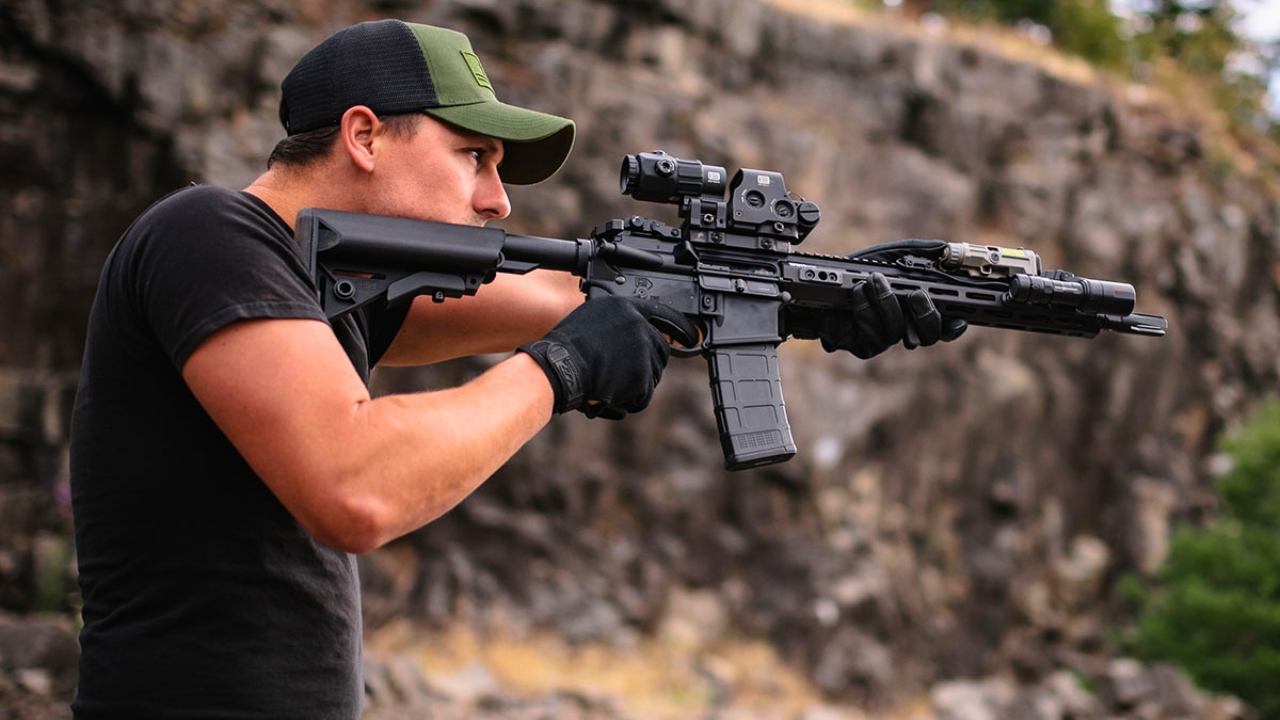
Assault-weapon bans have survived years of courtroom attacks, but a new wave of litigation is forcing judges, lawmakers, and you as a voter to confront how far the Second Amendment really goes. Instead of a single blockbuster ruling, a series of cases is quietly setting the stage for a broader reckoning over which firearms the Constitution protects and which governments can restrict. The legal fight now stretches from Maryland to Washington state and the District of Columbia, and it is drawing in the Department of Justice, gun‑rights groups, and local officials who all claim to be defending public safety and constitutional limits.
The Supreme Court’s quiet but consequential refusals
You might expect the Supreme Court to be eager to settle whether governments can ban so‑called assault weapons, yet the justices have repeatedly stepped back from that edge. After the Court considered two Second Amendment challenges at 15 consecutive private conferences, it ultimately declined to hear them, leaving lower court rulings in place and signaling that, for now, the justices are not ready to rewrite the rules on these bans, as reflected in the account of how the Supreme Court handled those petitions. That kind of prolonged internal debate followed by silence keeps the legal landscape unsettled, because it neither blesses nor condemns the contested laws.
For you, that silence matters as much as any dramatic opinion. When the Court turns away cases without comment, it effectively tells states and cities that existing bans can stand for now, while also inviting more creative challenges that might eventually force a clearer answer. The result is a patchwork in which your rights and restrictions depend heavily on where you live, even though the same Second Amendment applies nationwide, and the Court’s refusal to intervene keeps that patchwork intact.
Maryland’s law as a test of patience and precedent
Nowhere is that patchwork more visible than in Maryland, where a 2013 law restricting assault weapons has become a long‑running test of how far states can go. When the Supreme Court declined to hear a challenge to that statute, it left Maryland’s framework in place and signaled that, at least for the moment, the justices would not second‑guess the state’s judgment about which semiautomatic rifles and magazines to restrict, a result that kept Maryland’s ban intact. That decision frustrated gun‑rights advocates who had hoped the Court would use the case to narrow what states can label as unusually dangerous weapons.
At the same time, the fight over Maryland’s law has become a rallying point for those who argue that the Supreme Court’s modern Second Amendment decisions require a fresh look. Advocates at the state and national level insist that when the Court eventually takes a case squarely addressing assault‑weapon bans, it should clarify how the historical‑tradition test from recent rulings applies, a point underscored by commentary that urges the justices to explain how Bruen should guide lower courts. Until that happens, you are watching a kind of constitutional shadowboxing, where both sides claim the high ground while the ultimate referee stays offstage.
Washington state’s experiment in aggressive regulation
On the other side of the country, Washington state has become a proving ground for a more aggressive approach to regulating assault‑style rifles. A state law banning the sale of certain semiautomatic weapons has already survived multiple rounds of litigation, with a judge again rejecting arguments that the measure violates the right to bear arms, a result that kept the law in place even as critics warned it targets popular rifles used by law‑abiding owners, as described in coverage that noted how a judge upheld WA’s ban. That ruling leaned on the idea that states retain broad authority to regulate especially lethal weapons, even when those firearms are widely owned.
The political story behind that law is just as important for you to understand as the legal one. For years during his time as attorney general, Gov Bob Ferguson pushed for the ban in the wake of a shooting at a Muki school, framing it as a necessary response to high‑profile violence. That history shows you how individual tragedies can drive long campaigns that eventually reshape state law, and how those laws then become test cases that lawyers on both sides watch for clues about what courts will tolerate.
Illinois, Snope v. Brown, and the federal government’s shifting role
Illinois offers a different kind of test, one that puts the federal government directly in the middle of a state‑level fight. When the state enacted restrictions on assault weapons and large‑capacity magazines, a federal District Court on April 28, 2023, preliminarily enjoined those bans, finding that they likely violated the Second Ame protections for keeping and bearing arms, before higher courts later allowed enforcement to resume, a sequence described in detail in an account of how the District Court handled the case. That early injunction signaled that at least some judges see these bans as difficult to square with a robust reading of the Second Amendment.
At the appellate stage, the Department of Justice stepped in with an amicus brief supporting a challenge backed by the National Rifle Association, a move that underscored how the federal executive branch can shape the legal battlefield you are watching. At the same time, another case, Snope v Brown, reached the Supreme Court, only for the justices to decline review of a Second Amendment challenge to a separate set of gun regulations. Together, those moves show you a federal government that is sometimes willing to attack state bans and sometimes content to let them stand, depending on the legal theory and the forum.
D.C. becomes the new focal point
The District of Columbia has now emerged as the sharpest flashpoint in this broader conflict, in part because it sits at the intersection of local governance and national politics. The Department of Justice filed a sweeping complaint titled DOJ Files Lawsuit Challenging District of Columbia Assault Weapons Ban, arguing that the city’s restrictions on certain semiautomatic rifles and magazines are inconsistent with the Constitution. That lawsuit does more than target one municipal code; it signals that federal lawyers are prepared to argue that some assault‑weapon bans are historically ungrounded and therefore invalid.
At the same time, another case in the capital attacks the city’s licensing and registration practices as part of a broader pattern that allegedly deprives residents of their right to keep and bear arms. In that litigation, attorney Dhillon contends that D.C. has adopted an arbitrary approach to regulating rifles and pistols, and the Department of Justice has criticized the city’s ban as lacking historical support, a critique captured in an analysis of how Dhillon framed the challenge. Because D.C. is a federal district rather than a state, the outcome there could carry symbolic weight that extends well beyond its borders, giving you an early look at how national officials think these bans should be judged.
How courts are reading the Second Amendment after Bruen
Behind all of these fights is a deeper argument about what the Second Amendment actually protects in the twenty‑first century. In recent years, the Supreme Court has instructed lower courts to evaluate gun regulations by looking to the historical tradition of firearm laws, a shift that has forced judges to compare modern assault‑weapon bans with centuries‑old rules about muskets, pistols, and public carry, a trend summarized in a survey of Second Quarter Trends in gun rulings. That historical test has produced divergent outcomes, with some courts upholding bans by analogizing them to past limits on especially dangerous weapons and others striking them down as unprecedented.
For you, the key takeaway is that the same constitutional text is being read in very different ways depending on which judge gets the case. Some opinions stress that the United States has long regulated weapons deemed unusually dangerous, while others emphasize that modern semiautomatic rifles are now common and therefore presumptively protected. The resulting split is exactly the kind of conflict that usually draws Supreme Court review, yet the justices’ reluctance to step in so far has left you with a legal map that is still being drawn in real time.
The DOJ’s evolving message on “common use” and public safety
One of the most striking developments for you to watch is how the Department of Justice has started to talk about which weapons are in “common use” and for what purposes. In its criticism of D.C.’s ban, the department argued that both semiautomatic rifles and certain pistols are used for a variety of lawful purposes, including self‑defense in the home, and that the city’s attempt to single them out lacks a firm historical foundation, a position reflected in reporting that quoted the view that Both kinds of weapons serve lawful ends. That framing matters because the Supreme Court has previously suggested that arms in common lawful use are at the core of the Second Amendment’s protection.
At the same time, federal lawyers have insisted that the United States has a strong interest in ensuring that the Second Amendment is not relegated to a second‑class right, language that underscores a broader shift away from automatic deference to local gun regulations. That sentiment appears in legal updates that describe how The United States framed its role in ongoing litigation. For you, this means that even as some states double down on restrictive laws, the federal government is increasingly willing to argue that those laws must be tightly justified, not simply assumed to be valid because they claim to promote safety.
Why lower‑court skirmishes matter as much as Supreme Court showdowns
It is tempting to focus only on the Supreme Court, but the real action that affects your day‑to‑day rights is happening in trial courts and regional appeals courts. In Illinois, Washington, Maryland, and D.C., judges are issuing detailed opinions about what counts as an assault weapon, how to measure “dangerousness,” and whether modern rifles are more like the muskets of the founding era or the machine guns that have long been tightly regulated. Those rulings, some of which initially blocked bans before higher courts reinstated them, shape the practical rules you live under even when the Supreme Court stays silent.
These lower‑court skirmishes also create the factual and legal record that the justices will eventually have to confront. When a District Court catalogs how many residents own a particular rifle, or when an appellate panel explains why it thinks a ban fits within historical tradition, it is building the scaffolding for the next big constitutional moment. For you, paying attention to those details now helps you understand why, when the Supreme Court finally does take a case that squarely addresses assault‑weapon bans, the outcome will rest on years of groundwork that most people never saw.
What this evolving fight means for you
All of this litigation can feel abstract, but it has concrete implications for how you buy, own, and use firearms, and for how your community responds to gun violence. If you live in a state like Washington or Maryland, the current trend of judicial deference means that existing bans are likely to remain in force unless and until the Supreme Court intervenes. If you live in places where judges have been more skeptical, such as parts of Illinois or the District of Columbia, you may see rapid shifts as injunctions are granted, stayed, and sometimes reversed, leaving you to navigate a moving target of what is legal.
Looking ahead, the most important thing you can do is recognize that the fight over assault‑weapon bans is not just about one type of rifle or one city’s ordinance. It is about how courts balance individual rights against claims of public safety, how much weight they give to historical analogies, and how willing they are to let local experiments stand. As the Department of Justice, state officials, and advocates on both sides continue to test those boundaries, you are watching a live debate over the meaning of the Second Amendment that could, at any moment, move from the margins of the docket back to the center of national attention.
Like The Avid Outdoorsman’s content? Be sure to follow us.
Here’s more from us: