Photo credit: seeetz/Unsplash
A whole lot of carry guns make a strong first impression. You pick one up at the counter, wrap your hand around it, rack the slide a couple times, maybe line the sights up on a blank wall, and it feels like you found the one. It points naturally. It looks sharp. It feels slim enough to carry and substantial enough to trust. That is usually the moment a lot of people talk themselves into a purchase. The problem is that a gun can feel excellent in a store and still turn into a headache once it has to live on your body, run through real ammo, and work its way into daily life. Carry guns do not fail in real life only because they jam or break. They fail because they are uncomfortable, annoying to conceal, unpleasant to shoot, too easy to leave at home, or harder to run well under pressure than they seemed under bright lights at the gun counter. That is the truth a lot of shooters learn after the money is spent and the honeymoon is over.
Counter feel does not tell you much about daily carry
Gun stores are great for narrowing things down, but they are a terrible place to figure out what daily carry is really going to feel like. You are standing upright, fresh, and focused on the gun for maybe a minute or two. You are not sitting in a truck with a seat belt across your waist. You are not bending over to pick something up. You are not walking around in summer heat with sweat building under the holster. You are not trying to keep the grip from printing through a T-shirt or digging into your side while you carry a kid, work around the house, or move through a long day. That is where a lot of “perfect” carry guns start showing their weak side. A pistol that felt balanced at the counter may feel top-heavy in the waistband. A grip that felt great in the hand may turn out to be just long enough to print every time you move wrong. A slide that seemed slim may still feel like a brick once it is riding against you for ten hours.
That is one reason so many shooters wind up rotating through carry guns. They bought based on first impression instead of lived experience. They focused on how the gun felt to hold instead of how it felt to carry. Those are not the same thing. Real carry is about comfort, concealment, access, and consistency, and a gun can score well in one of those areas while making the others worse. Some people figure that out in the first week. Others keep fighting the gun for months, changing belts, holsters, clothes, and positions trying to fix a problem that usually starts with the gun not actually fitting their real life the way it seemed to fit their hand in the store.
Good ergonomics on the sales floor can turn into bad shooting under recoil
This is another big one. A pistol can feel amazing in a dry hand with no recoil at all, then turn out to be snappy, awkward, or harder to control than expected once real shooting starts. A lot of smaller carry guns are the worst offenders here. They feel great because they are compact, easy to reach around, and simple to wrap your hand around fully for a second or two. Then you load them up, fire a few defensive rounds, and realize the shorter grip gives you less control, the lighter frame makes recoil feel sharper, and the gun starts shifting in your hand faster than you expected. Suddenly that “great feel” does not seem so great anymore. It just means the gun fit your hand while standing still, not while trying to fire controlled shots with actual speed.
This is where a lot of people get fooled by comfort at rest. Soft edges, slim dimensions, and a short grip can all feel nice at the counter, but they do not automatically translate to shootability. In fact, the features that make a gun easier to conceal often make it harder to shoot well, especially for people who do not train a lot. That does not mean small guns are bad. It means they ask more from the shooter than people want to admit. The guy who buys a tiny carry pistol because it “felt right” in the store may find out at the range that it is harder to keep flat, harder to track, and slower to recover with than a slightly larger gun he dismissed too quickly. That is a frustrating lesson, because by then the gun still looks good, still carries decently, and still seems like it should work. It just does not perform as easily as the store impression promised.
Reliability problems show up after the brochure version of the gun is over
Some carry guns do not really reveal themselves until you start putting mileage on them. That first clean, oiled, carefully handled range trip is not always where problems show up. Sometimes the trouble starts once the gun gets carried every day, picks up lint, sees different ammo, or gets run hard enough to expose weak magazines, fussy tolerances, or sloppy quality control. This is another way carry guns fail in real life. On paper, they are small enough, modern enough, and popular enough to make the buyer feel safe in the choice. In actual use, they may prove picky with hollow points, rough to reload under speed, or inconsistent once the round count climbs. The owner ends up making excuses for it because he wants the purchase to make sense. He tells himself it just needs more break-in, different ammo, stronger mags, or a lighter recoil spring. Sometimes that is true. A lot of times it is just denial.
Carry guns get a special kind of grace from people because nobody likes admitting the gun they trusted for self-defense may not have been the right call. So they keep forcing the relationship. They tolerate weird little stoppages. They write off failures as ammo issues. They keep carrying a pistol they no longer shoot confidently because the size is convenient or the brand has a good reputation. That is how a carry gun becomes a real-life failure without technically being broken. Trust starts slipping. Practice gets less enjoyable. Confidence drops. The gun may still go bang most of the time, but “most of the time” is not the standard anybody should want from something riding on their belt for serious use.
The holster and belt test exposes the truth fast
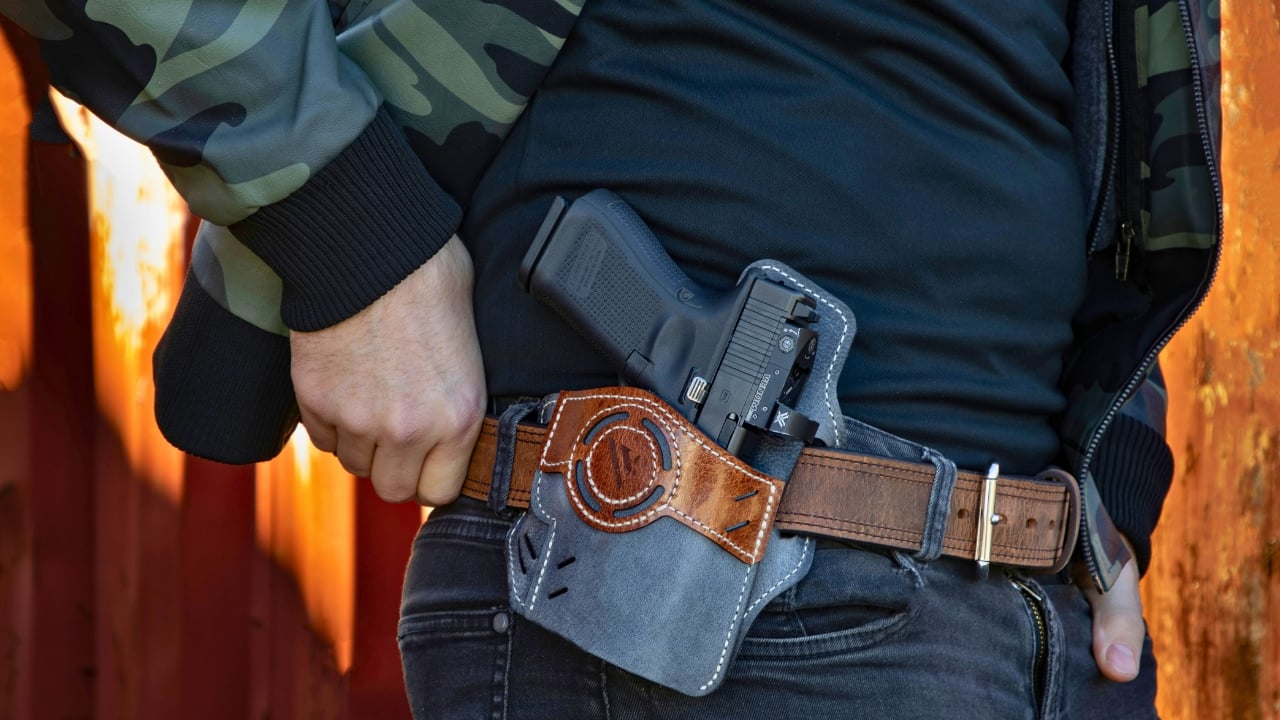
One of the fastest ways to find out whether a carry gun actually works in real life is to wear it with a real holster and belt for a full day. Not five minutes in front of a mirror. Not a few dry draws in the spare room. A full day. That is when the comfort lies fall apart. Maybe the grip rubs more than expected. Maybe the beavertail pokes you every time you sit. Maybe the added weight keeps dragging your belt down. Maybe the thickness you barely noticed at the counter now feels obvious every time you move. This is where people discover that a pistol they thought was “easy to conceal” is really only easy to conceal while standing still in one shirt under ideal lighting. Actual carry is less forgiving than that.
The holster setup matters, of course, and a bad holster can make a decent pistol feel worse than it is. But good gear only goes so far when the gun itself is not a natural fit for your body type, carry position, or routine. Some guns are simply more demanding to hide well. Some are more sensitive to grip length than people expect. Others feel fine until you add a red dot, a weapon light, or a spare mag and realize the entire package is now more annoying than you want to deal with daily. The gun has not changed. Your willingness to put up with it has. That is usually the moment people start carrying something else more often, which is another polite way of saying the original choice failed where it mattered most.
The best carry gun is the one that still works after the novelty is gone
This is the part people usually learn the hard way. A good carry gun is not the one that wins the counter test, gets the most compliments online, or feels the coolest in the hand for thirty seconds. It is the one that keeps making sense after the novelty wears off. It still conceals when the weather changes. It still feels manageable when you are tired. It still shoots well enough under speed to let you trust your hits. It still works with the ammo you want to carry. It still rides comfortably enough that you do not start “accidentally” leaving it home on short trips because it is a pain. That is the difference between a gun that looked right and a gun that actually is right.
A lot of people buy carry guns with their imagination and then judge them with their real life. That gap is where disappointment lives. The pistol that felt perfect in the store may have only been perfect for a sales-floor version of you who was not sweaty, rushed, seated, layered up, or running live ammo. Once real life gets involved, the standards change. That does not mean the gun was garbage. It means carry guns live or die by use, not by first impressions. And if a gun stops being something you trust, shoot well, and willingly carry every day, then it has already told you the truth. It may have felt great in the store, but that was never the real test.
Like The Avid Outdoorsman’s content? Subscribe to our newsletter so you never miss an article.
Here’s more from us: