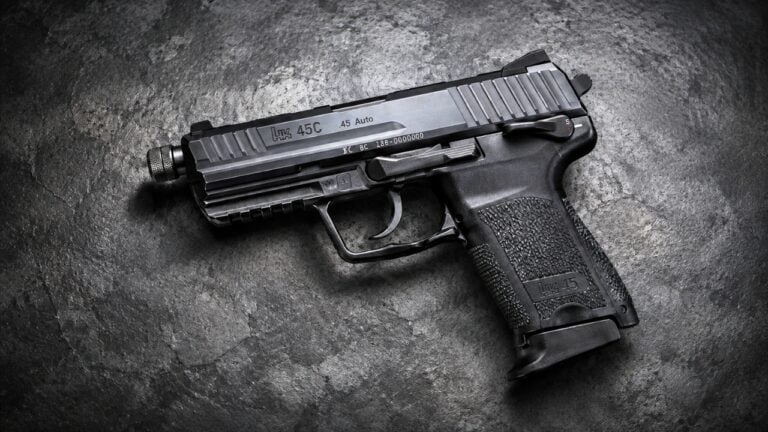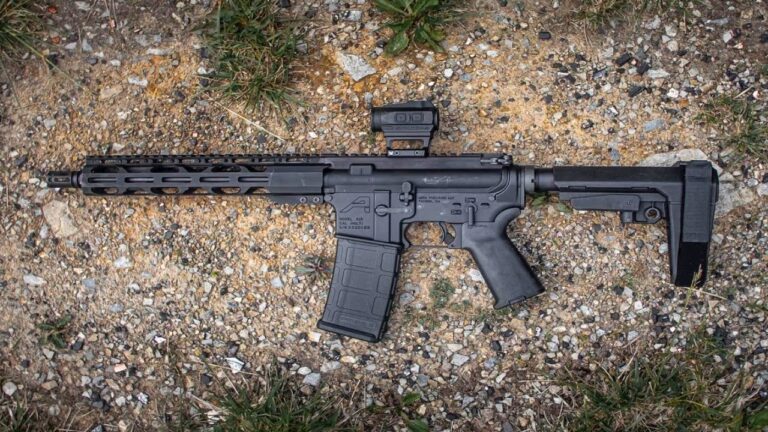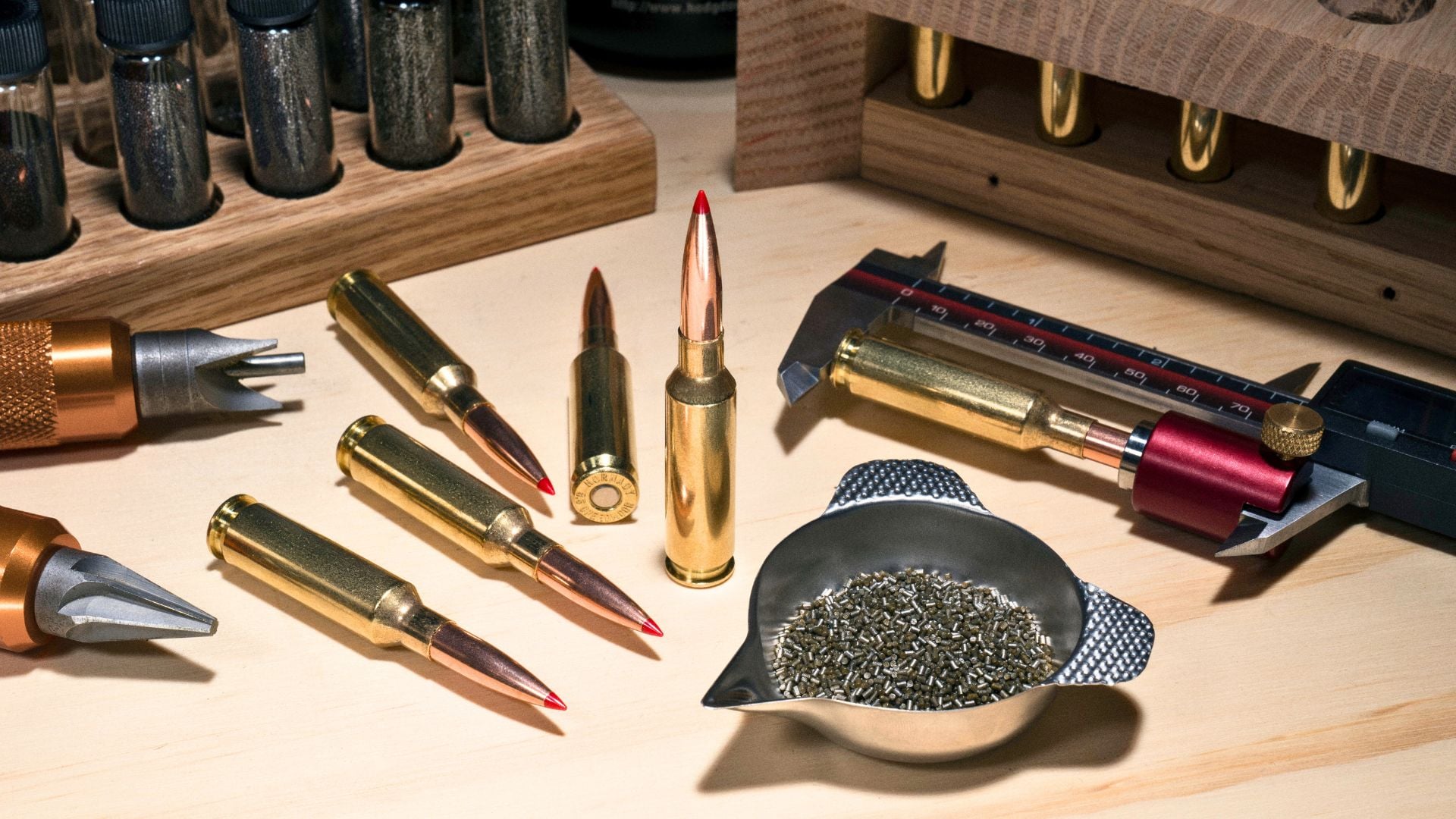
Photo credit: Bottcher Visuals/Shutterstock.com
If you reload long enough, you start to see which calibers make sense—and which ones aren’t worth touching unless you enjoy wasting time, money, or both. Some cartridges cost more to load than to buy factory. Others chew through brass or have erratic components that shift every lot. And then there are the boutique oddballs that don’t offer any real performance advantage but make every part of reloading harder. You won’t find these in a well-used press or tucked into labeled ammo cans. That’s not because they’re rare—it’s because folks who reload with their heads on straight know better. If you’re stocking up on dies and brass, these are the ones to skip. Whether you’re a seasoned handloader or new to the bench, you’ll save yourself plenty of regret by letting these calibers stay someone else’s headache.
.25-20 Winchester

There’s a reason most .25-20 shooters aren’t handloaders—they’re collectors. Brass is rare, soft, and expensive, and it doesn’t hold up to multiple reloadings. The thin case walls are easy to crush, and you’ll lose more than you save unless you’re loading with surgeon hands and a single-stage press. Even resizing takes a delicate touch.
It also doesn’t help that powder charges are small and finicky. A tenth of a grain too much or too little throws velocity all over the place, and you’re still only getting mild performance. For most folks, there’s no gain. There’s no reason to load your own unless you’re feeding an heirloom and can’t find ammo. Even then, it might make more sense to shoot less than reload more.
.41 Action Express

You won’t see many presses set up for .41 AE, and that’s not a mistake. It was designed with big dreams—9mm-sized guns shooting .41-cal bullets—but the market didn’t bite. Now the brass is nearly extinct, and dies are only available if you’re lucky on the secondhand market.
Even if you find components, there’s no payoff. It doesn’t do anything better than a modern 10mm or even a hot 9mm. You’ll spend time making brass from .40 S&W or trimming down cases, and for what? A cartridge that nobody asks for and most shooters have never heard of. Smart reloaders don’t chase ghosts, and this one’s about as dead as they come.
.17 Remington

If you like cleaning your rifle every 15 rounds, go ahead and reload .17 Remington. Otherwise, keep your bench free of it. These tiny cases are tricky to handle, hard to prime, and easy to overcharge. You’re working with such a narrow safety margin that a slight mistake can spike pressures fast.
Then there’s the fouling. That high-velocity .17-cal bullet leaves a mess in the bore, and it doesn’t take much to throw off accuracy. You’ll spend more time chasing groups and scrubbing carbon than enjoying your handiwork. For all the trouble, you’re reloading a cartridge that’s already fading in popularity—and doesn’t give you anything that a .204 Ruger or .22-250 won’t do better.
.32 H&R Magnum

You’d think a light-kicking revolver round like the .32 H&R Magnum would be a reloader’s dream, but it ends up being more work than it’s worth. The brass isn’t cheap, and not all of it holds up well to repeat firings. Plus, it’s not always easy to find projectiles that play nice with the old pressure limits.
Even when it’s available, you’re stuck working up loads that often fall short of what a .38 Special +P can do with less effort and more flexibility. If you’re chasing performance, you’ll be pushing pressures that put wear on your revolver. And if you’re not, then what’s the point? Most reloaders leave this one on the shelf unless they’re committed to a niche gun and have the patience to load accordingly.
.338 Lapua Magnum

It might be fun to shoot, but the .338 Lapua Magnum is no fun to load unless you’ve got deep pockets and bench space to match. Everything about it is oversized—dies, cases, powder charges—and none of it comes cheap. You’ll burn through more powder in a weekend than most folks do in a season.
The brass is costly, the bullets are premium, and your press better be stout. Forget trying to load this on a budget setup. Even case prep takes more time because of the thick necks and overall size. Smart reloaders look for efficiency, consistency, and affordability. This one offers none of those unless you’re building loads for extreme long range and have the tools—and wallet—to match.
5.7x28mm

Plenty of folks buy a Five-seveN or PS90 and think they’ll start reloading for it. Then they try, and the reality hits. The brass is lacquered or polymer-coated, prone to case setbacks, and has tiny case mouths that are tough to bell or seat without shaving bullets. It’s like loading bottleneck pistol rounds with the temperament of rimfire.
On top of that, reliable load data is scarce. Pressure spikes fast, and factory ammo is loaded hot to begin with. There’s not much headroom for experimentation. And even if you get it all dialed in, you’re still spending more time and effort than it’s worth for a round that doesn’t hit like a real rifle and doesn’t behave like a normal pistol. Most smart reloaders try it once and never look back.
.45 GAP

.45 GAP was supposed to be a space-saving answer to .45 ACP, but it never caught on. That lack of popularity means finding components—especially brass—is a pain. And once-fired stuff isn’t exactly common on the range. You’re likely buying new brass, and it’s not cheap.
Even when you have the gear, your options are limited. Most bullets and powders are better optimized for .45 ACP, and the GAP case gives you less room to work with. That makes pressure spikes more likely if you’re not careful. With so many better-supported cartridges out there, reloading .45 GAP ends up being more hassle than it’s worth unless you’re one of the few diehards still shooting it.
.30 Carbine

At first glance, .30 Carbine seems reloadable—it’s a straight-walled case, and the bullets are easy to find. But once you start, the headaches begin. The brass stretches a lot, often needing trimming every time. And don’t expect clean function in your M1 Carbine unless everything is dialed in perfectly.
It’s also touchy with powder choice. Too slow and the action short-strokes. Too fast and you spike pressure without warning. And because the case is relatively small, your margin for error isn’t great. For all the nostalgia of the platform, reloading this cartridge feels more like troubleshooting than crafting good ammo. Most smart reloaders would rather buy a few factory boxes than waste bench time messing with this temperamental round.
.221 Fireball

Reloading .221 Fireball feels like a precision exercise you didn’t ask for. The brass is rare, and factory ammo isn’t cheap to begin with. Every step in the process—resizing, seating, crimping—demands more care than usual because of the short case and sharp shoulder.
Priming can be annoying, too. It uses small rifle primers, and consistent seating depth matters more than you’d expect. If you’re working with older brass, you might get inconsistent neck tension or cracked case mouths. None of this is the end of the world, but when you compare the time and cost to something like .223 Remington, it’s clear which one makes more sense. The Fireball might be neat for short-barreled rifles or specialty varmint rigs, but it’s not a caliber smart reloaders load often—if ever.
7.62x54R

You can reload for 7.62x54R, but unless you’ve got a sniper variant or modern bolt gun, you’re probably wasting your time. Most shooters are running it through Mosin-Nagants with questionable bores and generous chambers. That beats brass up fast and ruins any shot at consistent accuracy.
Add in the hassle of Berdan-primed surplus cases, and it gets worse. Boxer-primed brass is available, but you’ll pay more than you’d spend on a case of surplus ammo. And the bullets aren’t always a perfect fit either—some bores prefer .311″, others .312″, and some don’t care because they’re too worn out. A smart reloader skips this one unless they’re building loads for a specific gun that actually shoots worth a damn.
.50 Beowulf

This round sounds fun—until you start trying to reload it. Everything about .50 Beowulf is big and fussy. The brass is expensive, the bullets aren’t cheap, and reloading data is limited. Pressure signs can be vague, and case life isn’t always predictable, especially with hot loads.
Worse, a lot of setups don’t feed well unless your COAL is dialed in perfectly. That means trial and error, often across multiple mags and platforms. The wide case also means you’ll be seating big slugs with chunky crimps, which requires more force and precision than most entry-level gear handles well. Reloading it might save a few bucks—but it chews through time and components so fast that most smart reloaders pass on it unless they’re already all-in.
Like The Avid Outdoorsman’s content? Be sure to follow us.
Here’s more from us:
The worst deer rifles money can buy
Sidearms That Belong in the Safe — Not Your Belt
*This article was developed with AI-powered tools and has been carefully reviewed by our editors.