Photo credit: Ichabod/istock.com
There is a big difference between a one-time mistake and someone who keeps pushing a boundary after they know exactly where it is. Most hunters will back off once a line is made clear. When somebody does not, you are no longer dealing with confusion. You are dealing with a pattern, and patterns are what you have to address if you want the problem to stop. A lot of landowners get stuck here because they keep hoping the next time will be different, or they assume one conversation should have fixed it for good. When it doesn’t, frustration builds, and that’s when people start reacting instead of handling it in a way that actually shuts it down.
The key is not to match their behavior. It is to get more controlled and more consistent than they are. A hunter who keeps ignoring property lines is usually relying on the idea that nobody will follow through, nobody will track it clearly, and nobody will make it inconvenient enough for him to keep doing it. Once that assumption starts breaking down, the situation usually changes fast. But it only changes if you stop treating each incident like a standalone problem and start treating it like something that needs a clear, repeatable response every time it happens.
Stop treating it like a misunderstanding
This is the first shift that needs to happen. If the person has already been told where the boundary is and continues to cross it, then continuing to explain it again and again is not solving anything. It actually teaches the opposite lesson — that the worst thing that will happen is another conversation. At that point, it is not about clarity anymore. It is about whether the boundary means anything in practice.
That does not mean you jump straight into conflict, but it does mean your approach changes. Instead of repeating yourself, you start documenting each time it happens, noting where the crossing occurred, what signs were left behind, and whether the behavior is getting more frequent or more deliberate. That gives you something solid to work from instead of frustration and memory. It also shifts your mindset from “why is this happening again?” to “how often is this happening and what does the pattern look like?” That is a much stronger place to operate from.
Make the boundary harder to ignore
A lot of problems continue simply because the boundary is easy to test. If it is lightly marked, easy to step over, or tied to a natural feature that is not obvious in low light, then someone who is already willing to push it is going to keep doing exactly that. So before you expect the person to change, look at whether the property itself is making that behavior too easy.
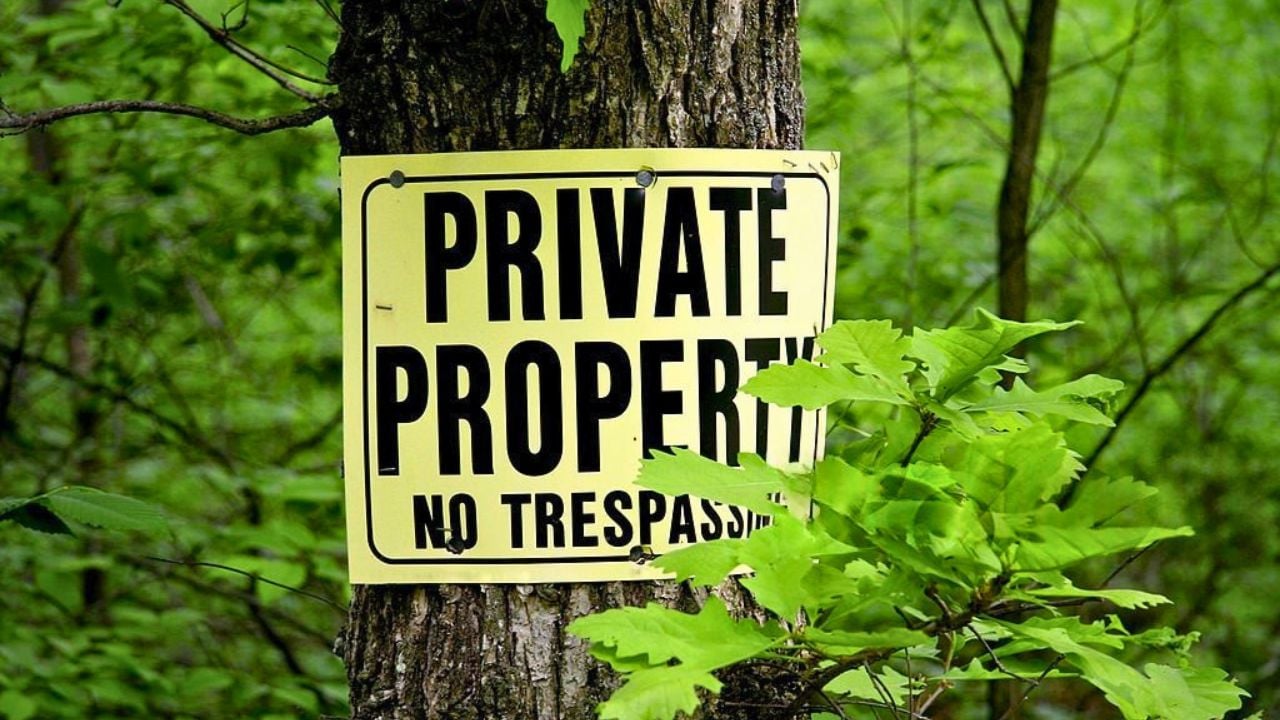
Clear markers, maintained fence lines, visible signs at common crossing points, and attention to areas where people naturally drift across all change how a property feels. What used to look like a gray area starts looking defined. That matters more than people think. Some hunters stop the moment a line feels official and watched, even if they ignored it when it felt casual and open. The goal here is not decoration. It is removing any excuse — real or fake — for why someone might claim they “weren’t sure.”
Keep your response consistent every time
Inconsistent reactions are one of the biggest reasons this kind of problem drags on. If one incident gets addressed and the next one gets ignored, or if the response changes depending on how frustrated you feel that day, the message gets muddy. From the other person’s perspective, that makes it easier to keep testing the line because the outcome never feels certain.
Consistency does not mean escalation every time. It means the same clear standard is applied each time the line is crossed. That might be documentation, communication, or taking the next step if the behavior continues. The point is that the boundary starts to feel real because the response to crossing it is predictable. Over time, that predictability is what makes the behavior less appealing to repeat.
Avoid turning it into a personal back-and-forth
This is where a lot of situations get worse than they need to be. Once frustration builds, it is easy to start focusing on the person instead of the behavior. Conversations turn into arguments, arguments turn into ongoing tension, and now the issue is not just about property lines anymore. It is about pride.
The more you can keep it centered on the behavior, the easier it is to manage. You are not trying to win a personal battle. You are trying to stop a pattern. That means staying direct, specific, and controlled when you do address it. The second it turns into who is right and who is wrong in a broader sense, the situation usually drags out longer than it should.
Know when it has crossed into something bigger
There comes a point where it is no longer reasonable to expect the situation to fix itself through conversations or adjustments alone. If the behavior continues despite clear boundaries, documentation, and consistent response, then it has already crossed into something that needs to be handled more formally.
At that stage, what matters is that you have kept your side clean. You know where it is happening, how often it is happening, and what steps have already been taken. That puts you in a position to move forward without scrambling or guessing. The worst place to be is reacting late with no record and no clear pattern. The best place is being ready before it ever gets that far.
The goal is to stop the pattern, not chase every incident
The biggest mistake people make in this situation is trying to win each individual moment. They catch the person once, address it, feel like it should be done, and then get frustrated when it happens again somewhere else. That keeps the focus on single events instead of the overall behavior.
What actually works is stepping back and looking at the pattern as a whole. Where is it happening most? When is it happening? What makes those spots easy to cross? What response has been consistent, and what hasn’t? Once you answer those questions, you stop reacting and start controlling the situation.
A hunter who refuses to respect property lines is not going to stop because of one perfect conversation. He stops when the pattern becomes harder to maintain than it is worth. And that only happens when the landowner is paying attention, staying consistent, and making it clear that crossing the line is not going to stay easy or unnoticed.
Like The Avid Outdoorsman’s content? Subscribe to our newsletter so you never miss an article.
Here’s more from us: