
Photo credit: Mentor Beqiri/Shutterstock.com
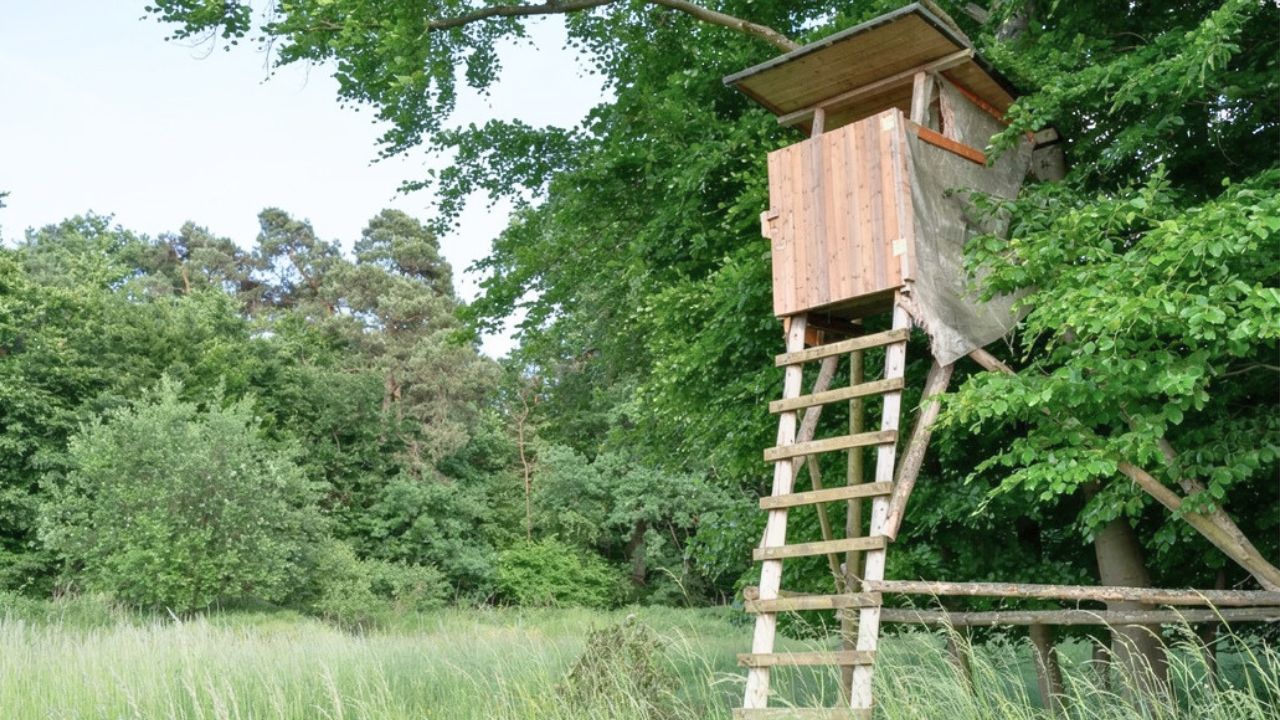
Finding a deer stand on land you hunt will get your attention in a hurry, especially if you know it is not yours and it sure was not there the last time you walked that stretch. Maybe it is strapped to a tree just inside a boundary. Maybe it is tucked back in a spot that tells you the person who hung it knows exactly where the deer move. Maybe it is so bold it almost feels like a message. However it shows up, that kind of discovery puts a hunter in a bad headspace fast because it touches nerves that run deep: access, pressure, trespassing, ownership, and the feeling that somebody has inserted himself into a place you work hard to keep right. The temptation is to react on instinct. A lot of guys want to rip it down, drag it out, throw it in the truck, or sit there waiting on whoever comes back. That kind of thinking is understandable, but it is not always smart. The first thing to do is slow down and get clear on exactly what kind of situation you are standing in, because not every stand on land you hunt means the same thing and not every response will help you.
Make sure the ground and the stand are exactly what you think they are
Before you do anything else, confirm the basics. That sounds obvious, but people get themselves into dumb situations all the time by acting on certainty they have not actually earned. Make sure the stand is on the property you have the right to hunt, not on a line you are estimating from memory or on neighboring ground that feels close enough to be yours. Pull up your map, check your pins, and make sure you know exactly where you are standing. Then think about the stand itself. Is it clearly abandoned, freshly hung, or part of an older setup you somehow missed. Are there screw-in steps, trimming, flagging tape, a shooting lane, or fresh tracks around it. Does it look like a landowner’s old setup, a lease member’s stand, or somebody’s cheap run-and-gun rig hung without permission. These details matter because your response should be grounded in facts, not in adrenaline. If you are wrong about the boundary, wrong about permission, or wrong about who had a right to hang it, you can turn yourself into the problem in a hurry. That is why the first step is not anger. It is clarity.
Treat it like a land and access issue before you treat it like stolen property
A lot of hunters immediately start thinking of the stand as an object they can deal with however they want because it is on ground they hunt. Sometimes that instinct gets people into trouble. Just because a stand is where it should not be does not always mean you should lay hands on it right away. In some places, removing somebody else’s property, even property set there improperly, can muddy the situation if you have not first established who owns the ground and what permission exists. This is especially true on family land, leased property, club ground, or any place where multiple people may believe they have rights that overlap more than they should. The stand may belong to a trespasser, sure, but it may also belong to a relative of the landowner, a former lease member who thinks he still has access, or somebody who got told “go ahead” by a person who never should have granted it. That does not make the stand legitimate, but it changes how you should handle the next step. Think of it first as a land-access problem that needs to be documented and cleaned up properly, not as an excuse to start tossing somebody else’s gear around because you are mad.
Document everything before you move a single strap
Once you know the stand is on your side of the line and it does not belong there, start documenting. Take clear photos of the stand from multiple angles. Get wide shots that show the surrounding trees, lanes, and any nearby landmarks that help place it on the map. Save screenshots of the property line on your hunting app. Note the date, time, and exact location. If there are fresh boot tracks, ATV marks, trimmed limbs, feed, flagging, or anything else that suggests recent use, photograph that too. This is not busywork. It protects you. Documentation gives you something solid if the issue turns into an argument with a landowner, lease manager, game warden, or sheriff’s deputy later. It also keeps the facts from changing once the stand disappears, gets moved, or suddenly becomes a story about how it was “never really on your place.” Too many people skip this step because they are in a hurry to act, and then later all they have is a verbal account and a lot of frustration. A clean record gives you leverage without needing to raise your voice.
Get the landowner or decision-maker involved before you make it personal
If you are hunting land that you do not personally own, the smartest move is usually to contact the landowner, lease holder, or whoever has actual authority over access before you confront anybody. That is not weakness. That is just keeping the chain of responsibility where it belongs. The man who owns the dirt or controls the lease is the one who needs to know that an unauthorized stand is hanging on the property, and he may already have context you do not. Maybe he knows exactly who put it there. Maybe there is an old permission arrangement nobody bothered to explain to you. Maybe he has had trouble with the same trespasser before and wants the matter handled a certain way. If you own the land yourself, then you are that decision-maker, but the same principle still applies: do not rush to make it personal before you have thought through what result you want. Do you want the stand gone quietly. Do you want the person identified. Do you want law enforcement involved if it is repeated trespass. Those are different goals, and the way you handle the stand should line up with the result you actually want instead of the anger you happen to be feeling in that moment.
Do not ambush the situation unless you are ready for everything that comes with that
Some hunters get the idea that the best answer is to leave the stand in place and catch the person using it. Sometimes that works. Sometimes it gets messy in a hurry. If you are going to sit on a problem like that hoping to identify the user, you need to think honestly about what you are prepared for. Are you planning to observe and document, or are you really hoping for a confrontation. Those are not the same thing. A surprise face-to-face on a boundary line with somebody who already felt bold enough to hang a stand where it did not belong can turn ugly fast, especially during season when tempers and entitlement both tend to run high. If the goal is identification, a camera pointed at the approach route may do more good than your truck parked around the bend while you wait to argue. If the goal is removal, then dragging out the tension for days may only give the other person more time to hunt the spot, remove evidence, or create a story about you before you ever make your move. There is a reason calm documentation and controlled contact beat improvised showdowns most of the time. Drama feels satisfying for about ten minutes. Clean facts hold up longer.
Remove it the right way once the authority and facts are on your side
Once it is clear the stand does not belong there and the right person has signed off on action, then removal may be the right answer. If that is the route, do it cleanly. Document it again before touching it. Remove it without damaging your own trees, fences, or equipment. Keep the stand intact if possible rather than wrecking it out of spite. That may not feel as good in the moment, but it prevents the issue from turning into some side argument about destroyed property. In some cases it makes sense to store the stand temporarily in a barn, shop, or other secure place while the issue gets sorted. In other cases, the landowner may want it set by the gate with a clear message that it was removed from unauthorized ground. The point is to handle it in a way that looks responsible if somebody asks later. A man who calmly removed an unauthorized stand from ground he had the right to manage looks very different from a man who tore it down in anger and scattered pieces through the brush. Even when the other side was wrong first, you still want your own conduct to be the part that holds up under daylight.
The bigger issue is usually not the stand — it is the access behind it
A deer stand hanging on your ground is usually a symptom, not the whole problem. The real issue is that somebody felt comfortable enough to enter, scout, pick a tree, trim lanes, and plan to come back. That means access is the bigger story. Ask yourself how he got in, how long he may have been doing it, and what else he may already know about the property. Check gates, fences, corners, common crossing spots, creek bottoms, and easy vehicle approaches. Look at camera coverage and think about where your blind spots are. Fresh signage may be needed. A gate chain that looked good enough last summer may not be good enough now. Boundary paint, posted signs, or a conversation with neighboring landowners may be part of the fix too. A lot of people get so focused on the stand that they miss what the stand is telling them. It is telling them somebody saw an opening, and until that opening gets closed, the problem is not really solved. You are not just dealing with a piece of metal against a tree. You are dealing with a breach in control.
Handling it right now can save you a bigger problem later in the season
When somebody hangs a stand on land you hunt, the right move is usually the one that keeps the facts clean, the authority clear, and the access problem from getting worse. That means verifying the location, documenting everything, involving the landowner or decision-maker, and resisting the urge to turn it into a personal showdown before you know what lane the problem is really in. Once you have clarity, then you can decide whether removal, monitoring, law enforcement, or stronger access control is the best next step. Most of the time, the worst response is the first emotional one that feels good. The better response is the one that protects your rights, preserves your credibility, and closes the door on the next unauthorized stand before it ever gets hung. A lot of hunting headaches start because people wait too long to deal with something small. A strange stand in your woods may look like one object in one tree, but if you ignore it or handle it sloppy, it can become a much bigger mess by the time the season gets rolling.
Like The Avid Outdoorsman’s content? Subscribe to our newsletter so you never miss an article.
Here’s more from us:


