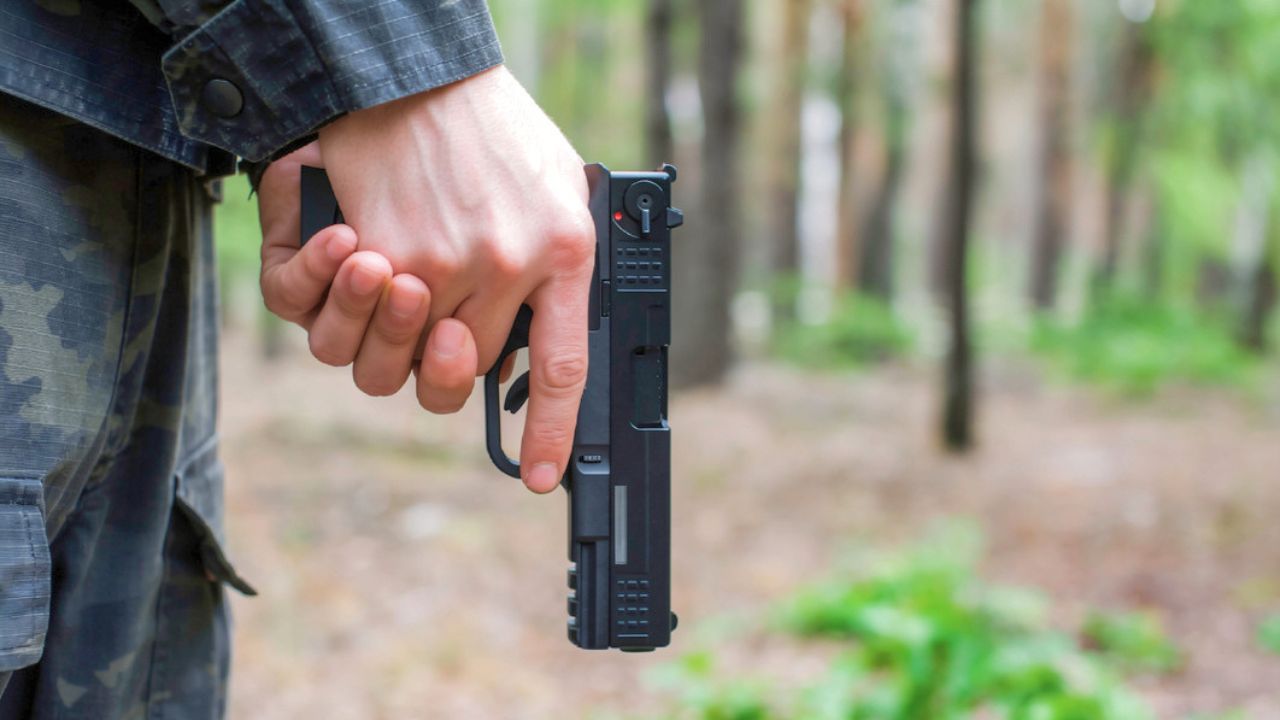
Photo credit: Alexdov/Shutterstock.com
Most property disputes involving guns do not start with somebody brandishing a weapon, making threats, or breaking some obvious law right out in the open. A lot of them start with something much more common than that. A man is carrying legally, he steps onto land he thinks he can be on, or he walks into a situation where permission is fuzzy, emotions are already running hot, and suddenly that sidearm changes the tone of the whole encounter. The mistake is not always the carry itself. A lot of the time, the mistake is assuming that being legally armed automatically makes every other decision around access, confrontation, and boundaries look reasonable too. It does not. Carry law and property law are not the same thing, and people get in trouble when they treat them like they are. You can be perfectly within your rights to carry a handgun and still handle a land issue in a way that turns a simple disagreement into something the other side sees as intimidation, escalation, or trespassing with a gun on your hip. Once that happens, the facts may still matter, but the temperature has already changed, and good luck talking it back down after that.
Legal carry does not clean up a bad decision about where you are standing
A lot of folks get comfortable with the idea that if they are carrying lawfully, then they are already the responsible one in the situation. Sometimes they are. Sometimes they are not. What trips people up is failing to separate the right to carry from the right to be on a certain piece of ground, to cross a gate, to check a fence line, to recover an animal, or to confront somebody face to face over an argument that was already touchy before the firearm entered the picture. A sidearm on your belt does not give you extra standing in a boundary dispute. It does not strengthen shaky permission. It does not make a verbal confrontation sound calmer just because you know you are not planning to touch the gun. The other guy does not live inside your intentions. He sees what he sees. And what he may see is a man stepping onto disputed ground while armed during a tense interaction. That is how a situation that might have stayed in the lane of “whose land is this” suddenly slides into “why did he come over here armed.” The carry may be legal. The access may not be. The approach may be stupid. And once those things get mixed together, the fact that the gun was lawfully carried does not keep the dispute small.
The problem usually starts when somebody decides to go handle it in person
There is a certain kind of bad call that shows up over and over in rural disputes. A man spots something that bothers him on or near a line, gets aggravated, and decides the fastest way to solve it is to walk over there right then and “straighten it out.” Maybe it is a truck parked where it should not be, a stand too close to the boundary, somebody cutting across a corner, a gate left open, or a person on foot where he does not believe that person belongs. So he heads that way, armed like he normally is, telling himself it is no big deal because he always carries and has every right to. That is where legal carry can turn into a property dispute in a hurry. Not because the gun owner has done anything criminal by carrying it, but because he has combined a tense, personal confrontation with a visible weapon and a disputed patch of ground. That combination changes how everything is read. If the other side feels outnumbered, cornered, or pressured, the presence of the firearm becomes part of the story whether the gun owner likes that or not. Then the retelling starts. “He came over armed.” “He walked onto my place with a gun.” “He confronted me while carrying.” Maybe the carrier still thinks the issue is about a fence or a feeder. The other side is already talking about threat, intimidation, and fear.
Intent matters, but perception decides how ugly it gets
Gun owners spend a lot of time thinking about intent because intent feels fair. If you know you were not threatening anybody, then it is easy to assume that should settle things. But in property disputes, perception often decides how fast the situation goes sideways. A holstered pistol may be normal to you and alarming to the man across from you. A calm tone may not matter much if you have walked onto contested ground while armed and he already believes you are there to pressure him. This is especially true when the dispute involves family land, leased hunting ground, livestock, or access routes that people get emotional about in the first place. You may know the gun never left the holster. You may know your voice stayed level. None of that guarantees the other side reads it that way, especially if he is angry, defensive, or looking for a way to flip blame back on you. That is why wise carriers think past legality and into optics. Not soft optics. Not city-people opinions. Real-world optics. What does this look like from ten feet away to somebody who already thinks I am crossing a line. If the answer is that it looks like pressure, then you need to change the way you are handling the interaction before the law gets involved and everybody starts pretending perception was reality all along.
The smarter move is usually distance, documentation, and a cleaner contact point
Most land problems do not improve because one armed man closes distance on another person in the heat of the moment. They improve when somebody slows down and creates a cleaner way to handle it. That might mean backing off the line and making a phone call instead of crossing onto the property. It might mean documenting what you saw with photos, timestamps, maps, or camera footage rather than marching over to argue while emotions are hot. It might mean contacting the landowner instead of confronting a guest, family member, or lease hunter who may not even have the authority to settle anything. And in some cases, it means letting a game warden, sheriff’s deputy, or attorney become the point of contact if the issue is serious enough and direct contact is only going to make it worse. None of that means you are giving up ground. It means you are refusing to hand the other side an easy narrative about an armed confrontation when the facts could have stayed centered on access, trespass, damaged property, or boundary confusion. Carrying a handgun does not mean every problem should be handled with your boots on the line and your temper on a short leash. Sometimes the strongest move is staying where you belong, keeping your side clean, and forcing the dispute to play out in a way that does not let the gun become the headline.
Property disputes get worse when pride starts doing the decision-making
A lot of this comes down to pride, and plenty of outdoorsmen do not like hearing that. But it is true. Carrying can make a man feel settled, capable, and hard to push around, which is fine until that feeling starts steering his judgment. Then he begins believing he ought to go deal with something personally because backing off feels weak or because he thinks his legal status covers the entire encounter. That is exactly how stupid decisions get made by otherwise decent people. The urge to “go handle it” has started more ugly land fights than most folks will ever admit, especially when old grudges, access tension, or hunting pressure are already in the background. Pride tells you to step in closer, talk firmer, and make sure the other guy understands where you stand. Wisdom tells you that once a firearm is present, even lawfully, your margin for error gets smaller, not bigger. A heated word, a bad step over the line, a hand motion read the wrong way, or one phone call from the other side describing the encounter in the worst possible light can buy you a pile of trouble you did not need. Good carriers understand that restraint is not a retreat. It is part of staying in control of the whole picture.
The real mistake is forgetting that two legal things can still make a bad combination
This is what it comes down to in plain language: legal carry and direct property confrontation may each look manageable on their own, but together they can make a bad combination fast. The gun may be lawful. The issue may be legitimate. The way you choose to insert yourself into the dispute may still be the mistake that blows it up. That is the part people need to keep straight. Carry is not the problem by itself. Property disputes are not unusual by themselves. But once you mix a visible firearm with contested ground, unclear permission, or an emotional argument, you are playing with a situation that can be described in a whole lot of damaging ways once law enforcement, neighbors, or a judge start hearing about it later. The smartest armed citizens are not the ones who prove they are willing to walk into every mess. They are the ones who know when an ordinary carry day needs extra caution because the circumstances around it have changed. If the issue is land, gates, stands, feeders, lines, or trespass, handle it in a way that keeps the facts focused on the property and not on the pistol. That one choice will save more headaches than most people realize, because the mistake that turns legal carry into a property dispute is usually not carrying at all. It is deciding to mix that carry with a confrontation that never needed to happen face to face in the first place.
Like The Avid Outdoorsman’s content? Subscribe to our newsletter so you never miss an article.
Here’s more from us: