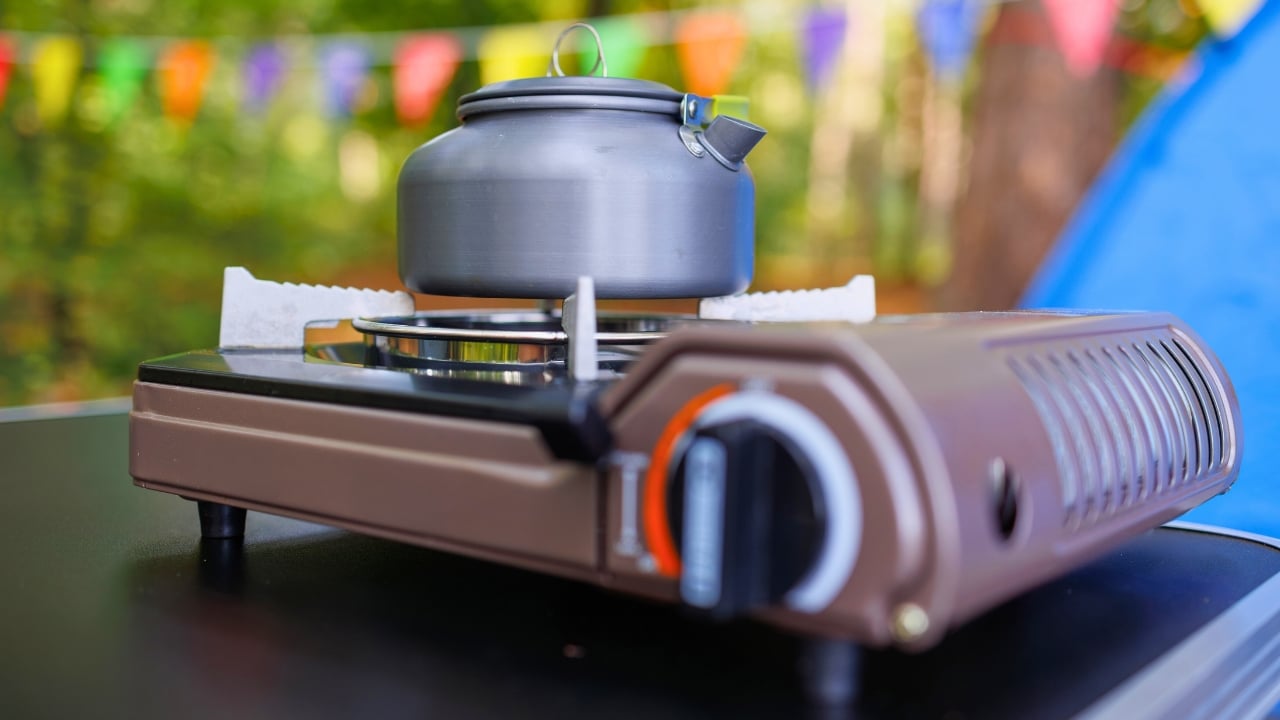
Photo credit: Andriiii/Shutterstock.com
Camp stoves are marketed as simple, almost foolproof tools, yet recall notices keep surfacing after violent explosions that leave campers injured and regulators scrambling. When you read past the legal language, a specific setup mistake appears again and again, turning a routine meal into a pressure bomb. Understanding that pattern, and how your own gear and habits fit into it, is the difference between a safe campsite and a fireball.
The core problem is not that portable stoves are inherently unsafe, but that their design leaves very little margin for error once heat, gas, and metal are confined in a tight space. If you know how these systems are supposed to breathe, how the canister is meant to sit, and why certain accessories quietly defeat the safety engineering, you can spot the red flags that recall notices hint at but rarely spell out.
The recall that exposed a hidden pattern
When you look at the recent recall of Ozark brand camping stoves sold at Walmart, you see more than a one off defect, you see a case study in how a common setup mistake can stay invisible until it injures people. The recall covers Ozark camping stoves that were linked to explosions causing injuries including second degree burns, a serious outcome for a product that is supposed to be safe enough for family trips. The language around the hazard points to gas accumulating where it should not, then igniting suddenly, which is exactly what happens when a canister is not seated correctly or heat is trapped around it.
In a separate report on the same issue, you learn that Walmart Recalls 201,000 Ozark Trail Stoves after an Explosion Hazard Leaves Campers With 16 Injuries And 0 Answers, a blunt description that underscores how long this risk can simmer before anyone connects the dots. The recall notice describes a period during which risk accumulated undetected, which is another way of saying that thousands of people were using the same basic configuration, often in the same flawed way, without realizing that a small misalignment or blocked vent could turn the stove into an explosive device.
How portable gas stoves are supposed to work
To understand why a specific setup error is so dangerous, you need to start with how these stoves are designed to operate when everything is done correctly. A typical portable butane or propane stove relies on a pressurized canister that feeds gas through a regulator and burner, where it mixes with air and burns in a controlled flame. The metal body around the burner is not just cosmetic, it is shaped to direct heat upward and away from the canister, while vents and gaps allow cooler air to flow over the top and sides so the fuel container never overheats.
Regulators and safety valves are calibrated for a narrow range of temperatures and pressures, which is why official guidance tells you to Avoid using the stove in any way that traps heat and to Ensure that there is adequate air flow over the top and sides of the appliance. When that airflow is preserved and the canister is locked into its cradle as intended, the system can handle normal cooking sessions without the pressure inside the canister climbing into the danger zone, which is why millions of meals are cooked safely every year.
The specific setup error: trapping heat around the canister
The recurring mistake that recall notices hint at is deceptively simple, you set up your stove in a way that traps heat around the fuel canister, often by combining a windscreen, oversized pan, or tight enclosure with a compact burner that was never meant to be boxed in. When you do that, the flame still looks normal, but the metal shell around the canister begins to act like an oven, slowly raising the temperature of the fuel until the internal pressure spikes. At that point, a seal can fail, a safety valve can vent violently, or the canister itself can rupture, any of which can produce the kind of explosion described in the Ozark Trail Stoves recall.
Safety regulators warn explicitly that you should Ensure
Why gas plus confinement is a perfect storm
Once you recognize that trapped heat is the trigger, the physics behind these explosions becomes less mysterious and more like a textbook example of what happens when gas and confinement meet. Pressurized fuel is stable only as long as its container stays within a safe temperature range, because heat makes the gas expand and raises the internal pressure, pushing every seal and weld closer to failure. If the canister is wedged into a tight compartment or pressed against a hot metal surface, the heat has nowhere to go, and the pressure can climb faster than the safety mechanisms were built to handle.
Legal analyses of gas incidents describe this pattern in broader terms, noting that one of the top causes of gas explosions is Improper use of a gas furnace, stove, or appliance, including leaking due to hoses or fittings that are not installed correctly or checked for leaks. In the camping context, that improper use often looks like forcing a canister into place, using an adapter that changes the angle of the connection, or running the stove in a partially enclosed space to shield it from wind, all of which increase the chance that gas will escape into a confined area and ignite in a sudden, explosive burn instead of a controlled flame.
The role of canister choice and orientation
Even if you keep the stove well ventilated, the way you choose and orient your canister can quietly set you up for trouble. Many compact stoves are engineered around a specific size and shape of butane canister, with a locator notch and latch that ensure the valve lines up perfectly with the burner assembly. If you substitute a different style of canister, use an off label adapter, or ignore the alignment marks, you can create a partial seal that leaks gas into the stove body, where it can pool until a spark or hot surface sets it off.
Experienced users and safety educators emphasize that the canisters you use with these stoves are not interchangeable toys, a point driven home in a widely viewed video titled Your Portable Butane Stove CAN Explode! In that demonstration, the presenter stresses that there is something very important about the canisters you will use with these stoves, because the wrong fit or orientation can defeat the safety design and turn a routine ignition into a blast. When you combine a misaligned canister with trapped heat around the stove body, you are stacking two failure modes on top of each other, which is exactly the kind of scenario that shows up in post incident investigations.
How accessories and “upgrades” create unintended hazards
Modern camping culture encourages you to accessorize, to add windscreens, griddles, and table systems that promise gourmet results far from home, but those upgrades can quietly recreate the conditions that regulators warn against. A rigid windscreen wrapped tightly around a single burner, a massive cast iron pan that overhangs the stove body, or a custom table cutout that hugs the metal case can all block the airflow that is supposed to cool the canister compartment. The flame may look steady and efficient, yet the temperature inside the housing can climb until the fuel container is far hotter than it was ever meant to be.
Retail listings for popular camping stoves and accessories rarely spell out these interactions, instead focusing on features and price, which is why it is worth scrutinizing the product details and manuals before you mix and match gear. When you treat every add on as part of a single system that must still allow air to flow freely over the top and sides of the stove, you are far less likely to build the kind of improvised enclosure that recall notices describe only after something has gone badly wrong.
What recall language is really telling you to change
When you read a recall notice closely, the legal phrasing about explosion hazards and injuries is usually followed by a set of instructions that point directly at the behavior you need to change. In the case of the Ozark Trail Stoves, the recall not only lists the number of affected units and the 16 injuries, it also tells you to stop using the product immediately and to follow specific steps for repair, replacement, or refund. Those steps are not just about liability, they are a tacit admission that the combination of design and typical user setup has created a risk that cannot be managed by warnings alone.
Regulators also remind you that Consumers can view full recall details and check for affected model numbers at official databases such as www.cpsc.gov, which is essential if you want to know whether your specific stove is implicated. When you see repeated references to explosion hazards tied to gas accumulation or overheating canisters, you are effectively being told that your current habits, like running the stove in a tight space or pairing it with the wrong canister, are part of the problem and must change even if your particular unit has not yet been recalled.
Practical steps to keep your camp kitchen from blowing up
Translating all of this into action at your campsite starts with a simple rule, never operate a gas stove in a way that confines heat or gas where it should not be. That means giving the stove plenty of open space on all sides, avoiding tight windshields that wrap around the body, and refusing to run it inside tents, vehicles, or enclosed shelters where both heat and leaked gas can build up. You should always lock the canister into place exactly as the manufacturer describes, double check that the valve area is clean and undamaged, and listen and smell for leaks before you strike a spark.
Beyond setup, you can reduce risk by treating every recall or safety bulletin as a prompt to audit your own gear and habits, not just the specific model named in the notice. When you see language about explosion hazards, overheating canisters, or gas accumulation, assume that the underlying physics applies to your stove as well, and adjust your routine accordingly, from the way you pack and store canisters to how long you run the burner under a large pot. If you are unsure whether your model has been flagged, take a few minutes to search official recall databases and manufacturer sites, using the same diligence you would apply to checking a child’s car seat or a home appliance, because the stakes around a pressurized flame are just as real.
Like The Avid Outdoorsman’s content? Be sure to follow us.
Here’s more from us: