Photo credit: SPN Firearms/YouTube
A lot of gun upgrades sound smart when you first hear about them. A lighter trigger promises better accuracy. A compensator promises flatter shooting. New internals promise smoother performance. Extended controls promise faster handling. None of those ideas are automatically bad, but a lot of shooters learn the hard way that improving one part of a pistol or rifle can make the whole setup less dependable, less balanced, or less useful for the job it was meant to do.
That usually happens when upgrades are chosen for theory instead of real need. A gun that already runs well can become less reliable when parts start getting swapped without a clear reason or enough testing afterward. Sometimes the issue is poor installation. Sometimes it is tolerance stacking. Sometimes it is simply turning a practical working gun into a project. The longer you spend around experienced shooters, the more you notice that many of them prefer a mostly stock firearm that works every time over a customized one that keeps asking for attention.
Ultra-light trigger kits
A light trigger sounds like an easy improvement because it seems tied directly to better accuracy. On a range gun or competition setup, that can absolutely be true when the work is done right. The trouble starts when shooters install ultra-light trigger kits in firearms meant for carry, hunting, or general hard use without thinking through the tradeoffs. A trigger can become so light or so altered in feel that it stops working in harmony with the role of the gun.
That creates problems fast. Reliability can suffer if springs get too light, and practical handling can suffer if the trigger becomes too easy to outrun or too unforgiving under stress. A carry gun or field rifle does not need a trigger that feels like a benchrest toy. It needs one that is clean, predictable, and dependable when your hands are cold, tired, or moving fast. Chasing the lightest pull often solves the wrong problem.
Cheap aftermarket magazines
Aftermarket magazines are one of the most common ways shooters accidentally create reliability problems while trying to save money or gain capacity. On paper, the idea is easy to understand. You get more mags for less money, maybe a few extra rounds, and the whole setup looks like a bargain. The problem is that magazines are often the heart of whether a semi-auto gun runs correctly, and quality control matters a lot more than people want to admit.
A cheap mag can introduce failures that get blamed on the gun, the ammo, or even the shooter. Feeding issues, inconsistent lockback, weak springs, and poor fit all turn a dependable pistol into something suddenly “mysterious.” That is why experienced shooters usually get picky fast about magazines. Saving a few dollars is not worth much if it turns a proven firearm into a range headache or a carry gun you no longer trust.
Match barrels in carry pistols
A match barrel sounds like a clear improvement because more accuracy always sounds useful. In some guns, for some purposes, it is. But a lot of shooters install match barrels into carry pistols that were already accurate enough for defensive use and then act surprised when reliability becomes less forgiving. Tightening tolerances may help on paper, yet it can also make the gun less tolerant of dirt, ammunition variation, or less-than-perfect conditions.
That matters because most carry pistols do not need target-grade precision nearly as much as they need boring consistency. If the original barrel already let you make realistic hits, a replacement that adds little practical accuracy while introducing occasional malfunctions is not really an upgrade. Many guns leave the factory with a balance between accuracy and reliability that makes sense for real-world use. Chasing tighter groups can upset that balance quicker than people expect.
Compensators on already small carry guns
Compensators look appealing because flatter shooting is easy to sell. A smaller carry gun that behaves more like a larger pistol sounds like a win, especially to shooters frustrated by snappy recoil. Sometimes comps do help. The problem is that adding one to a compact carry pistol can create new tradeoffs in reliability, concealment, holster fit, and ammunition sensitivity that many buyers never fully account for when they order the part.
A carry gun is not only about recoil control. It is also about simplicity, trust, and living with the setup every day. Once a compensator enters the picture, you may need recoil spring changes, more testing, different ammo, and new carry gear. Suddenly the “easy fix” becomes a system that asks for more maintenance and more patience. That does not mean compensated carry guns are useless. It means many shooters add one before they have solved the fundamentals the gun really needed first.
Reduced-power recoil springs
Reduced-power recoil springs often get installed because shooters want softer cycling, easier slide manipulation, or compatibility with certain loads. In a controlled setup, that can make sense. In a real working gun, though, changing recoil spring weight without understanding the full operating system can cause more trouble than expected. A semi-auto pistol is built around timing, and once you change spring behavior, other parts of the cycle can start behaving differently too.
That can show up as failures to return to battery, erratic ejection, or a gun that suddenly becomes far more sensitive to ammo choice than it used to be. Shooters sometimes go down this road because they are trying to fix a symptom instead of the actual cause. The original spring was usually chosen for a reason. If the gun ran fine before, changing it without a strong purpose and enough testing is one of the fastest ways to create reliability questions where there were none.
Oversized optics on carry pistols
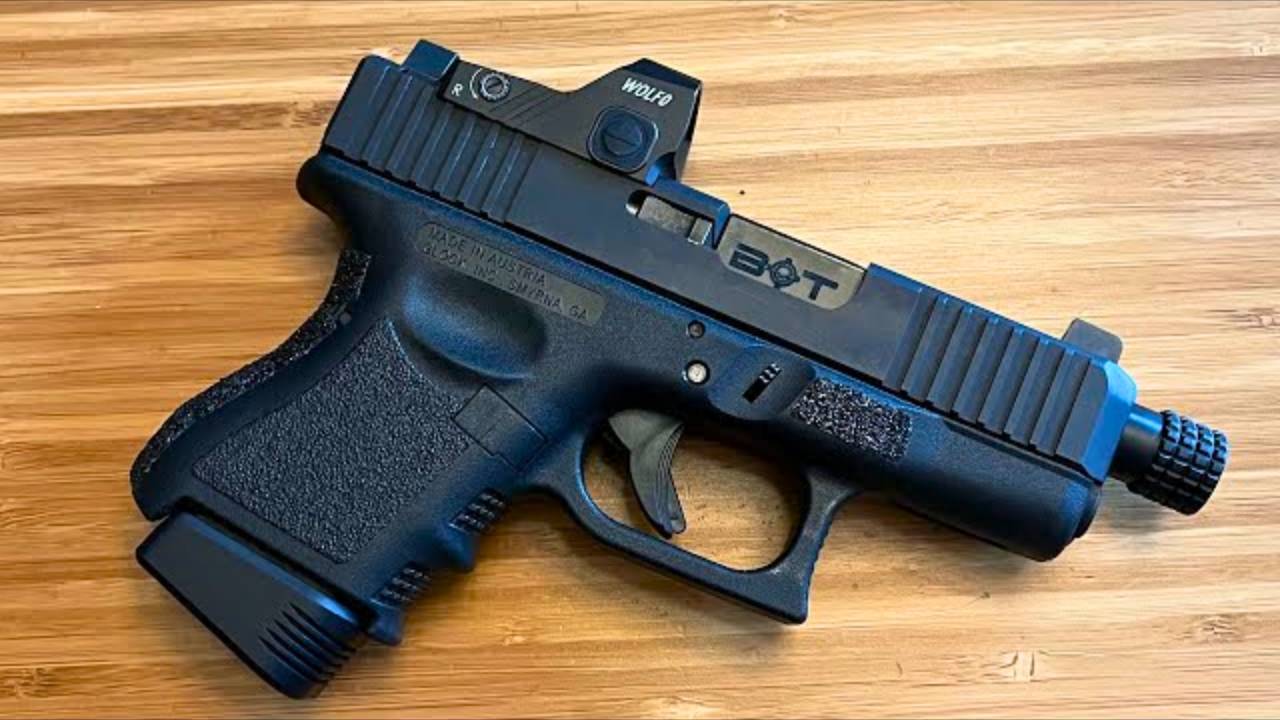
Red dots can absolutely be worthwhile, but bigger is not always better on a carry pistol. A large window sounds great in theory because it seems easier to track and faster to use. In practice, oversized optics can make the gun bulkier, harder to conceal, and more awkward to carry than the shooter expected. They can also change the balance of the slide enough that the whole setup feels different during actual daily use.
That is where the problem shows itself. A carry pistol has to live on the belt, not only impress at the range. If the optic makes concealment harder, prints more, or turns the gun into something the owner leaves at home more often, the upgrade has not really improved the package. A dot should support the role of the gun, not fight it. Many shooters solve the wrong problem by making the pistol bigger instead of making their practice better.
Skeletonized internal parts
Skeletonized internal parts get sold as modern, high-performance improvements that reduce weight and speed things up. Sometimes they also reduce durability or change the feel of a gun in ways the shooter did not need. A lot of these parts look impressive in product photos, but appearance and long-term usefulness are not the same thing. In working guns, especially, heavily cut or lightened internals can introduce a level of fragility or inconsistency that factory parts avoided.
The issue is not that every lightweight part is bad. The issue is that many shooters cannot clearly explain what real problem the part is solving. If the answer is mostly aesthetics or the vague idea that “lighter must be better,” that should be a warning sign. Internal parts that were designed around reliability often end up replaced by parts designed around marketing. That is usually when dependable guns start becoming interesting projects instead.
Folding or highly adjustable stocks on hunting rifles
Highly adjustable stocks can seem like a big improvement because customization sounds useful. Length of pull, comb height, and folding capability all have legitimate value in the right context. But on a plain hunting rifle, these upgrades can sometimes add weight, complexity, and bulk without giving back much practical advantage. A rifle that used to carry cleanly and shoulder naturally can start feeling overbuilt for what the hunt actually requires.
That matters more in the field than on a spec sheet. More moving parts mean more places for looseness, noise, and small annoyances to show up. A folding stock might sound clever until you spend a full day carrying the rifle and realize the gun no longer feels lively or balanced. Hunters often benefit more from a stock that fits well and stays simple than one loaded with features borrowed from roles the rifle is never going to fill.
Muzzle brakes on rifles that do not need them
A muzzle brake can be a very smart upgrade on a heavy-recoiling rifle. The problem is that many shooters add them to rifles that were already manageable. On paper, less recoil always sounds better. In practice, the blast, noise, and general unpleasantness can become a bigger issue than the recoil ever was. A rifle that used to be easy to live with can suddenly feel obnoxious to shoot without ear protection at the ready, especially in hunting conditions.
That trade often becomes obvious only after the brake is installed. The shooter may gain a little comfort at the shoulder while giving up a lot in terms of field manners. Partners nearby feel it. Confined spaces feel worse. The whole rifle becomes louder and sharper without necessarily becoming more useful for the job. Many hunters would be better served by better stock fit, a suppressor where legal, or simply more practice instead of a brake they never truly needed.
Extended controls that snag or get bumped
Extended slide stops, magazine releases, and charging handles all make sense in theory because they promise faster manipulation and easier access. The problem is that bigger controls do not only help deliberate use. They can also get bumped accidentally, snag on gear, or change the way the gun behaves under recoil and during carry. What felt like a smart speed upgrade at the bench can become an annoyance once holsters, slings, clothing, and movement all enter the picture.
This is especially common on carry pistols and practical rifles that get used in close contact with gear. A larger control can rub, print, activate unintentionally, or simply create one more thing to think about on a gun that worked perfectly well before. Controls need to be usable, but they also need to stay out of the way until needed. A lot of upgrades forget that second part, which is how convenience on paper turns into irritation in real life.
Home trigger jobs with mixed parts
The home trigger job has probably caused more unnecessary gun problems than people care to admit. A shooter changes springs, polishes surfaces, swaps connectors, and mixes parts from several manufacturers hoping to create a smoother or lighter pull. Sometimes it works. A lot of times it creates a trigger that feels strange, unreliable, or inconsistent, especially once the gun gets dirty or the round count starts climbing.
The danger here is that small changes can stack in ways that are hard to predict without enough experience. One altered part may be fine. Several altered parts working together can create light strikes, poor reset, or a gun that no longer behaves like it did when it was trustworthy. A good trigger is valuable, but reliability matters more. That is why so many experienced shooters would rather leave a decent factory trigger alone than turn a dependable firearm into a troubleshooting project.
Like The Avid Outdoorsman’s content? Subscribe to our newsletter so you never miss an article.
Here’s more from us: