Photo credit: The Blind Sniper/YouTube
There’s a time and place for spending real money on glass. Precision rigs built for long-range work, serious varmint setups, and backcountry rifles all benefit from high-end optics.
But not every rifle needs a scope that costs more than the gun itself—especially when the gun in question doesn’t offer enough consistency or capability to justify it. If your rifle can’t hold zero, sprays groups across the paper, or wanders as the barrel warms up, no amount of optic is going to clean that up.
In some cases, these guns are meant for fast, close shots where glass slows you down. Other times, the action or barrel simply isn’t accurate enough to match the optic’s capability.
You’ve probably seen a few of these rifles—decked out with a $1,200 scope and still missing by a foot. Here are some of the biggest offenders that make high-end optics feel like a waste of time and money.
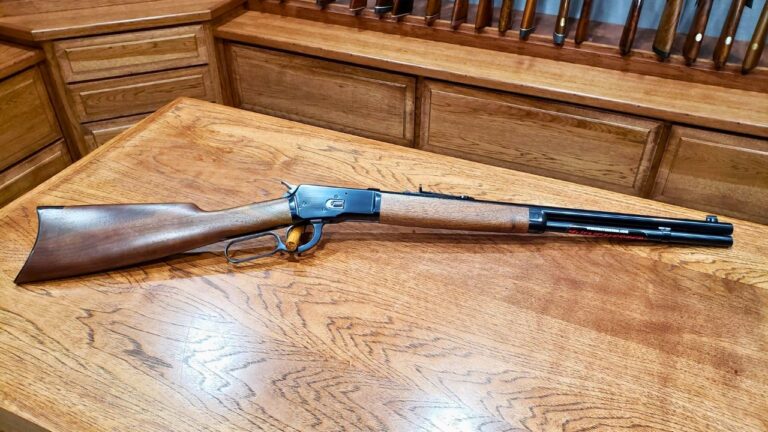
Marlin 1895 Guide Gun (Pre-Ruger)
A big lever-action like the old Remington-era 1895 Guide Gun isn’t meant for laser precision. Between the heavy .45-70 recoil, short sight radius, and inconsistent barrels during Remington’s low point, you’d be lucky to shoot a 3-inch group at 100 yards. That’s not a knock against the platform—it’s built to drop a bear inside 50 yards, not win a match.
Mounting a $1,500 scope on one of these doesn’t make a whole lot of sense. You’re better off with a rugged, low-magnification scope or even a ghost ring setup. At the distances this rifle was made for, speed and reliability matter more than tight groups. A good optic won’t fix a wandering zero or soft factory load either.
Century Arms C308

The Century C308, based loosely on the HK91/G3 platform, comes with enough quirks to make precision work a headache. The stamped receiver, rough trigger, and inconsistent build quality mean your groups might move from one range trip to the next. Even with a rock-solid mount, this gun rarely lives up to the promise of a full-powered .308.
You’ll occasionally see folks slap high-end scopes on these rifles thinking they’ve got a budget sniper. But accuracy is usually mediocre, and the heavy recoil and odd ergos don’t help. Save your optic money and set realistic expectations—this one’s better suited for plinking than punching tight groups.
Ruger Mini-14 (Older Models)
The older Mini-14s were notorious for wandering accuracy. The lightweight barrel would shift point of impact once it heated up, and groups would open fast. While Ruger improved the design in later years, the earlier models were best used at 100 yards and under with iron sights.
Mounting a fancy optic on one of those older Minis was often an act of hope. The scope couldn’t compensate for the loose tolerances or inconsistent accuracy. Even with a quality optic, you were still fighting against the rifle’s own limitations. If you’re running an old Ranch Rifle, keep the glass modest or stick to irons.
AK-47 Variants (WASR, PSAK-47, etc.)

You can dress up an AK all you want, but most of them were never built for precision. These rifles excel in reliability and ruggedness, not tight groups. The loose tolerances and short sight radius keep them minute-of-man accurate, and most shooters aren’t using them past 150 yards anyway.
Drop a $1,000 optic on a WASR or PSAK-47 and all you’ll really do is magnify the flaws. Even with a good mount, the accuracy just isn’t there to take full advantage of quality glass. Stick to red dots or basic LPVOs that match the platform’s strengths—fast target acquisition and close-quarters effectiveness.
Remington 742 Woodsmaster
The 742 might’ve filled deer camps for decades, but it was never a tack driver. With its questionable bolt lockup and tendency to jam when dirty, it didn’t offer the kind of performance that justifies a high-end optic. Accuracy is decent at best, and repeatability is often hit or miss.
A lot of these rifles had scopes thrown on them back in the day out of tradition more than necessity. If you’re still hunting with a 742, a lightweight, budget-friendly scope will match the rifle’s capabilities just fine. Anything beyond that is throwing money at a platform that was never meant to deliver precision.
Winchester 94 Angle-Eject

The Winchester 94 AE was designed to finally allow for top-mounted optics, but that didn’t suddenly make it a long-range gun. It still used the same action and barrels as earlier models, and with factory .30-30 ammo, you’re still looking at 150-yard max shots. Even then, group sizes aren’t usually impressive.
Some folks see “angle eject” and think they should drop a 3-15x scope on it and try for 300 yards. That’s wasted effort. The rifle, caliber, and ergonomics all scream short range. A compact 1-4x scope or ghost ring sights are a better match for the gun’s real-world use.
Remington 770
The Remington 770 was meant to be a budget bolt gun, and it shows. Rough bolt throw, mediocre triggers, and plastic bedding all work against consistent performance. Even when chambered in proven calibers like .30-06 or .270, it’s hard to keep this rifle grouping tight past 100 yards.
Slapping a premium scope on a 770 won’t make it a shooter. You’re still dealing with a rough platform that fights you every step of the way. If you own one, throw on a reliable budget optic, keep your expectations realistic, and start saving for an upgrade—it’ll serve you better than top-tier glass ever will.
Like The Avid Outdoorsman’s content? Be sure to follow us.
Here’s more from us:
The worst deer rifles money can buy
Sidearms That Belong in the Safe — Not Your Belt
*This article was developed with AI-powered tools and has been carefully reviewed by our editors.