Photo credit: Shatterthewicked/YouTube
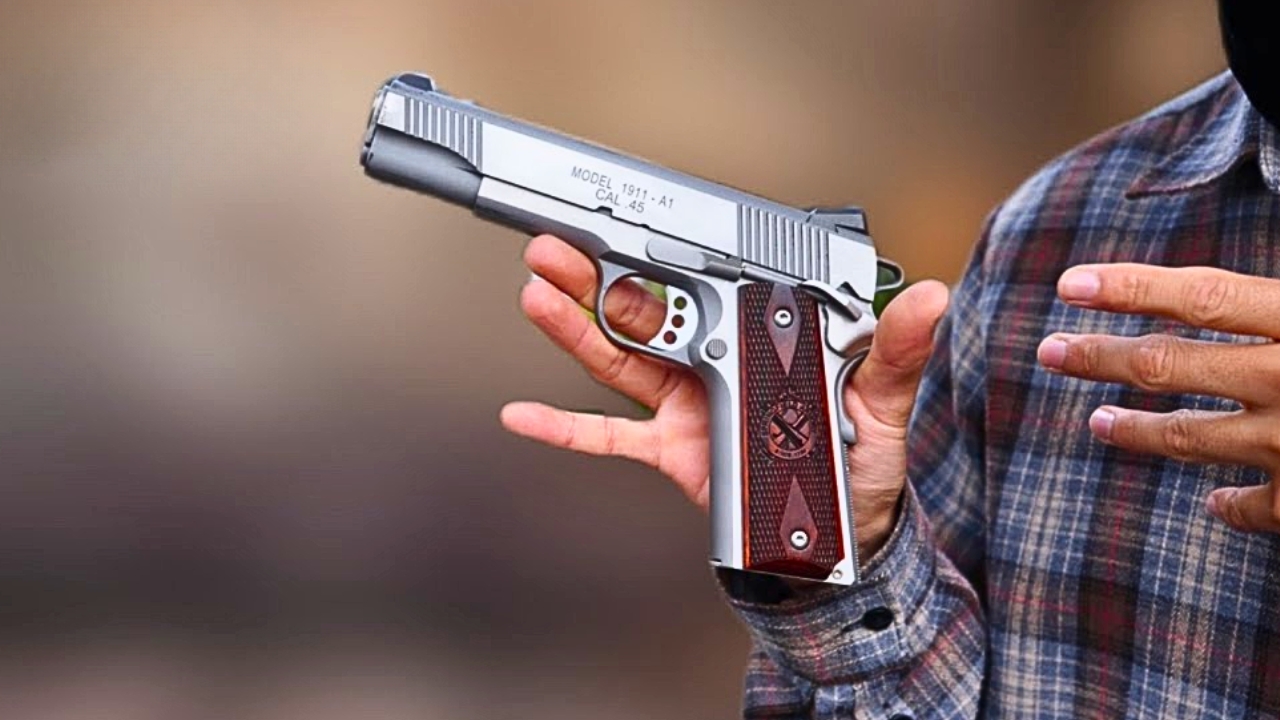
There’s a reason the 1911 hasn’t faded away after more than a century. When the plastic-framed striker guns started taking over police and civilian carry circles, folks figured the old steel single-action was heading for the shelf. But if you’ve spent time behind both, you know better. The 1911 still holds its ground, and in more ways than one. Sure, it’s heavier. Sure, it’s lower capacity. But that doesn’t mean it’s outdated. Not even close. For those who actually shoot their handguns—who value feel, control, and predictable performance—the 1911 can still beat most polymer pistols where it matters most. And that’s not nostalgia talking. It’s experience.
The trigger gives you an edge

You won’t find many polymer pistols with a factory trigger that breaks like a well-set 1911. That crisp, short pull followed by a clean break gives you better control when it matters. Whether you’re aiming for precision or managing fast follow-ups, the 1911’s single-action trigger helps you get there.
You can train around mushy striker-fired triggers, but you’ll always feel the difference when you come back to a 1911. It encourages cleaner shooting, and you’ll likely shoot better with it. For shooters who actually spend time on the range, that makes a real difference—and not just on paper.
Steel frames absorb recoil better
Polymer pistols save weight, but they don’t do you any favors when it comes to recoil. A steel-framed 1911 soaks up more energy with every shot. That means less muzzle rise, more manageable recoil, and a smoother shooting experience overall—even in bigger calibers.
If you’re running hot defensive loads or pushing .45 ACP, the extra weight isn’t a burden—it’s a benefit. You’ll feel less snap in the wrist, and quicker sight recovery shot to shot. For those who prioritize control over carrying ounces, that matters more than it gets credit for.
The grip angle points naturally

Some folks argue grip angle is preference. That’s fair. But many shooters who train consistently find that the 1911’s angle lines up better when they come out of the holster. It points more naturally for instinctive shooting, and helps some folks find their front sight faster.
That’s not to say polymer pistols don’t point well. But the 1911 has a reputation for feeling like an extension of your hand. It settles into the palm without effort. That kind of repeatable indexing is something you start to appreciate more as your experience grows.
Slim frames conceal surprisingly well
People look at the full-size 1911 and think it’s too big for concealed carry. But slide length isn’t the challenge—grip width is. And here’s where the 1911 shines. That single-stack mag and narrow frame tuck in close to the body and ride comfortably all day, even under light layers.
Plenty of folks carry commander-length or even full-size 1911s with no issue. You’ll need a good holster and belt setup, sure—but that’s true with anything. And once it’s set up right, the 1911 doesn’t feel as heavy or bulky as some polymer double-stack guns out there.
Manual safety gives intentional control

Some folks scoff at external safeties. They prefer a clean draw and press—no extra steps. But plenty of experienced shooters appreciate the 1911’s thumb safety for what it is: one more layer of control that doesn’t slow you down once you’ve trained with it.
It’s easy to disengage on the draw, and even easier to re-engage before holstering. That kind of manual control gives peace of mind, especially in real-world handling where accidental contact or re-holstering errors can happen. For some, it’s an added sense of confidence—not a crutch.
Aftermarket support is unmatched
You can do almost anything to a 1911. Swap triggers, upgrade internals, tweak fit, adjust grip panels—you name it. Whether you’re building a tuned range toy, a tuned carry pistol, or restoring an old classic, the 1911 platform has the support to take you there.
Polymer pistols are catching up in some areas, but the 1911 world is deep and well-established. Whether you’re a DIY tinkerer or leaning on a trusted gunsmith, the options available give you more flexibility than most plastic pistols on the shelf. You can make it truly yours.
It teaches you to shoot better

Spend time behind a 1911, and you start paying attention to details that matter. You get a feel for consistent grip, trigger control, sight picture, and reset. You become more deliberate. And when you transition back to polymer pistols, you’ll shoot them better, too.
It’s not magic. It’s mechanics and repetition. The 1911 encourages good habits because it rewards them. It doesn’t mask bad form, and that’s a good thing for serious shooters. If you want to improve your fundamentals, few handguns make a better training partner than a good 1911.
Like The Avid Outdoorsman’s content? Be sure to follow us.
Here’s more from us:
The worst deer rifles money can buy
Sidearms That Belong in the Safe — Not Your Belt
*This article was developed with AI-powered tools and has been carefully reviewed by our editors.