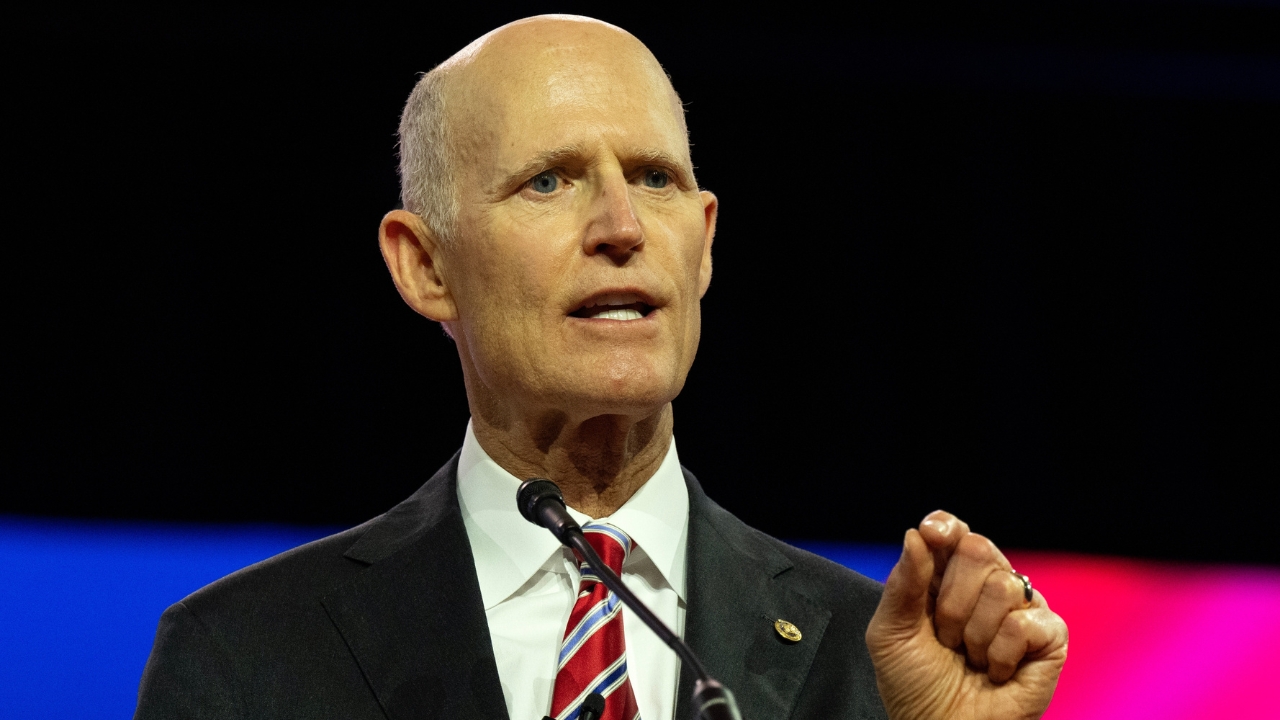
Photo credit: Consolidated News Photos/Shutterstock.com
Sen. Rick Scott is catching heat online after suggesting that Americans think about what would happen if they saved $500 every month from age 18 to 65. In a post on X highlighted by Inquisitr, Scott asked followers how much money someone would have by retirement if they invested that amount monthly and earned returns in line with the S&P 500’s long-term average. The idea may have been meant as a lesson in compound growth, but the reaction quickly turned into a debate over how realistic that advice sounds in the current economy.
The backlash centered less on the math and more on the assumption behind it. Inquisitr said many online critics argued that most Americans, especially younger workers, do not have an extra $500 sitting around every month to invest for decades. The article quoted social media users questioning whether Scott understands what everyday budgets actually look like for people dealing with rent, groceries, child care, car payments, and other basic costs.
That is why the post struck such a nerve. Advising people to save more is one thing, but telling them to set aside $6,000 a year can sound disconnected when a lot of households are already stretched thin. The criticism picked up even more because Scott is a wealthy longtime politician, which made the suggestion easier for opponents to frame as another example of a high-level official giving financial advice that feels impossible for the average worker to follow. This last sentence is an inference based on the public reaction quoted in coverage.
The timing also matters. Scott has been promoting a broader financial message tied to homeownership and long-term saving. Earlier this month, he introduced the American Dream Accounts Act, a proposal that would create tax-advantaged savings accounts for first-time homebuyers, with annual contribution limits of up to $7,500 for younger savers and $10,000 for people 35 and older. That means the $500-a-month discussion did not come out of nowhere. It fits into a wider argument Scott has been making about saving, investing, and building wealth over time.
Still, critics say that kind of message can miss the real obstacle. For a lot of Americans, the problem is not that they do not understand the value of saving. It is that they do not have enough left after bills to save at that level in the first place. That is the gap this story taps into: the distance between theoretical personal-finance advice and the day-to-day reality many families say they are living right now. This is an inference drawn from the criticism quoted in the coverage.