Photo credit: HK USA
A pistol can be accurate, reliable, and proven… and still feel wrong the second you press it out. That’s the piece people forget. “Points naturally” isn’t marketing fluff—it’s grip angle, bore height, trigger reach, and how the backstrap fills your hand so the sights land where your brain expects them to be. When a handgun fits you, the front sight shows up without you hunting for it. Your wrists stay neutral. The gun tracks straight in recoil, and you’re not fighting the muzzle to get back on target.
The best part is you know it fast. The first grab, the first press-out, the first couple presentations from low ready—some pistols just line up like they were built for your hands. Here are 15 that tend to do that for a lot of shooters.
SIG Sauer P365

The P365 is one of the rare micro-compacts that doesn’t feel like you’re trying to point a bar of soap. The grip shape and beavertail area encourage a consistent high hold, and the sights tend to appear right where you want them when you punch out.
It also helps that the gun doesn’t force your wrist into a weird angle. Even if you’re coming from full-size pistols, the P365 usually feels familiar fast. For a carry gun, that matters, because you’re not always going to have time to “build” the perfect grip under stress. When a pistol naturally indexes the same way every time you grab it, your first shot gets easier. The P365 tends to do that for a lot of hands.
SIG Sauer P320 Compact

The P320 Compact has a grip that feels straightforward and neutral, which is a big reason it points so naturally for many shooters. When you drive it out, the sights tend to land in your eye line without extra wrist correction or micro-adjustments.
A lot of pistols feel good at rest and then get awkward during presentation. The P320 usually stays consistent. The trigger reach is reasonable, and the grip shape gives you a repeatable hand position that doesn’t shift when you’re moving fast. If you shoot a lot, you’ll also appreciate that it doesn’t make you “search” for the dot or the front sight the way some higher-bore guns can. It’s a very honest, intuitive pistol to point and run.
Smith & Wesson M&P9 (M2.0)

The M&P9 is a classic example of a gun that meets your hands halfway. The grip angle feels natural, and the frame shape lets you lock in without forcing your wrist into a position that feels off. When you present it, the sights usually show up quickly.
The M2.0 texture and ergonomics also help with consistency. A pistol that points well once is nice. A pistol that points well every single time you grab it—sweaty hands, cold hands, gloves, whatever—is what you actually want. The M&P tends to give you that repeatable index. It’s one of the reasons you see so many people shoot them well without a long “learning curve.” It feels like an extension of your hands, not a foreign object.
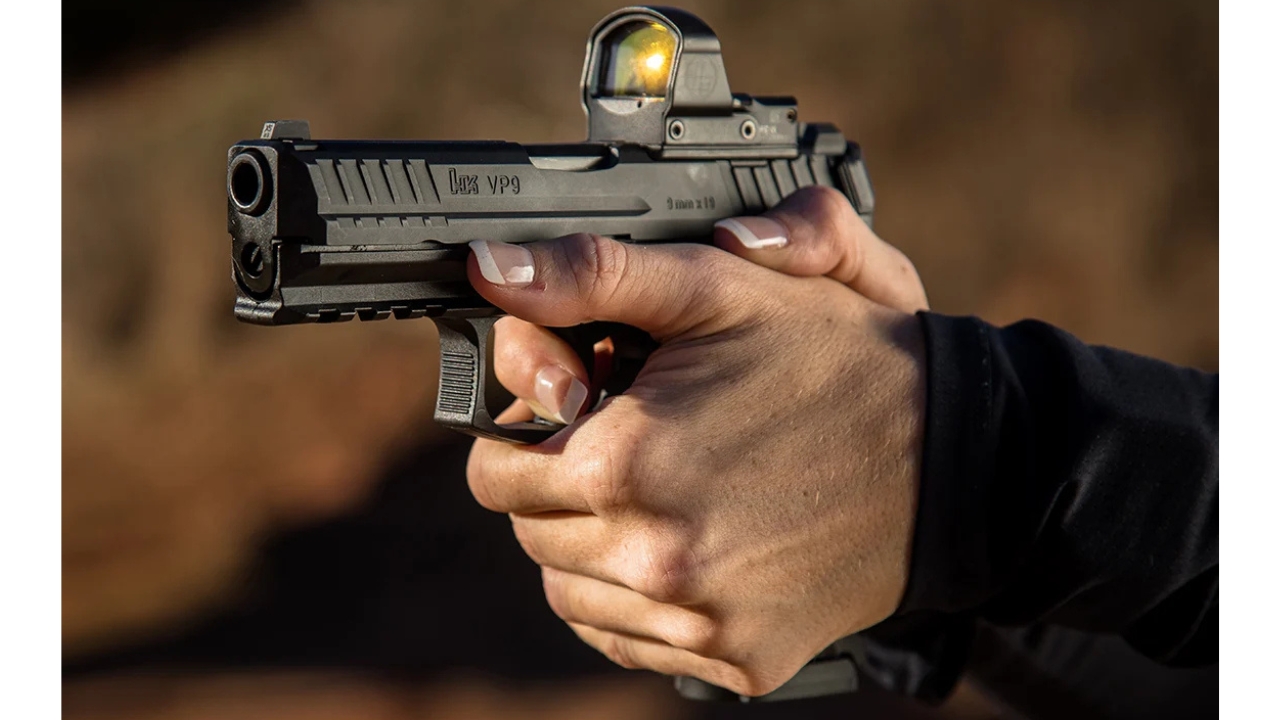
Heckler & Koch VP9

The VP9 is one of those pistols that makes people say, “Oh… that’s easy,” the first time they press out. The grip is shaped in a way that naturally guides your hand into a consistent, high hold, and the gun tends to line up without you forcing it.
HK did a good job with the ergonomics here, especially for shooters who don’t have massive hands. The VP9 sits comfortably and points like a duty pistol should. When you start doing quick presentations, the sights appear with less hunting, and the gun tracks in a straight line when you’re transitioning between targets. If you’re the kind of shooter who values feel as much as function, the VP9 has a way of making you look smoother than you feel.
Heckler & Koch P30

The P30 is famous for its ergonomics for a reason. The grip shape is one of the most “hand-friendly” designs out there, and it tends to point naturally even for shooters who struggle to find comfort on other pistols. When you grab it and press out, it feels like it wants to align.
That matters because presentation is where people waste time. If you have to roll your wrists or adjust your grip to find the sights, you’re behind. The P30 helps you skip that. It also stays consistent when you’re moving fast, which is where natural pointability becomes more than a comfort issue—it becomes a performance issue. If your hands get along with DA/SA, the P30 can feel almost unfair in how easy it is to index.
Walther PDP Compact

The PDP Compact points naturally for a lot of shooters because the grip and frame geometry encourage a high, locked-in hold without you thinking about it. When you present it, the sight picture tends to appear quickly, and the gun doesn’t feel like it’s fighting your wrists.
The PDP also shines when you speed up. A pistol can feel “natural” slow and then get weird once you start pushing tempo. The PDP tends to stay predictable, and that helps your draw-to-first-shot time and your transitions. It’s also a pistol that makes you want to practice, because it feels cooperative instead of picky. If you’ve ever picked up a gun and immediately felt like you could run a drill clean, the PDP Compact gives that vibe to a lot of people.
CZ P-10 C
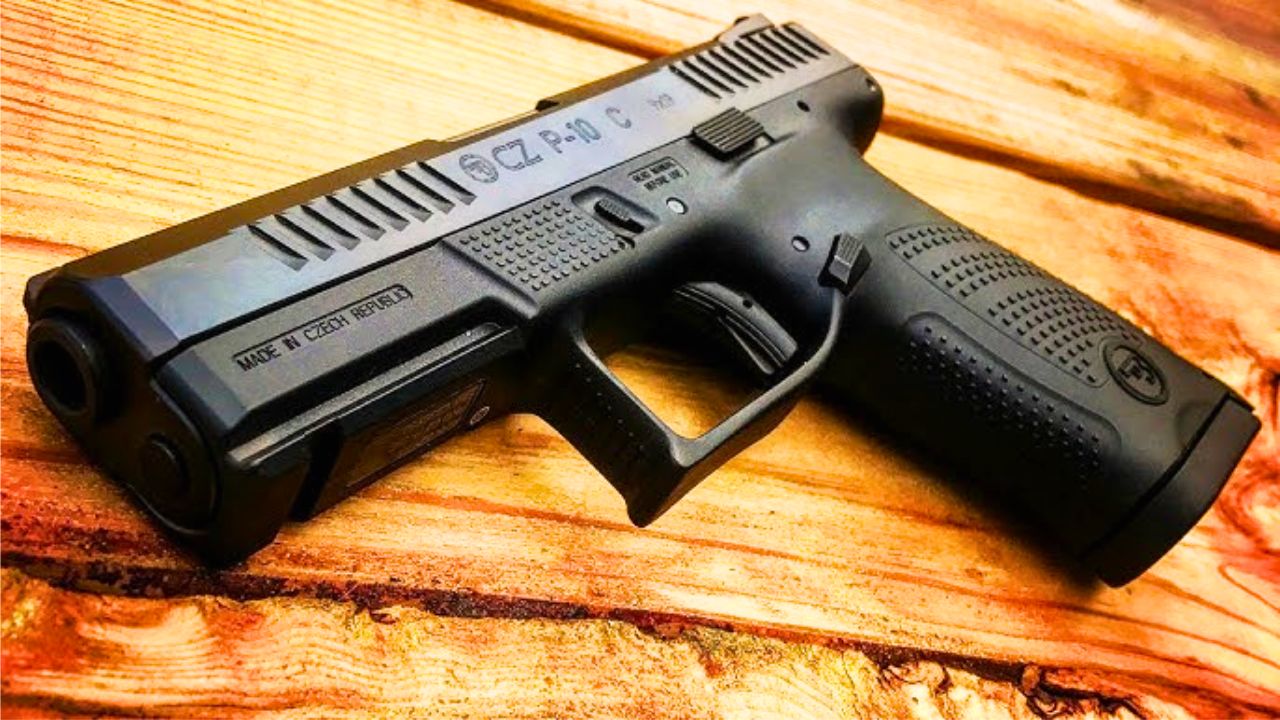
The P-10 C has a grip shape that tends to lock your hand into the same spot every time, which is a big reason it points naturally. The gun presents cleanly, and the sights usually land where you expect them without needing a wrist roll.
It’s also a pistol that feels “flat” in a good way—flat in presentation, flat in recoil, flat in how it tracks back to target. That contributes to pointability more than most people realize. If the gun returns to the same place after each shot, your brain starts trusting it. The P-10 C often builds that trust quickly. It’s one of those compact pistols that feels like it was designed by someone who actually cares about how a gun behaves at speed.
CZ P-07

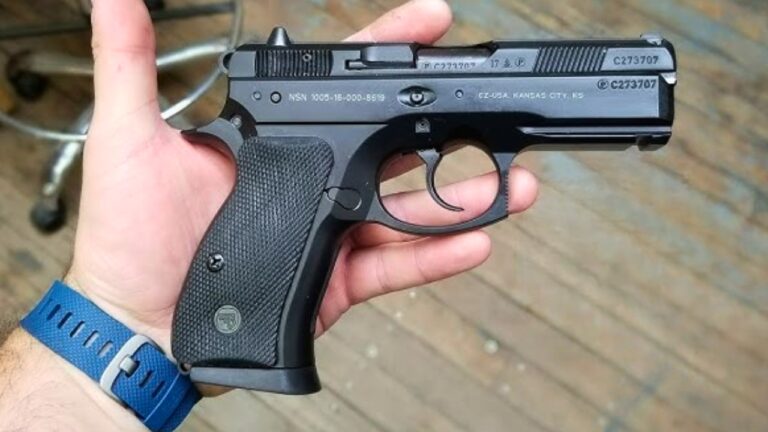
The P-07 has that classic CZ feel where the gun seems to settle into your hand instead of perching on top of it. The grip shape and beavertail area make it easy to build a consistent hold, and when you press out, the sights often appear right away.
DA/SA guns can sometimes feel clunky in presentation because of trigger reach or grip geometry. The P-07 avoids a lot of that for many shooters. Once you get your hands on it, it tends to point straight, and the gun feels stable when you’re moving quickly between targets. If you like a pistol that feels planted and intuitive, the P-07 can be one of those “first grab” surprises where you realize you’re not fighting the gun at all.
Beretta 92FS

The 92FS is a big pistol, but it points naturally for a lot of shooters because the grip angle and balance feel steady and predictable. When you drive it out, the gun tends to settle, and the sights don’t feel like they’re floating around up top.
The other factor is how the pistol behaves when you’re moving the gun. The 92FS transitions smoothly and doesn’t feel twitchy. That makes it easy to keep the sights where you want them, especially in controlled pairs or simple drills. If your hands fit the grip well, the 92FS can feel like a very “honest” pistol—what you do is what you get. It’s not a tiny carry gun, but it’s a classic for a reason, and pointability is part of that story.
Beretta PX4 Storm Compact

The PX4 Compact is one of those pistols that often feels better in the hand than you expect. The grip shape and balance make it point quickly, and the gun tends to settle into a natural sight picture without forcing your wrists into a weird position.
The PX4 is also easy to keep aligned when you’re shooting faster. A pistol that points naturally usually tracks naturally too, and that’s where this one surprises people. It doesn’t feel top-heavy, and it doesn’t feel like it wants to twist out of your grip. If you’re the kind of shooter who values “index” and fast sight acquisition, the PX4 Compact can feel like a cheat code once you get the feel for it.
FN 509 Compact
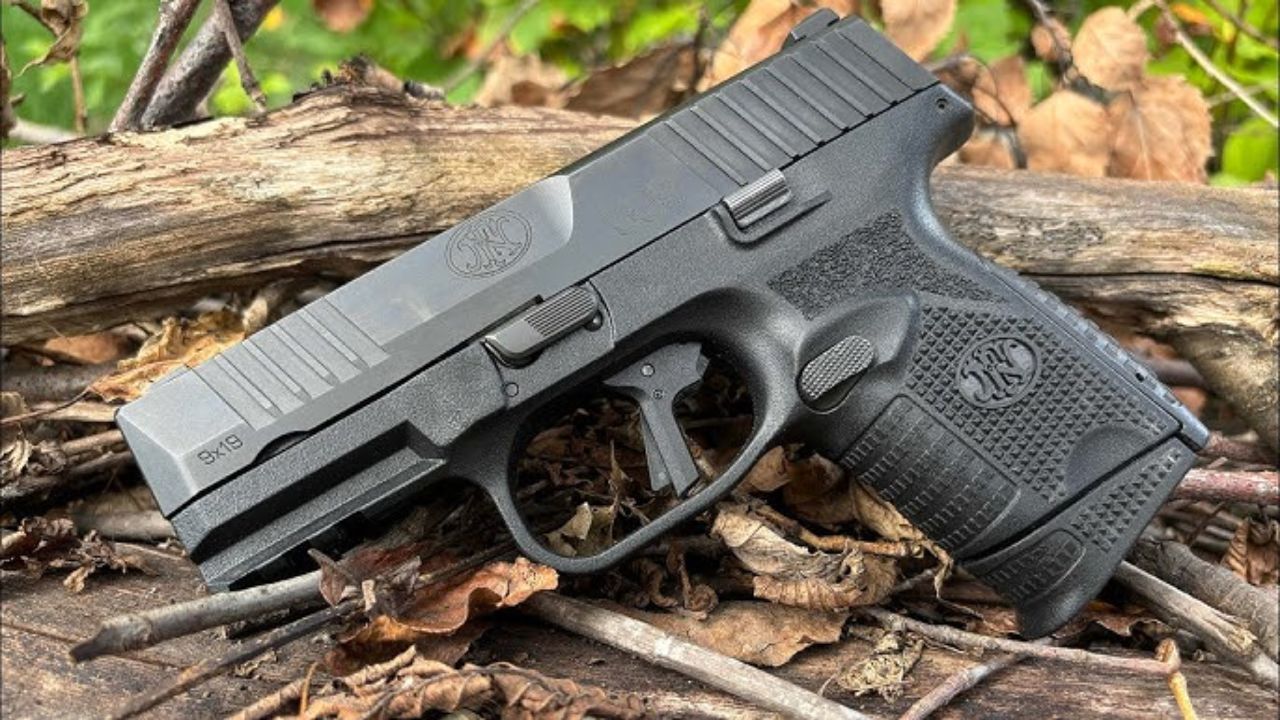
The FN 509 Compact is built like a duty pistol that got trimmed down, and that shows up in how it points. The grip geometry encourages a consistent hold, and the gun tends to present with the sights close to where you want them from the first rep.
A lot of compacts feel snappy or jumpy in the hands, and that can make them feel less pointable at speed. The 509 Compact usually feels steadier, which helps you keep the gun aligned when you’re pushing tempo. If you’re coming from full-size pistols, it won’t feel like a totally different animal. That familiarity is a big part of natural pointability—your hands don’t have to relearn the gun. It’s a practical, intuitive compact pistol.
Springfield Armory Hellcat Pro

The Hellcat Pro is one of the better examples of a slim carry gun that still points naturally. A lot of thin pistols feel like they’re missing something in the grip, but the Hellcat Pro fills your hand better than many of its peers, which helps the sights land where you want them.
It also helps that the gun is sized in that sweet spot—big enough to control, small enough to carry. When you present it, you’re not fighting a tiny grip or an awkward angle. For many shooters, the Hellcat Pro feels “ready” the first time they grab it, and that translates into smoother draws and cleaner first shots. If you want a pistol that feels intuitive without needing a bunch of time to get used to it, the Hellcat Pro is a strong pick.
Ruger Max-9
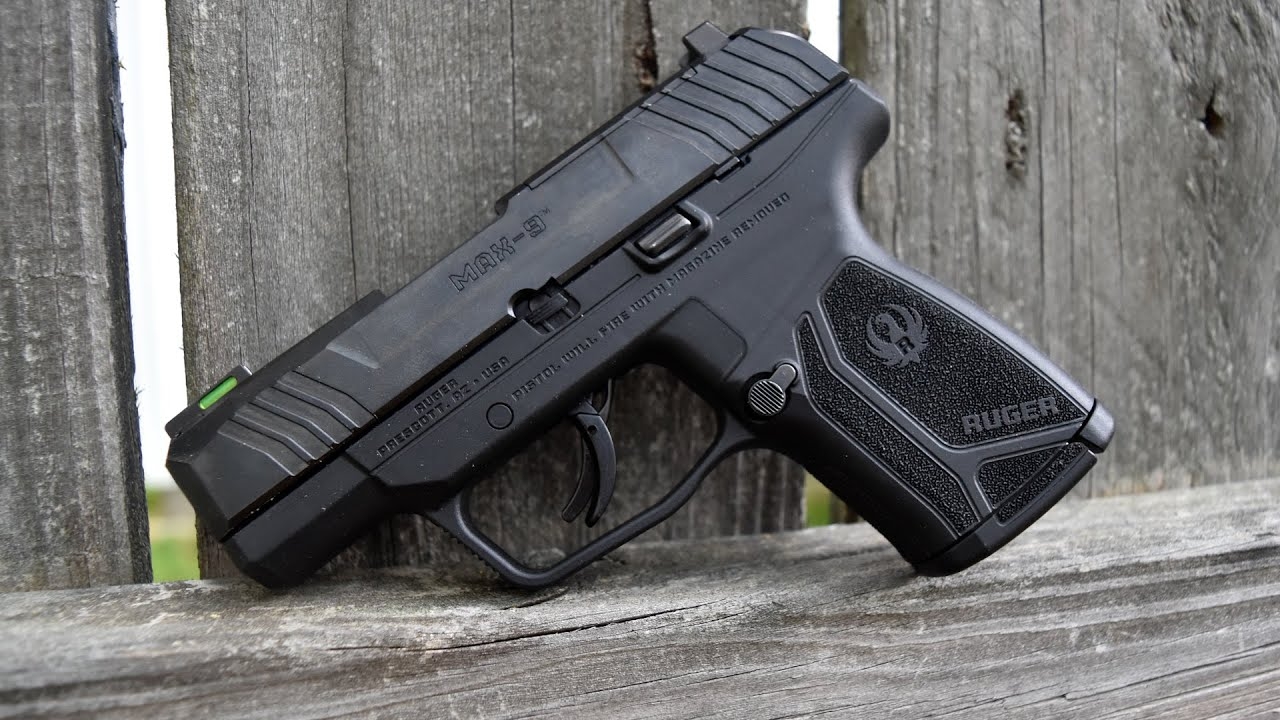
The Max-9 is a budget-friendly pistol that often surprises people with how naturally it points. The grip shape is straightforward, and the gun tends to line up without forcing you into an exaggerated wrist angle. For a compact carry gun, that’s a big win.
A lot of small pistols feel like they want to point high or low depending on your hand shape. The Max-9 tends to be more neutral for many shooters, which means your front sight shows up faster and you spend less time correcting. It’s also a pistol that feels consistent when you practice. If you’re building muscle memory for draw and presentation, you want a gun that gives you the same index every time. The Max-9 often does that without costing you a fortune.
Canik Mete SF
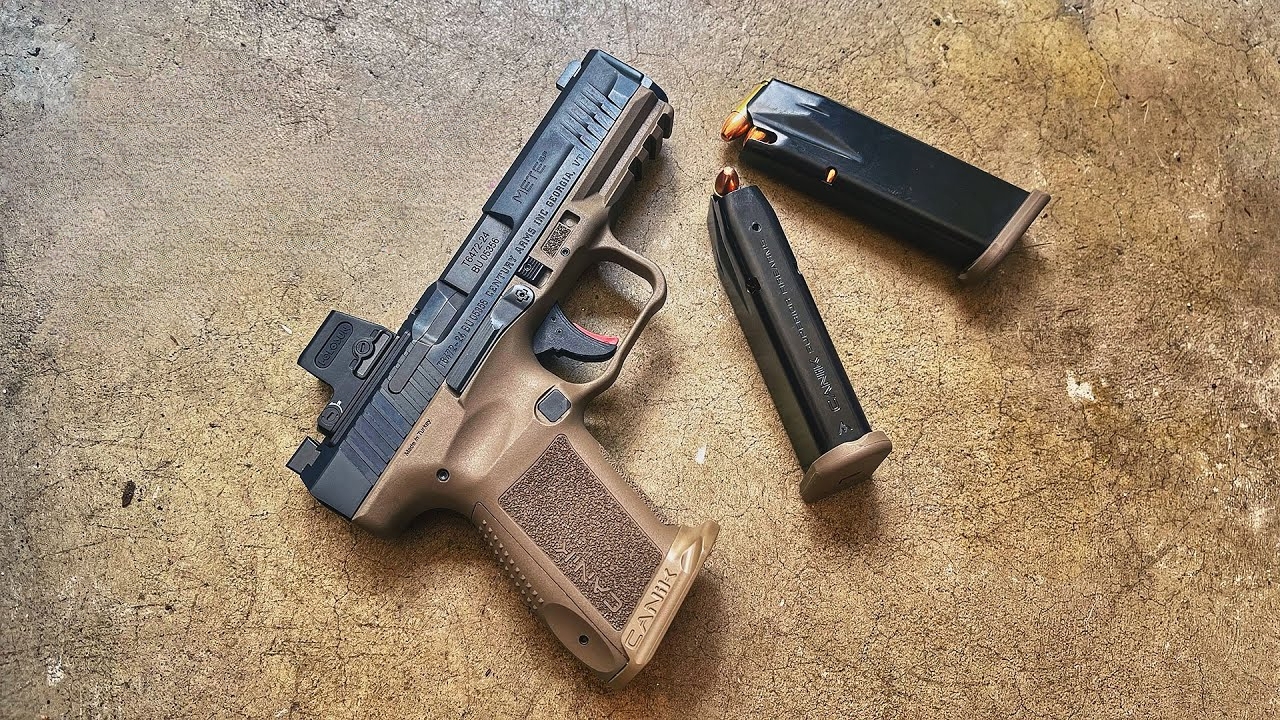
Canik pistols have a reputation for being easy to shoot well, and the Mete SF is a big part of why. The grip shape and ergonomics tend to guide your hands into a consistent position, and the gun points naturally when you present it. It feels like it wants to line up.
The other reason it stands out is that it doesn’t punish you when you’re moving fast. Some pistols point fine until you start rushing, then you’re hunting the sights again. The Mete SF stays more intuitive for many shooters, which makes it easier to run drills clean without feeling like you’re wrestling the gun. If you want a pistol that feels friendly and predictable from rep one, the Mete SF is the type of gun that can make you comfortable fast.
Colt 1911 (Government Model)

A well-fit 1911 points naturally for a lot of shooters because of its grip angle and slim frame. When you press it out, the sights often land right where your eyes want them, and the gun feels like it’s sitting deep in your hand instead of riding high.
The 1911 also rewards good fundamentals without forcing you to fight the ergonomics. The trigger reach is comfortable, the frame is thin, and the overall balance feels steady. That combination makes it easy to index and easy to keep aligned when you’re transitioning or shooting controlled pairs. Not every 1911 is created equal, but the basic design has been pointing naturally for over a century for a reason. If you want a pistol that feels like it was shaped for human hands, the 1911 still belongs in this conversation.
Like The Avid Outdoorsman’s content? Subscribe to our newsletter so you never miss an article.
Here’s more from us: