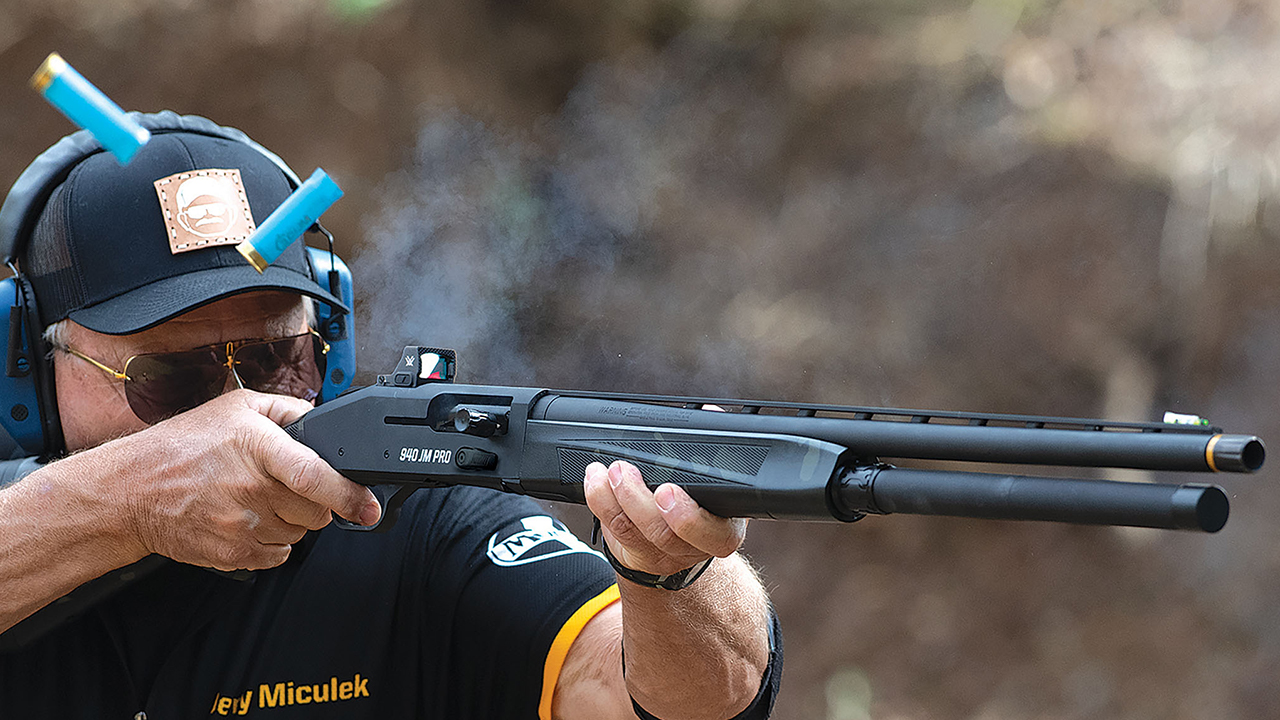
Photo credit: Mossberg
The Mossberg 940 JM Pro could have been a short-lived competition shotgun if it only had Jerry Miculek’s name on the receiver and a few flashy parts bolted on. That is not what kept it around. The reason shooters still talk about it is that Mossberg built the 940 JM Pro around things competition and high-volume shotgun shooters actually notice: loading speed, cycling reliability, cleaner operation, better controls, adjustable fit, and optics support.
It also helped change how people looked at Mossberg semi-autos. Mossberg was already respected for pump guns, but the 940 JM Pro gave the company a much stronger answer in the gas-operated competition shotgun lane. Mossberg describes the 940 JM Pro as a fast-cycling, competition-focused shotgun designed with Jerry Miculek’s input, using a durable gas system, nickel boron-coated internals, a competition loading port, adjustable stock, and functional parts meant to improve speed, accuracy, and durability.
1. It Was Built Around Competition From the Start
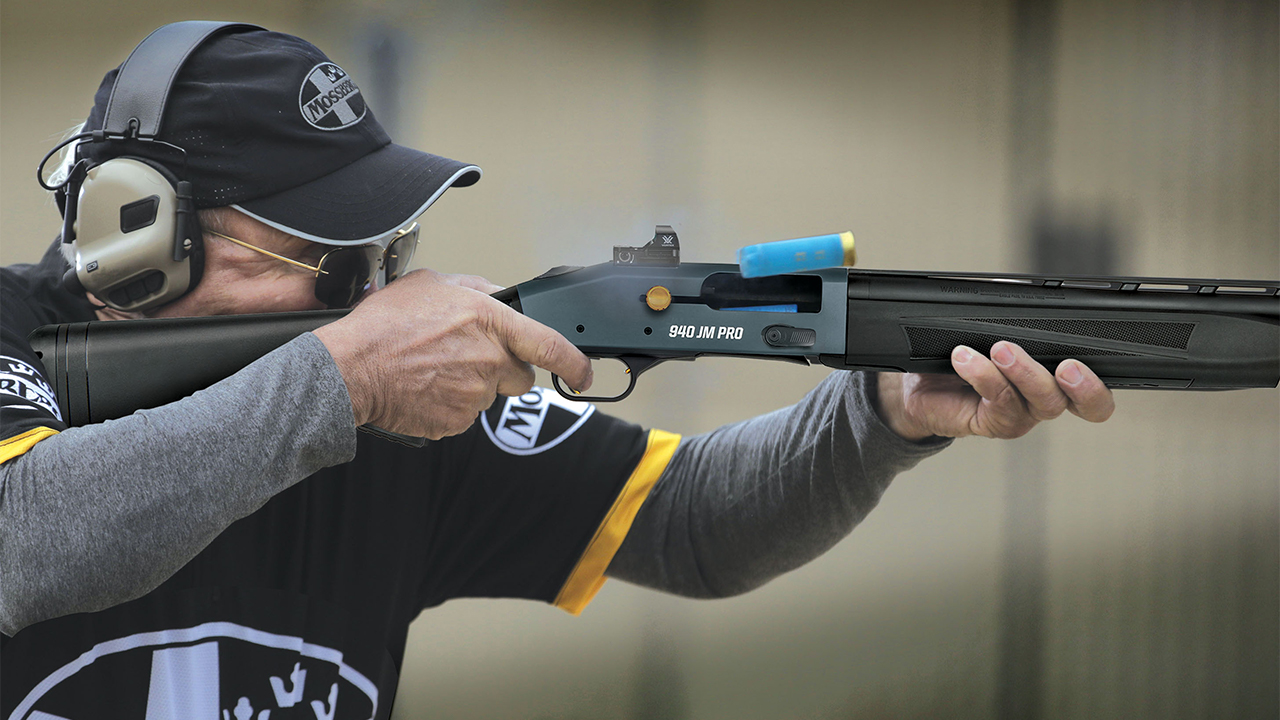
The 940 JM Pro matters because it was not a field shotgun awkwardly shoved into a competition role. Mossberg built it with 3-gun-style use in mind from the start. That matters because competition shotguns live or die by loading, controls, cycling, and how well they hold up to volume.
A shotgun can be reliable in the duck blind and still feel clumsy in a match. The JM Pro focused on the parts that slow shooters down: the loading port, elevator, follower, stock fit, bolt controls, and gas system. That gave it credibility beyond the name attached to it. It was actually designed around the way fast shotgun shooters run a gun.
2. Jerry Miculek’s Input Actually Shows
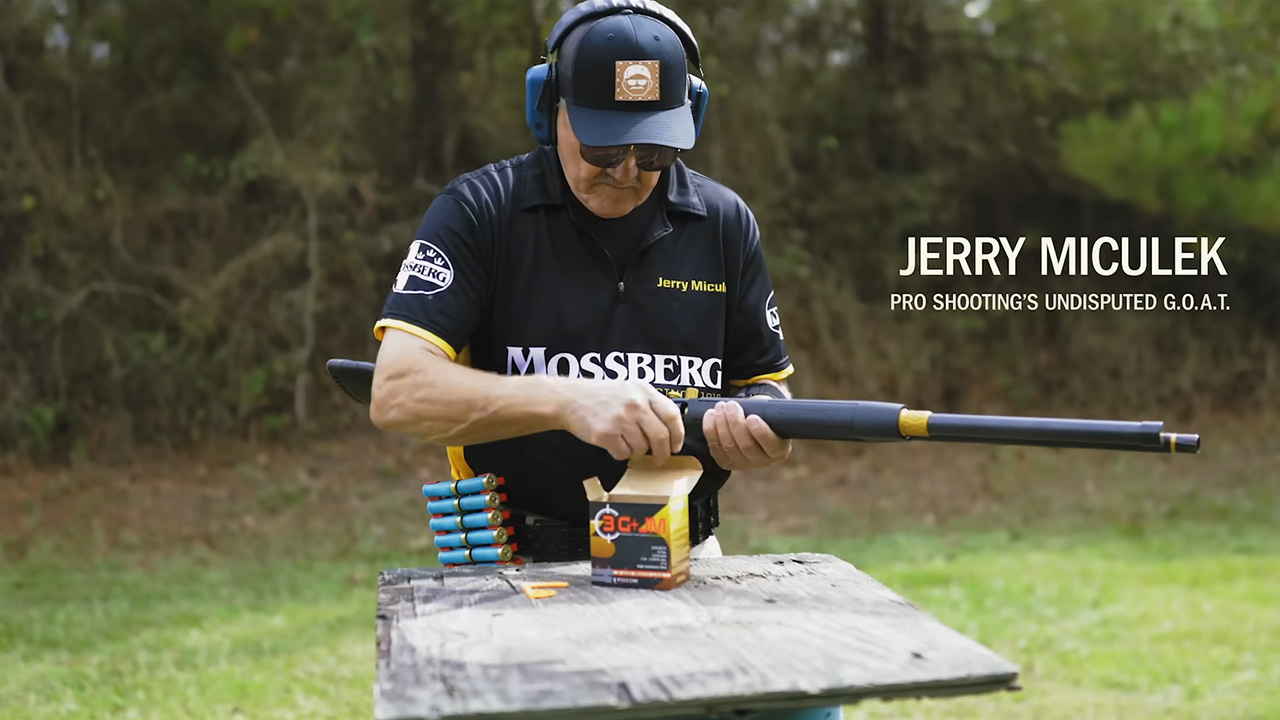
Celebrity-branded guns can feel like marketing exercises, but the 940 JM Pro has features that make sense for someone like Jerry Miculek. Mossberg says the shotgun was designed in collaboration with Miculek and built with specs meant to give competitive shooters an edge. The company also points to competition-optimized speed, accuracy, and durability as core goals of the model.
That influence shows most clearly in the loading system and controls. Those are the places a world-class shooter would immediately care about. A smooth-loading, fast-cycling semi-auto with better manipulation points saves time. That is not decoration. That is exactly where matches are won or lost.
3. The Gas System Gave Mossberg More Credibility
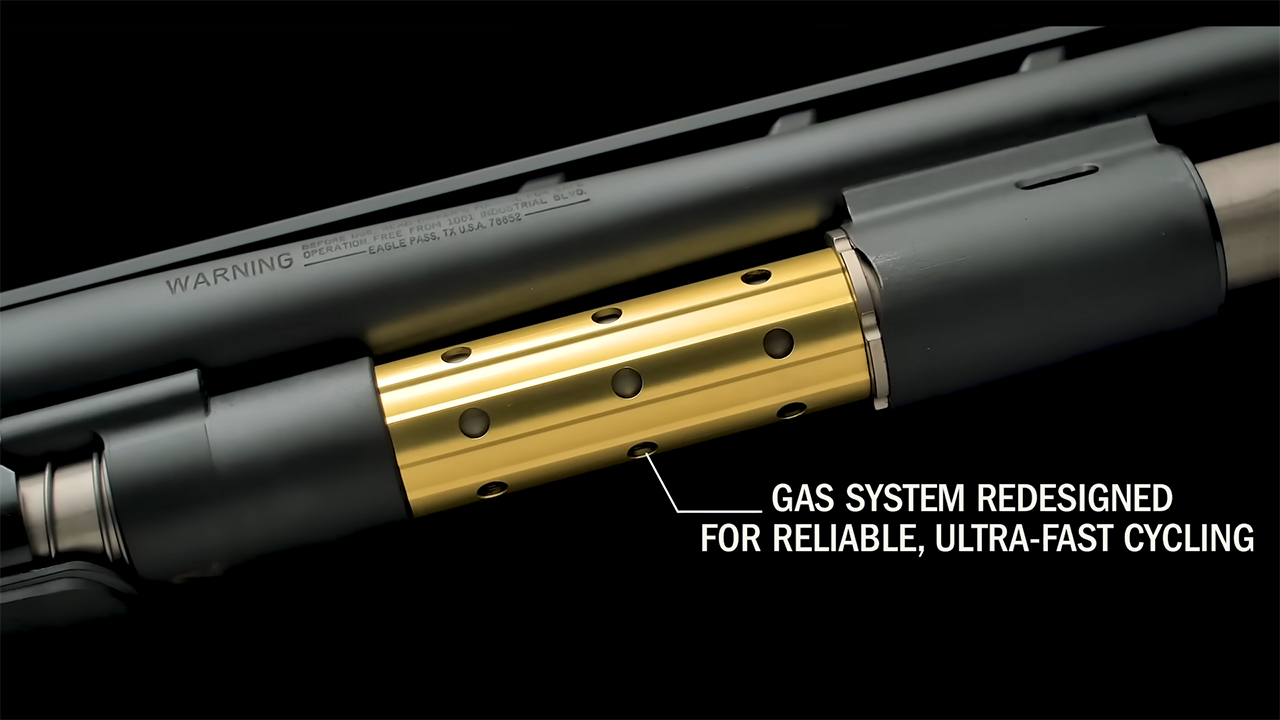
The 940 platform’s gas system is one of the main reasons the JM Pro stayed relevant. Mossberg says the 940 Pro line uses a durable gas system that allows up to 1,500 rounds between cleanings. That was a serious improvement over the older perception some shooters had of Mossberg semi-autos needing more attention when run hard.
That matters in competition because shotgun stages are already busy enough. A shooter should not be wondering whether the gun is getting too dirty halfway through a long day. A cleaner-running, longer-interval gas system gives the JM Pro a better foundation. It made Mossberg feel more serious in a lane where reliability under volume is everything.
4. Nickel Boron-Coated Internals Help Smooth Things Out
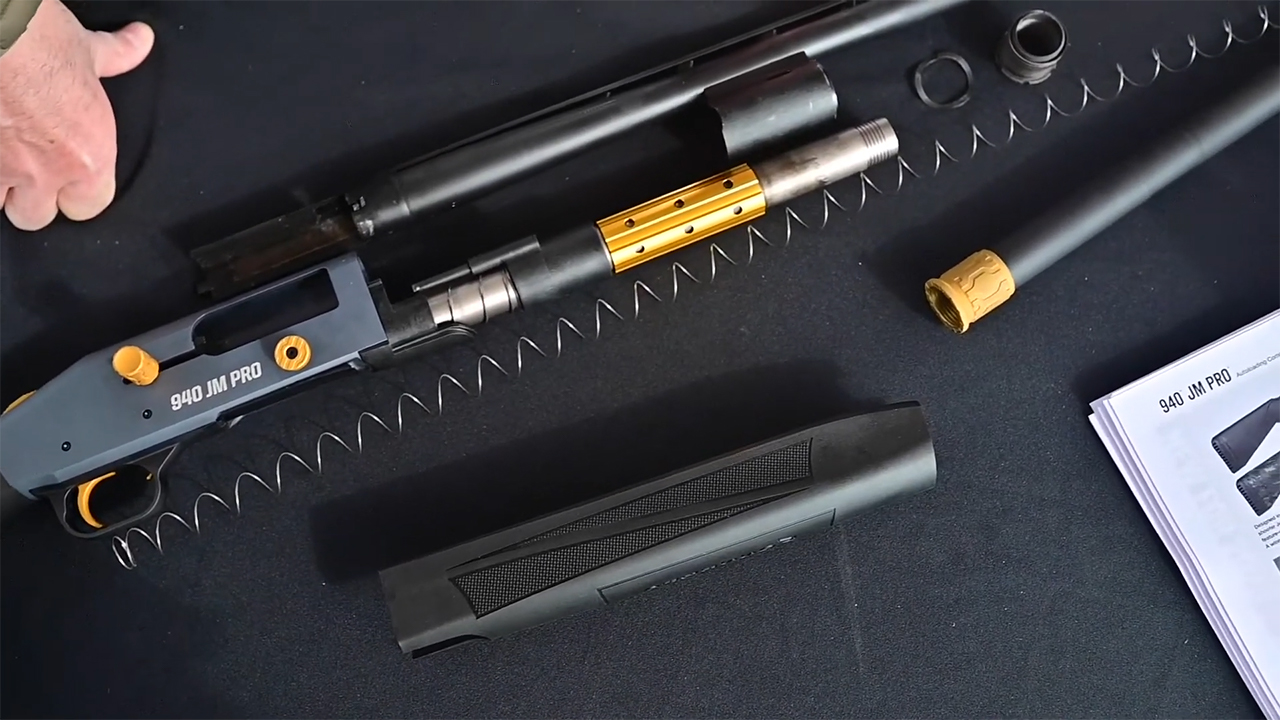
The 940 JM Pro uses nickel boron-coated internal parts, which Mossberg highlights as part of the gun’s smooth-operation package. Coatings do not replace good design, but they can help reduce friction, make cleaning easier, and improve corrosion resistance in the parts that get worked hard.
That is the kind of feature that matters over time. Competition shotguns take repeated loading, cycling, heat, fouling, and rough handling. Anything that helps the action run smoother and clean up easier earns its keep. The JM Pro did not rely on one trick. It stacked several small improvements that add up.
5. The Loading Port Is One of Its Biggest Wins
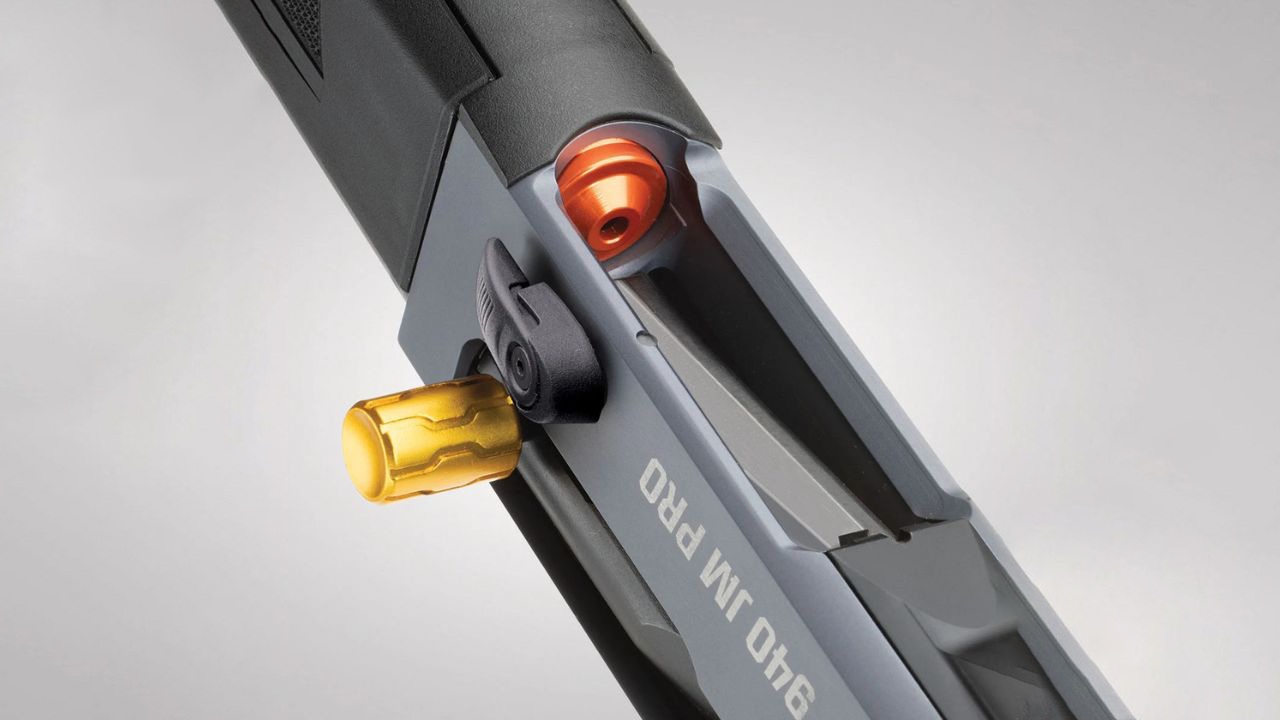
Shotgun shooters know the loading port can make or break a semi-auto. The 940 JM Pro’s loading port was designed around speed, and Mossberg specifically calls it a competition-level loading port. The model is also described as built for quad-loading, which is exactly the kind of feature serious 3-gun shooters expect now.
That is a major reason the JM Pro remains relevant. A shotgun can have a good barrel, good sights, and good cycling, but if the loading port beats up your thumb or catches shells during fast loading, it becomes frustrating fast. The 940 JM Pro made fast loading part of the design instead of something owners had to fix immediately.
6. The Elongated Elevator Reduces Pinch Problems
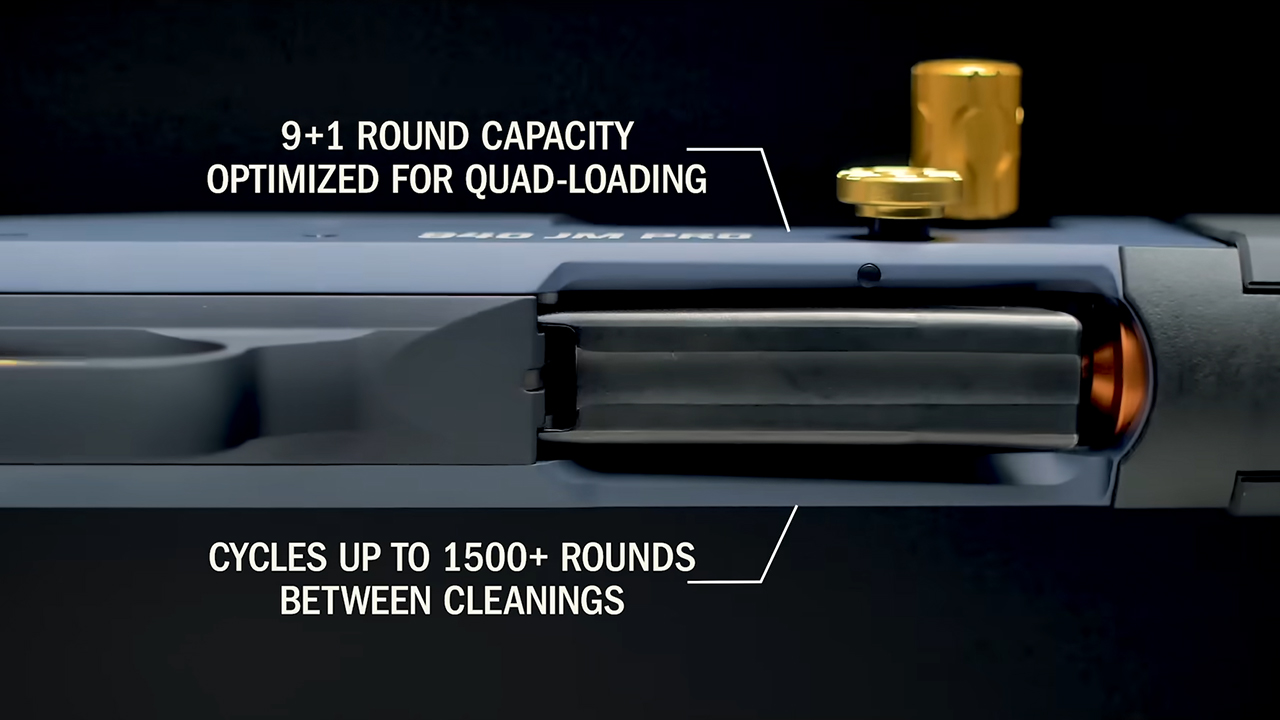
The 940 Pro line uses an elongated elevator, and outside reviews have noted the design is meant to be pinch-free. Guns & Ammo specifically described the 940’s loading port as enlarged and beveled for quad-loading and noted that the elongated elevator helps avoid the finger cuts and pinching some shooters experience with other shotguns.
That sounds small until you have loaded a shotgun hard under time. A sharp or poorly shaped elevator can make practice miserable and slow down reloads. The JM Pro’s elevator design keeps the gun friendlier during high-volume loading. That is one of those practical competition details that regular hunters and defensive shotgun users can appreciate too.
7. The Bright Follower Gives Quick Visual Feedback
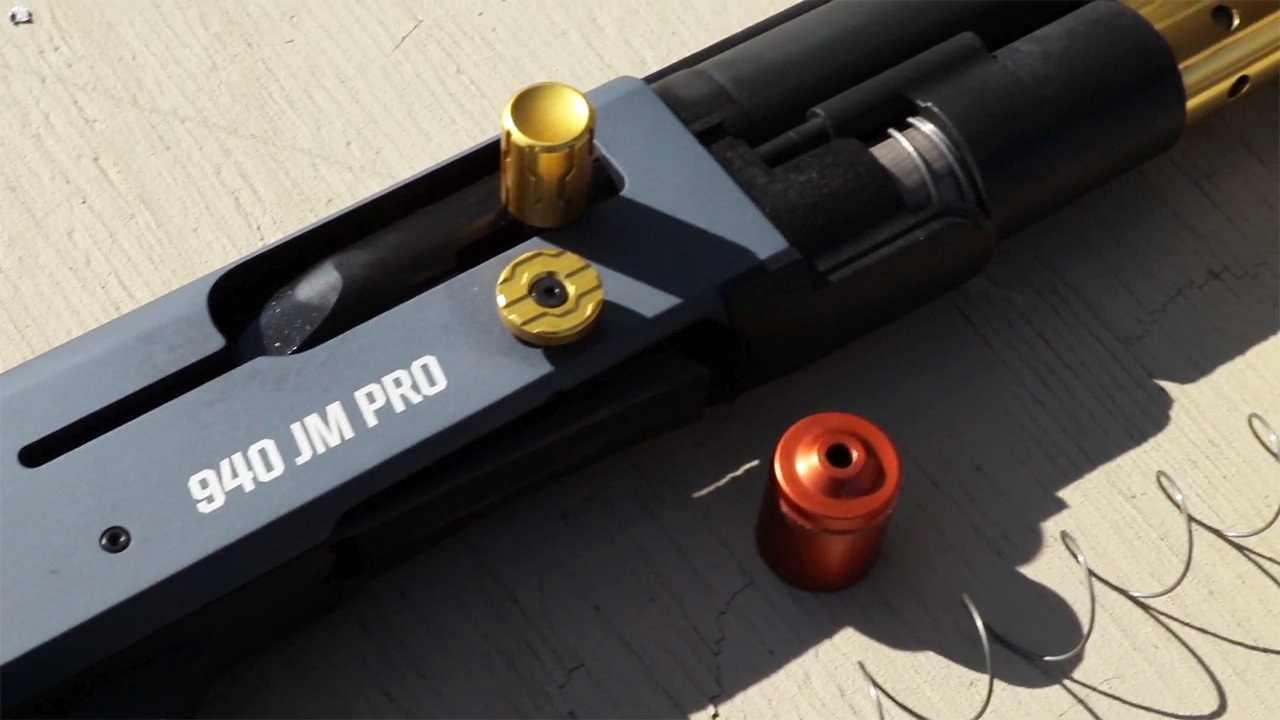
The 940 JM Pro uses an anodized follower, and Mossberg highlights the follower as part of the competition-level loading system. Guns & Ammo described the 940’s bright orange follower as giving visual feedback on the magazine’s status and location.
That matters when a shooter is moving fast. Knowing what is happening in the magazine tube at a glance can help during loading, unloading, and troubleshooting. It is not the kind of feature that wins attention at the gun counter, but it makes the shotgun easier to manage under speed. Good competition guns are full of little details like that.
8. The Oversized Controls Are Actually Useful
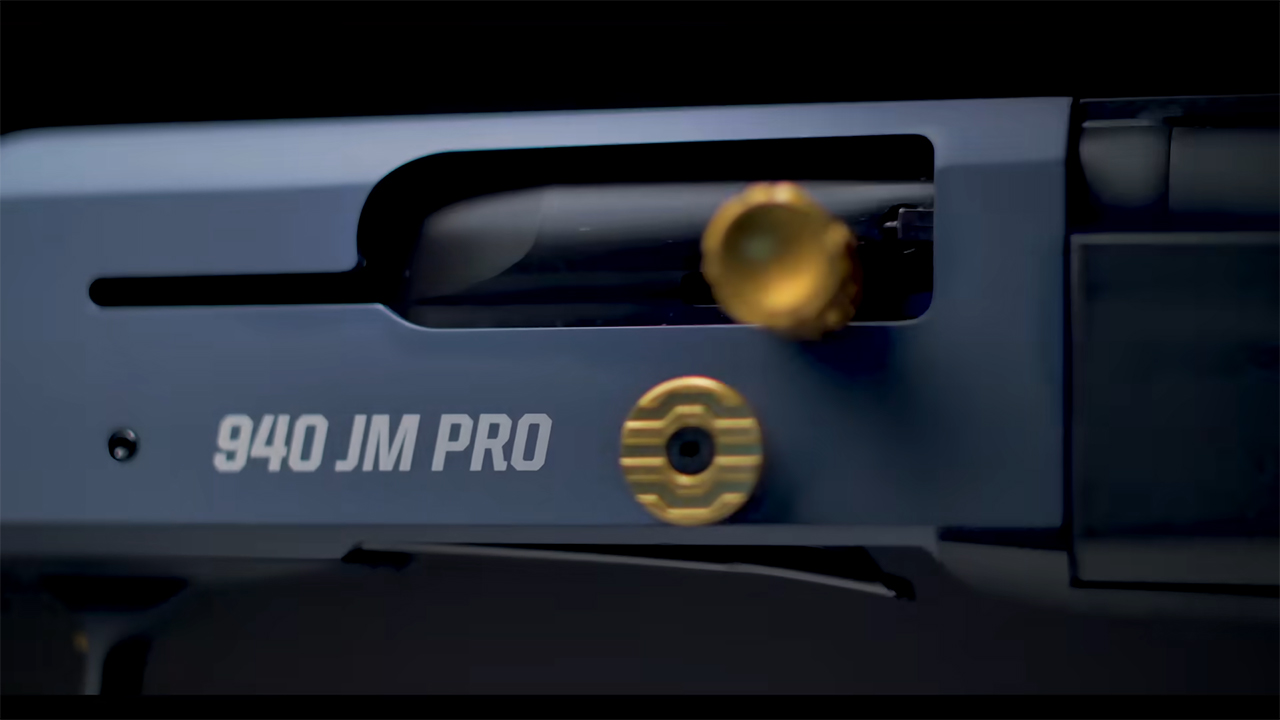
The JM Pro benefits from oversized and contoured controls, including a larger charging handle and bolt-release button. Guns & Ammo noted that competition shooters want control over a shotgun’s function and that the 940’s oversized controls were specified for quicker manipulation.
This is one place where “competition” features make sense for almost everyone. Bigger controls are easier to find with gloves, easier to hit under stress, and easier to run when the gun is hot, wet, or dirty. Oversized shotgun controls can look a little loud, but on the JM Pro they serve a real purpose.
9. The Adjustable Stock Helps It Fit More Shooters
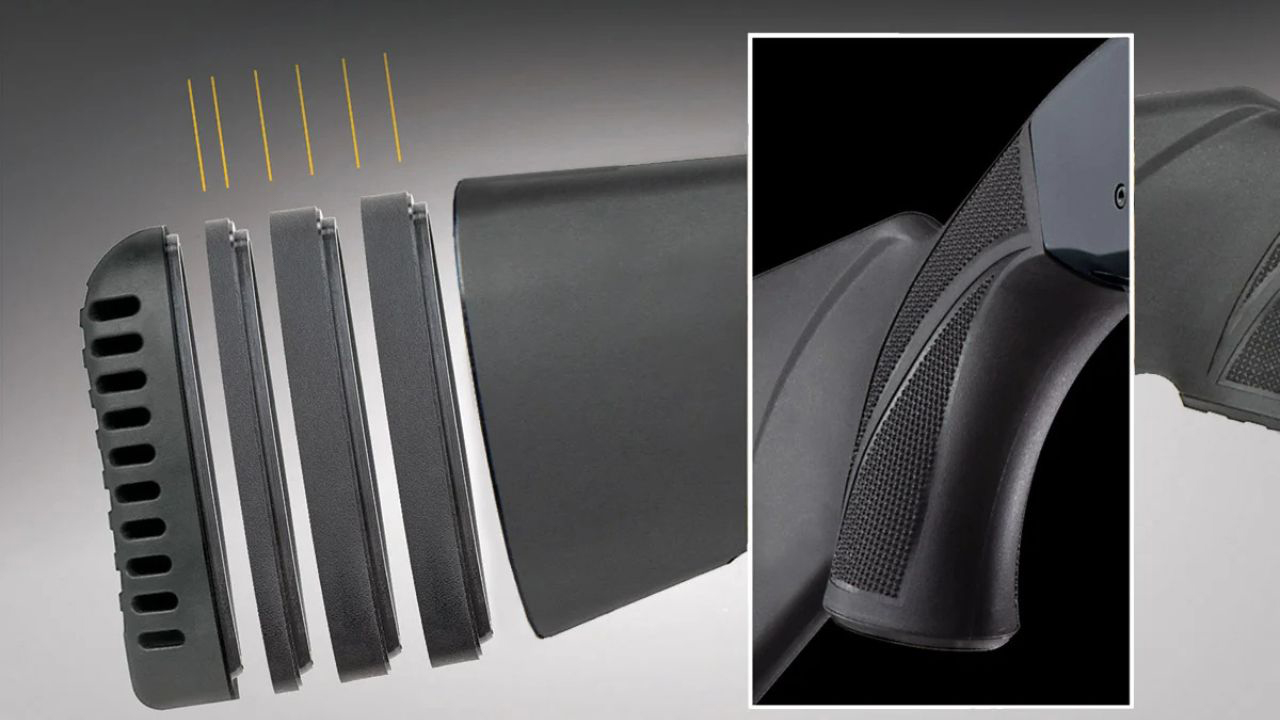
Shotgun fit matters. A lot. The 940 JM Pro’s stock is adjustable for length of pull and drop, and Mossberg’s series overview notes a 1.25-inch length-of-pull adjustment range, plus drop at comb and cast adjustment through shims.
That helps keep the JM Pro relevant because shooters are not all built the same. A shotgun that fits poorly kicks harder, points slower, and makes clean hits more difficult. Adjustable fit lets the owner tune the gun closer to their body and shooting style. That is especially useful in competition, where mounting the gun consistently matters on every stage.
10. It Comes Set Up for Optics
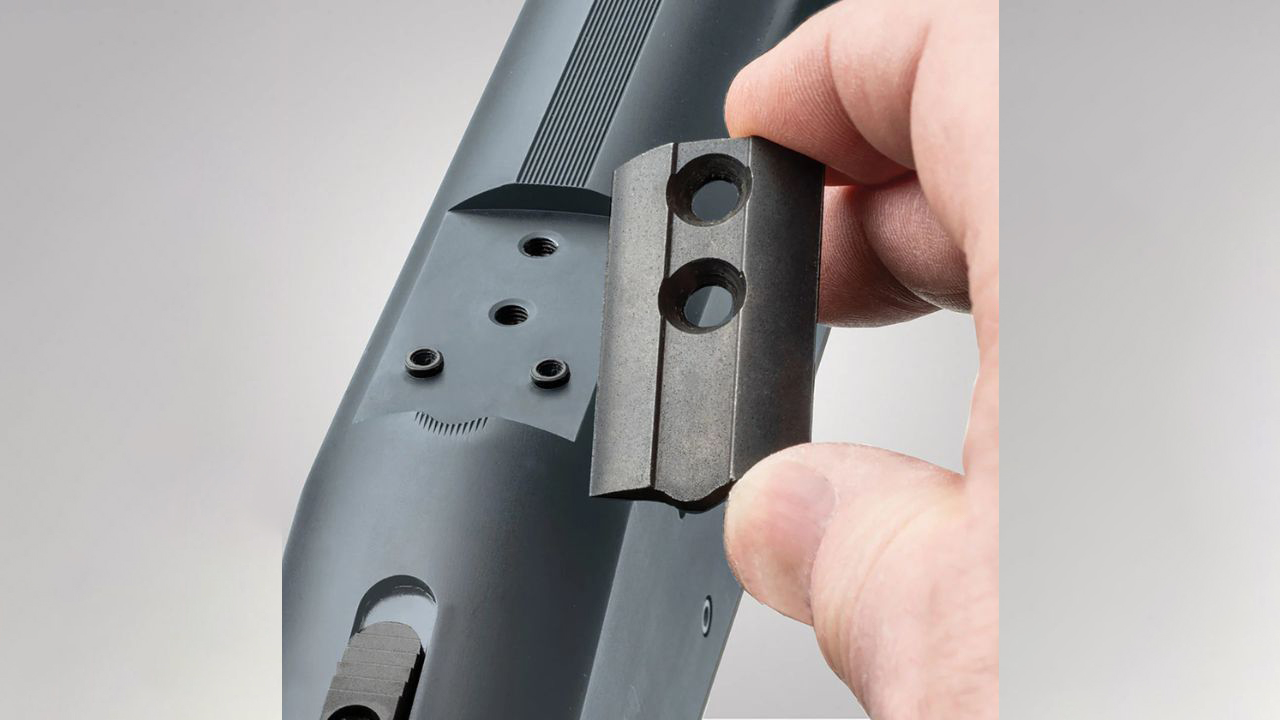
The 940 JM Pro is optic-ready, with receiver cuts that allow direct mounting of RMSc-pattern micro red dots, and Mossberg says adapter plates are included for RMR, Docter, and Leupold optic footprints. The receiver is also drilled and tapped.
That is a modern advantage. Red dots are not only for pistols and ARs anymore. On a shotgun, an optic can help with slugs, precise aiming, aging eyes, and certain competition stages. The JM Pro stayed relevant because it did not treat optics like an afterthought. It gave shooters a factory path instead of making them start with custom work.
11. It Still Has Traditional Shotgun Sights Covered
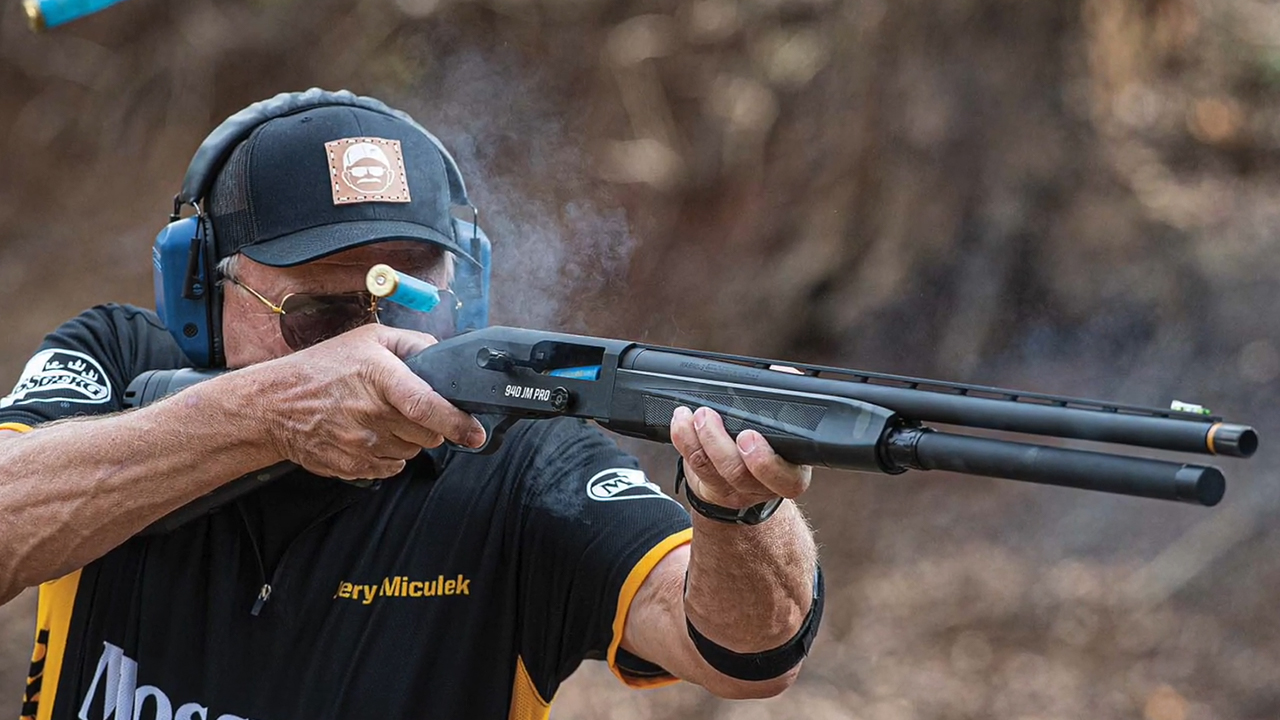
Even with optics support, the 940 JM Pro still includes fiber-optic sights. Mossberg lists fiber-optic sights among the JM Pro features, which gives shooters a fast, visible aiming reference if they are not running a dot.
That balance matters. Not everyone wants an optic on a shotgun, and not every match or range setup requires one. A good fiber-optic front sight can be plenty fast for close targets, clays, and general shotgun work. The JM Pro gives shooters options instead of forcing one sighting approach.
12. The Briley Extended Chokes Add Real Value
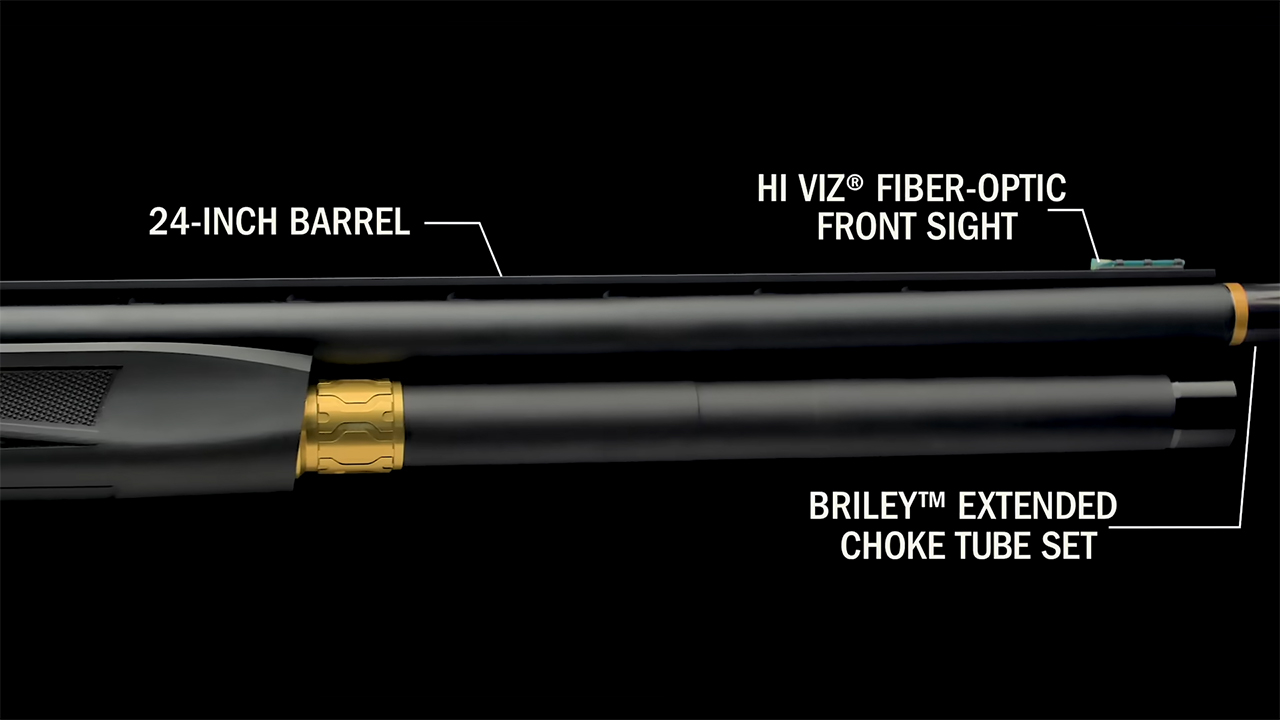
Mossberg lists the 940 JM Pro with a Briley extended choke tube set. That is a strong inclusion because chokes matter for patterning, target presentation, and getting the shotgun tuned for different stages or uses.
A lot of buyers overlook chokes until they start missing targets or patterning loads. Extended chokes are easier to identify, install, and remove than flush tubes, especially when changing setups at the range. Including a respected choke set makes the JM Pro feel more complete out of the box and less like a gun that needs immediate upgrades.
13. The Top-Mounted Safety Works for Both Sides
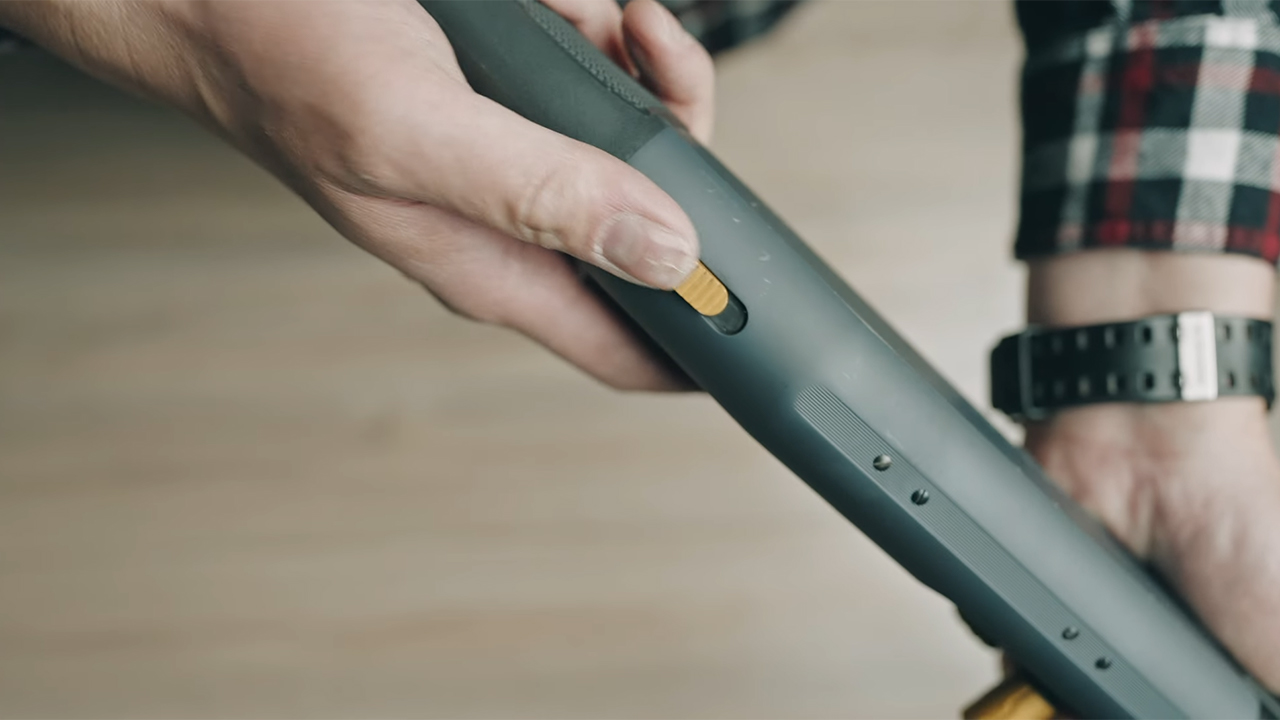
Mossberg’s tang safety has always been one of its calling cards, and the 940 JM Pro keeps that ambidextrous top-mounted safety. Mossberg lists it as one of the JM Pro’s features, and it remains one of the easiest shotgun safety layouts for right- and left-handed shooters to understand.
That matters more in shotguns than people think. A safety that works naturally for both hands is valuable in competition, hunting, defensive use, and training. It also helps when multiple shooters use the same gun. The JM Pro may be a competition shotgun, but that familiar Mossberg safety keeps it practical.
14. It Gave Mossberg a Serious 3-Gun Identity
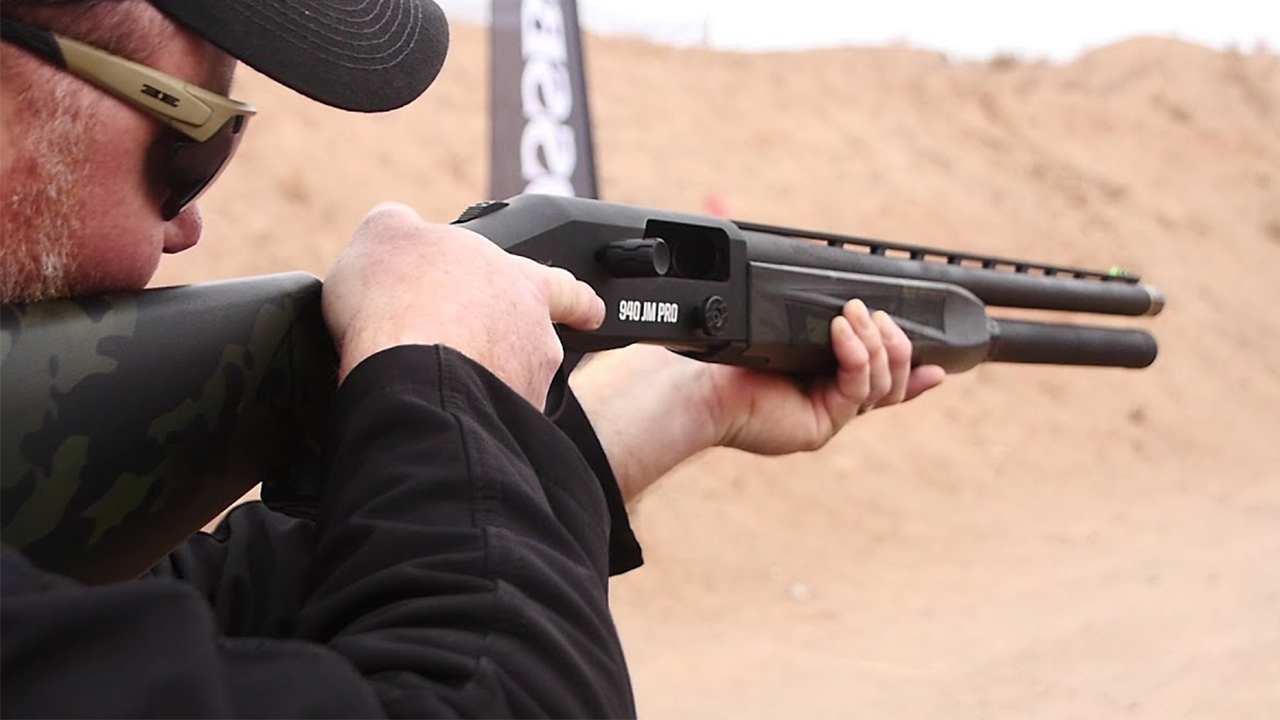
The 940 JM Pro helped Mossberg step into the 3-gun shotgun conversation in a way the company had not fully owned before. Mossberg calls it “the top gun for 3-gun” and says it was built to compete and win. That branding would not mean much if the gun lacked the features to back it up, but the JM Pro brought the loading, gas, control, and fit improvements people expected.
That identity matters. Mossberg already had defensive pump guns and hunting shotguns covered. The 940 JM Pro gave the brand a recognizable competition semi-auto. Even shooters who never enter a match know that competition use tends to expose weak design fast. That helped the 940 line gain respect.
15. It Is Still Relevant Because It Solves Real Shotgun Problems
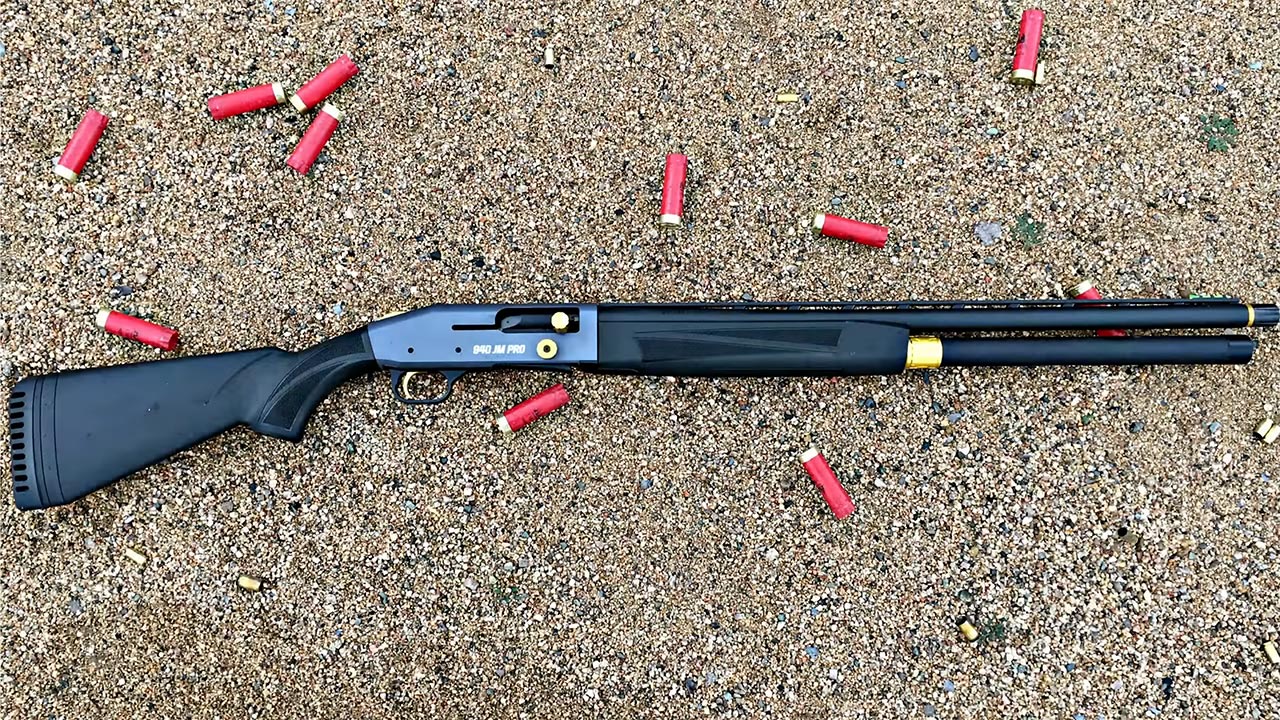
The Mossberg 940 JM Pro stays relevant because its strengths are not imaginary. It loads better. It runs cleaner. It has better controls. It fits more shooters. It supports optics. It includes useful chokes. It carries enough competition influence to feel purpose-built instead of dressed up.
That is why it still matters even as newer semi-autos keep hitting the market. The JM Pro is not the fanciest shotgun out there, and it does not need to be. It gave Mossberg a serious, fast-running, competition-ready semi-auto that solved the problems shotgun shooters actually complain about. That is the kind of relevance that lasts longer than hype.
Like The Avid Outdoorsman’s content? Subscribe to our newsletter so you never miss an article.
Here’s more from us: