
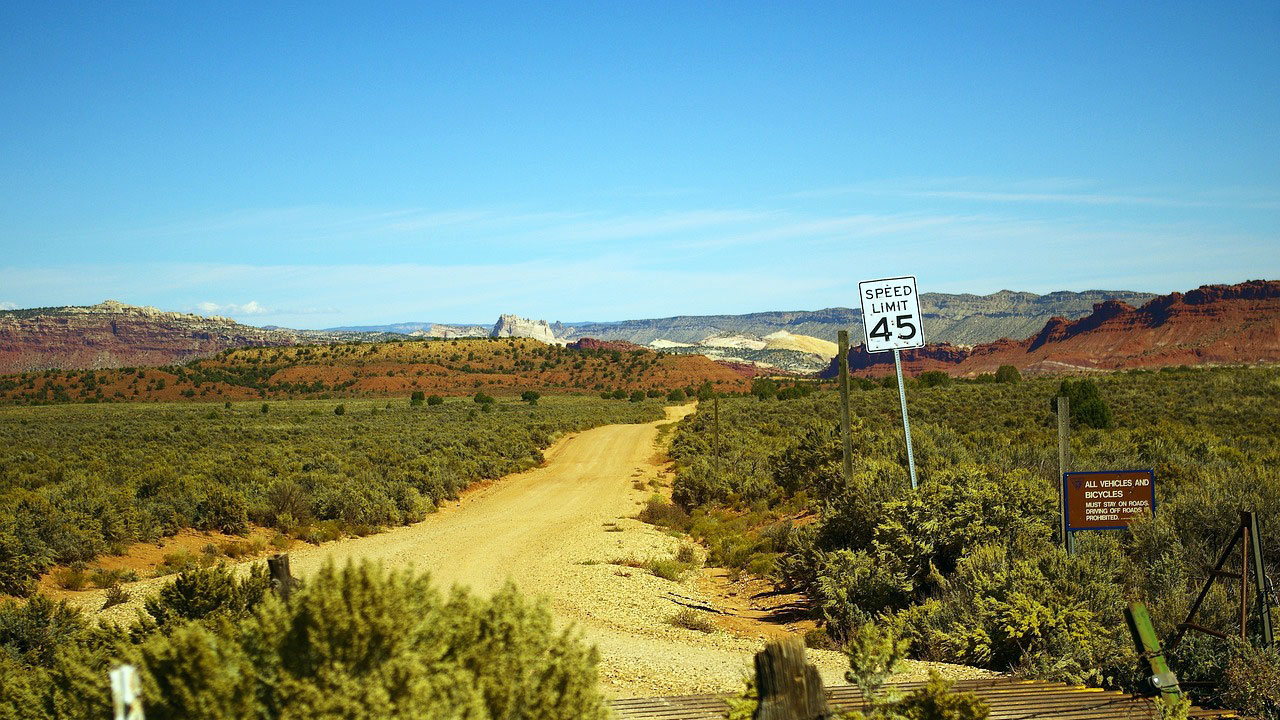
Photo credit: MikeGoad/Pixabay.com
BLM land is one of the most misunderstood pieces of public ground in the U.S. People talk about it like it’s “free camping desert land,” but it’s way bigger than that—and in a lot of places, it’s the public land that actually connects everything else. It’s also managed under a multiple-use mandate, which means you’ll run into recreation, grazing, energy development, cultural sites, and closures… sometimes all in the same trip.
1) BLM manages about 245 million acres of surface public land

That number surprises people because most of the BLM footprint is out West, so if you live east, you may barely think about it. But BLM itself lists about 245 million acres of public lands managed. In practical terms, that’s why BLM is a big deal for hunters, anglers, campers, and anyone who likes roaming—there are entire regions where BLM is the main public-land option, not a side option. And even in states where there’s also a lot of national forest, BLM often fills in the gaps with huge basins, sage flats, canyon country, and open range.
2) It’s “one in every 10 acres” of land in the U.S.

BLM says it manages one in every 10 acres of land in the United States. That helps explain why BLM land can feel like it’s everywhere once you start looking—big blocks in the West, but also scattered parcels elsewhere. For outdoors folks, it means your “public land map” isn’t complete unless you’re checking for BLM parcels. A lot of guys accidentally hunt private boundaries without realizing there’s a BLM strip or pocket that gives legal access if you approach it right.
3) The BLM mission is multiple use and sustained yield (and that drives everything)

BLM’s core law is the Federal Land Policy and Management Act (FLPMA). FLPMA requires public lands be managed under principles of multiple use and sustained yield, guided by land-use plans. That’s why you can be camping one ridge over from grazing, see a fuel break project, and drive past a permitted energy site on the way in. If you go in expecting “it’ll be like a park,” you’ll end up mad at normal BLM activity. If you go in expecting “working public land,” you’ll plan smarter and adapt faster.
4) BLM manages roughly 30% of the nation’s minerals

BLM states it manages approximately 30% of the Nation’s minerals. That’s a huge deal because mineral management doesn’t always look like a mine right in front of you. It can mean leases, planning decisions, access roads, and seasonal restrictions. It also means BLM land is often at the center of “use conflicts” that can change recreation access over time. If you hunt on BLM, you’ve probably seen the evidence—roads that exist because of development, areas posted for safety, and sometimes closures tied to active operations.
5) BLM also administers about 700 million acres of subsurface mineral estate

Even when BLM doesn’t manage the surface, it may manage the minerals underneath. BLM publications and federal summaries commonly cite 700+ million subsurface acres of federal mineral estate administered by BLM. That matters because the surface owner and the mineral manager can be different, which is one reason you see complicated permitting and coordination issues. For the average hunter/camper, the takeaway is simple: don’t assume “it’s not BLM land” means BLM decisions can’t affect what happens there.
6) Dispersed camping is generally allowed, but the stay limit is usually 14 days in a 28-day period

BLM’s camping guidance says dispersed camping is generally allowed up to 14 days within a 28 consecutive day period, and rules can vary by office. This is one of the most useful practical facts because people get themselves in trouble by assuming they can post up for a month wherever they want. Also, some places have extra requirements—fire restrictions, closures, permit zones, or “no camping within X distance of water/roads.” If you’re hunting out of a camp, always check the local field office page before you drive 6 hours and find a closure sign.
7) “BLM land” isn’t automatically free-for-all off-roading

Motorized travel on BLM is governed by route designations, and access can change based on planning decisions and court orders. A recent example: a federal court ordered the closure of 2,200+ miles of off-road vehicle routes across about one million acres in California’s western Mojave to protect desert tortoise habitat. You don’t have to be an OHV guy for this to matter—route closures change hunter access, change where pressure concentrates, and can turn a “quick drive to glassing point” into a long hike.
8) Most BLM land is in the West, but it exists in every state

BLM says its lands and minerals are found in every state. The catch is that outside the West, it may be smaller, scattered parcels—so people overlook it. That’s exactly why it can be sneaky valuable: a small BLM parcel can be a legal access point, a river corridor, or a piece of ground other hunters don’t even realize is public. If you do your map homework, you can find “quiet” BLM pieces that hunt way bigger than their acreage.
9) BLM land-use planning is what quietly decides the future of access

FLPMA ties management to land-use plans. That sounds boring until a plan changes your favorite road, campsite corridor, or hunting access. The guys who stay successful on BLM tend to keep tabs on local planning updates, because those decisions can change travel routes, camping zones, and permitted uses for years. It’s not about politics—it’s about not getting blindsided when the rules shift and everyone funnels into the same remaining access points.
10) BLM isn’t just desert: it includes mountains, tundra, rangelands, and forests

BLM’s own description of what it manages spans “forests, mountains, rangelands, arctic tundra, and deserts.” That matters because the “BLM = open desert” stereotype makes people ignore prime mountain foothills, timbered pockets, river breaks, and high-country transitions that can hunt extremely well. In some states, the best mule deer winter range and migration corridors sit on BLM. In others, it’s canyon country that funnels movement and gives you glassing advantage.
11) The same BLM valley can feel empty… and still be heavily used

BLM tends to swallow pressure differently than national forests. In open country, you can have a lot of users and still feel alone because everybody spreads out. But that doesn’t mean animals aren’t pressured. They just shift to micro-cover, rougher terrain, and timing changes. This is why “I didn’t see anyone” can still mean “the deer went nocturnal.” If you hunt BLM often, you learn to read tire tracks, glassing points, and campsite clusters like sign—because those things tell you where animals will avoid.
12) Grazing is a major, normal use on BLM land

Because of multiple use, grazing is part of BLM’s day-to-day reality. Hunters sometimes act surprised when they see cattle on public land. On BLM, it’s common. That can be annoying, but it’s also information. Cattle create trails, open up sight lines, and change where wildlife feeds and beds. Some units hunt better because cattle keep grass short and improve visibility. Others get hammered around water. Either way, treating grazing as “data” instead of just frustration helps you hunt smarter.
13) Energy development footprint can be big in certain regions

BLM’s own recent reporting noted more than 21.3 million acres of BLM-managed lands under lease for oil and gas (as of that update). That doesn’t mean all those acres look like a drill pad—but it does mean leasing and development can shape access, roads, traffic, and closures in specific places. Some hunters love the extra roads. Others hate the disturbance. The main point is you shouldn’t be shocked when BLM country includes active development. It’s baked into how the land is managed.
14) “Check local rules” isn’t a cop-out — it’s the only safe way to do BLM right

BLM’s own camping guidance says rules vary by office. Fire bans, target shooting restrictions, camping setbacks from water, OHV route maps, seasonal closures, and permit areas are all local and changeable. If you treat BLM like it’s one universal rulebook, you’ll eventually get burned—either with a citation, a closed road, or a trip that doesn’t work because your plan depended on an area that’s seasonally shut down.
15) BLM is often the “in-between” land that makes big hunts possible

This is the one a lot of hunters don’t appreciate until they’ve spent years out West: BLM is frequently the land that connects national forest blocks, state parcels, and access corridors. Without BLM, huge parts of the West would be chopped into smaller, less useful chunks. Because BLM holdings often sit in basins, foothills, winter range, and migration corridors, it can be the difference between a unit that hunts well and a unit that feels like a private-land checkerboard puzzle. If you learn how to use BLM pieces as connectors and pressure-avoidance zones, you’ll consistently find animals where other people swear there “aren’t any.”
Like The Avid Outdoorsman’s content? Subscribe to our newsletter so you never miss an article.
Here’s more from us:


