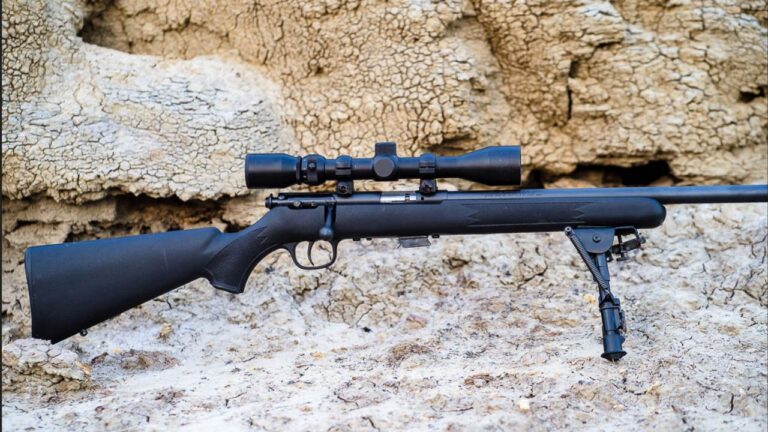
Photo credit: Northern Hills Defense/YouTube
The Mossberg 500 is one of those shotguns people tend to sum up in one sentence: affordable pump, works great, been around forever. All of that is true, but it leaves out why the gun became such a giant in the first place. Mossberg’s own company timeline says the first Model 500 was produced in August 1962, and American Rifleman has described it as a shotgun built around an unusually strong mix of affordability, quality, and modularity.
That combination is what made the 500 more than just “the budget pump.” It became one of the most important shotgun platforms in America because it could cross over from bird hunting to police work to home defense to weird specialty variants without losing its basic identity. Here are 15 surprising facts about the Mossberg 500 that a lot of shooters never really hear laid out clearly.
It dates to 1962, not some much later budget-gun era

A lot of people talk about the Mossberg 500 like it showed up as a later bargain alternative after the classic pumps were already established. Mossberg’s own timeline says the first Model 500 was produced in 1962, and both American Rifleman and Shooting Illustrated treat that year as the real starting point of the model.
That matters because it puts the 500 much deeper into American shotgun history than some younger shooters realize. It is not a recent knockoff-era gun. It is a long-running postwar pump design that has been part of the market for more than six decades.
It won by being affordable without feeling cheap

American Rifleman’s history piece says the 500 became popular because of its balance of affordability and quality, which is really the whole story in plain English. Mossberg managed to build a pump gun regular people could afford without making it feel throwaway.
That is a harder trick than it sounds. Lots of guns are cheap. Fewer become classics because they stay affordable and earn long-term trust. The 500 did that, which is why it stopped being “the inexpensive option” and became one of the default pump shotguns in the country.
The receiver is aluminum, not steel

One of the most overlooked Mossberg 500 facts is that it uses an anodized aluminum receiver, not a steel one. American Rifleman’s centennial coverage lists that directly among the shotgun’s defining features.
That surprises some shooters because the gun still built a strong durability reputation anyway. The reason it works is that the bolt locks into the barrel extension, so the receiver is not taking the same kind of stress people assume. That let Mossberg keep weight and cost down without turning the gun into a fragile mess.
The safety is ambidextrous in a way a lot of pumps are not

The Mossberg 500’s top-mounted safety is one of the features that helped define the platform. American Rifleman’s centennial announcement specifically calls it “universally-recognized” and ambidextrous.
That is a bigger deal than it sounds. A lot of shotgun controls favor one kind of user more than the other. The 500’s tang safety is part of why so many shooters find the gun intuitive, especially in traditional stock form. It became one of the little ergonomic advantages that helped set the 500 apart.
It did not always have dual action bars
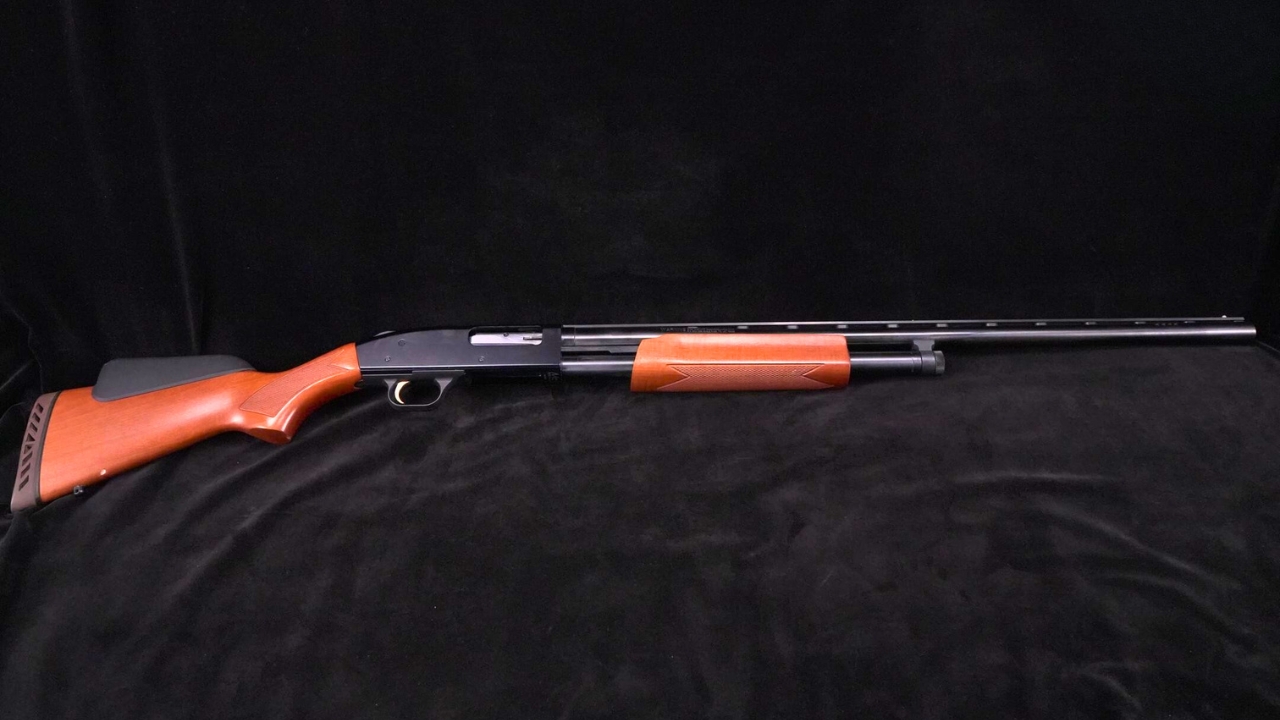
A lot of people assume the Mossberg 500 always had dual action bars, but Shooting Illustrated says dual action bars were added in 1970, after Remington’s patent expired, to prevent binding from pressure applied to one side.
That is a fun little historical detail because it shows the 500 was not born fully frozen. The gun evolved. And one of the features many people now treat as a basic part of the model actually came after the original launch.
Its bolt locks into the barrel extension, not the receiver

Shooting Illustrated’s 2015 shotgun piece says all Mossberg 500 and 590 models use a single-lug bolt that locks directly into a hole on the barrel extension, which means there is no locking stress on the aluminum receiver.
That helps explain how the shotgun could use an aluminum receiver and still hold up so well. It is one of those mechanical details most owners never think about, but it is a big part of why the design works as well as it does.
The anti-jam elevator is one of its defining mechanical features

American Rifleman’s centennial piece includes the anti-jam elevator in the model’s core design features, right alongside the dual extractors and twin action bars.
That sounds minor until you remember what pump guns are supposed to do: feed smoothly and keep going. On a shotgun that became famous for reliability, little details like that matter a lot. The 500’s reputation did not come from one big gimmick. It came from a lot of small design choices that worked together.
The 500 eventually sold in staggering numbers

American Rifleman reported in 2019 that more than 12 million Mossberg 500s had been sold in its 50-plus years of production. That is a huge number for any shotgun line.
Once a gun crosses that kind of production threshold, it stops being just successful and starts becoming part of the background of American gun culture. The 500 is one of those guns people “just grew up around,” and the sales numbers explain why.
It was modular long before “modular” became a trendy selling word

American Rifleman’s history piece says the 500’s modular nature was a major part of its appeal, noting that stocks and barrels could be switched to turn the same gun into very different setups.
That is a big reason the 500 stayed relevant. A single shotgun could be a bird gun, a deer gun, or a cruiser-type defensive gun with relatively little fuss. That kind of flexibility made the platform feel more valuable to ordinary owners, and it helped keep people in the Mossberg world instead of looking elsewhere.
It built a huge law-enforcement following because agencies could actually afford it

Shooting Illustrated says many of the shorter-barreled 500s were sold to law-enforcement agencies because of their reliability and the fact that they were affordable enough for budget-strapped departments to buy in quantity.
That tells you something important about the 500’s role in American shotgun history. It was not just a field gun that sometimes got used defensively. It became one of the practical working shotguns of the law-enforcement world because it delivered enough performance at the right price.
The original Model 500 failed the military test that later led to the 590

This is one of the most interesting Mossberg 500 facts. Shooting Illustrated says that during the 1970s, Mossberg submitted the Model 500 for official military consideration, but it failed the government’s MIL-SPEC 3443E protocol.
That sounds like bad news until you see the rest of the story. Mossberg used the lessons from that process to develop the Model 590, which was built to meet the military requirements more directly. So the 500’s military “failure” is part of what gave us one of its most important descendants.
The 590A1 exists because Mossberg kept pushing the platform into harder-duty roles

Shooting Illustrated’s history of the 590A1 explains that after the earlier military-testing issues, Mossberg ultimately produced the 590 in 1987 to meet military specifications.
That matters because a lot of people treat the 500, 590, and 590A1 like unrelated Mossberg families when they are really part of the same broader lineage. The 500 did not stay stuck as one sporting pump. It grew into a family that could serve much tougher roles too.
Mossberg even made a bullpup 500 in the 1980s

This one surprises a lot of people. American Rifleman says Mossberg cataloged a bullpup version of the Model 500, called the Model 500B, throughout the 1980s, and Shooting Illustrated also notes a short-lived bullpup variant in the mid-to-late ’80s.
That is a great reminder that the Mossberg 500 story is not just wood-stock bird guns and bead sights. Mossberg was willing to get pretty weird with the platform when the market or the moment seemed to call for it.
The FLEX system tried to turn one shotgun into many shotguns

American Rifleman’s 2012 coverage of the Mossberg 500 FLEX described it as giving “new life” to the time-tested design by making it easier to swap configurations so one gun could serve multiple roles.
That fits perfectly with the deeper 500 theme: modularity. Mossberg kept returning to the idea that the 500’s strength was not just durability, but adaptability. The FLEX system was basically that idea turned into a factory feature.
The Mossberg 500’s real surprise is that it became a classic without pretending to be fancy

The 500 never built its identity on luxury. It built it on value, utility, and the fact that the design kept working in one role after another. American Rifleman calls it iconic for hunting and home defense, and Mossberg’s own company history says the shotgun became legendary for reliability and durability.
That is probably the most surprising thing about it. A lot of famous guns become famous because they were glamorous or premium. The Mossberg 500 became famous by being the shotgun a huge number of ordinary people could buy, trust, and keep using for just about everything. That is a different kind of legend, but it is a real one.
Like The Avid Outdoorsman’s content? Subscribe to our newsletter so you never miss an article.
Here’s more from us: