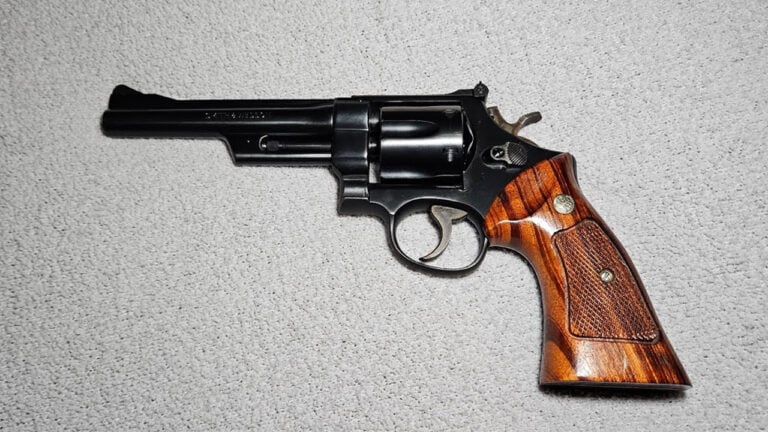
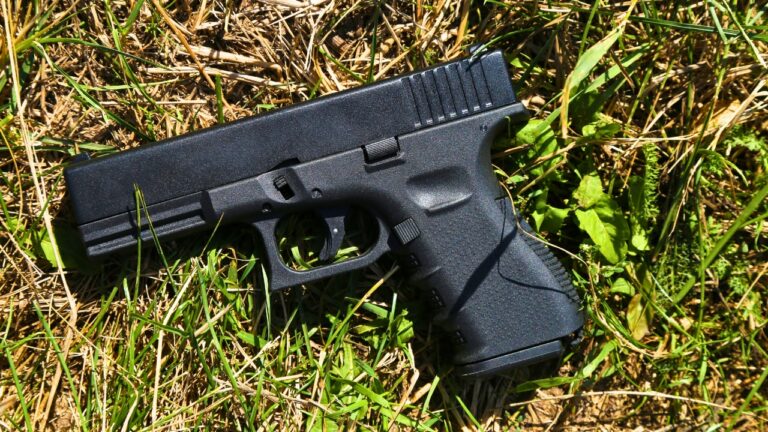
Photo credit: Springfield Armory
The TRP doesn’t care if it’s cold, dirty, or running on dry lube. It was designed off the FBI’s Professional Model—built for real use, not benchrest admiration. You pick it up, load it, run it, and it keeps going. Whether you’re shooting drills or carrying it as a defensive tool, the TRP doesn’t act finicky like some other 1911s can.
You don’t have to wonder if it’ll choke on your preferred hollow points or start acting weird after a few hundred rounds. It’s the kind of 1911 that’s built to be used, not pampered. And once you put a few boxes through it, you’ll know exactly what I mean.
It’s tight where it matters, but still runs
A lot of folks chase 1911s that are tight for the sake of being tight—thinking that means accuracy. But overly snug slide-to-frame fit doesn’t always survive real-world use. The TRP feels fitted, but it doesn’t lock up like a match pistol. There’s just enough give to keep things reliable, especially when conditions aren’t perfect.
You can shoot this thing hard, and it won’t hiccup just because it hasn’t been wiped down in 200 rounds. It’s the sweet spot between precision and practicality. Tight where it needs to be, forgiving where it should be. Springfield got that part exactly right on the TRP.
The checkering actually helps, not hurts

Plenty of 1911s come with checkering that looks good in photos but feels like a cheese grater after a few magazines. The TRP gives you 20 LPI on the front strap and mainspring housing, and it’s aggressive—but usable. When your palms are wet or your grip breaks down mid-string, that checkering keeps things anchored without chewing your hands to ribbons.
If you’re used to slick grip frames or mushy G10 panels, this will feel like a different world. In a good way. The TRP stays planted when you press through recoil. You don’t have to wrestle it back into position every shot.
The trigger breaks like you want it to
Every TRP I’ve handled had a clean, consistent trigger—usually in the 4 to 5-pound range. It’s not race-gun light, and that’s fine. For serious work, you want a trigger you can trust under pressure, not one that surprises you when you’re still prepping the shot.
The reset is short and tactile. It gives you exactly what you need to run it fast and stay accurate. Springfield didn’t try to reinvent anything here. They gave you a trigger that does what a 1911 trigger is supposed to do—without stacking, grit, or mystery.
It’s set up for actual carry, not the safe
A lot of higher-end 1911s ship with parts that are too delicate, too flashy, or too snaggy for real use. The TRP avoids all that. You get combat-style three-dot tritium sights, a forged steel frame, a match-grade barrel, and an ambi safety that doesn’t stick out like an oar.
Even the finish—Springfield’s Armory Kote—holds up better than you’d expect. It’s not going to look perfect forever, but it doesn’t wear out from a holster in a week either. You can run this gun daily and not feel like you’re ruining something expensive. That’s a rare trait in the 1911 world.
It’s heavy, but it works in your favor

At around 42 ounces unloaded, the TRP isn’t light. But that weight makes it a lot easier to shoot well, especially with hot defensive ammo. Follow-up shots land quicker, muzzle rise is minimal, and even newer shooters can run it with control.
If you’re used to polymer carry guns, this thing might feel like an anchor at first. But once you get used to how it tracks and soaks up recoil, it’s hard to go back. It’s the kind of gun that rewards good fundamentals—and doesn’t punish you for extended range sessions.
Every part looks like it was made to last
Springfield didn’t throw bargain-bin parts into the TRP and hope nobody noticed. The match barrel, forged frame, and tool steel internals hold up under hard use. Even the grip screws and pins feel like they were picked with long-term durability in mind.
When you field strip the TRP, you don’t get the impression you’re dealing with something soft or fragile. Everything feels built to go the distance. That’s the difference between a gun you take to the range and one you’d trust in a fight. This one fits firmly in the second category.
It earns its price with performance
The TRP isn’t cheap. But you’re not paying for rollmarks, engraving, or boutique styling. You’re paying for a serious 1911 that’s already set up the right way. Most shooters would spend more upgrading a base model than what this costs out of the gate.
If you actually plan on carrying or using a 1911 for defensive work, the TRP makes sense. It shoots straight, carries well, and stays reliable through the kind of use most 1911s start complaining about. You won’t have to send it off to a gunsmith just to get it functioning properly. That alone makes it worth a hard look.
Like The Avid Outdoorsman’s content? Be sure to follow us.
Here’s more from us:
The worst deer rifles money can buy
Sidearms That Belong in the Safe — Not Your Belt
*This article was developed with AI-powered tools and has been carefully reviewed by our editors.