Photo credit: GUN SHOT SOUNDS/YouTube
The Desert Eagle is one of the most misunderstood handguns ever made because almost everybody meets it through movies before they meet it through facts. It gets talked about like it is just a giant novelty pistol, or like it was always a .50-caliber gun, or like it works like every other semi-auto. None of that is really right. The Desert Eagle was first conceived in 1979, its earliest production model was a Mark I in .357 Magnum that hit the market in 1983, and the platform’s real calling card from the start was that it used a gas-operated action with a rotating bolt, which is wildly unusual for a handgun.
That is what makes the Desert Eagle interesting. Under all the movie hype, it is actually a very specific engineering answer to a very specific challenge: how do you build a semi-automatic handgun that can handle cartridges most semi-autos were never designed to run? Here are 15 things most people get wrong about the Desert Eagle.
1. It was not originally a .50 AE pistol

A lot of people think “Desert Eagle” automatically means “.50 AE,” but the first production Desert Eagle was not a .50 at all. American Rifleman says the earliest production model was the Mark I in .357 Magnum, first available in late 1983. The pistol later became the first successful semi-auto in .44 Magnum in 1986, and the .50 AE chambering did not come until the mid-1990s with the Mark XIX generation.
So the .50-caliber image came later. It became the most famous version, but it was not the beginning of the story.
2. It does not work like a normal semi-auto pistol

Most people assume the Desert Eagle is just a giant recoil-operated pistol. It is not. Magnum Research’s own materials say the Desert Eagle is a gas-operated handgun with a rotating bolt, and American Rifleman says its action is more comparable to rifle mechanics than to the blowback or recoil-operated systems that dominate the handgun market.
That is one of the biggest reasons the gun is so different. The Desert Eagle is unusual not only because of the cartridges it fires, but because of the way it cycles them.
3. It was not built first and then marketed later. The company was built around it

American Rifleman says the Desert Eagle was first conceived in 1979 and became the founding product of Magnum Research. The gun was not some later sideline experiment from an already giant handgun brand. It was central to the company’s identity from the beginning.
That matters because the Desert Eagle was never just filler in a catalog. It was the main event.
4. It was not all-American from the beginning
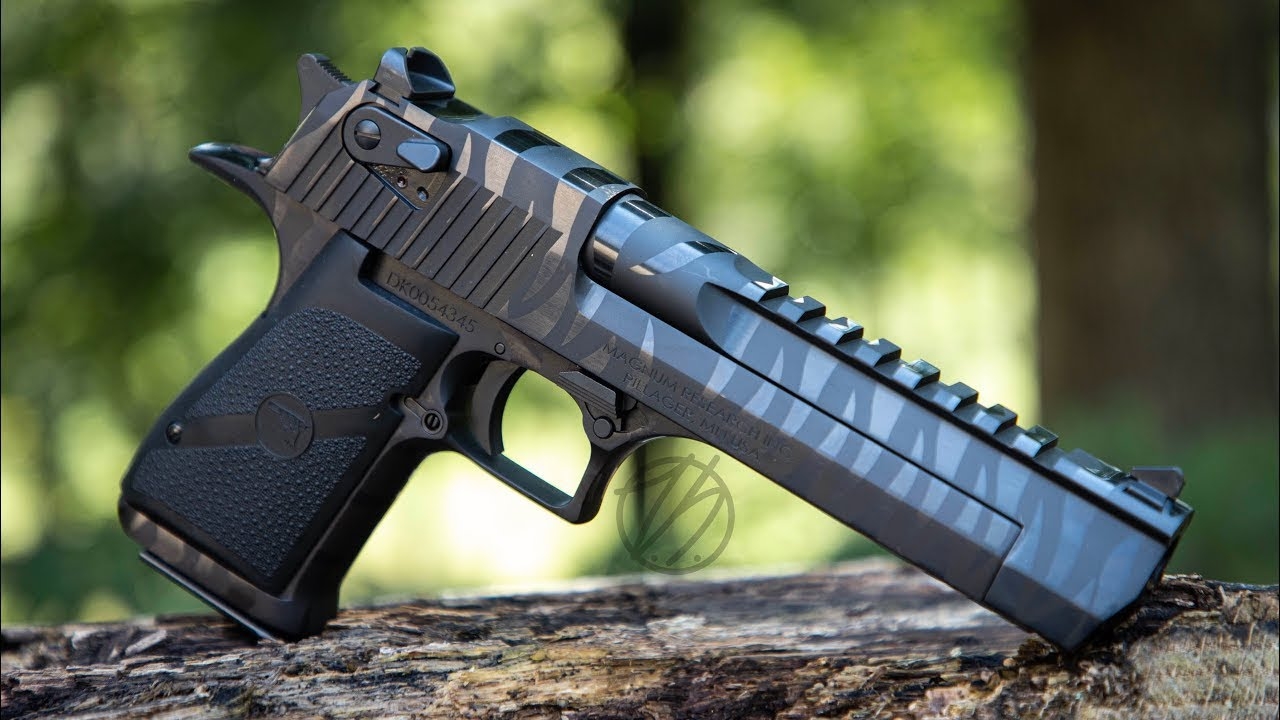
A lot of people assume the Desert Eagle has always been a U.S.-built handgun. The history is more mixed. American Rifleman says working prototypes were completed early, but Israel Military Industries (IMI) was subcontracted to build the gun, and the earliest production models were made there. Later, production moved stateside, and American Rifleman says the pistol has been produced wholly in the United States since 2009 under Kahr’s umbrella.
So the Desert Eagle’s manufacturing history is part American design story, part Israeli production story, and later a U.S.-production story again.
5. The “Mark” versions are not all the same gun

A lot of people use “Desert Eagle” like there was one gun and then some finish variations. In reality, there were three major iterations: Mark I, Mark VII, and Mark XIX. American Rifleman and Shooting Illustrated both lay that out clearly. The Mark VII added a two-stage trigger, a redesigned safety lever, and an enlarged slide release, while the Mark XIX later became the modular version associated with multiple magnum chamberings and modern accessory rail arrangements.
That means “Desert Eagle” is a family name, not one fixed configuration.
6. It was the .44 Magnum version that really broke new ground

The .50 AE gets the glory now, but the .44 Magnum Desert Eagle was arguably the bigger breakthrough for its time. American Rifleman says the Desert Eagle became the first successful semi-automatic handgun chambered in .44 Magnum in 1986.
That is a much bigger deal than many casual fans realize. The platform had already done something historic before the .50 AE ever showed up.
7. The .41 Magnum version existed, but most people never hear about it
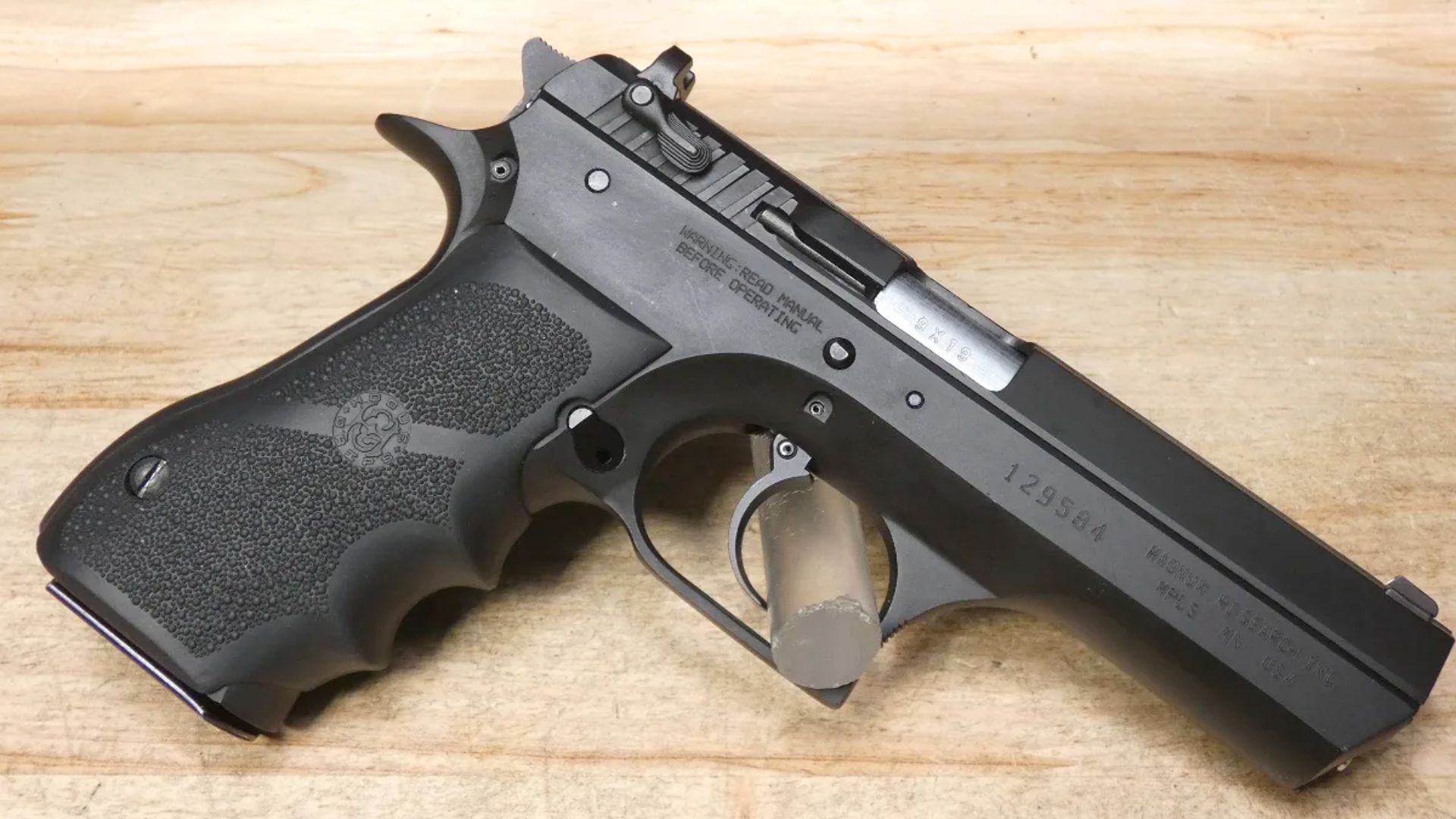
When people list Desert Eagle chamberings, they usually say .357, .44, and .50 AE and stop there. But American Rifleman says the pistol was also chambered in .41 Magnum in 1987, though that version is no longer in production.
That makes the Desert Eagle’s caliber history a little broader than the usual talking points suggest.
8. It is not just “heavy because it is ridiculous.” The size is part of how the system works
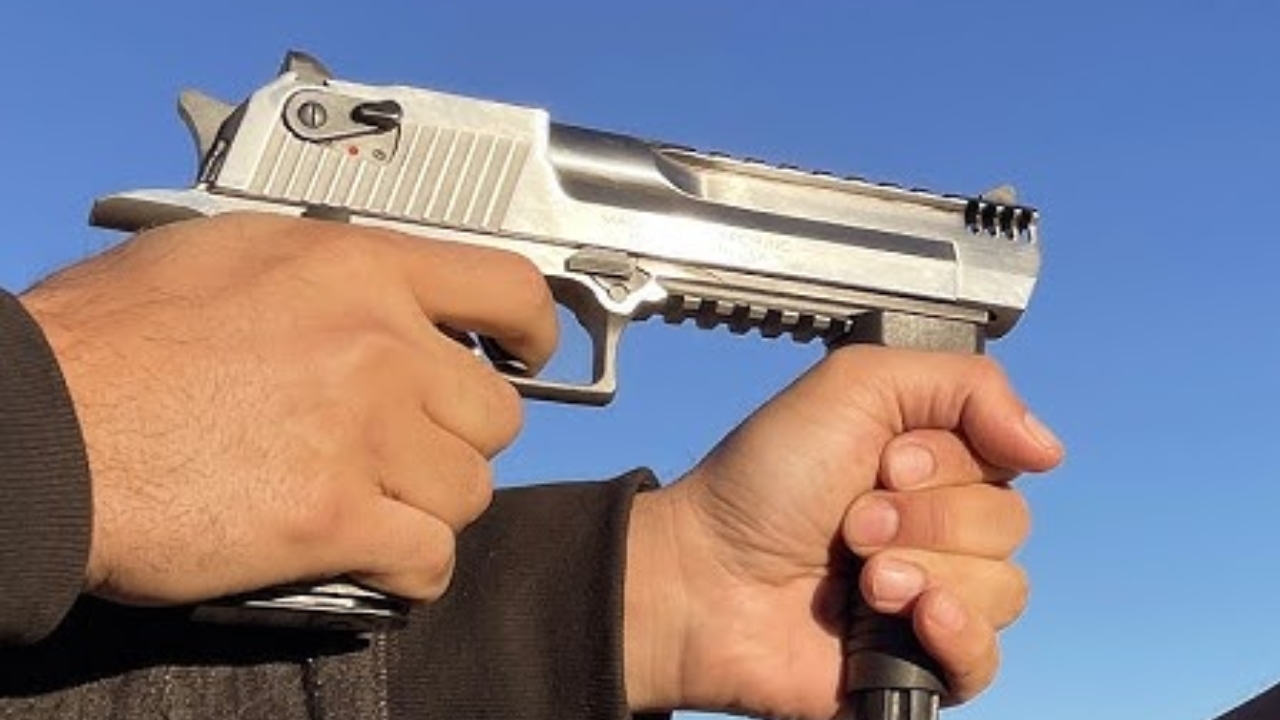
People mock the Desert Eagle’s size like it is pure vanity, but the physical bulk is tied directly to the operating system and cartridges. Magnum Research’s official brochure describes the pistol as using a fairly massive rotating bolt, and the gas-operated design itself demands space and structure most handgun systems do not need.
So yes, it is huge. But a lot of that hugeness is engineering, not just styling.
9. The barrel rail changed a lot across generations
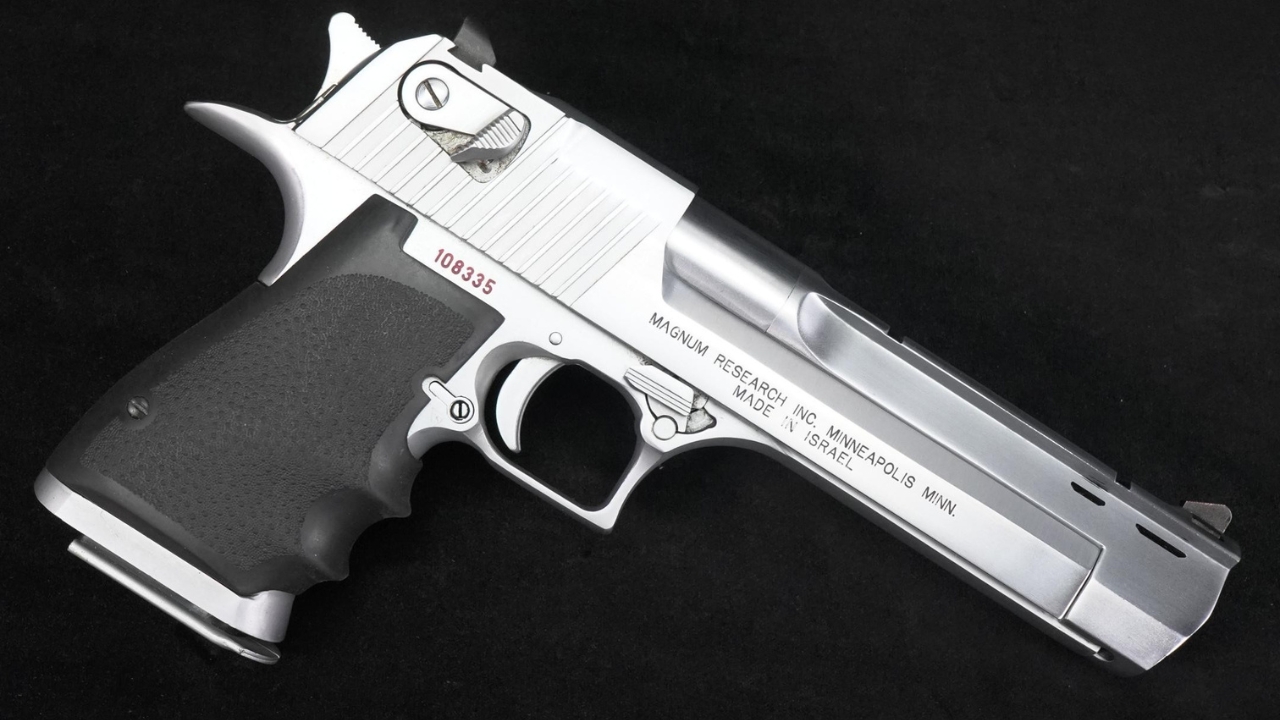
A lot of people think every Desert Eagle always had the same top rail setup. Shooting Illustrated’s interchangeability breakdown says the Mark I barrels had a narrow 3/8-inch straight rib, the Mark VII widened that to a larger rail-like format, and the Mark XIX eventually got a more modern multi-slot arrangement.
That matters because the rails are one of the quickest visual tells for what generation of gun you are looking at.
10. It is more modular than most people think

American Rifleman says the Mark XIX progressed into a form with modular components allowing conversion between .357 Magnum, .44 Magnum, and .50 AE.
That is one of the more overlooked practical facts about the platform. People think of the Desert Eagle as a fixed-format showpiece, but later versions were designed with meaningful caliber flexibility in mind.
11. The gun’s design is closer to a rifle than most pistols are

American Rifleman’s “Nine Things You Didn’t Know” piece says the Desert Eagle’s gas-operated action is comparable to an AK-47-style gas system and uses a multi-lug rotary bolt similar in concept to an AR-15, minus the bolt carrier.
That is why so many ordinary pistol assumptions fall apart with this gun. It really is operating from a different engineering mindset than most handguns.
12. It became a movie icon very early
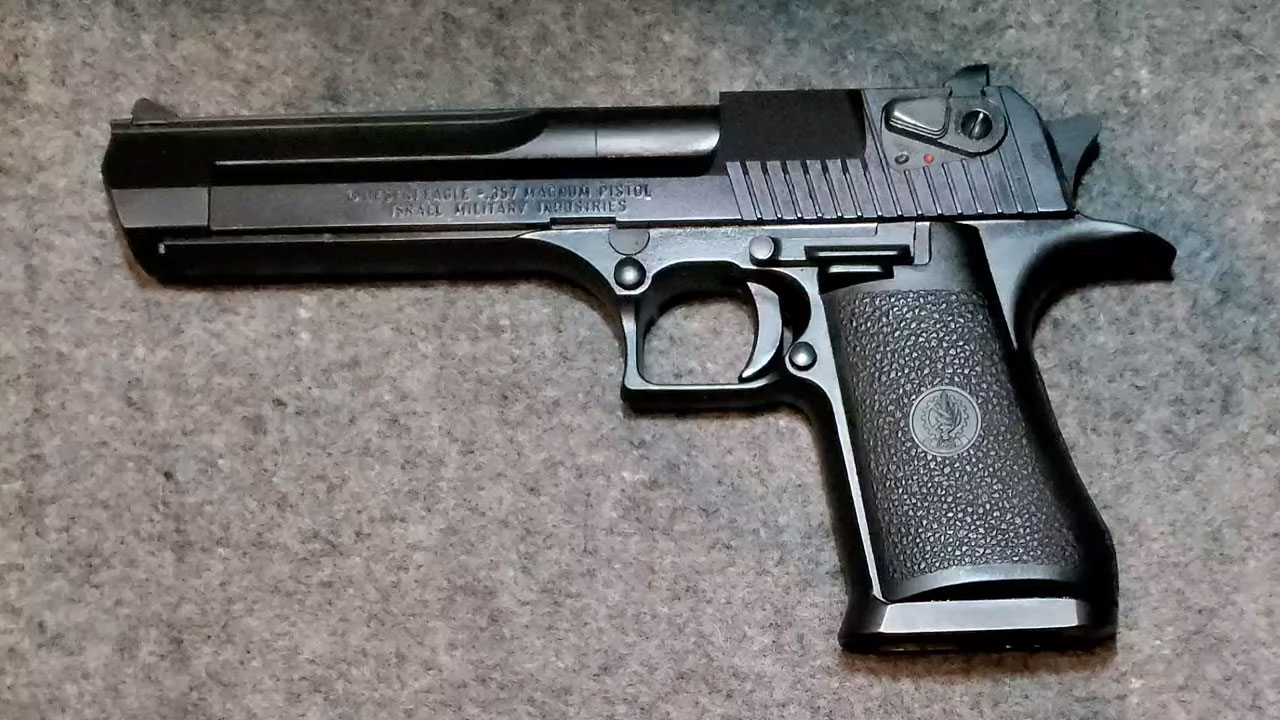
A lot of people treat the Desert Eagle’s movie image as something that developed later, but American Rifleman says the Mark I appeared in films by 1985, including Year of the Dragon and Commando.
That early screen exposure mattered. The pistol’s giant silhouette and unusual proportions made it perfect for movies, which helped build the myth before most normal shooters ever saw one in person.
13. The .50 AE version was a first in its own lane too

American Rifleman says that when the .50 AE Mark XIX arrived in the mid-1990s, no one else had successfully built a .50-caliber semi-automatic pistol like it, and it remains the one most strongly tied to that concept.
That means the gun was not just oversized for attention. It kept breaking genuinely unusual new ground as the platform evolved.
14. It is not a practical carry or duty pistol just because it is semi-auto
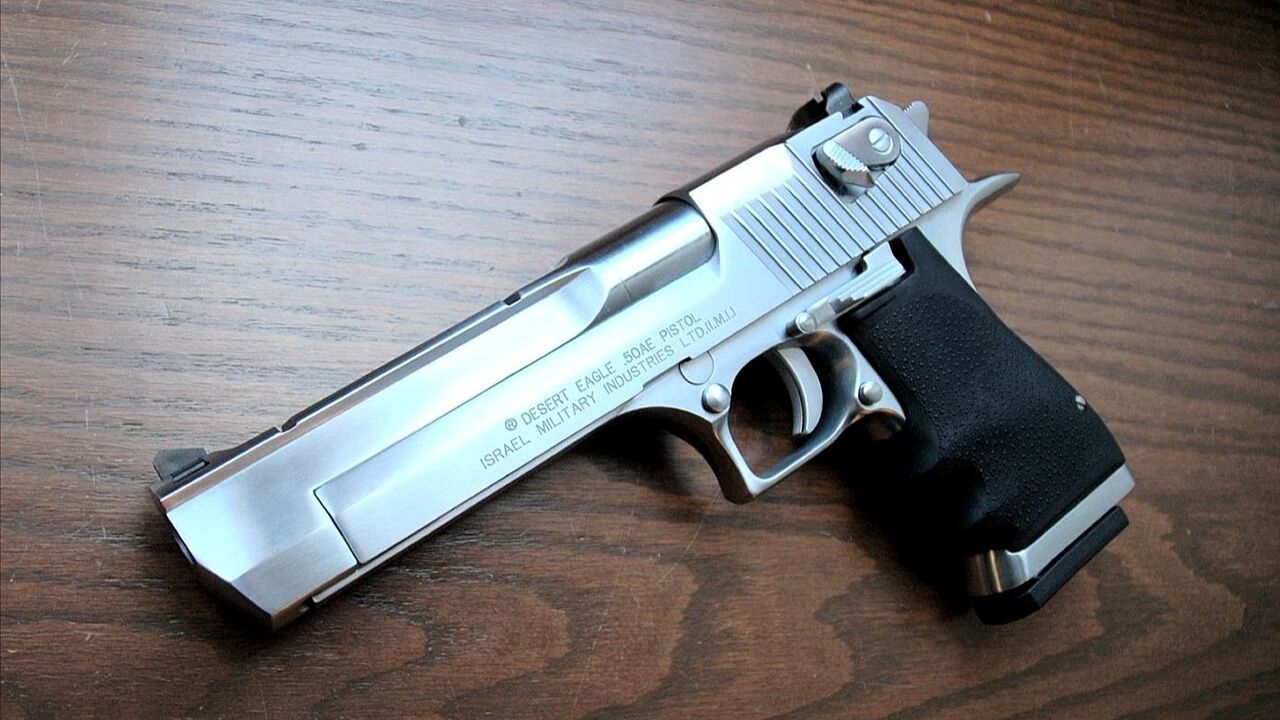
This is one of the biggest things people get wrong when they blur “semi-auto” into “service pistol.” The Desert Eagle is a semi-automatic handgun, yes, but everything about its size, weight, cartridge selection, and operating system puts it far outside normal duty-pistol logic. Even American Rifleman frames it more like a specialized magnum semi-auto than any kind of mainstream service handgun.
That does not make it pointless. It just means it belongs in a very different category from the pistols most people actually carry or issue.
15. The biggest thing people get wrong is thinking it is only famous because it looks cool
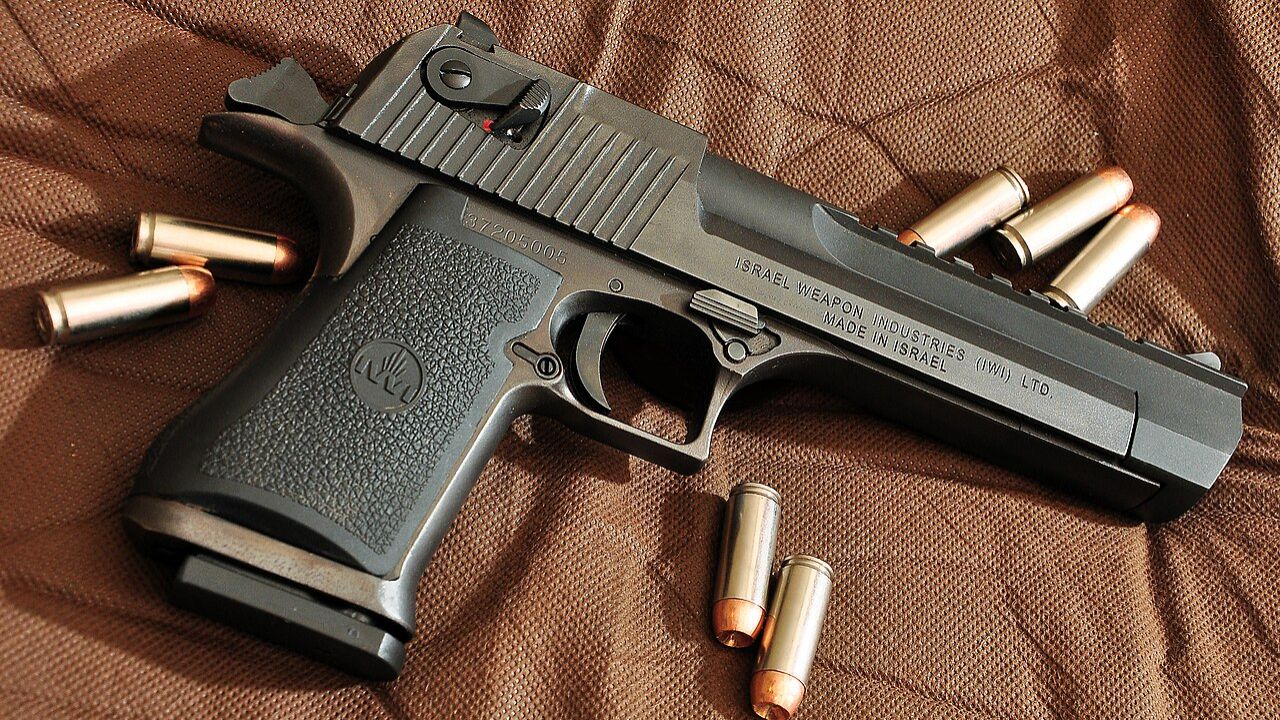
The Desert Eagle absolutely owes some of its fame to movies, video games, and pure visual excess. But that is not the whole story. Underneath the image, it was a genuinely unusual engineering project: a gas-operated, rotating-bolt semi-auto handgun that successfully handled cartridges like .44 Magnum and later .50 AE in a way few people thought practical.
That is why the gun lasted. If it were only a prop, it would have faded. The reason it is still here is that behind all the hype, the Desert Eagle was always a real technical outlier.
Like The Avid Outdoorsman’s content? Subscribe to our newsletter so you never miss an article.
Here’s more from us: