
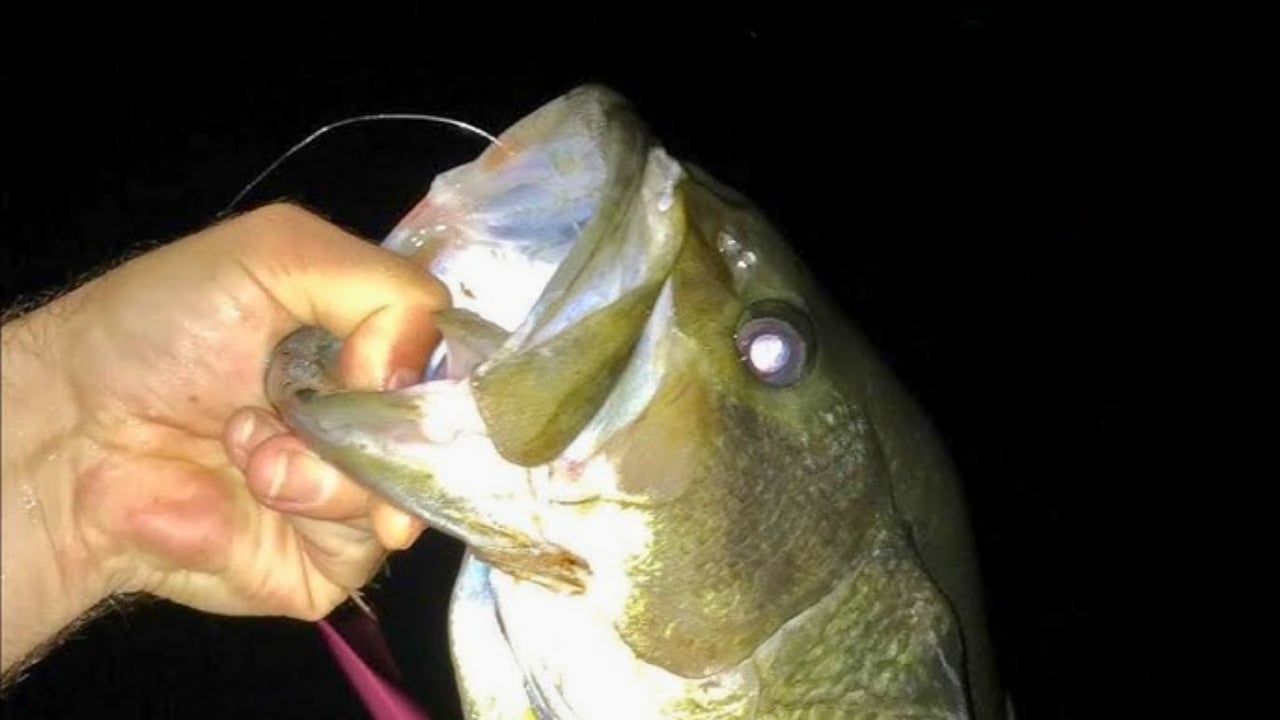
Image Credit: The Fishing Teacher With Randy Blaukat/YouTube.
Night fishing for bass isn’t the same as throwing a few casts in the middle of the day. Everything changes after dark—bass feed differently, their strike zones widen, and they rely more on feel and sound than sight. If you’re still fishing the same way you do during daylight hours, you’re leaving a lot of bites on the table.
To catch more bass at night, you need to adapt. That means picking the right lures, focusing on high-percentage areas, and understanding how bass move when the lights go out. If you’re serious about stepping up your night fishing game, these nine tips will help you land more fish and make the most of those after-dark trips.
1. Use Lures That Create Vibration and Sound

When visibility drops, bass rely on their lateral lines to detect movement and vibration. That means loud, thumping lures like spinnerbaits, chatterbaits, and big Colorado-blade buzzbaits should be your go-to. A black or dark-colored lure with a steady, slow retrieve will put out plenty of vibration and get a reaction strike.
Topwater baits like a jitterbug or a loud popping frog also shine at night. The key is a consistent retrieve—no erratic movements. Bass lock in on a predictable target, so let them come to it instead of yanking it away.
2. Target Shallow Structure First

Bass push shallow at night, especially in warmer months. During the day, they might be deep, avoiding the sun, but once that heat breaks, they’re hunting in the shallows. Start with docks, rocky shorelines, points, and submerged timber.
Light penetration is minimal, so bass will use shadows and structure as ambush points. If you’re fishing a new lake, focus on shallow flats near deeper water. These areas hold fish year-round and make for an easy night bite.
3. Slow Down Your Retrieve

Most guys fish too fast at night. During the day, you can get away with burning a crankbait or ripping a jerkbait, but at night, bass are looking for an easy meal. Slow-rolling a spinnerbait or dragging a Texas-rigged worm along the bottom gives them time to locate and commit.
A steady, slow-moving bait creates the kind of vibration bass home in on after dark. If you think you’re fishing slow, slow down even more. The best night anglers know patience is what gets big bites.
4. Pay Attention to the Moon Phase

The moon plays a big role in how bass behave at night. A full moon provides more light, which means bass can rely on sight a little more. That’s when topwater and reaction baits shine. On darker nights, they depend on their lateral line even more, so go heavy on the thumping, slow-moving lures.
If there’s a strong moon, fish will often move deeper or hold tighter to cover. On pitch-black nights, they tend to push shallow and hunt more aggressively. Either way, knowing the moon phase helps you adjust your approach.
5. Use Darker Colored Baits

It sounds counterintuitive, but dark-colored baits show up better in low light. Black, dark blue, and purple create a strong silhouette against the surface, making it easier for bass to track.
Soft plastics, spinnerbaits, and jigs in these colors will outperform bright, flashy lures at night. A black and blue jig with a bulky trailer is one of the best setups when the bite is slow.
6. Listen for Feeding Activity

One of the best ways to locate bass at night is to use your ears. Bass busting shad, bluegill popping near the surface, or even the sound of baitfish scattering are all signs you’re in the right area.
If you hear activity, don’t waste time fishing dead water. Move toward the action and throw a lure that matches the bait they’re feeding on. A topwater plug or a swimbait fished just below the surface can capitalize on an active school.
7. Fish Around Artificial Light

Docks, marinas, and bridges with lights draw in baitfish, and where there’s bait, there’s bass. Artificial lights create a feeding zone, making it easy to predict where bass will be.
Throw a lure along the edges of the light, where bass will be waiting to ambush bait. A slow-moving swimbait or a wacky-rigged worm can get them to commit when they’re staged in these high-percentage spots.
8. Watch for Temperature Drops

Cooler night temperatures can trigger feeding frenzies. If you’re fishing in the summer, bass will be much more active once the air and water temps drop.
Pay attention to sudden temperature swings. The first few hours after sunset can be some of the best fishing of the day, especially after a hot afternoon. Plan your trip around these temperature changes for the best results.
9. Use a Headlamp and Keep It Low

A headlamp is a must for night fishing, but blasting the water with light will spook bass. Use a red or dim setting and keep it pointed away from your target area.
If you need to tie a knot or re-rig, angle your light down toward your lap instead of the water. The less you disturb the natural nighttime environment, the more success you’ll have keeping bass comfortable and biting.
*This article was developed with AI-powered tools and has been carefully reviewed by our editors.


