Photo credit: AI-generated image created using ChatGPT. Illustrative only
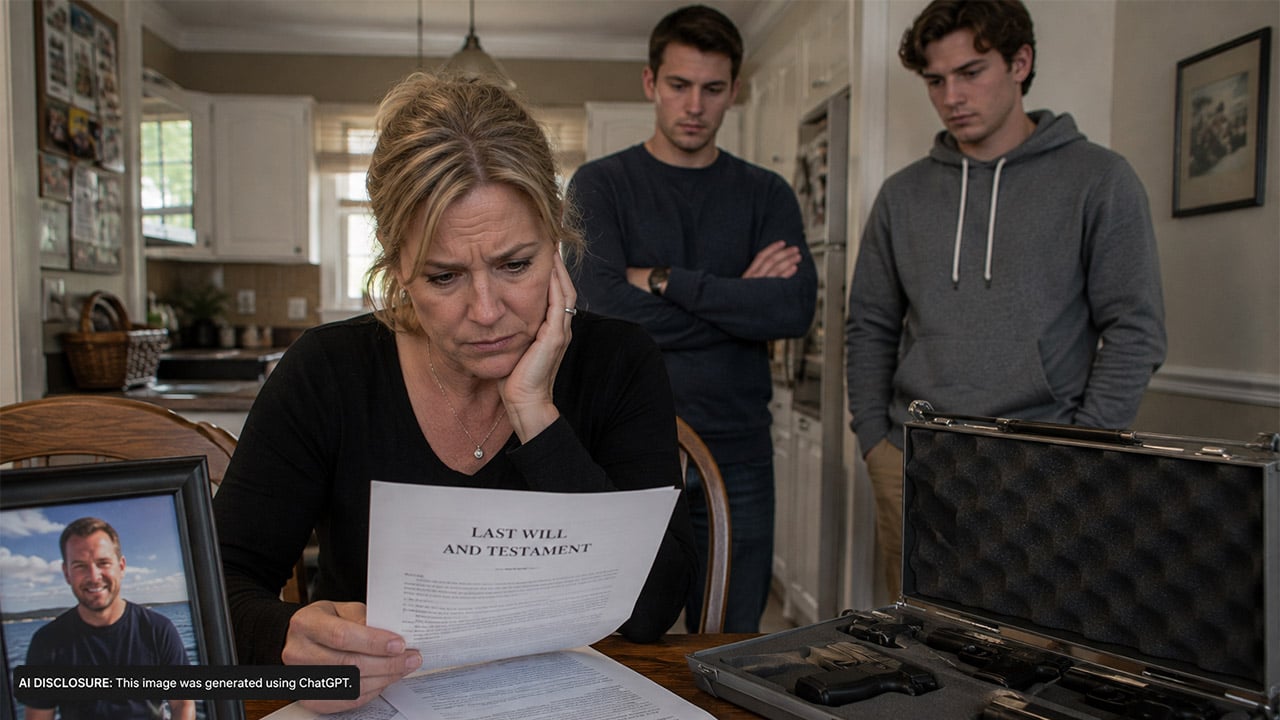
A sudden death has a way of turning regular household stuff into urgent decisions. In this case, a Connecticut family was dealing with a father’s safe full of firearms just days after he died from an unexpected heart attack, and the clock started ticking the minute everyone realized the legal “owner” might not be the one who can legally possess them.
In the original post, the man’s two sons said they both live in Connecticut and both hold Connecticut pistol permits. They’d already split the collection—handguns and long guns—between them. But their mother, the widow, was set to inherit everything, and she didn’t have a pistol permit and didn’t want the guns in the house.
A family plan ran straight into a paperwork wall
On the practical side, the sons were doing what most outdoorsmen would do: secure the guns, decide who gets what, and try to keep things calm for mom. The snag was that “we’ve split them up” doesn’t automatically mean anything in a state with strict transfer rules.
The sons’ question was simple and honest: is this something they need to do through an FFL, or can they handle it with the state transfer form (they referenced the DPS-3-C) and “call it in” themselves? That’s the kind of question you only ask when you’re trying to do it clean, because cutting corners would be easier in the short term—and a whole lot uglier later.
When the widow “inherits” guns she can’t legally keep
The tension point in their situation is one a lot of families never think about until they’re standing in front of a safe: inheritance doesn’t always match possession. The widow was inheriting “everything,” but she didn’t have a pistol permit and didn’t want firearms in the home.
That combination—no permit and no desire to store them—creates real risk. Even if everyone in the family is on the same team, the wrong gun in the wrong hands, even temporarily, can turn into a legal problem. And on a human level, it’s also just unfair: a grieving spouse shouldn’t be forced to become a temporary gun custodian if she doesn’t want that responsibility.
The sons had permits, but that doesn’t automatically solve the transfer
A lot of gun owners hear “the kids have permits” and assume that’s the end of it. In real life, it’s usually just the beginning. Permits make the sons eligible to receive handguns, but eligibility isn’t the same as a lawful transfer under Connecticut’s rules.
That’s why the original question focused on process: whether they needed an FFL in the middle, or whether the correct state form and reporting would cover it. It’s not just about being “allowed” to own the guns—it’s about proving the chain of ownership if the state ever asks, and avoiding a messy situation if the guns are ever sold, traded, stolen, or used defensively down the road.
The safe in the house becomes a deadline
The post makes it clear the guns were in the father’s safe at home and “need to be attended to.” That’s a polite way of saying everyone’s thinking about security, access, and what happens if something goes sideways while emotions are high and the house is full of people.
There’s also the reality that the widow didn’t want them in the house anymore. That’s common, especially right after a sudden death. One day those firearms are a normal part of the home; the next day they’re a stressful reminder and a responsibility she never asked for, with legal strings attached.
What gun owners usually focus on in situations like this
Even without seeing a long back-and-forth in the source material, you can tell what the pressure points are because they’re the same ones that come up anytime an estate includes firearms: keep them secured, don’t let an unpermitted person become the “holder,” and get the transfer documented the right way.
Hunters and shooters also tend to think ahead to the practical consequences. If the guns aren’t transferred correctly, it can complicate everything from insurance claims after a theft to a future sale to another family member. And if there’s ever a defensive use, the last thing anyone needs is a question mark over whether the gun was legally possessed in the first place.
The most important move is slowing down and doing it clean
This family’s situation is exactly why so many old-school outdoorsmen preach estate planning for guns—because the worst time to learn state transfer rules is the week you’re planning a funeral. When a surviving spouse is the legal heir but isn’t permitted (and doesn’t want the firearms), the “right” answer usually involves getting the guns secured, keeping possession with someone who can lawfully have them, and completing whatever transfer process the state requires.
The sons were already trying to do the responsible thing by asking how to handle the transfer instead of just swapping guns in the kitchen and calling it good. In a place like Connecticut, that little bit of discipline—paperwork, proper transfer channels, and keeping the widow out of the middle of it—can be the difference between honoring a father’s collection and inheriting a headache nobody needs.
Like The Avid Outdoorsman’s content? Be sure to follow us.
Here’s more from us: