Photo credit: AI-generated image created using ChatGPT. Illustrative only
Breakups are hard enough without blue lights showing up at your door. But one woman says that’s exactly what started happening after an out-of-the-blue split in late December—first during a simple property exchange, then at her apartment, and even at a restaurant while she was on a date.
In the original post, she lays out a pattern: an ex-boyfriend repeatedly calling 911 and feeding police alarming claims about weapons, instability, and threats—claims she says don’t match reality and, in at least one case, were contradicted by city records she obtained.
How a routine “swap our stuff” meetup turned into a police ambush
According to her account, the first escalation came about a week after the breakup. The pair had planned to exchange belongings, and her ex called police to be present. That can happen in some breakups, especially where there’s a history of threats or violence.
Her point is there wasn’t. She says the relationship had never been abusive or violent on either side, and neither had a criminal record or substance issues. Still, she describes officers approaching her as if she were armed and extremely dangerous, then following her home.
City records showed the weapon claims didn’t add up
The part that would make anybody’s stomach drop is what she says she found afterward. She requested a copy of the call through city records and learned her ex had allegedly told police she owned weapons and was “erratic,” among other claims.
She says he couldn’t have known any of that even if it were true, because they had been almost no-contact after the breakup aside from arranging the exchange. In her telling, she was simply sad and trying to get through the week like anyone would.
When “wellness checks” become a tool
After that first incident, she says she went full no-contact. No messages, no social media posts, no baiting, no threats—nothing that should be generating emergency calls.
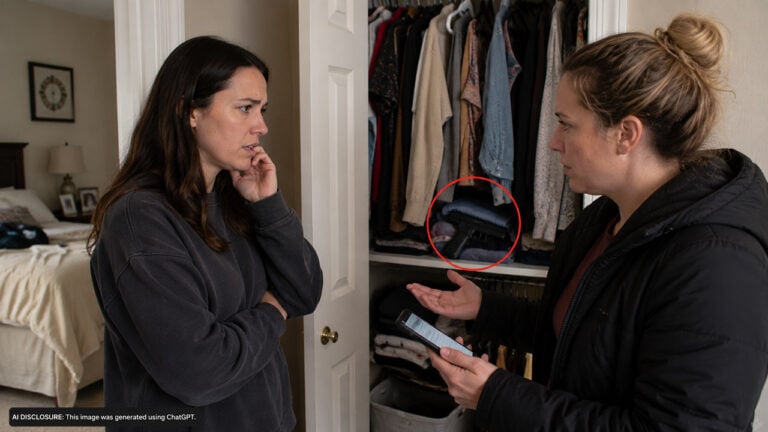
Even so, she reports that her ex called 911 twice more and sent police and paramedics to her apartment. This time, she says he claimed she was making suicidal and homicidal threats toward him and that she had bought a gun. She denies making any threats and says she does not own a gun, even though she grew up familiar with firearms. She also notes that her ex carries a gun “everywhere he goes,” which adds another layer of tension when he’s the one repeatedly injecting “she has a gun” into the conversation with dispatch.
A public run-in raised the stakes
In smaller towns and cities, you can do everything right and still end up in the same place as someone you’d rather never see again. She says that’s what happened when her ex showed up at a restaurant where she was already on a date.
She reports that he called police and claimed she was stalking him. Officers again approached her as if she were violent and dangerous. If you’ve ever been stopped on the side of a highway while hauling rifles to deer camp, you know the feeling: even when you’re doing nothing wrong, the moment law enforcement believes there’s a weapon involved, the temperature changes fast.
Why false “gun” and “threat” reports are more than just harassment
From an outdoorsman’s perspective, this is where it goes from annoying to truly risky. When someone tells dispatch, “That person has a gun and is acting erratic,” you’ve just set the stage for an officer to arrive amped up and cautious. That’s not a knock on cops—it’s reality. They go home at night by treating unknown situations seriously.
But the person on the receiving end can get hurt, or worse, if the reporting is false and keeps escalating. The woman says that’s exactly her fear: that her ex will eventually say something that causes police to harm her. Even if nobody gets physically hurt, being repeatedly treated like a violent suspect can cost you your reputation, your job opportunities, your housing peace, and your sense of safety in your own home.
It also puts lawful gun owners under a microscope. A false report that someone “bought a gun” or “has weapons” can lead to extra scrutiny during encounters and can sour how local officers view you going forward, even if the claim is untrue.
She tried to get help—and felt dismissed
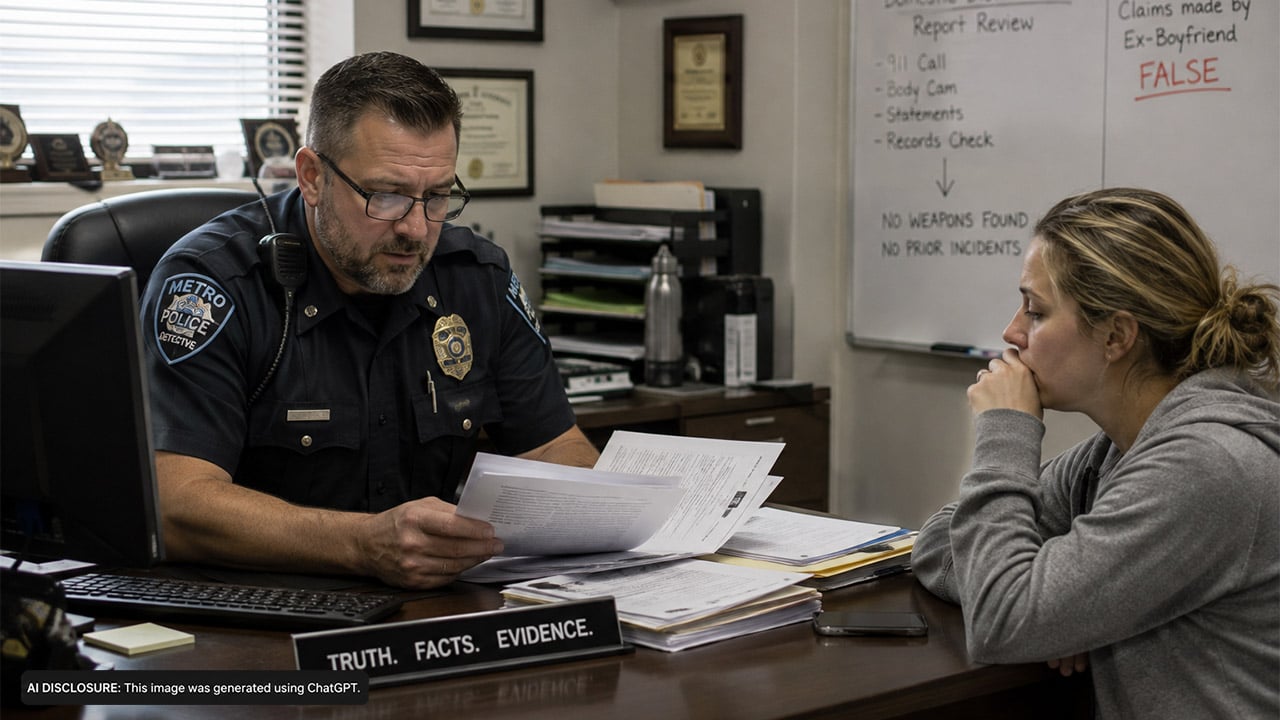
Her update is the part that will frustrate a lot of readers. She says she went to the police station, played the calls, and explained that they were no-contact—so, in her view, there’s no way he could have firsthand knowledge that she’s suicidal, homicidal, or unstable.
She reports the officer didn’t take her seriously and suggested her ex could simply be worried because she’d been sad after the breakup. She also says the officer implied she might have gone to a popular restaurant hoping to run into him, even though she didn’t pick the place. The officer reportedly said he would call the ex and warn him that false reporting and misuse of 911 can be a crime, but he refused to make that call in front of her. She left feeling “deflated” and labeled as the “crazy ex girlfriend,” in her words.
That response—again, based on her account—highlights a hard truth: sometimes the first person to call 911 sets the narrative. If you hunt, fish, or shoot long enough, you’ve seen versions of it. A neighbor complains about “automatic gunfire” on a Saturday afternoon and suddenly you’re explaining your perfectly legal range setup to someone who arrived expecting a problem.
In her case, the repeated “she has a gun” and “she’s dangerous” claims seem to be doing exactly what they’re meant to do: control the frame of the story before she ever gets a chance to speak.
She says she’s doing one smart thing already—requesting copies of the calls and saving them. When you’re dealing with someone weaponizing systems meant for emergencies, documentation is your lifeline. Dates, times, incident numbers, recordings, and any paperwork become the difference between “he said/she said” and a pattern that’s hard to ignore.
She also expressed concern that her ex may be having a mental health crisis and could hurt her, especially since his behavior is so different from how he presented during the relationship. That’s not an unreasonable fear when someone is repeatedly escalating and involving police.
At the end of the day, outdoors folks tend to believe in simple rules: don’t make threats you won’t carry out, don’t cry wolf, and don’t drag innocent people into danger. If her account is accurate, repeated false reports about guns and violence aren’t just petty—they’re playing with matches around a gas can.
Like The Avid Outdoorsman’s content? Be sure to follow us.
Here’s more from us: