

Photo credit: StudioLab Images/Shutterstock.com
Prices and plan terms verified September 5, 2026. The Avid Outdoorsman is a Bass Pro Shops affiliate — if you buy through a link here we earn a small commission at no cost to you.
These are the two cameras most people end up choosing between, and almost every comparison you’ll read gets hung up on the wrong things. Trigger speed differs by five hundredths of a second. Detection range differs by four feet. Neither of those will change a single hunt.
Here’s what actually separates them.
If you’re hanging one to four cameras, buy the Moultrie Edge 4 Solar ($169.99). The solar panel means you stop walking into your spots to change batteries.
If you’re hanging five or more, buy Tactacam Reveal Pro 4.0s ($159.99). Tactacam bills one plan per account. Moultrie bills one plan per camera. That single difference is worth more money than every other spec on this page combined.
That’s the whole answer. The rest explains why, and where each one will annoy you.
Side by side
| Tactacam Reveal Pro 4.0 | Moultrie Edge 4 Solar | |
|---|---|---|
| Price | $159.99 | $169.99 |
| Power | 12 AA (R5/R10 rechargeable packs optional) | Power Mag II rechargeable + integrated solar |
| Detection range | 96 ft low-glow / 80 ft no-glow | 100 ft |
| Trigger speed | 0.35 sec | 0.4 sec |
| Plan billing | Per account — one plan, unlimited cameras | Per camera |
| Plan starting price | ~$5/mo on annual billing | $9.99/mo |
| No-glow option | Yes | No |
| Map integration | No | Yes — onX |
Check Tactacam Reveal Pro 4.0 price at Bass Pro Shops · Check Moultrie Edge 4 Solar price at Bass Pro Shops
The billing difference, in dollars
This is the entire argument, so here it is in a table instead of a paragraph. Three years of ownership, entry-level plan on each:
| Cameras | Tactacam (per account) | Moultrie (per camera) | You save with Tactacam |
|---|---|---|---|
| 1 | $340 | $530 | $190 |
| 2 | $500 | $1,060 | $560 |
| 4 | $820 | $2,120 | $1,300 |
| 8 | $1,460 | $4,240 | $2,780 |
Camera cost plus 36 months of plan. Tactacam at $5/mo covering the account; Moultrie at $9.99/mo per camera.
At one camera it’s a couple hundred dollars over three years — real, but not decisive. At four cameras it’s a rifle. At eight it’s a rifle, a scope, and the hunt you drive to.
The thing to notice is the shape of it. Moultrie’s cost grows every time you get more serious about scouting. Tactacam’s doesn’t. If there’s any chance you’ll add cameras — and if you’re reading a comparison like this, there is — that’s the number to plan around.
Where the Moultrie is genuinely better
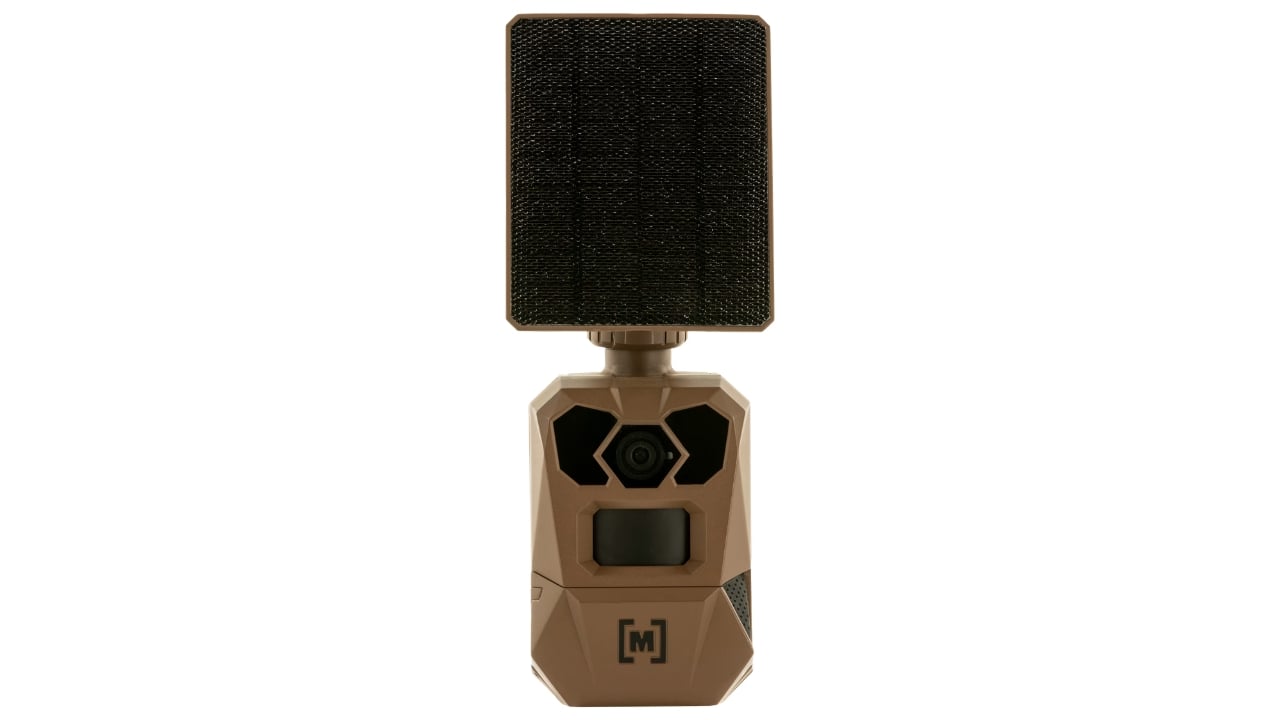
The solar panel is the real feature. Plenty of cameras have a token panel that slows the drain without stopping it. This one is good enough to hang in August and forget until you pull it in January. And the value of that isn’t battery money — it’s the four or five trips you don’t make through a bedding area in October to swap AAs. Pressure is the thing that ruins spots, and every camera trip is pressure.
onX integration. Your photos land on a map with wind data attached. That turns a folder of pictures into something you can plan a sit around. Tactacam has nothing equivalent. If you already pay for onX, this is a bigger deal than it sounds.
Night photos improved noticeably this generation. Telling a 3.5-year-old from a 4.5-year-old at 2 a.m. is most of what a summer camera survey is for, and the Edge 4 does it better than it used to.
Where it’ll annoy you: the door latch. It’s been a persistent complaint across this line, and a latch that doesn’t seat properly is a wet camera. Check it deliberately every single time you close it — that’s not a big ask, but it is a habit you have to build.
Where the Tactacam is genuinely better
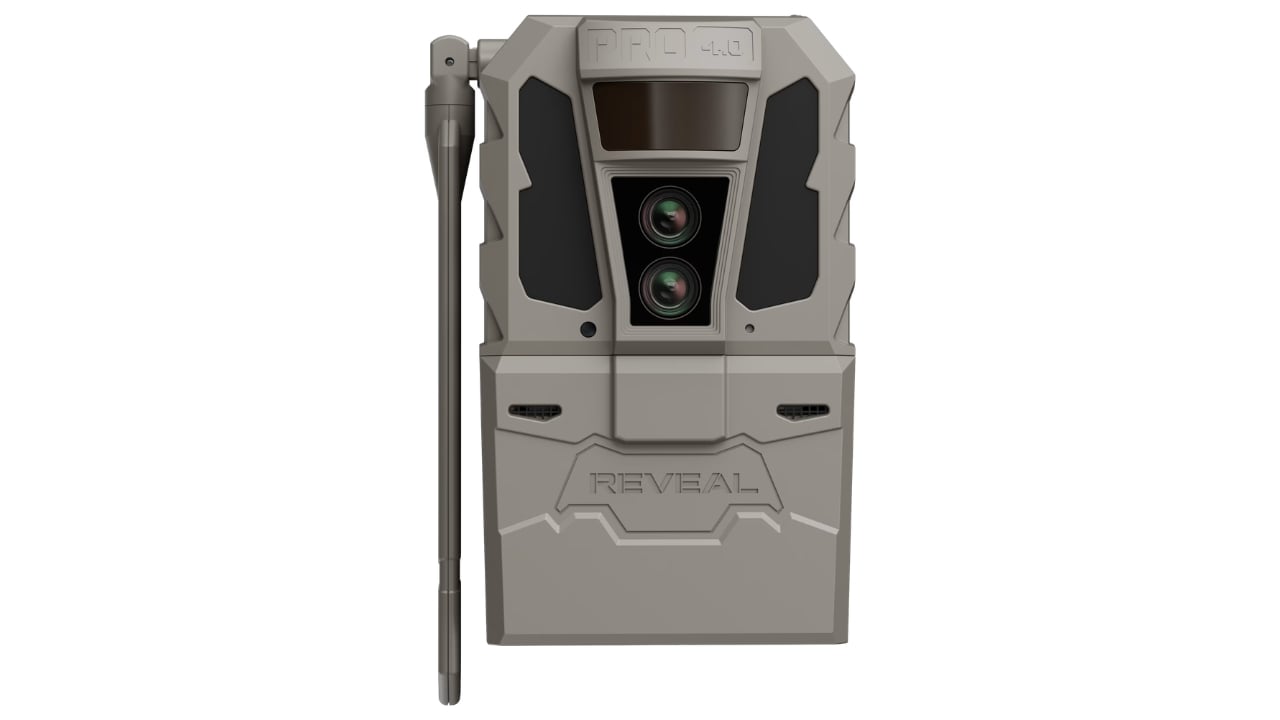
Battery life, and the ability to extend it. Twelve AAs is already a long deployment. The R5 and R10 rechargeable packs turn it into a year-round camera. It’s brute force where the Moultrie is elegant, but it gets to the same place: fewer trips.
A real no-glow option. This matters more than people give it credit for. Any camera facing a road, a property line, a trail people walk, or public ground is a camera that advertises itself with low-glow IR. The trade is range — 80 feet instead of 96. Put the no-glow on your pinches and close funnels where 80 feet is plenty, and low-glow on field edges where you need the reach.
Where it’ll annoy you: the first connection during setup is slow enough that you’ll think it failed. It usually hasn’t — give it several minutes before you start troubleshooting. The power button has also been described as finicky by enough owners that it isn’t a one-off.
The honest tiebreakers
Buy the Moultrie if: you’re running one to four cameras, you use onX, and you value never thinking about batteries over saving $200 across three years.
Buy the Tactacam if: you run five or more cameras, you hunt pressured or public ground where no-glow matters, or you expect your camera count to grow.
Buy neither if you can pull SD cards without crossing your hunting ground. Cellular solves an access problem. No access problem, no reason to pay $120 a year — buy a good non-cellular camera at half the price.
Frequently asked
Can I mix brands? You can, but you’ll be running two apps and two plans, and you’ll stop checking one of them. Pick a system and stay in it. This is the main reason the per-account versus per-camera question deserves your attention now rather than after you own four cameras.
Does the Moultrie’s solar panel actually work in winter? Under bare timber in the northern half of the country it keeps up better than you’d guess, because leaf-off means more light hits the panel exactly when the days get short. Deep in evergreens or under heavy cover, expect to top up the Power Mag II midseason.
Is 0.35 vs 0.4 seconds a real difference? Not on a food plot or a scrape, where deer mill around. On a trail where deer are walking through, a faster trigger is the difference between a photo of a buck and a photo of where a buck was. Both of these are fast enough for most setups; if trail-crossing cameras are your whole strategy, there are quarter-second options worth looking at instead.
Bottom line: the Moultrie Edge 4 Solar is the nicer camera to live with. The Tactacam Reveal Pro 4.0 is the cheaper system to own. Under five cameras, buy the nicer camera. At five and up, the math stops being close.
Sources: Field & Stream, Best Cellular Trail Cameras of 2026 · Trail Cam HQ, Cellular Trail Camera Data Plans Compared. Verify current pricing and plan terms before you buy — both change.
Like The Avid Outdoorsman’s content? Be sure to follow us.
Here’s more from us:


