Photo credit: The Avid Outdoorsman
A hunter who was already dealing with theft at a job site set up a trail camera to catch whoever was sneaking around. Then the thief found that camera and stole it too — without realizing another camera was watching.
The story came from a post on r/Hunting titled “Trail cam thief caught red-handed.” The poster said he had been having trouble with theft at a job site, so he put out a trail camera to monitor the area. That part was practical enough. Trail cameras are not only for deer trails anymore. A lot of people use them on rural properties, job sites, gates, barns, driveways, and remote spots where people tend to show up when nobody is around.
But the thief apparently noticed the camera and took it.
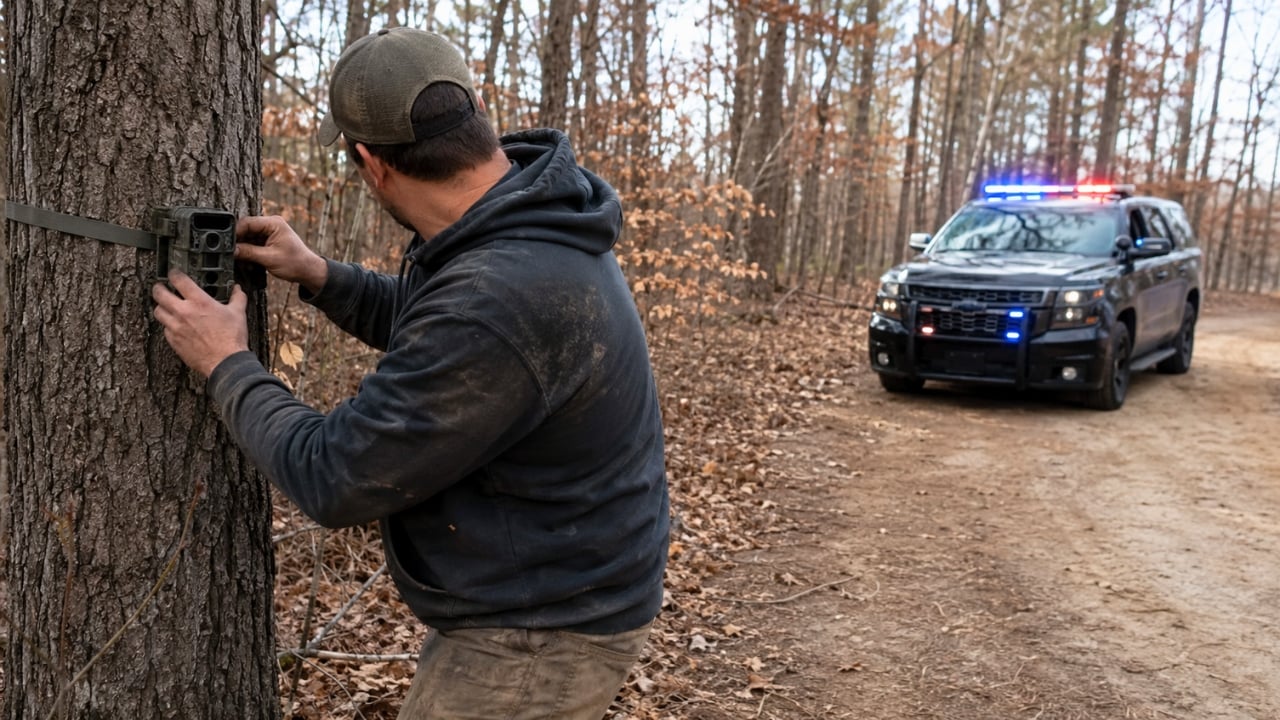
That could have been the end of the story if the poster had only used one camera. Instead, he had another camera placed where it could watch the first one. That second camera caught the person stealing the first camera, which turned a simple theft complaint into something with proof.
That is the part that made the post satisfying. Anyone who has had a trail camera stolen knows the frustration of finding an empty strap, a cut cable, or a missing memory card and having no idea who did it. This time, the person who took the camera may have thought they were removing the evidence. Instead, they created it.
The poster said he went to the police and filed a report. At that point, it was not merely a hunch or a complaint about missing gear. It was a theft with images attached.
The First Camera Was the Bait Without Meaning to Be
Trail cameras are often placed to watch a trail, feeder, stand, road, gate, or work area. But once people start stealing, the camera itself becomes part of the trap.
That seemed to be what happened here. The thief found the obvious camera and took it. Maybe they thought they were being smart. Maybe they assumed if the camera was gone, there would be no evidence of who had been there. But that only works when there is not another camera watching from a less obvious angle.
Hunters and rural landowners talk about this setup all the time. One camera is placed where it can be seen. Another one is hidden higher up, farther back, or at an angle that catches anyone walking up to mess with the first. It is the same idea as using a decoy, except the first camera may still be doing real work until someone takes it.
This kind of setup is especially useful in places where theft has already happened. A regular camera at eye level is too easy to spot. A thief can walk up, pull the card, cut the strap, or take the whole thing. A second camera hidden better gives the owner a chance to catch the person in the act.
The poster’s result proved the idea works. The thief took one camera, but not the one that mattered most.
Job Site Theft Has the Same Rural Feel as Hunting Theft
Even though this was tied to a job site, the problem felt familiar to hunters.
The equipment may be different, but the frustration is the same. You leave something in a place where it needs to do a job, and somebody else decides it belongs to them. A trail camera in the woods, a tool at a job site, a stand on public land, a ladder at a lease, a gate chain, a feeder battery — all of it depends on people not being thieves.
That is why the post landed well in a hunting community. Trail cameras are common hunting gear, but their usefulness goes way beyond scouting deer. They are also one of the easiest ways to watch remote places without sitting there all day.
The job-site angle also made the theft more serious than a random prank. If someone is stealing from a work site, they may be costing the owner time, money, materials, and trust with whoever is working there. If tools, supplies, or cameras disappear, the whole project becomes harder to manage.
The trail camera was supposed to help stop that. When it got stolen too, the poster had even more reason to push the issue.
Luckily, the second camera turned the thief’s own move against him.
Commenters Liked the Two-Camera Setup
The strongest reaction from commenters was simple: the backup camera was the right call.
A lot of hunters have learned that one camera is sometimes not enough. If a person is willing to steal, they are often willing to take the obvious camera with them. That is why many commenters in these kinds of threads suggest placing a second camera high in a tree, hidden behind brush, or angled toward the first camera instead of toward the deer trail.
Several people were glad the poster had proof. Without it, the stolen camera might have become another annoying loss with no way to follow up. With it, he could go to the police and file a report.
That difference matters. Police or game wardens can do more with a face, vehicle, license plate, or clear sequence of photos than they can with a vague complaint. Even if the stolen camera itself is not expensive, the evidence can connect a person to other thefts in the area.
Some commenters also likely enjoyed the irony. The thief thought he was stealing the camera that saw him. He missed the one that actually mattered.
That is one of the few satisfying outcomes in gear-theft stories. Most of the time, the thief disappears. This time, he got recorded.
The Police Report Was the Right Next Step
The poster said he filed a police report, which was the clean move.
When people find stolen gear or catch someone on camera, there can be a temptation to handle it personally. That is especially true in rural areas or job sites where people feel like they know who is responsible. But confronting a thief can get messy fast, especially if the person denies it, gets defensive, or has been stealing more than one thing.
A police report creates a record. It also lets the situation move through the proper channels instead of becoming a personal fight. If the person is connected to other thefts nearby, the report may help build a larger case.
That is important because thieves rarely steal only once. If someone is comfortable enough to walk onto a job site and take a trail camera, there may be other missing items, other properties, or other victims. The camera footage could help more than just the poster.
It also protects the owner from making a bad decision in the heat of the moment. Anger over stolen gear is real. But showing up at someone’s house or workplace to demand property back can turn a simple theft case into a dangerous confrontation.
The poster did what commenters usually recommend: get the proof, take it to police, and let them deal with the thief.
What Commenters Said
Commenters mostly saw the post as a good reminder that one camera can catch deer, but two cameras can catch thieves.
Many liked the idea of using a hidden second camera to watch the first one. They knew that visible cameras are easy targets, especially in places where people already know nobody is around. A backup camera placed higher, farther away, or from an unexpected angle can be the difference between losing gear and catching the person responsible.
Others focused on the police report. They agreed that once the thief was caught on camera, the best move was to file a report instead of trying to handle it personally. The images gave the poster something concrete, which is exactly what matters when stolen property is involved.
Some commenters likely shared their own trail camera theft stories, because almost every hunting group has them. Cameras get stolen off trees, memory cards vanish, locks get cut, and sometimes the only thing left behind is a strap mark on the bark.
This time, though, the thief did not get away clean. He may have taken the first camera, but the second one caught him doing it. For anyone dealing with theft on hunting land, rural property, or a remote job site, that is the lesson worth remembering: the camera watching the camera may be the one that matters most.