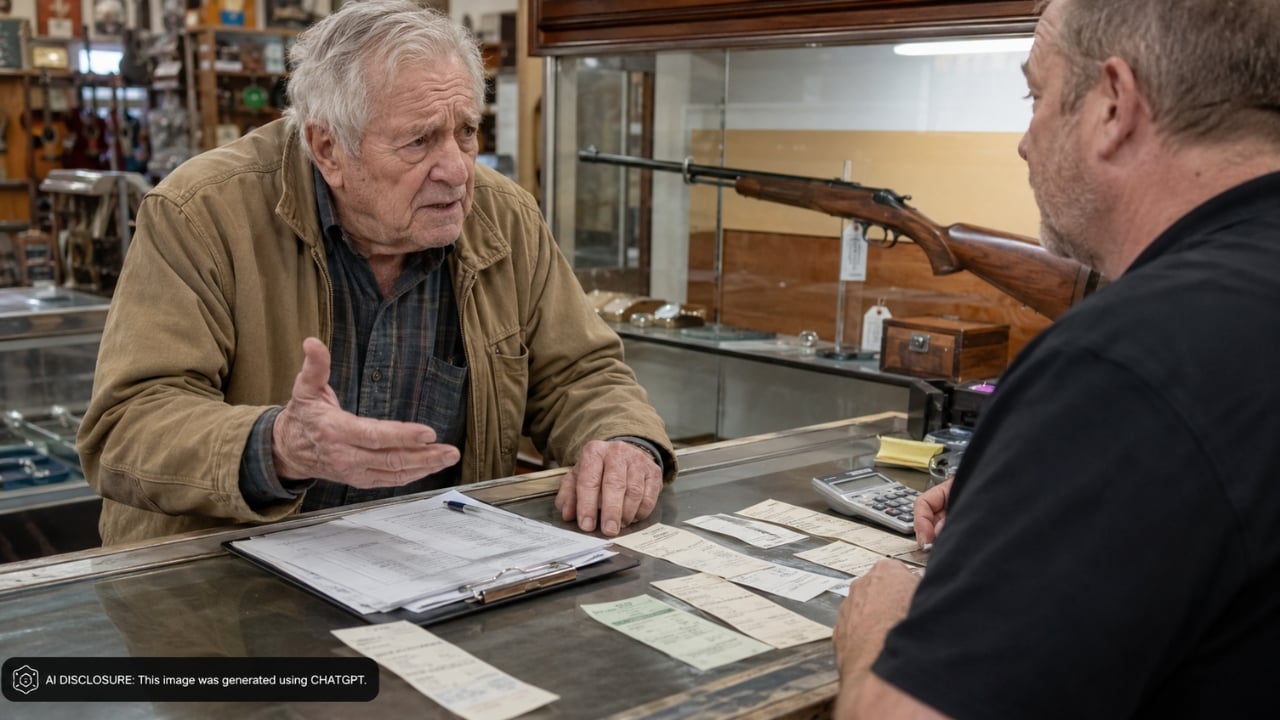
Photo credit: AI-generated image created using ChatGPT. Illustrative only
When a rifle has been in the family for more than half a century, it’s not just “a gun.” It’s opening day memories, sweat in a deer stand, and a piece of a man’s story. That’s why one North Carolina family says they kept making monthly pawn payments for years after their son died—only to be told the shop still won’t hand the firearm back.
The situation was laid out in the original post, and it reads like a gut punch: a 71-year-old father trying to recover a rifle he’s owned since he was 16, after it was pawned during his son’s addiction and the son later died of an overdose.
How the rifle ended up behind the pawn counter
According to the family, their son struggled with addiction and pawned one of his father’s guns before he died in October 2018. The father didn’t report the theft or push for charges, in part because gun theft can come with serious consequences and he didn’t want that for his son.
That decision is understandable on a human level, but it’s also where the paper trail starts getting thin. Once a firearm is pawned, a shop isn’t just holding property for a buddy—it’s holding an item under a regulated transaction, with records that matter to the shop’s license and liability.
The shop’s assurances turned into years of payments
Right after the death, the family contacted the pawn shop. They say the manager told them that when they could afford it, the shop would “work something out” to get the gun returned. In the meantime, they were told to keep paying the monthly amount to prevent the gun from being sold to someone else.
So that’s what they did. Month after month, the father kept the pawn ticket current, believing those payments were protecting his rifle until he could finally scrape together the full amount needed to redeem it. For a lot of working families, that kind of slow bleed is the only way bills—and problems—get managed.
When they finally had the money, the answer changed
Last month, they say they finally had enough to get the rifle out. That’s when the pawn shop told them it couldn’t be released without a death certificate and power of attorney. In other words: the shop treated the transaction as the deceased son’s pawn, and the father was not the person authorized to redeem it.
To make it worse, the family says the shop suggested they stop paying until the firearm is released to be sold, then try to buy it back. That’s a hard thing to hear after paying for years with the understanding that the payments were keeping the rifle safe and available.
The poster was blunt about how it felt: bad faith. The family believed they were doing the responsible thing—keeping the ticket current, staying in touch, and trying to avoid drama—only to get boxed out when it mattered.
Old guns, no “registration,” and the limits of a handshake
One detail in the story will sound familiar to a lot of older gun owners: the father never “registered” the rifle. He’s described as the old-school type who doesn’t want the government having a list of his firearms. In North Carolina, most ordinary long guns aren’t “registered” the way people sometimes imagine, but that doesn’t solve the family’s real problem: proving ownership to a third party who has the gun in their possession.
Pawn shops operate on paperwork. If the pawn ticket is in the son’s name, the shop is going to be cautious about releasing that firearm to anyone else—especially when the original borrower is deceased. Even if everybody in town knows the rifle belonged to the father, the shop is thinking about what happens if they release it and then get accused of handing a firearm to the wrong person.
This is also where a “handshake agreement” can fall apart. A manager might say they’ll “work something out,” but when it comes time to move a gun across the counter, shop policy and legal risk tend to speak louder than informal assurances.
Why reporting it stolen isn’t a simple pressure lever
In frustration, the family considered reporting the rifle stolen to force the pawn shop’s hand. That’s the kind of idea that comes up when you feel like you’re being played—and when the gun has real sentimental value. But this is a spot where folks need to slow down and think through consequences.
From the family’s own account, they knew the son pawned it and they chose not to report it at the time. Filing a stolen gun report later, after years of making pawn payments to keep the ticket active, could create a mess of conflicting statements and paperwork. It might also expose the family to questions they don’t want, and it doesn’t guarantee the rifle gets returned quickly—or at all.
There’s also the practical reality: if a pawn shop took in a firearm under the required process and has a ticket showing who pawned it, law enforcement may treat it as a civil/property dispute unless there’s clear evidence of theft and a clean, consistent timeline.
The practical routes people tend to focus on in situations like this
The shop demanded a death certificate and power of attorney. The power of attorney part is the sticking point—because power of attorney typically ends when someone dies. After death, authority usually shifts to an executor/administrator of the estate, not an agent under POA.
In plain terms, the shop appears to be asking for “proof you’re the person legally allowed to act for him,” even if they’re using the wrong label for that proof. Families often end up needing estate paperwork that shows who can handle the deceased person’s property and contracts.
Another angle is the pawn ticket itself. If the father has been making the payments and has documentation—receipts, ticket numbers, names of employees spoken to—that may help show a continuous effort to redeem the item and that the family relied on the shop’s instructions. It doesn’t automatically force the shop to release a firearm, but it can matter when the conversation moves beyond the counter and into formal demands or legal advice.
Finally, there’s the hard-nosed business reality: letting it go to sale and trying to buy it back might work, but it also risks the rifle being sold out from under them, priced higher than expected, or snapped up quickly. For a gun with deep family history, that’s a gamble.
At the end of the day, this is what a lot of outdoorsmen can take from the story: when a firearm leaves your control—especially through pawn, divorce, family trouble, or addiction—you’re no longer dealing in “mine and yours,” you’re dealing in documentation and process. The best time to protect that rifle was before it hit the pawn counter. The second-best time is now, with calm heads, paperwork gathered, and the right legal steps to prove who can redeem it.
Like The Avid Outdoorsman’s content? Be sure to follow us.
Here’s more from us: