Photo credit: AI-generated image created using ChatGPT. Illustrative only
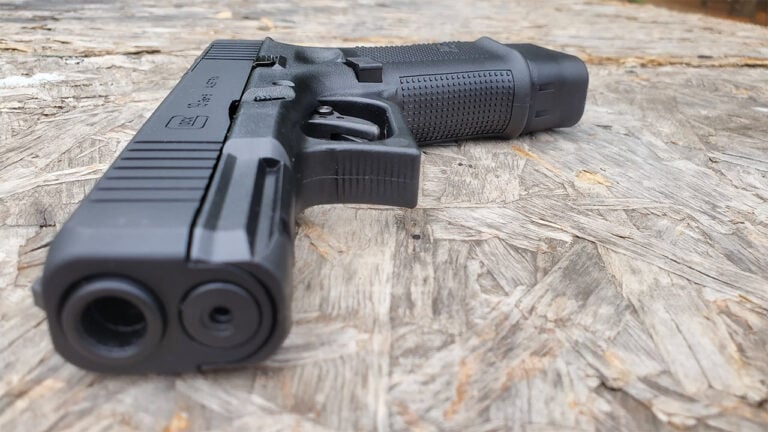
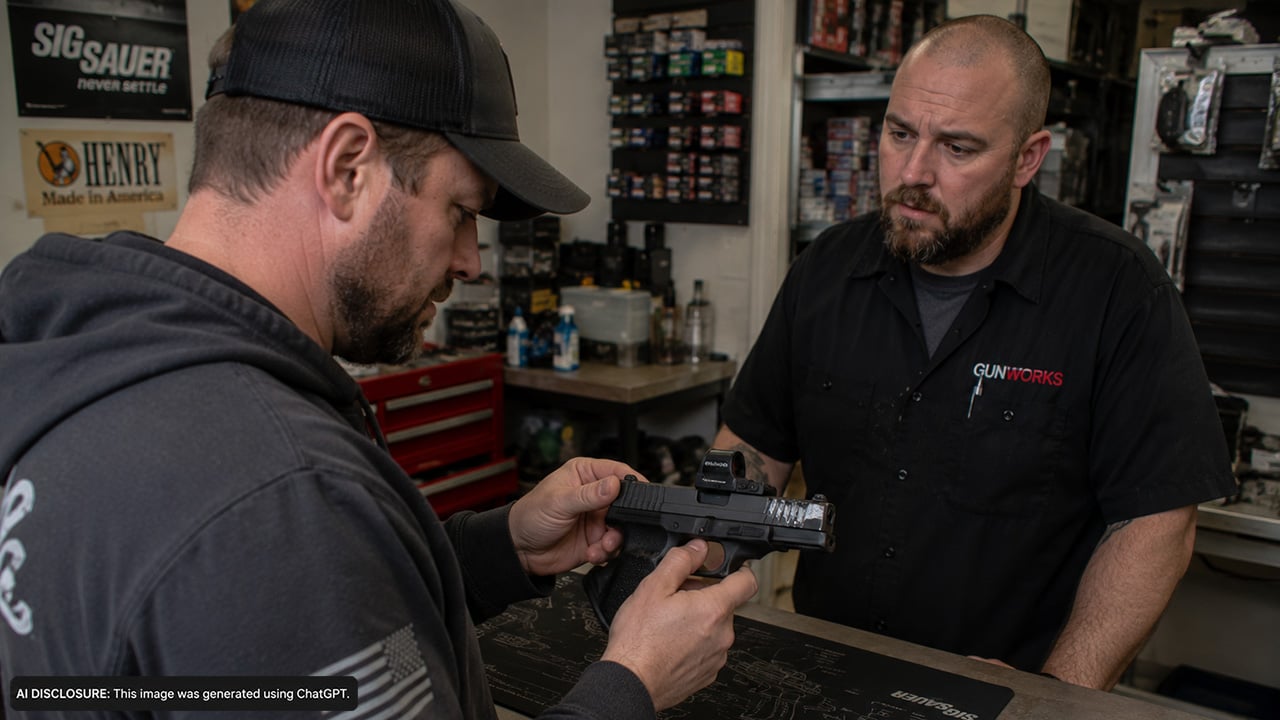
Nothing makes your stomach drop like picking up a handgun you trust and immediately noticing something just isn’t right. That’s the spot one Sig Sauer owner found himself in after getting a set of Angry Bear Arms tall sights installed at a local gun shop.
In the original post, the owner said the shop handed the pistol back “like this” and explained that “the tolerances were tight.” From the owner’s perspective, it looked less like a careful fit and more like the sights were forced into place instead of being properly fitted.
A routine sight job turned into visible damage
Most folks drop off a pistol for sights because they don’t have a sight pusher, they don’t want to risk marring the slide, or they simply want it done right the first time. It’s a pretty normal service for a gun shop, especially when you’re dealing with tall sights that may be going onto an optics-ready slide or a setup intended for a suppressor.
But in this case, the owner said the gun came back with obvious marks after the install. His read on it was straightforward: the shop likely drove the sights in without taking the time to fit them correctly, and the result looked like damage rather than a clean, professional job.
“Tight tolerances” isn’t a free pass to beat parts together
Yes, some sight dovetails are snug. That’s by design. A tight fit helps keep a rear sight from drifting under recoil, and it can keep a front sight stable when a pistol rides in a holster day after day.
But “tight” and “forced” are two different things in the real world. When a sight is truly too tight for a given slide, the right move is to stop and fit it correctly. The owner’s concern was that the shop didn’t do that—didn’t remove it, didn’t file or fit as needed—and instead muscled it into place and sent it out the door.
Why this matters beyond cosmetics
A lot of gun owners can live with a few honest wear marks from carry, training, and time in the field. Those are earned. Shop damage is different, because you paid to avoid exactly that.
There’s also the practical side. If a sight was forced in, it raises questions: is it centered correctly, is it under stress, and is it going to be a problem if you ever need to swap sights later? Even if the pistol still shoots fine, a bad install can turn a simple future change into a headache—especially if metal got gouged or the dovetail edges were distorted.
The first-time shop experience factor
The owner noted this was his first time having any work done at a gun shop, and that’s a big part of why stories like this matter. A newer gun owner may not know what “normal” looks like on a sight install, what level of marking is unavoidable, or what a shop should do to protect a finish.
Most experienced shooters learn to ask a few basic questions before leaving a gun: what method are you using, do you have the right tools, and what happens if something gets marked? But plenty of people assume the basics will be handled with care—and most of the time they are.
What a careful response can look like for the owner
From a common-sense standpoint, the first priority is safety: confirm the pistol is unloaded and handled properly any time it’s inspected or transported. After that, it becomes a documentation and communication problem, not a shouting match problem.
If you end up in a similar spot, the grounded move is to take clear photos and go back to the shop calmly. Show them what you’re seeing, explain what you expected, and ask how they intend to make it right. Sometimes the best shops will own the mistake immediately; other times you’ll learn fast that you need a different shop for future work.
And if the gun is a carry piece or a home-defense pistol, it’s worth thinking about confidence, not just appearance. When a shop hands back a gun that looks mishandled, it puts doubt in your mind. That doubt tends to follow you onto the range and into the holster, whether it’s fair or not.
A good reminder before your next sight install
This kind of situation is a reminder that “gunsmithing” covers a wide range of skill levels, and not every counter that offers installs is set up to do clean work. Sight jobs look simple until they aren’t. Different manufacturers, different dovetail dimensions, different coatings, and different tools can turn a quick install into a mess if the person doing it doesn’t slow down.
If you’re dropping off a pistol for sights—especially tall sights or anything that’s not the factory set—pick the shop the same way you’d pick a mechanic to work on your truck. Ask a couple questions, look at their work if you can, and don’t be afraid to walk away if you get a bad feeling. A careful install is cheaper than fixing avoidable damage later.
In the end, the owner’s frustration makes sense: he paid for a straightforward service and felt like he got a rushed, heavy-handed job instead. For most of us, the takeaway is simple—when it comes to the guns we rely on, workmanship matters, and it’s okay to expect better than “we forced it because it was tight.”
Like The Avid Outdoorsman’s content? Subscribe to our newsletter so you never miss an article.
Here’s more from us: