Photo credit: The Avid Outdoorsman
The worker did not walk into Amazon with a gun on his hip.
That is what made the whole thing feel so frustrating from his side. He was not trying to carry inside the warehouse. He was not making a statement, not showing off, not threatening anybody, and not intentionally testing the policy.
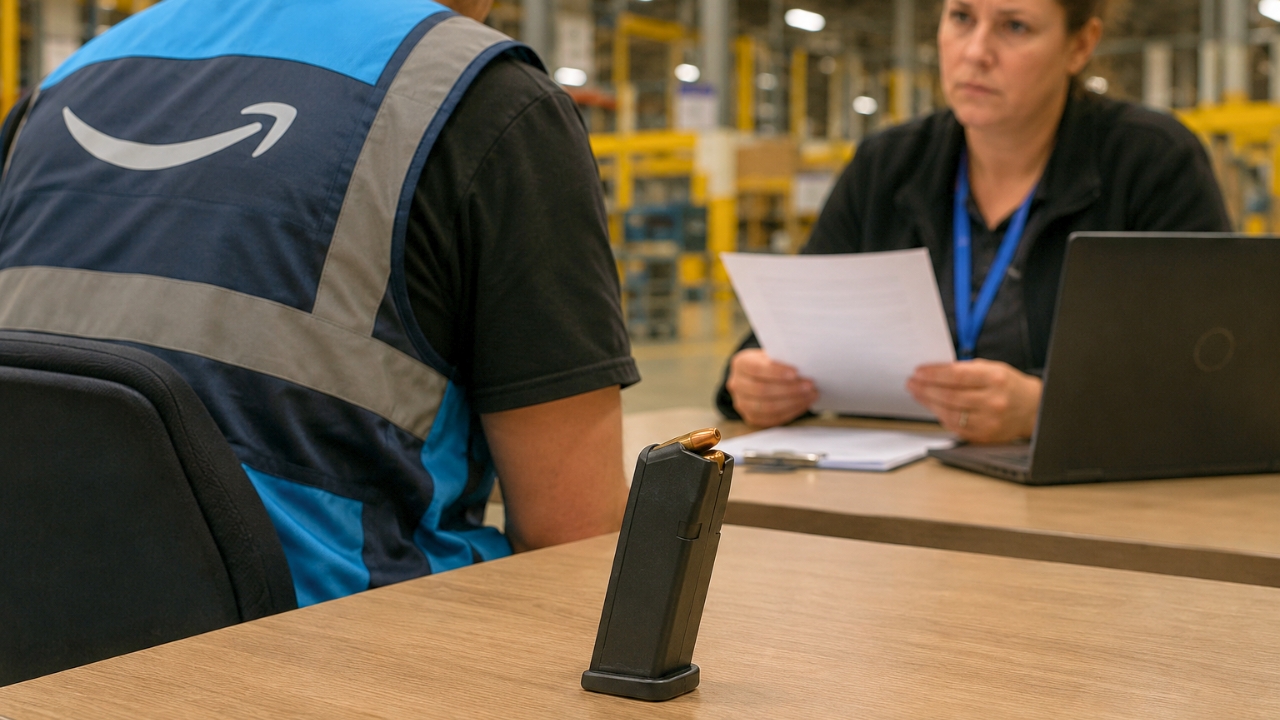
He said he accidentally brought in a loaded magazine.
In a Reddit post, the worker said a loaded magazine ended up getting him fired from Amazon after it was discovered at work. And once HR got involved, it stopped being a small mistake and became a weapons-policy problem.
That is the part a lot of gun owners underestimate. To the person who carries, a magazine might feel like gear. It is not the firearm itself. It may have been left in a pocket, bag, lunch box, jacket, or something else by mistake. The worker may have seen it as a dumb accident, not a threat.
But to a company like Amazon, a loaded magazine inside the building is not going to be treated casually.
Big workplaces do not usually want gray areas around weapons policies. They do not want managers deciding case by case whether someone “meant” to bring ammunition inside. They do not want to parse intent, habit, or whether the person is normally responsible with firearms. Once the item is found, the company is likely to treat it as a serious violation.
That appears to be what happened here.
The worker’s mistake had real consequences. A loaded magazine went into the workplace, HR got involved, and the job was gone. It is the kind of outcome that feels harsh if you focus only on intent, but predictable if you look at it from the company’s side.
Amazon warehouses are huge, controlled environments with security rules, cameras, managers, HR processes, and policies meant to apply to thousands of workers. A loaded magazine may not be a gun by itself, but it is still ammunition feeding equipment. In a workplace setting, especially one with strict safety rules, that is enough to trigger a serious response.
The worst part is how easy the mistake is to imagine.
A person who carries daily may have spare mags in a bag, vehicle, jacket, range bag, or pocket. Maybe he changed clothes in a hurry. Maybe he used the same bag for work and everyday carry. Maybe he forgot a magazine was in there after a range trip. Maybe he meant to leave everything firearm-related in the car and simply missed one piece.
That kind of routine overlap is exactly where trouble starts.
A lot of carriers get careful about the gun itself but less careful about the accessories. They know where the pistol is. They know whether it is holstered, locked up, or left at home. But magazines, loose rounds, pocket knives, pepper spray, and other items can end up in bags without much thought. Then a workplace search, metal detector, bag check, or accidental discovery turns it into a disciplinary issue.
The worker learned that the hard way.
It is also the kind of mistake that probably gets replayed in someone’s head for weeks. If he had checked the pocket. If he had used a separate work bag. If he had cleaned out the car the night before. If he had noticed the weight. If he had left all range and carry gear in one locked place instead of letting it mix with work stuff.
But once HR has the magazine, the “if only” part does not matter much.
The company was not looking at the situation like a gun owner would. They were looking at it like a policy violation involving a loaded magazine on company property. That is a very different lens.
And that is the bigger lesson here. Workplace weapon policies often cover far more than firearms. They can include ammunition, magazines, knives, parts, tools, pepper spray, or anything the company defines broadly enough to discipline over. A worker may think, “It wasn’t even the gun,” while the company thinks, “It was still prohibited.”
That gap can cost a job.
For carriers, the practical fix is boring but important: separate work gear from carry gear. Do not use the same backpack for range days and work shifts unless it gets checked every single time. Empty pockets before going in. Keep spare mags in one controlled place. Know the policy before walking through the door. And if the workplace has strict screening, treat every pocket like it matters.
Because it does.
The Amazon worker’s story was not about a dramatic gun incident. It was about one loaded magazine, one workplace discovery, and a company policy that did not leave much room for explaining it away.
Commenters mostly treated it as a hard lesson in workplace policy and personal routines.
Some people were sympathetic because they understood how a spare magazine could accidentally end up in a bag or pocket. Daily carry creates habits, and sometimes those habits follow a person into places where they do not belong. A few said it was a painful reminder to check bags before work, especially if the same bag is used for range trips or carry gear.
Others were blunt. They said Amazon was always going to take that seriously. A loaded magazine in a warehouse is not something HR is likely to shrug off, even if the worker says it was accidental. From the company’s standpoint, the policy violation is the item being there, not the worker’s intent.
Several commenters warned that “it wasn’t a gun” probably would not help much. Many company policies are written broadly enough to include ammunition, magazines, firearm parts, knives, or anything considered a weapon. If the rule says no weapons or related items, a loaded magazine can be enough.
A lot of the advice came back to separation. Use one bag for work and another for range or carry gear. Do a pocket check before going into work. Do not leave magazines in jackets that might be worn into restricted places. Build a routine so the mistake cannot happen again.
Some commenters also pointed out that once HR is involved, the outcome is usually hard to reverse. A manager might personally understand, but a big company often follows the written policy because it is easier and safer for them.
For the worker, the lesson was expensive. A loaded magazine he did not mean to bring inside turned into a firing. And for everyone reading, the warning was pretty clear: at work, forgotten gear can count the same as intentional gear once someone finds it.