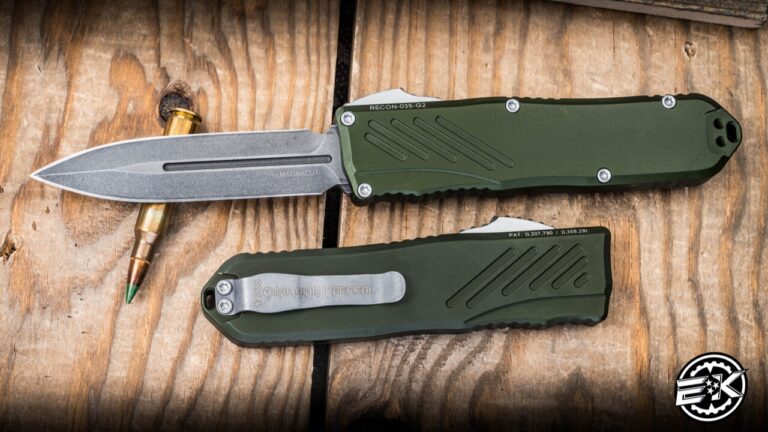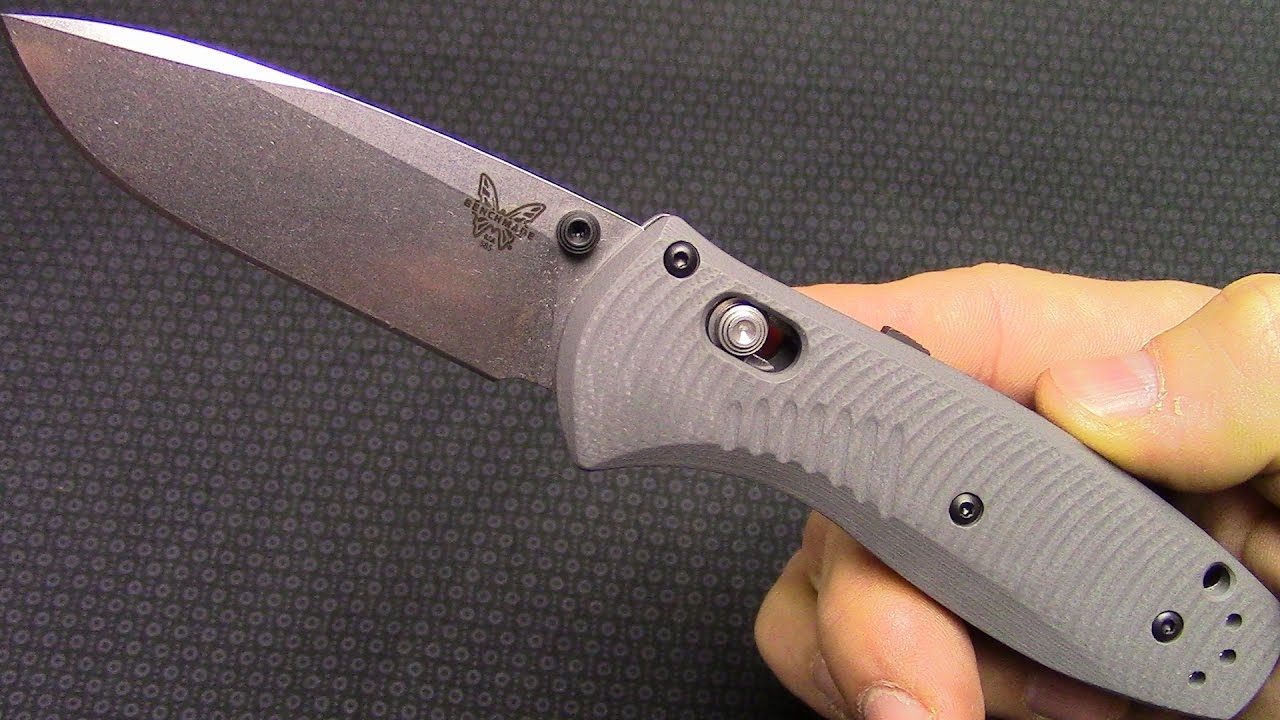
Photo credit: KNIVES PLUS ®/YouTube.com
Knife laws rarely trend on social media, yet they shape what you can carry in your pocket on the way to work, on a hike, or through an airport checkpoint. The most persistent confusion sits right where your thumb meets the blade: the fine line between assisted-opening knives and true automatics, a line that lawmakers, retailers, and even some police officers do not always draw the same way. If you rely on a folding knife as a tool, understanding that distinction is not trivia, it is legal risk management.
Why the assisted versus auto distinction matters more than you think
When you buy a modern folder, you are not just choosing a blade shape or handle material, you are choosing a legal category that can determine whether your everyday carry is treated as a tool or as contraband. The difference between an assisted opener and an automatic often comes down to a few millimeters of spring travel and how much force your thumb must apply, yet that engineering detail can decide whether a traffic stop ends with a warning or with your knife in an evidence bag. You feel the difference as a snap versus a glide, but the law reads it as a question of who is really doing the opening, you or the mechanism.
That is why the headline misconception is so costly: many people assume that if a knife does not have a big red button or a dramatic “switchblade” look, it is automatically legal everywhere. In reality, some statutes focus on how the blade is “released,” others on whether the knife has a “bias toward closure,” and others on whether the mechanism can open the blade from a fully closed position without continued manual input. Once you see how designers describe manual, assisted, and automatic systems in technical guides, you can map those definitions onto the language that shows up in criminal codes and import rules, and you start to see where your favorite flipper actually sits.
How modern opening systems actually work in your hand
From your perspective as a user, knife opening systems fall into three broad experiences: you either move the blade entirely by hand, you start it and a spring finishes the job, or you press something and the knife does almost everything for you. Detailed manufacturer breakdowns of manual, assisted, and automatic designs walk through how a thumb stud, a flipper tab, or a button interacts with internal springs and locks, and they explain why some models feel “snappy” while others feel more deliberate. When you read a technical knife opening guide, you see that the same external silhouette can hide very different internal mechanics, which is exactly what makes legal classification tricky.
Manual folders rely entirely on your hand to rotate the blade, so the pivot and detent are tuned for smoothness and safety rather than speed. Assisted designs add a spring that engages only after you have moved the blade a short distance, which is why they are often marketed to users who want a quick deployment without full automation. Automatic systems, by contrast, store energy in a spring that is held back by a sear or button; once you trigger it, the mechanism drives the blade from fully closed to fully open with little or no additional effort. That spectrum of human versus mechanical work is the same spectrum lawmakers try to capture when they distinguish a pocketknife from a switchblade.
What “automatic” really means in knife law
In legal language, “automatic” is not about how dramatic the opening looks, it is about whether a spring or similar device does the essential work of moving the blade from closed to locked with minimal human effort. Practical comparisons of auto and assisted knives emphasize that an automatic knife, sometimes called a switchblade, opens when you press a button, push a lever, or slide a switch, and then the mechanism does the rest. One widely cited explanation of “What, Difference, Anyway, Automatic” makes the point that with a true automatic, you do not have to keep pushing once the action starts, because the stored energy in the spring takes over after that initial trigger.
That distinction matters because many statutes define a prohibited automatic knife as one where the blade opens by pressing a button in the handle or by the operation of inertia, gravity, or a spring that is activated from the closed position. When you carry a side-opening automatic or an out-the-front model that deploys with a slider, you are relying on a mechanism that is designed to meet that definition. If your local law keys off whether “the mechanism does the rest,” as some consumer guides put it, then a knife that feels only slightly more mechanical than your favorite assisted flipper can suddenly fall into a much more restricted category.
Why assisted-openers are built around “bias toward closure”
Assisted-opening knives occupy the gray zone that most owners misunderstand, because they are engineered to feel fast while still requiring you to do meaningful work. Technical descriptions of “Assisted Knives, Bias Toward Closure, Assisted” explain that these designs use a spring that actually wants to keep the blade shut until you push it past a certain point, at which stage the spring reverses and helps drive the blade open. That “bias toward closure” is not just a safety feature, it is a legal strategy, because it lets manufacturers argue that the knife is fundamentally manual and only becomes assisted after you have already committed to opening it.
In practice, you experience this as a firm detent or resistance when you start to move the blade with a thumb stud or flipper tab, followed by a distinct snap once you cross the engagement point. Detailed product guidance notes that assisted knives are ideal for “Users Who Want” a “Quick, Opening Knife Without Full Automation,” because you still have to apply some manual force to deploy the blade even though the final motion feels automatic. When lawmakers or courts look at that design, they often focus on the fact that the knife will not open from a fully closed position unless you first overcome that closing bias, which is why many assisted models remain legal where true automatics are not.
The federal switchblade rules most carriers never read
At the federal level in the United States, the key switchblade rules live in 15 U.S. Code 1241 through 1245, which focus on interstate commerce rather than simple possession. Consumer legal summaries explain that “In the, Code” the law restricts the shipment, sale, and distribution of automatic switchblade knives across state lines, while carving out exceptions for certain military and law enforcement uses. If you buy an automatic online and have it shipped across state borders, you are operating in the space that those sections of the code were written to control, even if your local sheriff has never mentioned it.
Those same summaries stress that the federal definition of a switchblade centers on a knife that opens automatically by hand pressure applied to a button or other device in the handle, or by the operation of inertia, gravity, or a spring. That language is why retailers are careful about how they label “automatic switchblade knives” and why they often group them in a separate “Style Push Button Switchblade Collection” that is subject to additional disclaimers. The federal rules do not usually criminalize you for simply owning such a knife at home, but they do shape what manufacturers can ship, how dealers can advertise, and what happens if a package is inspected in transit.
How state and local rules redraw the line
Once you move from federal law to state and city codes, the picture fragments quickly, and the assisted versus auto distinction can shift from a technical curiosity to a criminal threshold. Some states still treat any knife that opens with the help of a spring as a prohibited switchblade, while others explicitly exempt assisted designs that have a bias toward closure or that require the user to move the blade a certain distance before the mechanism engages. In a few jurisdictions, even a manual flipper that can be snapped open with a strong wrist flick risks being treated as an illegal gravity knife, regardless of how the manufacturer markets it.
That patchwork is not unique to knives. Over the past year, “In 2025, landmark changes to federal guidance, intensified state-level enforcement, and high-profile legal cases have reshaped the classification framework” for independent contractors, a reminder that classification fights now run through many areas of law. The same dynamic plays out with edged tools: state legislatures rewrite definitions, local prosecutors test new theories, and courts decide whether a particular mechanism fits within an old statute. If you carry a knife while working as a delivery driver, a field technician, or a contractor, you are navigating both the evolving labor rules described in that classification framework and the shifting weapon definitions that can affect your day-to-day work.
Common myths that put ordinary carriers at risk
One of the most persistent myths is that any knife sold in a big-box store or on a mainstream e-commerce platform must be legal to carry everywhere. In reality, retailers often rely on broad disclaimers that push the responsibility back onto you, and they may ship a model that is perfectly lawful in one state into another where the same knife is treated as a prohibited automatic. Another widespread misconception is that if you have to touch the blade at all, the knife cannot be a switchblade, even though many statutes focus on whether a spring or similar device completes the opening once you have started it.
There is also confusion around how much “help” a mechanism can provide before a knife crosses the line into being automatic. Technical marketing that highlights “Lightning-Fast Deployment” for “Automatic Knives” can blur into descriptions of assisted models that promise similar speed, and some buyers assume the two categories are interchangeable. When you read a detailed breakdown of “Automatic Knives: Lightning-Fast Deployment” that explains how a button or lever triggers a fully powered opening, you see why lawmakers treat that design differently from an assisted knife that still demands continuous manual input. Without that mechanical context, it is easy to underestimate how a small change in spring geometry can have outsized legal consequences.
How to evaluate your own knife before you clip it on
Before you drop a knife into your pocket, you can run through a simple checklist that mirrors the questions lawmakers and courts tend to ask. Start by closing the blade fully and looking for any button, slider, or lever in the handle that is separate from the blade itself; if pressing that control causes the blade to jump open without you moving it manually, you are almost certainly holding an automatic. Next, open the knife slowly with the thumb stud or flipper and pay attention to whether you feel a distinct point where a spring takes over from your hand, and whether the blade would stay closed if you only moved it a few millimeters and then let go.
If you sense a strong detent that keeps the blade shut until you deliberately push past it, and the knife will not open from fully closed without that initial movement, you are likely dealing with an assisted design that has a bias toward closure. Manufacturer guides that describe “Assisted Knives: Bias Toward Closure” explain that this resistance is intentional, both for safety and for legal classification, because it shows that the knife is not designed to open automatically from a resting state. By contrast, if the blade can be flicked open purely by inertia with minimal thumb movement, or if a handle-mounted control unleashes a stored spring from the closed position, you should treat the knife as an automatic for legal purposes even if the packaging uses softer language.
Choosing the right opener for work, travel, and everyday carry
Once you understand how the mechanisms differ, you can match your choice of opener to the environments where you actually use a knife. For office carry or travel between jurisdictions with strict laws, a straightforward manual folder with a thumb stud or nail nick is usually the lowest risk, because it relies entirely on your hand and has no internal spring that could trigger a switchblade definition. For outdoor work, emergency response, or situations where you may need to open a knife with gloves or limited dexterity, an assisted model can offer a good compromise, giving you fast deployment while still maintaining a bias toward closure that many statutes recognize as a safety feature.
If you operate in a state that clearly permits automatics and you have confirmed that your specific model is lawful to possess and carry, an automatic can be a powerful tool, especially when you need one-handed access in tight spaces. Comparative reviews that pit auto against assisted designs often note that either way, “Either” style can make you “look awesome flicking your blade open,” but they also stress that the legal and practical differences matter more than the cool factor. When you read a focused comparison of “What, Difference, Anyway, Automatic” that walks through how the mechanism does the rest once you press a control, you are better equipped to decide whether that extra speed is worth the additional legal complexity in your daily life.
Why staying current on definitions is now part of responsible carry
Knife technology is not standing still, and neither are the laws that govern it. Designers continue to experiment with hybrid systems that blur the line between assisted and automatic, such as detent-based flippers that can be snapped open with minimal effort or dual-action models that can be opened manually or by a hidden mechanism. As those innovations reach the market, legislators and courts are forced to revisit definitions that were written for older designs, and the same knife can move from a gray area into a clearly regulated category without any change to its hardware.
At the same time, broader legal trends show that regulators are increasingly willing to revisit long-standing classification frameworks when technology or public pressure shifts. The recent overhaul of independent contractor rules, where “landmark changes to federal guidance” and “intensified state-level enforcement” reshaped how workers are categorized, is a reminder that definitions you once took for granted can change quickly. In the knife world, staying on the right side of that change means pairing a working knowledge of mechanisms, informed by resources like a detailed automatic knives overview, with a habit of checking your local statutes before you clip a new purchase onto your pocket.
Using manufacturer guidance without confusing marketing for law
Knife makers have a strong incentive to describe their products in ways that sound exciting but still fit within legal safe zones, which means their marketing language can be helpful but also potentially misleading. When a company explains that its “Assisted Knives, Bias Toward Closure, Assisted” models are designed to stay shut until you apply deliberate pressure, that is a genuine engineering claim that aligns with how many laws distinguish assisted openers from automatics. At the same time, the same catalog might describe a true automatic as offering “Lightning-Fast Deployment” without spelling out that pressing a button in the handle triggers a spring from the fully closed position, a detail that is central to legal definitions.
To use manufacturer information responsibly, you should focus on the mechanical descriptions and diagrams rather than the adjectives. A general-purpose assisted-opening explanation that walks through how much “manual force” is required to deploy the blade is more useful for legal analysis than a tagline about tactical performance. When you combine that technical understanding with a clear reading of your local statutes and the federal rules summarized in guides to “automatic switchblade knives legal facts,” you can treat marketing copy as a starting point rather than a guarantee, and you are far less likely to carry a knife that crosses a legal line you did not know existed.
Unverified based on available sources.
Like The Avid Outdoorsman’s content? Be sure to follow us.
Here’s more from us: