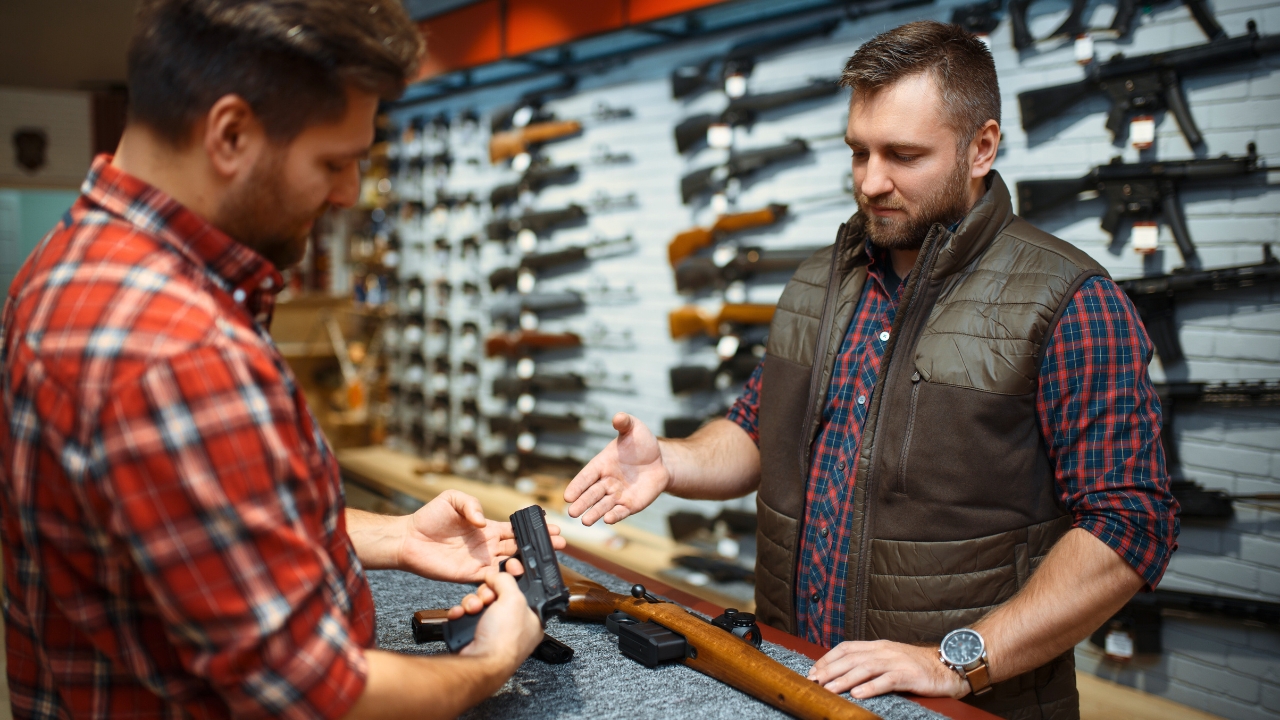
Photo credit: Nomad_Soul/Shutterstock.com
Background checks for gun purchases are supposed to be quick, but in some parts of the country they are stretching from minutes into days or even weeks. When that happens, you are left in limbo, unsure whether you will ever walk out of the store with the firearm you tried to buy. Understanding why those delays are spiking, and exactly what you can do within the law while you wait, is now as important as knowing which model you want to own.
Instead of treating a “delay” notice as a dead end, you can approach it like any other bureaucratic problem: know the rules, document everything, and use the appeal tools that already exist. The law gives you specific rights, but it also imposes hard limits, especially in states that have layered their own rules on top of the federal system. The more clearly you see that landscape, the less likely you are to get blindsided at the gun counter.
Why delays are rising, and why some states feel it more
When you start a purchase, the store runs your information through the National Instant Criminal Background Check System, or NICS, to see whether you are legally allowed to own a gun. In theory that check is instant, but in practice it can bog down when records are incomplete, when your name or birthdate resembles someone else’s, or when state databases are slow to respond. In places that run their own checks instead of relying directly on the federal system, even a routine software upgrade can ripple into long waits, as retailers in NBC Universal, Inc’s reporting on background check delays in gun sales discovered when a state police computer system change slowed approvals.
Those state level chokepoints matter because the United States is split between jurisdictions that plug directly into FBI NICS and those that act as a “Point of Contact” and run their own reviews. A trade group fact sheet notes that in 36 states, an FFL contacts the FBI NICS system itself, while in 13 full “Point of Contact” states the FFL must go through a state agency instead, which can add another layer of delay. If you live in a state like Connecticut that has built its own background check infrastructure, you are more exposed to local backlogs, staffing shortages, or technology problems than buyers in states that rely solely on the federal pipeline.
How the federal background check system is supposed to work
To understand what has gone wrong, you first need a clear picture of how the process is designed to function. When you try to buy a firearm from a licensed dealer, the seller, known in federal law as a Federal Firearms Licensee or FFL, must have you fill out a transaction record and then contact the FBI to run your information. The FBI explains in its overview of How Firearms Background Checks Work that when someone tries to buy a firearm, the FFL sends your identifying details to NICS, which searches federal and state databases for disqualifying records such as felony convictions, domestic violence orders, or certain mental health adjudications.
The form you complete at the counter is the ATF Form 4473, which has been updated several times to reflect new legal requirements and to clarify questions about your criminal history, immigration status, and other eligibility factors. The Bureau of Alcohol, Tobacco, Firearms and Explosives maintains a page detailing ATF Form 4473 revisions, and dealers are required to use the current version. Once the form is complete, the FFL either calls in the check or submits it electronically, and NICS responds with one of three messages: “Proceed,” “Denied,” or “Delayed.” Only that last category triggers the limbo that is now becoming more common.
What a “Delayed” response actually means for you
When the system flags your transaction as “Delayed,” it does not mean you have been denied, and it does not automatically imply that you did anything wrong. The FBI’s explanation of How Firearms Background Checks Work notes that a “Delayed” message means the system could not immediately determine whether you fall into a prohibiting category, often because records are incomplete or require manual review. In practice, that can happen if your name matches someone with a disqualifying record, if an old arrest lacks a final disposition, or if a state court has not yet updated its database.
Under federal law, the FBI has three business days to resolve that uncertainty. Guidance summarized by compliance software provider FastBound explains that How Long Does a NICS Delay Last, and notes that the FBI has three business days (excluding weekends and federal holidays) to issue a final “Proceed” or “Denied.” If the FBI cannot make a final determination within that window, federal law does not require the FFL to keep waiting, but that is only half the story, because state law can impose stricter rules.
The three day rule, and how states can override it
The so called “three day rule” is one of the most misunderstood parts of federal gun law. An ATF advisory explains that If the FFL has not received from the NICS a final determination after 3 business days have elapsed since the delay response, it is not required to wait for a final response and may legally transfer the firearm. That is a permission, not a mandate, and many dealers choose to wait longer as a matter of policy, especially if they are concerned about liability or community relations.
On top of that, some states have written their own statutes that effectively erase the three day default. FastBound’s guidance on checking the status of a delay notes that State specific laws may override federal law and require FFLs to wait until a full approval is received, meaning a firearm cannot be transferred until the state or FBI explicitly says “Proceed.” In those jurisdictions, even if the FBI’s three business days have come and gone, your dealer’s hands are tied by state statute, and your only real options are to wait, to challenge the delay, or to walk away from the sale.
New enhanced checks for younger buyers
Delays have also grown more common for buyers under 21 because Congress expanded the background check process for that age group. As a result of the Bipartisan Safer Communities Act, often shortened to BSCA, the FBI and state authorities now conduct an “enhanced” review when you are between 18 and 20 and try to buy a firearm from an FFL. That deeper dive can involve checking juvenile records and contacting local law enforcement, which naturally takes longer than a standard instant check.
One range and retailer that walked customers through the change explained that the New Enhanced Background Check Process created by the BSCA can extend the review period for 18 to 20 year olds beyond the usual three business days, and that they will only complete the transaction after receiving a release from the FBI. For you, that means age is now a major factor in how long you might wait, even if you have a completely clean record, and it is one reason younger buyers are seeing more “Delayed” responses than older customers standing at the same counter.
How to track a delay and press for answers
Once you are stuck in delay status, the first step is to gather information rather than simply waiting in the dark. You should ask the dealer for your NICS Transaction Number, often called a NTN, and keep a copy of your ATF Form 4473 for your records if the store will provide it. FastBound’s guidance on checking the status of a delay notes that you can Submit a NICS Status Request directly to the FBI to find out what is causing the delay, although the response can take several weeks to months.
In the meantime, you should clarify with your dealer whether state law or store policy will allow the transfer after three business days if no final answer arrives. FastBound’s explanation of State Laws Differing from Federal Rules notes that Some states have stricter background check requirements than federal law, meaning your delay could be due to state level processing that the FBI cannot speed up. If you live in one of those states, pressing your dealer to release the gun early will not help, but documenting the delay and starting a status request can position you better for an appeal.
Appealing errors, from NICS challenges to expungement
If you suspect the delay is rooted in a mistake, you have a formal path to challenge it. The FBI’s page on Appeals and Voluntary Appeal File explains that if you receive a denial or believe a delay is based on incorrect information, you can file a firearm related challenge with NICS. FastBound’s guidance likewise notes that you can Submit a Firearm Related Challenge (Appeal) If Necessary when you believe your NICS delay was caused by an error, such as an expunged record that is not reflected in NICS.
In some states, you may also need to clean up your underlying criminal history before the federal system will stop flagging you. A legal guide to California firearms law advises that if you are delayed, you should request a copy of your criminal history from the DOJ and address incomplete records, because missing dispositions can trigger repeated delays. More broadly, background check company Checkr notes that one step in the expungement process is to Determine eligibility Familiarize yourself with your state’s expungement laws and compare them to your record, since clearing an old case at the state level is often the only way to stop it from surfacing in NICS.
Using the Voluntary Appeal File and UPIN to avoid repeat delays
For buyers who are constantly delayed despite being legally eligible, the FBI offers a more permanent fix. Its appeals page explains that you can apply to be entered into the NICS Voluntary Appeal File, or VAF, which stores additional identifying information to help distinguish you from prohibited individuals with similar names or backgrounds. FastBound notes that if you have experienced multiple NICS delays in the past, you may want to apply for a Voluntary Appeal File (VAF) so future firearm purchases go through more smoothly, because the system can recognize you more quickly.
Once your VAF application is reviewed and accepted, the FBI issues you a unique number that you can use on future purchases. A legal explainer on constant delays describes how Once reviewed and accepted, you will be issued your UPIN, and You include this number on your ATF Form 4473 each time you buy a gun so the system can immediately see that your identity has been cleared. Another legal guide on NICS delays notes that If you are tired of being delayed every time you try to buy a gun, the best solution is often to apply for the Voluntary Appe file so your identity has been cleared in advance.
State waiting periods, rights, and realistic expectations
Even if your background check is clean and instant, some states require you to wait a set number of days before you can take possession of a firearm. The NRA’s overview of waiting period laws notes that Most buyers will continue to be approved instantly, and those who are flagged for additional investigation will still be subject to the three business day default under federal law, but state waiting periods can add extra time even after approval. That means you might face both a background check delay and a statutory cooling off period, stretching the process far beyond what you expected when you walked into the store.
Gun rights advocates often argue that “a right delayed is a right denied,” and some have urged buyers to push back when they believe the system is dragging its feet. One advocacy blog bluntly states that If you were delayed or denied, you should contact NICS Section, Appeals Services Unit, in Clarksburg, West Virginia 26302 4278 to challenge the decision. At the same time, legal guides caution that your rights are bounded by both federal and state law, and that ignoring a waiting period or pressuring a dealer to violate state rules can expose you and the FFL to serious criminal penalties.
Practical steps to protect yourself before and during a purchase
The most effective way to avoid a miserable delay is to prepare before you ever fill out a form. That means resolving any open court cases, pursuing expungement where you are eligible, and keeping your identification documents up to date so they match your records exactly. It also means understanding your state’s specific rules, just as public benefit programs remind applicants that You meet another state approved exemption
During the purchase, your best tools are precision and documentation. Fill out ATF Form 4473 carefully, double checking every line so a typo does not trigger a mismatch, and keep a copy of your receipt and any transaction numbers the dealer can share. If you are delayed, ask the FFL to explain whether state law or store policy controls how long they must wait, and then decide whether to pursue a status request, a formal appeal, or a longer term fix like the VAF. In a system where delays are increasingly common, especially in states that run their own checks, the buyers who fare best are the ones who treat the process as a legal maze to be navigated, not a black box to be endured.
Like The Avid Outdoorsman’s content? Be sure to follow us.
Here’s more from us: