
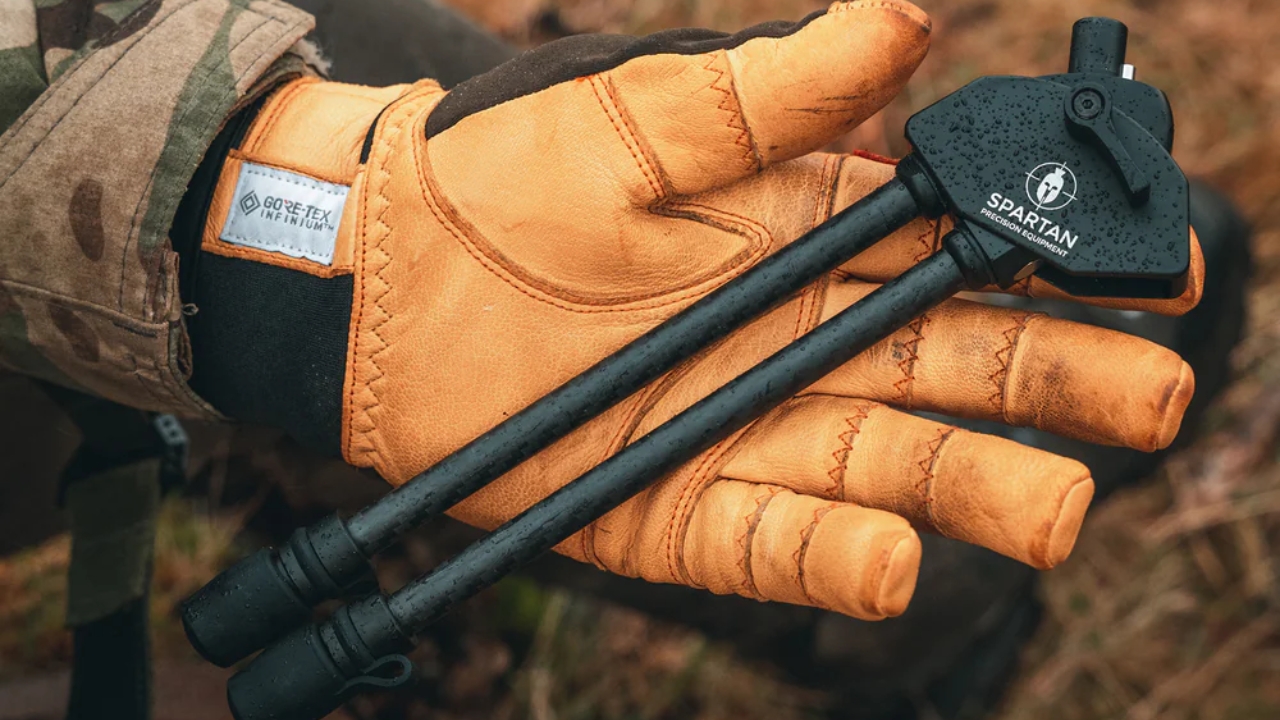
Image Credit: Spartan Precision Equipment.
The right bipod makes all the difference when it comes to stability and accuracy. Whether you’re hunting, competing, or shooting long-range, a solid bipod helps you stay steady and confident. Some offer precision adjustments, while others focus on being lightweight and practical. No matter your setup, these are the best options out there.
Magpul MOE

The Magpul MOE bipod keeps things simple. No extra bells and whistles—just a lightweight, easy-to-use bipod that does what it’s supposed to. It extends from 7 to 10 inches in half-inch increments and locks into place with a button press. The rubber feet grip well, and if they ever wear down, aftermarket replacements are easy to find.
It mounts to a swivel stud using a big thumb wheel that’s easy to tighten by hand. In the stowed position, it stays tucked up close to the rifle, which helps keep things compact. One thing to keep in mind—it has a chunky profile. On an AR or a chassis rifle, it fits right in. On a traditional bolt gun, it can look a little out of place.
Caldwell XLA Pivot

For the price, the Caldwell XLA Pivot is tough to beat. It’s built on the same basic design as a Harris but at a fraction of the cost. Available in four height options (6-9″, 9-13″, 13-23″, and 13.5-27″), there’s a version for just about any shooting situation. It clamps onto a swivel stud with a simple thumb wheel, and the external springs keep the legs locked in tight.
The legs have indexed grooves for setting height, and the feet have rubber tips for solid traction. The cradle that contacts the stock even has a rubber lining to prevent scratches. It cants up to 18 degrees to help keep the rifle level on uneven ground. It’s not the most durable bipod, but for casual use, it’s solid.
Harris S-Series

The Harris S-Series is one of those bipods you just trust. It’s been around forever, and for good reason—it works. It’s affordable, easy to use, and tough enough to handle regular abuse. If a rifle has a single swivel stud, this is usually the bipod that ends up on it. The legs extend from 9 to 13 inches, and the tilt feature is controlled by a tension wheel at the rear.
That tension wheel can be a pain with heavier rifles, though. If it keeps loosening, swapping it for an aftermarket version with a handle makes a big difference. The legs have two positions—stowed or straight down—and the feet width is fixed. It’s not the most adjustable bipod out there, but there’s a mountain of aftermarket parts available to tweak it exactly how you want.
MDT Ckye-Pod Gen2

The MDT Ckye-Pod Gen2 is what you get when precision shooters demand more out of their gear. It’s built for fast adjustments, rock-solid support, and serious versatility. PRS, NRL, and other precision shooters swear by it, and for good reason—nothing else comes close when it comes to adaptability.
The legs adjust from 9.5 to 14.5 inches and can be spread wide for stability or brought in close to get the rifle higher. They lock at 0, 45, and 90 degrees, and the head rotates 180 degrees. There’s even a double-pull version that extends up to 18 inches, though it adds weight and cost. It’s not cheap, but once you get your hands on one, it’s obvious why. This thing is built to perform, but it does require some upkeep—keeping it clean and lubed will go a long way in making sure it stays reliable.
Atlas BT10 V8

Atlas bipods have earned their reputation for being some of the best in the business. The BT10 V8 is no exception. It’s built from aluminum, lightweight, and packed with features that make it a favorite for precision shooters. The legs adjust from 6.5 to 10 inches and can lock into five different positions, giving it more flexibility than most bipods on the market.
The feet can be swapped from rubber to spiked versions for different terrain. The spring-loaded collars on the legs make adjusting height quick and easy, even when behind the rifle. The head pans 30 degrees and has a built-in cant feature for leveling. It mounts to a Picatinny rail, with options for quick-detach or permanent mounting. It’s not the cheapest bipod, but when reliability and adjustability matter, it’s a rock-solid choice.
MDT Ckye-Pod Lightweight

For shooters who love the Ckye-Pod but need to keep their rifle under weight limits, the MDT Ckye-Pod Lightweight Single Pull is a game changer. It offers nearly the same rock-solid stability and versatility as the standard Gen2 models but shaves off 5 to 6 ounces—a big deal for competition shooters and mountain hunters alike.
With a quick-attach clamp for RRS ARCA or Picatinny rails, it locks up securely and deploys fast when the moment counts. For NRL Hunter matches, where rifles need to stay under 12 pounds (including optics and accessories), this bipod is a go-to choice. It’s so dependable and quick to set up that it’s worth bringing along, even when every ounce in your pack has to earn its place.
Spartan Javelin Lite

When ounces matter, the Spartan Javelin Lite is hard to beat. Designed for mountain hunters who want stability without extra bulk, this bipod is light, simple, and quick to deploy. Unlike traditional bipods, it doesn’t stay attached to your rifle full-time. Instead, it slips into a socket on your stock and is held in place by a strong magnet.
This setup keeps your rifle sleek and easy to carry. The bipod itself weighs as little as five ounces, depending on the leg length (available in 5.1″, 7.2″, and 8.7″). It provides cant adjustment for uneven ground and lets you pan smoothly to track your target. It’s not built for competition-level stability, but for hunters covering serious ground, it’s a smart choice.
*This article was created with the assistance of AI.


