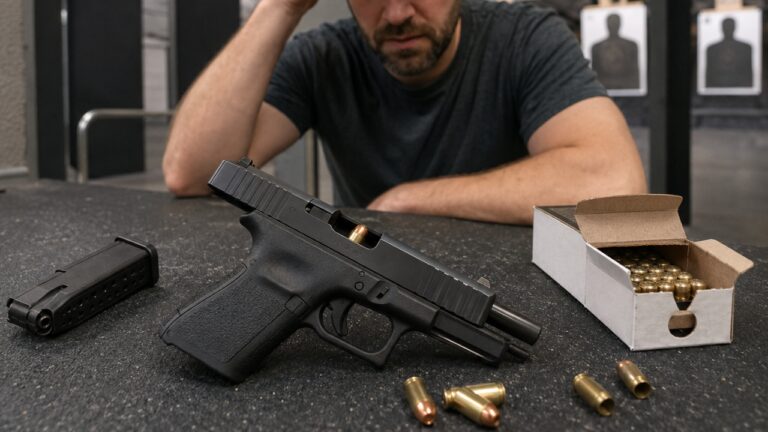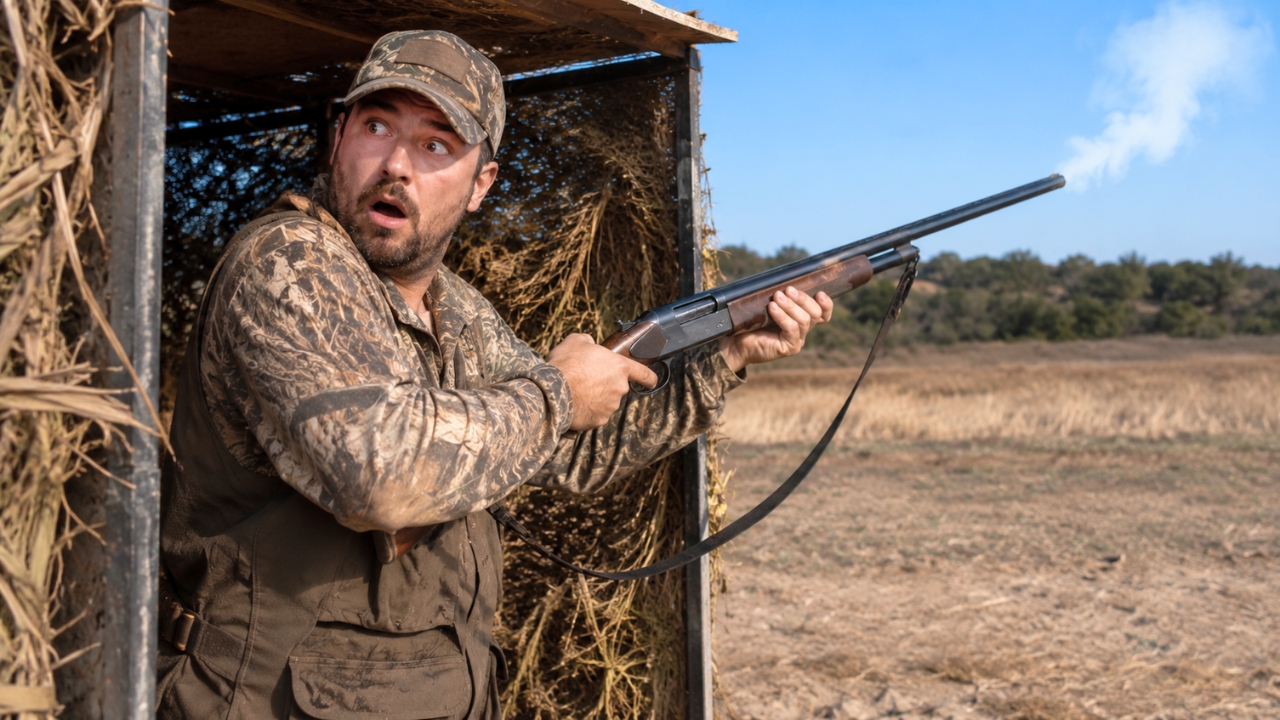
Photo credit: The Avid Outdoorsman
The bird hunter was already in the kind of setup where small mistakes matter.
A layout blind does not give you much room to be sloppy. You are tucked low, hidden, and usually working in tight quarters with a shotgun, shells, calls, layers, and sometimes other hunters close by. Everything is cramped. Everything is close to your body. Every movement has to be controlled because the gun is right there with you.
Then one adjustment turned into a shot.
In a Reddit thread, hunters were talking about regrettable hunting experiences, and one story involved a bird hunter who forgot to put the safety back on while in a layout blind. When he adjusted himself or his gear, the shotgun fired.
That is the kind of moment that turns a hunt cold instantly.
Not because of a missed bird. Not because the flock flared. Not because somebody called at the wrong time. Because a gun went off when no one meant for it to go off.
That is a different kind of silence afterward.
Layout blinds can make shotgun handling tricky because the gun is often lying across, beside, or partly on the hunter while he waits. The whole point is to stay hidden until birds commit. Then the doors pop open, hunters sit up, mount the shotgun, and shoot quickly. It is a fast transition from stillness to motion, and that means the gun has to be managed carefully the whole time.
A safety does not replace muzzle discipline, but forgetting it removes one more layer of protection.
The hunter apparently had the shotgun ready, then did not re-engage the safety before shifting around. That one missed step mattered. A piece of clothing, a gloved hand, a strap, a blind flap, or some part of the adjustment was enough to make the trigger move. In a tight blind, there is not much distance between “I’m just getting comfortable” and “something touched the trigger.”
That is why shotguns in blinds demand boring habits.
Safety on until it is time to shoot. Finger off the trigger until the bird is in the air and the shot is being taken. Muzzle pointed in a safe direction even when lying down. Gun positioned so a strap, glove, coat drawstring, or blind edge cannot get into the trigger guard. If you need to shift, adjust, unzip, sit up, or move gear, the gun gets controlled first.
Not after.
Before.
The scary part of an accidental shot in a bird blind is how close everyone may be. Waterfowl, dove, pheasant, and upland setups often involve buddies, dogs, guides, and gear within a few yards. A shotgun blast at the wrong angle can send pellets where no one planned. Even if the muzzle is pointed generally away, a negligent discharge can still scare the life out of everyone nearby.
And if a dog is working close, the fear gets even worse.
The post was framed as a regret, which says the hunter knew how bad it could have been. A shot that goes off during an adjustment is not a funny little mistake while it is happening. It is a gut-check moment. Everyone around you knows instantly that something went wrong, and you are the reason.
That is hard to sit with.
But it is better to sit with it than excuse it. The correct response after something like that is not, “Well, nobody got hurt.” That is luck talking. The better response is, “What exact habit failed, and how do I make sure it never happens again?”
For this hunter, the failed habit was clear enough: the safety was not put back on, and the gun was still being handled or positioned in a way that allowed the trigger to get pressed.
That means the routine has to change.
Every time the gun comes down, safety on. Every time the hunter settles back into the blind, safety on. Every time the gun is not actively being mounted for a shot, safety on. And even with the safety on, the gun is treated like it can fire if everything else goes wrong.
That second part matters because safeties are mechanical devices. They are helpful, but they are not magic. A responsible hunter does not let the muzzle cover people because “the safety is on.” The safety is one layer. The muzzle direction is another. Finger discipline is another. Trigger guard protection is another. The more layers working together, the less likely one small mistake becomes a gunshot.
The tight blind setup also deserves attention. If a shotgun is lying in a position where the trigger can be bumped while adjusting, that position is wrong. If a glove or jacket can snag the trigger, fix the clothing or the gun position. If the layout blind is too cramped to move safely with the gun loaded, slow the whole process down.
Birds are not worth rushing unsafe handling.
The hunter’s mistake probably ruined the mood of the hunt for a while. It is hard to keep joking and watching the sky after a gun fires unexpectedly. Everyone nearby likely replayed where the muzzle was, where they were sitting, and how close the outcome came to being worse.
That kind of scare sticks.
And it should.
A negligent shot in a blind is one of those lessons that should make a hunter more deliberate forever. Not scared of the gun, but respectful of how quickly “I’m just adjusting” can turn into “the shotgun fired.”
The birds can wait.
The safety routine cannot.
Commenters treated the story as a serious reminder that bird hunting setups can get dangerous fast when people get too comfortable.
Several hunters focused on the layout blind itself. It is cramped, awkward, and full of straps, clothing, doors, and gear that can interfere with safe handling. That means the shotgun needs to be positioned carefully, not casually laid wherever it feels convenient.
Others said the safety should go back on every time the gun is not actively being fired. It is a simple habit, but it matters most in setups where the hunter may be lying down, shifting around, or waiting for long stretches.
A lot of commenters also pointed out that a safety is not enough by itself. Muzzle direction and trigger discipline still matter. If the gun fires, the shot should still be pointed somewhere safe.
Some hunters said this is exactly why they slow down in blinds, even when birds are working. The excitement of a flock coming in cannot override the basic rule that nobody moves or adjusts a loaded gun carelessly.
The main lesson was simple: in a layout blind, every adjustment needs to start with controlling the shotgun. One forgotten safety step can turn a normal hunt into the moment everyone remembers for the wrong reason.