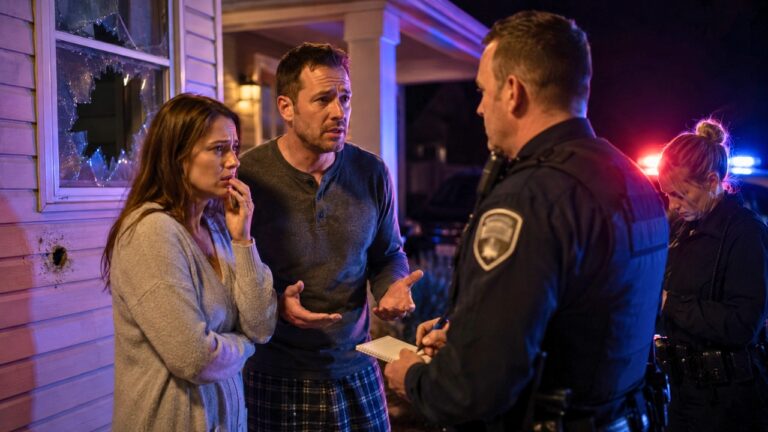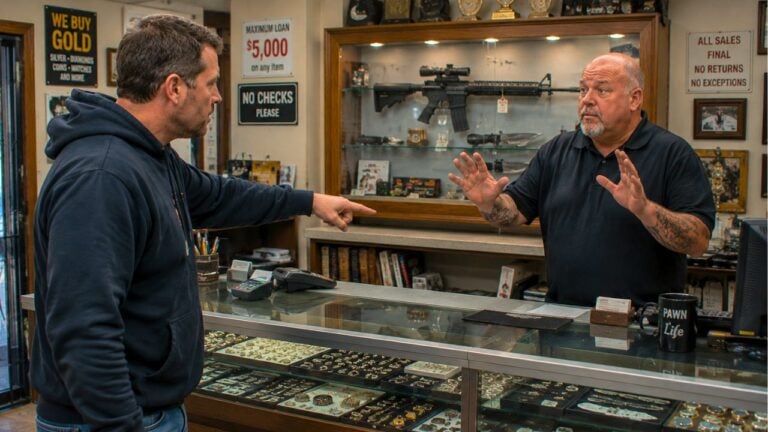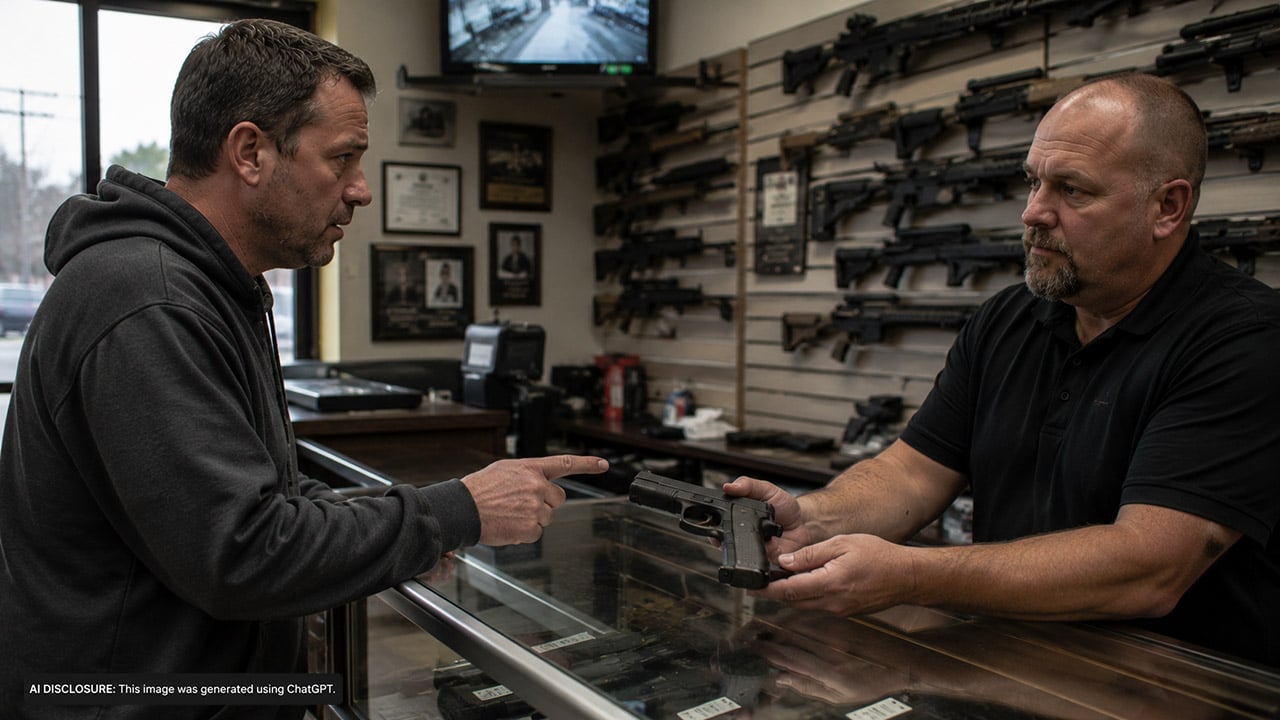
Photo credit: AI-generated image created using ChatGPT. Illustrative only
When somebody kicks in a door and walks off with thousands of dollars’ worth of guns, it doesn’t feel like a “property crime.” It feels personal, and it feels dangerous—because those firearms don’t just disappear. They move.
That’s the situation a Nevada family described in the original post, saying their father’s home was burglarized and roughly $8,000 worth of firearms were stolen. After calling police, the family said they were told there wasn’t time or manpower to investigate, and that no detective would take the case.
A break-in that hits harder than a busted door
If you’ve spent years building a small collection—hunting rifles, a couple shotguns, maybe a handgun or two—you know it’s not just “stuff.” It’s money, yes. But it’s also memories, tags punched, time at the range with family, and the confidence that you’re prepared to protect your home.
In this case, the family said the burglars made off with an estimated $8,000 in firearms. That number matters because it’s big enough to sting financially, but more importantly, it’s enough guns to end up scattered all over the place if thieves start trading them for quick cash.
“They don’t care”: the response that left the family stuck
The most frustrating detail wasn’t the theft—it was the follow-up. The poster said police were called, but the response they got was blunt: they don’t have time to investigate.
In an edit, the poster shared their father’s description of the situation: “They dont care. It is a property crime and they dont have the manpower. Not even a detective will take the case. I talk to a secretary who ammends my initial report.” If you’ve ever tried to get traction on a report and felt like it died on a clipboard, you know exactly how that reads.
Why stolen guns don’t stay “just property” for long
Here’s the part gun owners understand in their gut: stolen firearms create a safety problem for everybody nearby. A thief doesn’t usually steal guns to put them in a safe and admire them. They steal them to sell them, trade them, or use them.
And once that happens, the guns can pop up anywhere—at a pawn shop, in a traffic stop, or in the hands of someone who can’t pass a background check. That’s why getting the details right at the beginning matters so much, even if the initial response feels like a dead end.
Even without investigative manpower, a proper report creates a paper trail. It’s the “birth certificate” for the recovery process if one of those serial numbers shows up later.
The practical steps that matter when law enforcement is stretched thin
When you’re told nobody is coming and nobody is investigating, you still have moves—practical ones that help with recovery odds and protect you down the road. The first is documentation: serial numbers, make/model, photos, receipts, and any unique markings.
If a report was taken, make sure it’s accurate. The father in the source material mentioned a secretary amending the initial report. That’s a detail worth paying attention to because errors in serial numbers, caliber, or model names can break the chain later when something turns up.
Next is insurance. A lot of folks assume homeowner’s insurance automatically makes them whole, and sometimes it does—sometimes it doesn’t. Policies can have limits on firearms, require riders, or treat collections differently than general household property. Even if it won’t cover everything, a claim can at least start replacing basics.
Finally, there’s the “don’t make it worse” category. Don’t confront suspected thieves. Don’t try to buy your own gun back under the table if you spot it floating around. That can tangle you up fast. Keep everything aboveboard and documented.
What people tend to focus on in cases like this
The source post itself is short, but the situation is common enough that the advice usually clusters around the same points: paperwork, serial numbers, and persistence. When the first answer from an agency is “we don’t have manpower,” the squeaky wheel approach—politely, consistently—sometimes gets a better outcome.
That can mean following up with the records unit to confirm the report is finalized, asking how stolen guns are entered so they flag properly if recovered, and requesting the case number so it doesn’t get lost in the shuffle. None of that guarantees an investigation, but it can keep the theft from becoming invisible.
Gun owners also tend to talk about prevention after the fact—because once the guns are gone, recovery is a long shot. Better doors, better locks, a bolted-down safe, and cameras that actually capture a face and a plate can turn the next break-in into a case with leads instead of a case with a shrug.
How a pawn shop recovery can change the whole story
Stolen guns have a habit of resurfacing in the most ordinary places. Pawn shops, especially, are a common endpoint for thieves looking for quick money and low questions. When a firearm turns up across a county line, it can add friction—different jurisdictions, different case loads, different priorities.
But it can also be the break you need, because a legitimate shop typically keeps records. If a shop takes in a gun that’s properly flagged as stolen, it can trigger a hold and a call. That’s why the boring stuff—serial numbers entered correctly, report filed correctly—matters more than people want to admit.
And if you’re the victim, the key is keeping your hands clean and your information tight. If one of your firearms surfaces, you want to be able to point to the report, the serial number list, and your proof of ownership without any drama or guesswork.
Burglary is a gut-punch, and being told it won’t be investigated is salt in the wound. But for gun owners, the goal is bigger than replacing property—it’s getting those firearms out of circulation. The best odds come from accurate reporting, steady follow-up, and the kind of documentation you hope you’ll never need, right up until the day you do.
Like The Avid Outdoorsman’s content? Subscribe to our newsletter so you never miss an article.
Here’s more from us: