
You learn fast in the deer woods: a round that looks impressive on paper doesn’t always do the work where it counts. There’s a difference between punching paper and putting hot lead through hide, bone and lungs. Some rifle cartridges are tiny, light-for-caliber, or built to fragment — perfect for prairie dogs and coyotes, awful for a 120–200-pound whitetail. This piece focuses only on rifle cartridges you should not bring to deer season. I’m not talking theory or internet bravado — these are rounds that, by design and by real-world results, lack the penetration, retained mass, or bullet construction to reliably reach vitals. You owe it to the animal and to yourself to use a cartridge that leaves as little to luck as possible.
.22 Long Rifle

Yes, you can kill a deer with a .22 LR under the most extreme luck-and-placement circumstances, but that doesn’t make it a deer cartridge. Rimfire .22 bullets are tiny, slow to begin with from short barrels, and whenever they meet bone or heavy hide they tend to slow down, yaw, or break apart rather than carry energy deep. Even from a rifle, the effective terminal performance falls short of what’s needed for consistent lung or heart hits. You might get away with a headshot at point-blank range, but that’s not hunting — that’s gambling with an animal’s welfare. Keep the .22 LR for small game and training.
.17 HMR

The .17 HMR is fantastic for long-range varmint work: flat shooting, light recoil, pinhole groups. But its 17-grain bullets are designed to fly very fast and then fragment on soft targets. That fragmentation is a virtue on prairie dogs; on deer it turns into a liability, because the bullet often fails to penetrate deeply enough to score a humane kill. The practical result is superficial wound channels and long tracks, especially at typical deer distances. Treat the .17 HMR like what it is — a rimfire varmint round — and leave it off the deer list.
.22 Winchester Magnum Rimfire (WMR)
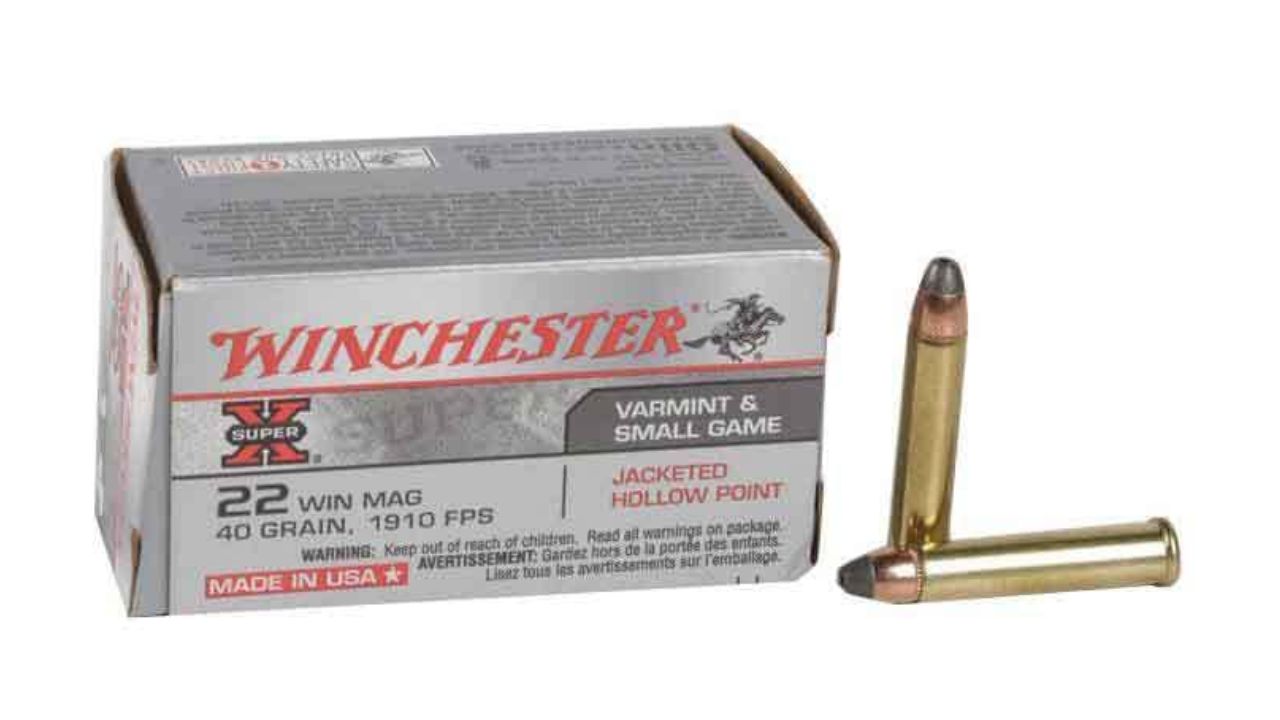
You get more than a .22 LR with the .22 WMR, but it’s still a rimfire aimed at small predators and varmints. The heavier rimfire bullets can expand early and lose momentum against bone and heavy muscle. That leaves marginal penetration on deer-sized targets unless you’re inside a few yards and hit perfectly. Stories of successful deer shots with a .22 WMR exist, but they’re anecdotes, not evidence that the cartridge is suitable. If you want an ethical, consistent outcome, use a centerfire rifle cartridge built for medium game.
.17 Mach 2

The .17 Mach 2 is another lightweight, high-speed small-game round that looks fast on paper and shoots tiny bullets with minimal sectional density. That speed turns the projectile into a fragile thing on impact: it fragments or tumbles instead of punching through ribs and muscle. You’ll see great groups on reactive targets at the range — that’s not the same as delivering controlled, deep penetration on game. Conservation and ethics mean you should pick a cartridge with margin for error; the Mach 2 doesn’t give you that.
.22 Hornet

The .22 Hornet has a long, respectable history on small predators and occasional coyote work. On whitetail it’s underpowered. Even the stoutest Hornet loads leave you with marginal retained energy after they pass through hide and hair, and most bullet designs for the Hornet are optimized for expansion rather than deep penetration. At typical stand-to-stand distances and in real woods with quartering angles and bone in the way, the Hornet simply doesn’t deliver reliable, humane kills. It’s a fine varmint cartridge — not a deer round.
.17 Winchester Super Magnum (WSM)

The .17 WSM is the high-end rimfire velocity champion — blistering speed but still rimfire and still firing tiny bullets. That velocity makes the projectile fragile on impact, and when light bullets fragment they fail to reach the vitals on a deer. The .17 WSM is a great tool for long-range varmint work where fragmenting is desired. On deer it’s a mismatch of purpose: little mass, brittle construction, and limited penetration make it a poor ethical choice.
.204 Ruger

The .204 Ruger brought speed and flat trajectory to the varmint world, but its light, fast 32–40-grain bullets tend to fragment on impact rather than penetrate deeply. That makes them terrible for reliably reaching both lungs through ribs, or through shoulder bone when a shot isn’t textbook. Hunters who try the .204 on deer often find wounding instead of quick kills. As a varmint and predator cartridge it’s excellent; as a medium-game cartridge it’s underbuilt and unpredictable.
.17 Remington

The .17 Remington is an extreme varminting round — very light bullets at very high speed. High speed doesn’t magically make a cartridge suitable for deer. The slender projectiles carry little sectional density and fragment readily, which reduces deep penetration. In woods and brush, where shot angles aren’t perfect, you want bullets that keep mass and penetrate to the vitals. The .17 Remington was never intended for that job; don’t recruit it to do work it can’t.
.22-250 Remington

The .22-250 is one of the most popular varmint rifles because it shoots flat and hits hard on small critters. But that very trait — light, high-velocity bullets designed to break apart — is what makes it questionable on deer. On paper it can produce rapid energy, and it will punch paper groups, yet on bone the projectiles are prone to fragmentation and can fail to transfer energy where it matters. Some hunters have had success on deer with heavy, controlled-expansion bullets in .22-250, but the majority of typical varmint loads make it a risky, marginal choice for whitetail.
.220 Swift

The .220 Swift was one of the first ultra-fast commercial cartridges and it still shows up on varmint benches. Like other ultra-high-speed .22s, its light bullets often fragment on impact instead of penetrating cleanly. That’s great for destroying small game targets, terrible for a 150-pound mammal where you need controlled penetration and retained mass. If you’re using a Swift, you’re gambling on perfect placement and ideal bullet construction — neither is a dependable plan in the field.
.223 Remington (with varmint loads)

The .223 itself is not universally useless on deer — with purpose-built, heavyweight, bonded bullets it can work at short ranges in a pinch — but the widespread practice of using varmint fragmentation loads in .223 is a real problem. Those factory loads are engineered to blow apart on soft targets; on deer they often fail to reach both lungs or yield messy wound tracks. The mistake is common: treating .223 as a one-size-fits-all and grabbing whatever ammo is cheapest. If you use .223, be deliberate about bullet choice. Otherwise, leave it at home for deer season.
.30 Carbine

The .30 Carbine is a rifle cartridge by definition, but it was designed for light carbine use in close combat, not medium game. Its relatively light bullets out of short barrels produce modest energy and limited penetration on a heavy-skinned, bone-framed animal. The round can incapacitate a threat at short range, but it doesn’t reliably break shoulders or penetrate to the vitals on a deer unless the shot is perfectly placed. In real hunting situations, that lack of margin makes .30 Carbine a poor choice for ethical deer work.
.17 Fireball (and similar necked-down small bores)

Cartridges like the .17 Fireball are built to move tiny bullets very fast, and they shine on small targets and in very lightweight rifles. But the law of terminal ballistics still applies: small mass plus fragile construction equals poor penetration on deer. The Fireball family was never intended to be a medium-game solution. If you want consistent, humane performance on whitetail, pick a cartridge and bullet combination that retains mass and penetrates bone and heavy muscle — the Fireball doesn’t.
.218 Bee

The .218 Bee is an old varmint round that saw use decades ago for coyotes and prairie dogs. It’s pleasant to shoot and accurate, but its light bullets and relatively low sectional density mean it loses momentum quickly against resistance. That results in shallow wound channels on deer and a real risk of merely wounding rather than killing. Tradition aside, you shouldn’t press a Bee into service for whitetail hunting — the cartridge simply doesn’t have the penetration or energy retention you need.
.219 Zipper

Another small-bore, lightweight vintage cartridge, the .219 Zipper was made for small predators and target work. It gives excellent accuracy in a light package, but like the others on this list, the bullet weights and constructions available for it are not suited to cleanly dispatching deer. You’ll either need a miracle shot or a heavier, purpose-built bullet that the cartridge wasn’t designed around. Don’t use nostalgia as an excuse — pick a modern deer-appropriate caliber instead.
Like The Avid Outdoorsman’s content? Be sure to follow us.
Here’s more from us:
The worst deer rifles money can buy
Sidearms That Belong in the Safe — Not Your Belt
*This article was developed with AI-powered tools and has been carefully reviewed by our editors.


