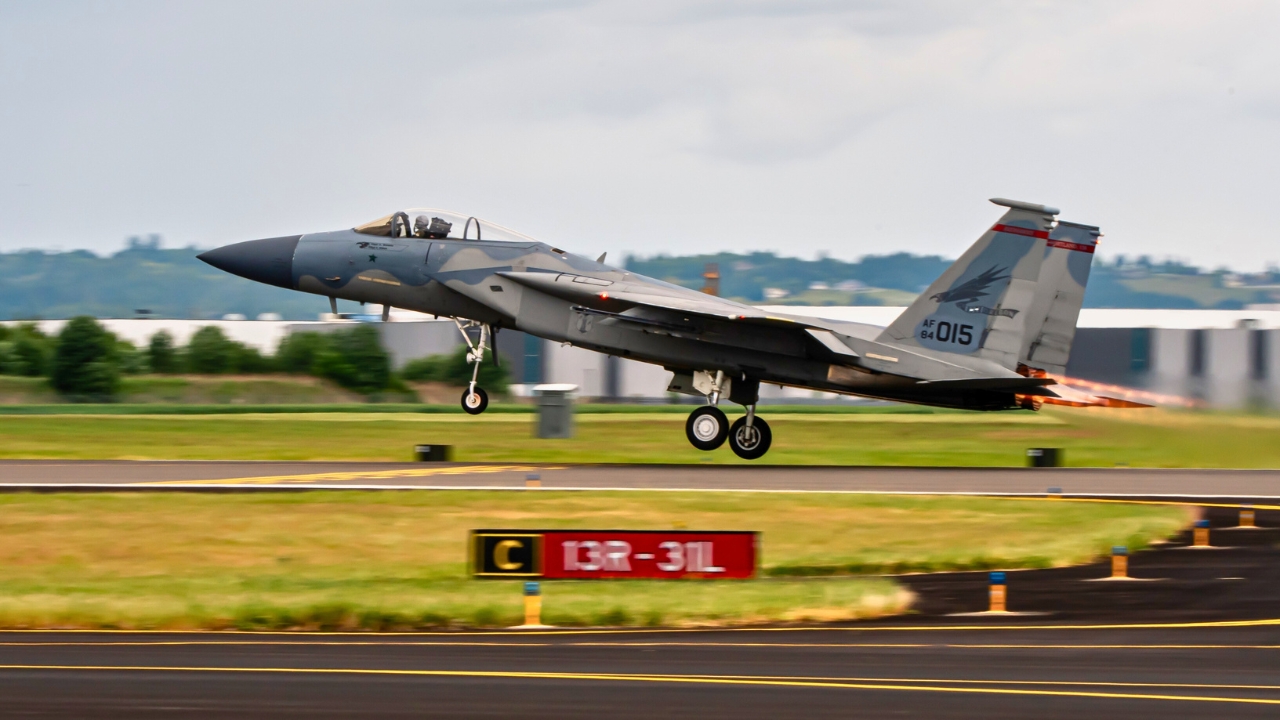
Photo credit: Joe A. Kunzler/Shutterstock.com
Defense Secretary Pete Hegseth is refusing to put a public timetable on how long the U.S. military campaign against Iran could continue, saying President Donald Trump will decide when Operation Epic Fury has achieved its objectives. The comments came as the war entered its third week and as the administration continued to send mixed signals about whether the fight is nearing its end or still has major phases ahead.
At a Pentagon briefing earlier this week, Hegseth declined to say how far along the United States is in the operation and instead pointed back to Trump as the one who will determine the end state. That answer stood out because it came shortly after Trump suggested the conflict might be moving faster than expected, while other administration officials have also said the mission will continue as long as needed to meet its goals.
Publicly, the administration has described those goals as destroying Iran’s offensive missile arsenal, dismantling major parts of its missile production base and navy, preventing Tehran from obtaining a nuclear weapon, and reducing the threat posed by Iranian-backed proxies. Reuters reported on March 5 that Pentagon officials said the mission was not being expanded beyond those stated aims, even as U.S. strikes moved into what military leaders described as a “next phase” focused on Iran’s ability to rebuild.
That still leaves a basic question hanging over the conflict: what counts as success, and who decides when the job is finished? Trump said near the start of the war that strikes would continue until “all of our objectives are achieved,” but he did not spell out a firm endpoint. AP later reported that Hegseth said the campaign could end sooner or run longer than outside estimates, reinforcing the sense that the administration wants flexibility more than a public deadline.
The backdrop is a war that has already expanded well beyond a short burst of airstrikes. Reuters reported this week that U.S. forces have hit thousands of targets in Iran, including naval assets, while Iranian retaliation has reached U.S. and allied interests across the region. AP also reported that the U.S. is sending additional military assets into the theater, though officials have cautioned that those moves do not automatically mean a ground invasion is coming.
For military families, veterans and readers watching this from home, Hegseth’s answer matters because it confirms there is still no publicly defined finish line. The administration is saying the mission is limited, but it is also making clear that Trump alone will judge when enough has been accomplished. Until the White House gives a clearer benchmark, Americans are left with a war plan built around objectives that are broad, evolving and ultimately tied to the president’s call.