Photo credit: Freeograph/Shutterstock.com
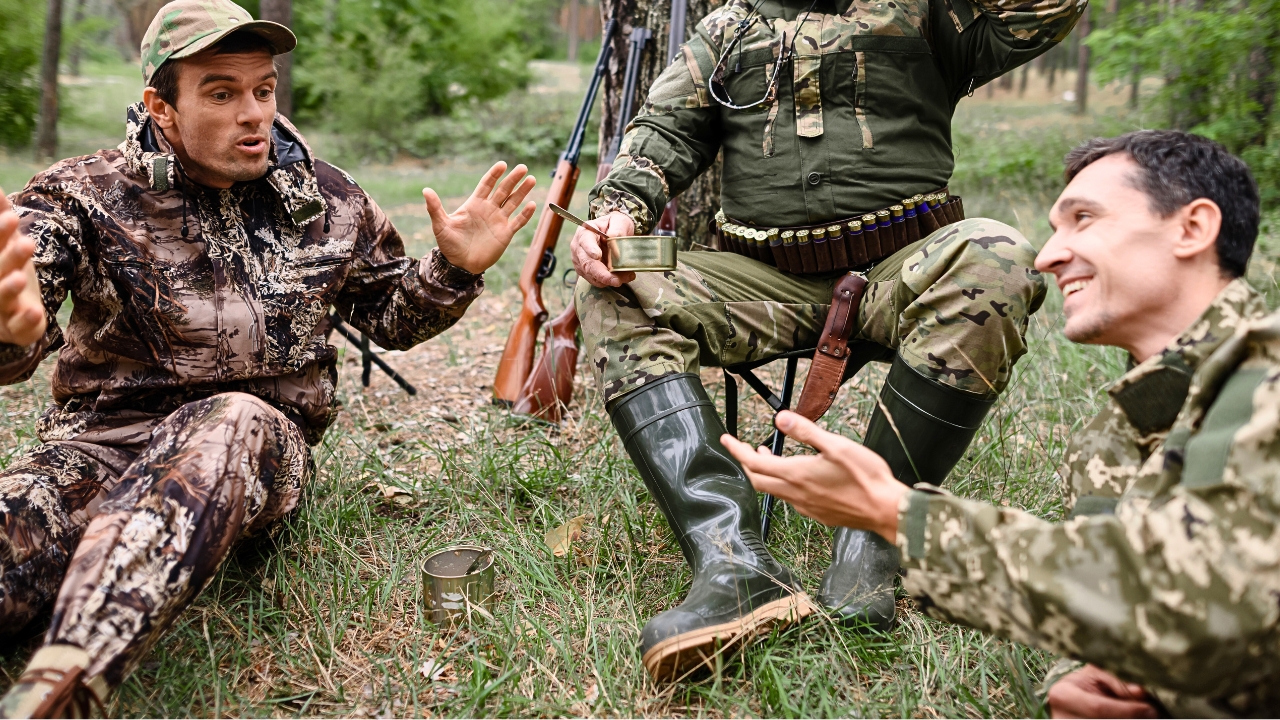
Every hunting camp has that moment—someone unzips their rifle case, and a few guys exchange looks. It’s not cruelty, it’s experience. They’ve seen that caliber fail on game, struggle in wind, or run out of energy when it mattered. There’s a big difference between what looks good on paper and what holds up in the field, especially when you’re a few miles from camp with one shot to make it count. Some cartridges earn respect. Others earn nicknames you don’t want repeated over breakfast. These are the calibers that might sound clever or nostalgic but tend to spark more jokes than confidence once the campfire stories start rolling.
.17 HMR

The .17 HMR is flat-shooting and flashy—great for varmints, terrible for anything bigger. Every camp has a guy who brings one thinking it’ll “do fine for deer at close range.” That conversation always ends the same way—with someone shaking their head. It’s underpowered for anything larger than a coyote, and even then, wind eats it alive.
Its lightweight bullets don’t carry momentum, so they shed energy fast. Miss a perfect broadside shot and you’re tracking wounded game into next week. Sure, it’s fun for plinking or pest control, but in deer or elk camp, it’s a punchline waiting to happen. Bring one out of your truck case, and you’ll hear, “What are you hunting, squirrels?” before you can chamber a round.
.22 Long Rifle

Everyone respects the .22 LR for what it is—a cheap, accurate, and reliable rimfire round. But show up to big game camp with one and you’ll never hear the end of it. No matter how confident you are in your shot placement, that little bullet isn’t meant for anything beyond small game or varmints.
The .22 just doesn’t have the energy to make humane kills on deer-sized animals. Hunters who’ve tried it for “fun” quickly learn how slow those follow-ups get when an animal runs. It’s the ultimate practice cartridge—but once you’re in real hunting country, pulling out a .22 is like showing up to a drag race in a golf cart. It’s great for squirrels and rabbits, not for filling the freezer with venison.
.204 Ruger

The .204 Ruger is lightning-fast and surgical on prairie dogs, but it has no place at deer camp. It shoots flat, yes, but it carries almost no punch past 200 yards. That’s fine for coyotes—but try it on anything bigger, and you’ll see why other hunters chuckle when they spot that tiny bore.
It’s sensitive to wind, light on energy, and doesn’t handle bone or muscle well. Most hunters who’ve experimented with it on deer come back humbled. In the right hands, it’s a coyote killer. In the wrong ones, it’s a poor choice that ends with a long blood trail. It’s a fun, accurate round for varmints, but it won’t earn you much respect when elk tags are on the line.
.25-06 Remington

The .25-06 sits in an odd place—it’s not underpowered, but it’s not respected the way it used to be. In elk or mule deer camp, it’s often met with raised eyebrows and jokes about “bringing a quarter-inch needle to a gunfight.” It shoots fast and flat, but it’s finicky with bullet selection, and those light projectiles don’t always perform well on larger animals.
It’s also known for overpenetration on smaller game and marginal expansion on big-bodied deer. Hunters who swear by it usually handload carefully and know its limits. But if you show up with factory loads and big ambitions, you’ll hear plenty of guys asking if your rifle came from the varmint section. It’s effective in the right setup—but it’s a conversation starter for all the wrong reasons.
.30 Carbine

The .30 Carbine is famous for its military history, not its hunting record. Bringing one into elk camp is guaranteed to get you a few smirks. Its ballistics are closer to a hot pistol round than a true rifle cartridge. Even at close range, it lacks the energy and penetration to be effective on anything bigger than a small hog.
The round drops quickly and loses velocity fast. At 100 yards, it’s already running out of steam. Sure, it’s fun to shoot, and the M1 Carbine is a classic piece of history—but nostalgia doesn’t kill elk. If you pull one out in camp, expect someone to ask whether you plan on scaring the bull to death. It’s a neat collectible, not a serious hunting tool.
.300 Blackout

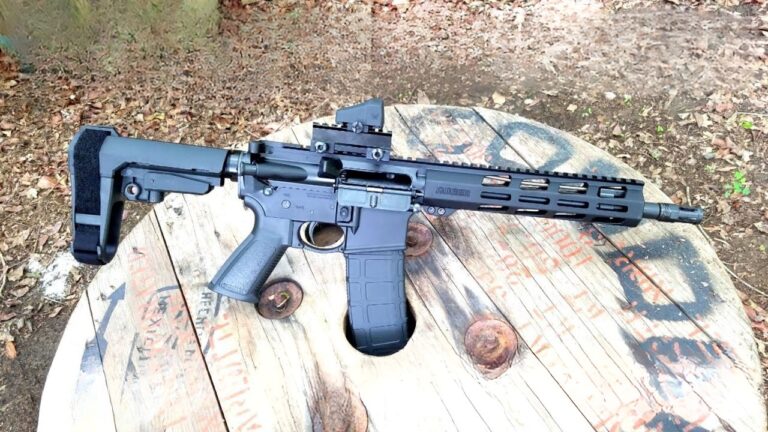
The .300 Blackout has a cult following, especially among AR enthusiasts. But in elk or mule deer country, it’s the butt of more than a few jokes. It’s designed for short barrels and subsonic loads—great for suppressors, terrible for long shots. It simply doesn’t have the velocity or energy to handle big game cleanly beyond 100 yards.
Hunters who bring it west expecting it to perform like a .308 often leave disappointed. Even with supersonic ammo, it runs out of steam fast. It’s accurate and compact, sure, but that doesn’t make it an elk rifle. Around the campfire, the .300 Blackout is known more for internet hype than real-world success. You’ll have more luck sneaking up close than taking ethical shots across open country.
.350 Legend

The .350 Legend made waves when it came out, promising “the fastest straight-wall cartridge.” In reality, it’s fine for Midwest whitetails—but outside of states that require straight-wall ammo, it’s an oddball. Bring it into elk or mule deer camp and someone’s bound to ask, “You lose your .308 on the drive here?”
It hits harder than a .300 Blackout but lacks range and sectional density. Past 200 yards, its trajectory gets ugly, and energy falls off sharply. It’s perfect for short-range tree stands or ground blinds, not open ridges and cross-canyon shots. It’s not useless—it’s just misplaced when the game weighs 700 pounds and the shots stretch past a football field.
6.5 Grendel

The 6.5 Grendel is great for lightweight AR setups, but when you pull one out for elk, you’ll hear laughter before the first round is chambered. It’s capable on deer and hogs within reasonable range, but it can’t compete with full-sized rifle rounds for penetration and retained energy.
It’s slow compared to other 6.5s, and the ballistic performance drops quickly after 300 yards. While it’s accurate, it’s not enough gun for elk or even large mule deer in most conditions. It shines for shooters who value low recoil, but elk country demands more authority. In hunting camps where .30-06 and .300 Win Mag rule, the 6.5 Grendel sounds like a whisper in a room full of hammers.
7mm-08 Remington

The 7mm-08 is accurate, efficient, and mild—but that same mildness gets it ribbed in elk camp. It’s great for whitetails and smaller western game, but when you’re hunting thick-bodied bulls in steep country, it’s borderline. You’ll make clean kills with good bullets and shot placement, but one bad angle and you’ll wish you had more cartridge behind it.
It’s not laughed at for being weak—it’s laughed at because everyone’s seen someone overestimate it. Guys show up thinking it’ll match a .280 or .30-06, and reality sets in when their bull doesn’t drop. It’s a fine rifle in the right hands, but if you’re chasing elk at long range, the 7mm-08 is a great way to hear, “You brought what?” before sunrise.
.270 Winchester Short Magnum (WSM)

The .270 WSM came in with high expectations but never really earned its place in campfire respect. It’s fast, flat, and loud—but the recoil is snappier than a standard .270, and the performance gain isn’t enough to justify it. Ammo availability is spotty, and factory loads vary wildly in consistency.
Hunters often complain about feeding issues, especially in budget rifles. Combine that with limited bullet selection and high cost, and it becomes a round that sounds fancy but underdelivers. Most elk hunters prefer tried-and-true .30-caliber rounds or even the plain .270 Win. Pull out a .270 WSM, and someone will likely mutter, “One of those marketing miracles again.”
6.8 SPC

The 6.8 SPC was meant to bridge the gap between the 5.56 and larger hunting rounds. On paper, it looked perfect. In practice, it’s underwhelming. It works fine for hogs or deer at moderate range, but beyond that, it lacks energy and trajectory for bigger game.
In elk country, the 6.8 SPC is simply outclassed. It’s an AR-friendly cartridge, but the energy drop past 200 yards is severe. You’ll hit your target—but not with enough authority. It’s earned a reputation as a “cool idea” that never really became a go-to hunting round. If you bring it to camp, expect someone to say, “You couldn’t find a real rifle?” before you even load a mag.
*This article was developed with AI-powered tools and has been carefully reviewed by our editors.