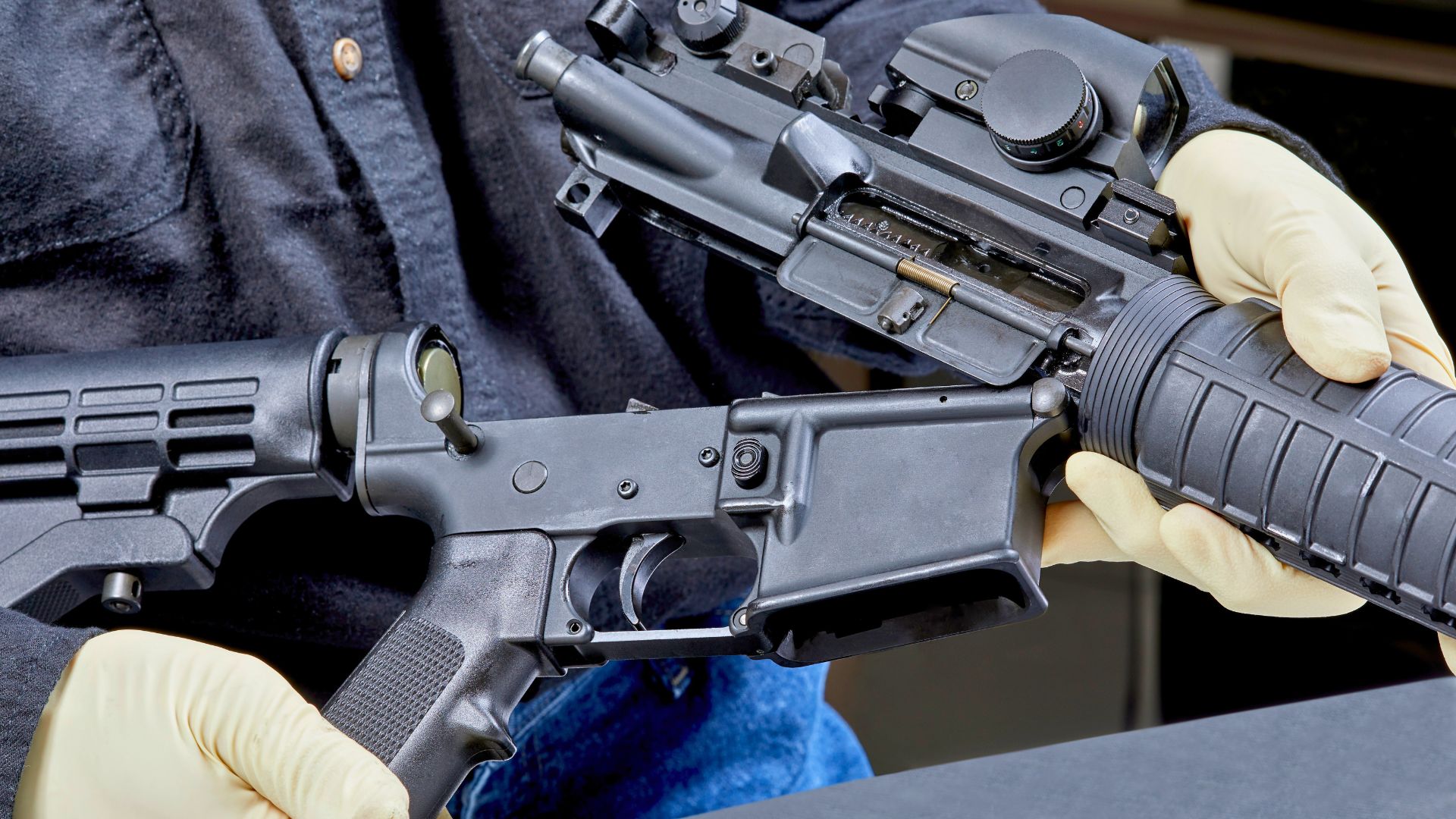
Photo credit: Pamela Au/Shutterstock.com
California has quietly redrawn the map for home AR builders and parts buyers, and the shift arrived the moment the calendar flipped to the new year. With Senate Bill 704 now active, the simple act of ordering a barrel for your next build has been pulled into the same regulatory orbit as buying a complete firearm, and the details matter if you want to stay on the right side of the law.
If you are used to grabbing AR-15 barrels online, meeting a buddy in a parking lot, or stocking up at a gun show, the new framework changes how, where, and even whether you can do that. Understanding what SB 704 covers, how it interacts with other New California Gun Laws, and what it demands from you as a builder is now as essential as knowing your torque specs or gas system length.
SB 704 in context: how California got to regulating barrels
California has spent years tightening rules around receivers, “ghost guns,” and serialized parts, and SB 704 is the next step in that progression. Lawmakers moved from focusing on frames and lowers to treating the barrel itself as a controlled component, folding it into a broader package of New Firearms Rules that also includes Assembly Bill 1263 and other measures that reshape how you buy and transfer gun parts in the state.
In that package, SB 704 is the piece that targets the physical tube that directs the projectile, while AB 1263 and related measures handle parallel issues like warnings, age checks, and online sales. The combined effect is that, beginning with this 1.1 effective date, California is no longer content to regulate only serialized receivers, it is now treating key components like barrels as items that must move through a dealer mediated system, a shift that is explicitly framed as part of a New California Gun Laws push that is Effective Jan and aimed at Californi residents who buy parts as readily as complete firearms.
What SB 704 actually covers: the legal definition of a “firearm barrel”
Before you can decide whether your next part order is affected, you need to know what the state now considers a regulated barrel. SB 704 does not leave that to guesswork, it Defines a “firearm barrel” as the tube, usually metal and cylindrical, through which a projectile or shot charge is fired, and it makes clear that the bore may be rifled or smooth. That language is broad enough to capture the AR-15 barrel you are used to threading into an upper, as well as shotgun and pistol barrels that share the same basic geometry.
Because the statute focuses on the tube that channels the projectile, it reaches beyond complete upper receivers or barrel assemblies and down to the core component itself. The analysis explaining how SB 704 Defines the term makes it clear that the law is not limited to a specific caliber, platform, or configuration, so whether you are working with a 16 inch 5.56 NATO barrel, a 10.3 inch pistol configuration, or a smoothbore shotgun tube, you should assume it falls inside the new definition unless a later clarification carves it out, which is Unverified based on available sources.
From parts to controlled items: new transfer rules for AR barrels
The most immediate change you will feel as an AR builder is that barrels are no longer treated like generic metal tubes you can buy and sell casually. Under SB 704, California is moving barrels into a category that must be handled through licensed intermediaries, so the kind of private party swaps that used to happen at the range or in a parking lot now risk colliding with a statute that treats those same parts as controlled items. The bill’s summary explains that it would also prohibit a person from possessing a firearm barrel with the intent to sell, or offering to sell, unless the transaction runs through the structure the law sets out.
That shift is reinforced by guidance aimed at dealers and compliance software providers, which describes how California Laws AB and SB 704 are creating additional requirements pertaining firearm barrels, effective 1.1, and folding them into the same compliance universe as complete guns. For you, that means a barrel is no longer just another accessory, it is a part that can trigger the same paperwork, background checks, and record keeping that you already associate with buying a new rifle, and ignoring that change exposes you to the same enforcement tools the state uses for other regulated firearms transactions.
Why online barrel orders now look like firearm sales
If you have relied on online retailers to keep your builds moving, SB 704 changes that experience in ways you will notice immediately. Where you once could have a barrel shipped straight to your doorstep like any other piece of hardware, the new rules treat that shipment more like a firearm transfer, with the barrel routed to a dealer and released only after the same kind of checks that apply to a complete gun. Retailers that serve California customers are already flagging that shift, explaining that New Rules for Firearm Barrels now prevent them from shipping those parts outside the dealer mediated system.
That online clampdown does not exist in isolation, it sits alongside AB 1263’s focus on digital transactions and age checks. Compliance guidance for AB 1263 notes that, beginning January 1, 2026, California will require online sellers of certain regulated items to treat the sale as a transaction similar to a firearm, with warning language, age verification, and other safeguards built in. When you combine that with SB 704’s treatment of barrels, the message is clear, the state expects your next AR barrel order to look and feel like a gun sale from the moment you click “checkout” until you sign for it at the FFL.
How SB 704 interacts with AB 1263 and The Two New Laws framework
SB 704 does not stand alone, it is one half of what many retailers are already calling The Two New Laws that reshape how you buy both accessories and core components. Assembly Bill 1263, often shortened to Assembly Bill 1263 or simply AB 1263, was Signed earlier in the legislative cycle and targets the informational and age verification side of the transaction, while SB 704 focuses on the physical control of the barrel itself. Together, they create a one two punch that covers both the digital front end of your purchase and the physical handoff of the part.
Retailers that specialize in AR platforms are already walking customers through that combined framework, explaining that Assembly Bill 1263 was Signed to govern how online accessory and barrel sales are presented, while SB 704 closes the loop by insisting that the barrel move through a dealer. When you see references to What AB and SB 704 Mean for your builds and for 2026 and Beyond, that is the structure they are talking about, a world where your AR barrel is treated as a regulated item from the moment you see the product page to the moment you pick it up from the counter.
Practical impact on AR builders: FFLs, wait times, and costs
For you as a builder, the most tangible change is that the path from idea to finished rifle now runs through an FFL at more points than before. Instead of ordering a barrel on a Sunday night and having it on your bench by midweek, you will be coordinating with a local dealer, paying transfer fees, and planning around the same kind of wait times that already shape your complete firearm purchases. Community discussions have already flagged that reality, with one widely shared reminder noting that SB 704 goes into effect 1/1/2026 and will require all rifle barrels to be sold through a FFL, and that the bill was Signed after a rush of last minute buying.
Those extra steps translate into real costs and delays, especially if you are used to building on a tight budget or timeline. Instead of treating a barrel as a low friction upgrade you can swap on a whim, you will need to factor in transfer fees, potential background check delays, and the possibility that your local shop may not be eager to process a flood of parts transfers. For many California AR owners, that will mean consolidating orders, planning builds further in advance, and accepting that the days of casual, same week barrel swaps are over, at least for parts that fall squarely within the new statutory definition.
Compliance traps to avoid: possession, intent to sell, and gray market risks
Beyond the obvious requirement to route new purchases through a dealer, SB 704 creates subtler risks that can catch you off guard if you are not paying attention. The bill’s language does not just regulate formal sales, it also reaches possession with intent to sell and offers to sell, which means that a box of spare barrels in your garage can become a legal problem if you are advertising them informally or moving them in ways that look like unlicensed dealing. The legislative tracking summary spells that out, noting that the bill would also prohibit a person from possessing a firearm barrel with the intent to sell, or offering to sell, unless they comply with the structure the law sets.
That matters if you are the person in your circle who always has an extra 14.5 inch or 18 inch barrel on hand and is willing to “help out” friends for cash or trade. Under the new rules, those casual arrangements can be read as unlicensed sales, especially if they happen repeatedly or involve multiple buyers, and the fact that the part is “just a barrel” will not carry much weight. With enforcement tools now calibrated to treat barrels as controlled items, the safest path is to route any transfer that looks like a sale through a dealer and to avoid gray market channels that promise to sidestep the new requirements but leave you exposed if something goes wrong.
What retailers and software providers are doing behind the scenes
While you are adjusting your build plans, the businesses that serve you are scrambling to rewire their systems so they do not run afoul of the same statutes. Compliance platforms that cater to gun shops and online sellers are already advertising tools tailored to California Firearm Warning, Attestation, and Age Verification Requirements, and they are explicitly asking, Are you ready for California Laws AB and SB 704 as they add additional requirements pertaining firearm barrels, effective 1.1. That back end work is what will determine whether your favorite retailer can keep shipping to your local FFL or has to cut off California customers entirely.
On the front end, you will see those changes in the form of new checkout flows, more prominent warning banners, and stricter age gates when you try to buy anything that looks like a barrel or a closely related accessory. Some retailers are already segmenting their catalogs so that California buyers see different options or are blocked from adding certain items to their carts, a reflection of how seriously they are taking the risk of shipping a regulated part outside the dealer mediated channel. For you, that means the list of vendors willing to support your builds may shrink, but those that remain will be the ones that have invested in the compliance infrastructure needed to survive under the new rules.
Planning your next build under SB 704: strategies for staying ahead
With the new barrel rule now live, the smartest move you can make as an AR builder is to treat compliance as another constraint in your planning, right alongside budget and parts compatibility. That starts with mapping out your builds months in advance, identifying which barrels you will need, and coordinating with an FFL that is willing to handle the transfers so you are not scrambling when a component finally comes back in stock. Retailers that cater to California AR owners are already urging customers to think this way, explaining that, beginning January 1, 2026, that kind of planning is essential because barrels and related accessories are now treated as regulated items, often with an adult signature required at pickup.
It also means being realistic about what you can and cannot do inside state lines. If you travel to free states for work or family, you may be tempted to buy barrels there and bring them home, but once you cross back into California, SB 704’s definition and transfer rules still apply, and any attempt to skirt them risks turning a simple parts purchase into a legal headache. The most sustainable strategy is to build a relationship with a local shop, stay current on updates to the New Firearms Rules that explain what AB and SB 704 Mean for your platform, and accept that, at least for now, building ARs in California is as much about navigating statutes and software as it is about torque wrenches and headspace gauges.
Like The Avid Outdoorsman’s content? Be sure to follow us.
Here’s more from us: