Photo credit: Andrey_Popov/Shutterstock.com
A traffic stop is usually nothing. But when you’re carrying, the way you act matters more than the reason you got stopped, because the officer is walking up to a stranger in a metal box with limited visibility and a lot of unknowns. Experienced carriers don’t treat that as a personal insult or a courtroom audition. They treat it like a short, procedural interaction where the goal is simple: no surprises, no misunderstandings, and no extra problems created by ego, bad timing, or sloppy movement. This isn’t legal advice and laws vary by state, but the patterns that keep things calm are pretty consistent: stay still, keep your hands visible, communicate clearly before you move, and don’t talk your way into a mess you didn’t have to be in.
They “park their hands” and stop acting busy
Newer carriers tend to fidget because they’re trying to look cooperative. Experienced carriers do the opposite: they get the car safely stopped, put it in park, and then they freeze the chaos by parking their hands where the officer can see them—typically on the wheel—and leaving them there until they’re told otherwise. That one habit does more to keep a stop calm than any perfect script, because most bad moments start when hands disappear and the officer has to guess what you’re doing. Even basic rights-and-safety guidance from ACLU emphasizes staying calm and keeping your hands visible, which should tell you how universal this piece is. If it’s dark, experienced carriers will also turn on interior light only if they can do it without reaching around weird, or they’ll simply tell the officer where the switch is and ask how they want it handled, because “I’m about to lean and reach” is the exact vibe you’re trying to avoid.
They don’t dig for documents until they’re asked
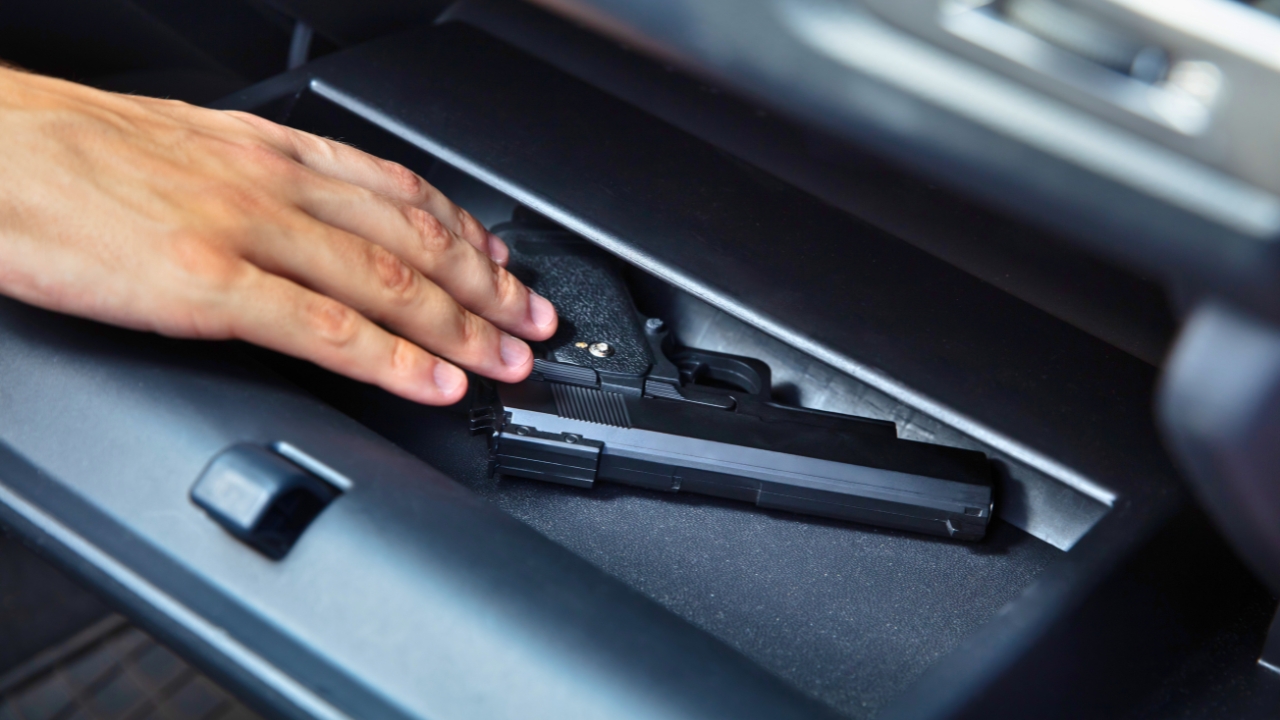
A rookie move is rummaging for license and insurance while the officer is still walking up. That “helpfulness” reads like uncertainty, and uncertainty is what spikes tension. Experienced carriers wait, listen, then narrate any movement before it happens: “My license is in my wallet in my back left pocket,” or “Registration is in the glove box—do you want me to get it?” The key is you don’t start reaching and then explain mid-reach. You explain first, then move slow, and you stop if the officer gives different instructions. This is straight out of common stop-safety guidance, including state and local ACLU “know your rights” materials that explicitly tell people to keep hands visible and inform the officer before reaching for paperwork.
They already know their “duty to inform” situation and don’t freestyle it
One of the biggest differences between experienced carriers and everybody else is they don’t “figure it out live.” They already know whether their state requires disclosure, whether it’s only required if asked, or whether there’s no duty to inform at all—and they also know the rule may change when they cross state lines. US Concealed Carry Association summarizes this patchwork and even breaks it into buckets (inform immediately, inform if asked, no duty), which is helpful as a starting point, but the experienced-carrier mindset is: verify your specific jurisdiction before you carry there, because this is not a vibes-based topic. If disclosure is required (or if you choose to disclose), experienced carriers keep it boring and procedural: calm tone, hands still visible, short sentence, then a question that hands control to the officer—no drama and no sudden movement.
They keep the conversation tight and don’t try to “win” the stop
Experienced carriers understand that a traffic stop isn’t the place to argue, vent, or explain your whole day. They give required info, answer what they must, and they don’t volunteer extra details because extra words create extra angles for misunderstanding. That’s not paranoia—that’s maturity. ACLU guidance is blunt about staying calm and not escalating the interaction, and it also reminds people they can choose not to answer questions beyond what’s required in many situations, which is why experienced carriers don’t get baited into talking themselves into contradictions. If consent-to-search comes up, experienced carriers don’t waffle or get emotional; they either consent because they truly want to, or they decline clearly and politely and then stop talking about it, because turning it into a debate never helps.
They don’t touch the gun, adjust the holster, or “help” with disarming
If there’s one mistake that can turn a normal stop into a high-alert moment, it’s messing with the gun—adjusting it, re-tucking a shirt around it, shifting it to be “more comfortable,” or trying to show you’re safe by doing something with it. Experienced carriers don’t do any of that. They keep their hands visible, disclose appropriately if required, and follow directions. If an officer wants to secure the firearm temporarily, experienced carriers let the officer run that process and they move slowly only when instructed, because the worst possible moment to add confusion is when a firearm is part of the conversation. Legal Heat guidance for armed traffic stops leans hard on the same basics—know your state rules, keep movements controlled, and avoid surprises—because those are the behaviors that keep everyone safe even when stress is high.
They manage passengers and the inside of the car like it matters
Another thing experienced carriers do differently is they don’t let the passenger seat create chaos. If someone is riding with them, they’ll tell them ahead of time: “If we get stopped, keep your hands visible and don’t talk over me.” The reason is simple—extra movement and extra chatter forces the officer to track more variables, and variables are where tension comes from. Experienced carriers also keep their vehicle set up so they don’t have to lean across the cabin for paperwork or dig through a glove box full of junk, because “I’m going to reach under this pile of stuff” is exactly what you don’t want to do when you’re carrying. It’s boring, but boring is the point: fewer weird motions, fewer misunderstandings, shorter stop, everybody moves on.
They think about the record, not the argument
This is a mindset thing. Experienced carriers assume that if the stop goes sideways, the story will be retold later by people who weren’t there, and the retelling will be shaped by whatever evidence exists and whatever was said out loud. That’s why a lot of them run a dash cam—not to “catch cops,” but to remove the he-said/she-said fog that shows up when stress and memory collide. Something like the Garmin Dash Cam X110 is built to capture the drive in 1080p with a wide field of view, and that kind of neutral record can help keep small situations from turning into big disputes later. (If you don’t want a dash cam, fine—but the experienced-carrier point stands: don’t assume your memory will be perfect when adrenaline is involved.)
Their “script” is simple because they practiced being calm
The last difference is the biggest: experienced carriers have already decided how they’ll act, so they don’t have to invent a personality on the shoulder of the road. They pull over safely, hands on wheel, wait to be asked, narrate movement before they move, disclose only as required (or disclose calmly if they choose), and keep their mouth from turning a small situation into a bigger one. That’s it. No speeches, no jokes, no sudden reaching, no ego. The whole point is to make the stop feel predictable to the officer and manageable to you, because predictability is what keeps routine encounters routine.
Like The Avid Outdoorsman’s content? Subscribe to our newsletter so you never miss an article.
Here’s more from us: