Photo credit: 2H Media/ Unsplash.com
The Supreme Court has now locked in a date to hear a challenge to the federal rule that bars people who use marijuana from buying or possessing guns, and the timing lines up with when you may be shopping for firearms in 2026. If you use cannabis in a state where it is legal, the case could determine whether you still have to choose between being honest on a background check form and keeping your Second Amendment rights. The arguments will unfold against a backdrop of expanding state legalization and a federal system that still treats marijuana as an “unlawful” drug.
How a routine gun case turned into a national test
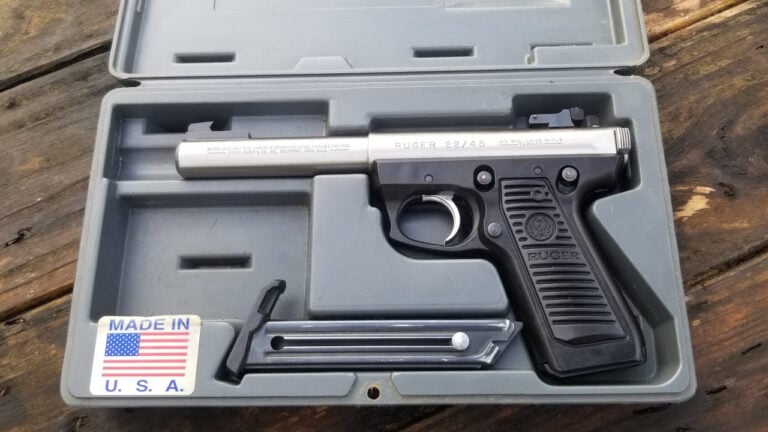
The dispute that is now headed to the Supreme Court started as a straightforward criminal case against a Texa gun owner who admitted to using marijuana and then faced federal charges for having a firearm. Under current law, anyone the government labels an “unlawful user” of a controlled substance can be prosecuted simply for possessing a gun, even if there is no allegation of violence or intoxication at the time of possession. When you fill out the standard background check form at a gun store, you are asked to confirm that you are not such a user, and a truthful “yes” to cannabis use can instantly disqualify you.
After lower courts wrestled with how that rule fits with modern Second Amendment doctrine, the case was sent back to a federal appeals court that ultimately found the existing statute could not be squared with the right to keep and bear arms as interpreted in recent decisions. That remand set the stage for a direct clash between federal drug policy and gun rights, and it is that conflict that the Supreme Court agreed to review when it scheduled arguments in a challenge involving marijuana consumers’ ability to exercise their Second Amendment rights.
What exactly the Supreme Court just scheduled
When you hear that the Supreme Court has “set” a case, it means the justices have moved past the question of whether to hear it at all and are now preparing for full arguments on the merits. In this instance, Jan scheduling orders placed the marijuana gun-rights dispute on the calendar for the Court’s late winter sitting, a signal that the justices see it as part of a broader wave of Second Amendment cases they want to resolve in 2026. For you as a potential buyer, that timing matters because it increases the odds that a definitive ruling will arrive before the end of the current term.
According to the Court’s own calendar, The Supreme Court will hear oral arguments on March 2 in a case that centers on the federal government’s efforts to prosecute a Texa resident under the “unlawful user” gun ban, a slot that was confirmed when The Supreme Court announced its February sitting lineup. Separate reporting notes that the justices have also set a March argument in a related proceeding described as a Case Challenging Federal Gun Ban for Marijuana Users, reinforcing that the question of how cannabis use interacts with gun ownership is now squarely before the nation’s highest court.
The federal rule that treats cannabis users as “unlawful”
To understand what could change for you in 2026, you need to know how federal law currently classifies marijuana. Even if your state allows recreational or medical cannabis, federal statutes still treat it as a Schedule I controlled substance, and the gun code uses that classification to define who counts as an “unlawful user.” Under 18 U.S.C. 922(g)(3), anyone the government views as a current user of such a substance is barred from possessing firearms or ammunition, and lying about that status on the background check form can itself be a felony.
Federal courts have been asked to decide whether that blanket ban is consistent with the Constitution, and one influential decision came from the Fifth Circuit in a case known as Daniels. In that litigation, the court held that historical tradition might support some limits on an intoxicated person’s right to carry a weapon but not a sweeping prohibition on a sober citizen who merely uses marijuana at other times, a conclusion that led the panel to side with a cannabis user who challenged the law and to scrutinize the government’s reliance on 922(g)(3).
How lower courts cracked the door open
Once the Supreme Court shifted its Second Amendment framework toward a history-and-tradition test, lower courts began revisiting long standing gun restrictions, including those tied to drug use. In the Daniels line of cases, the Fifth Circuit initially upheld the marijuana gun ban, then agreed to reconsider, and ultimately issued a Monday opinion that rejected the government’s position and vacated the conviction of a cannabis user who had been charged solely because of his status. That reversal signaled to other judges that the old assumptions about drug-related firearm bans might no longer hold.
The same appellate court later clarified that its reasoning applied broadly to people labeled as “unlawful” users, not just to the specific defendant in Daniels, and it framed the issue as one of whether the government can permanently disarm a citizen based on nonviolent conduct. In summarizing that shift, one analysis of the Fifth Circuit’s work explained that Monday’s opinion was the result of the court’s reconsideration of its prior decision in Daniels and that, as before, the panel concluded the government had not justified treating all marijuana users as categorically dangerous under 922(g)(3).
Why this case matters for your 2026 gun purchase
If you plan to buy a firearm in 2026 and you also use cannabis, the Supreme Court’s decision could directly affect what you have to disclose and whether you can complete the sale. Right now, the federal background check form asks if you are an unlawful user of marijuana, and because federal law does not recognize state legalization, answering truthfully can lead to an automatic denial. A ruling that narrows or invalidates the ban would change how that question is interpreted, and in some scenarios could force the government to stop using cannabis use alone as a basis to block purchases.
The stakes are heightened by the Court’s broader docket, which already includes several Second Amendment disputes that could reshape how lower courts evaluate gun regulations. Coverage of those cases notes that SCOTUS is set to take up key Second Amendment challenges in 2026, with one report highlighting that WATCH segments have focused on how the justices might treat long standing restrictions and what that means for ordinary buyers, including those facing a permit-to-purchase requirement, in a term that The Center Square has framed as pivotal for SCOTUS Second Amendment law.
What the justices will be weighing
When the justices hear arguments in March, they will not be deciding whether marijuana should be legal in general, but rather whether the federal government can treat every cannabis user as too risky to own a gun. You can expect the government’s lawyers to argue that drug use correlates with impaired judgment and that Congress has broad authority to keep firearms away from people it deems dangerous. On the other side, the defendant and supporting groups will likely stress that many state-legal marijuana consumers are law abiding, that there is no allegation of violence in the case, and that the Second Amendment protects their right to keep arms in the home.
Earlier coverage of the Court’s decision to take the case emphasized that The United States Supreme Court is preparing to hear a landmark dispute that could determine marijuana users’ gun rights under the Second Amendment, and that the outcome will shape how courts balance substance use and constitutional protections going forward, a framing that underscores the high stakes for both sides of the argument in what comes next. Another report from WASHINGTON noted that The Supreme Court said on Monday that it will consider whether pot smokers can be barred from owning guns, with the decision expected by early summer 2026, and that the case will test how far the justices are willing to extend an expanded view of gun rights.
How cannabis law and gun law collided
The conflict you are seeing now did not appear overnight, it has been building as more states legalized marijuana while federal law stayed frozen. As state markets opened, millions of adults began using cannabis legally under local rules, yet on paper they remained “unlawful” users in the eyes of federal gun statutes. That mismatch created a quiet but widespread dilemma for anyone who wanted to both comply with state cannabis regulations and exercise their right to own a firearm for self defense, hunting, or sport.
Legal analysts have been warning for years that this tension would eventually force a reckoning in the courts, especially as more gun owners asked whether they had to choose between their medical marijuana card and their firearms. One detailed look at the issue predicted a long series of court battles over cannabis and gun rights, pointing readers to Jacob Sullum’s reporting at Reason for a succinct summary and noting that Jan commentary had already identified this clash as a key front in future litigation over how cannabis policy intersects with the Second Amendment, a forecast that has now been borne out in predictions for the future.
Signals from the Court’s broader 2026 gun docket
The marijuana case is not arriving in isolation, it is part of a larger set of disputes that will tell you how the current Court views gun regulations in general. Commentators have described a 2026 term in which the justices are poised to revisit everything from public carry rules to purchase permitting, and the outcomes in those cases will shape the legal environment that surrounds any ruling on cannabis users. If the Court continues to apply a strict history-and-tradition test, it may be more skeptical of modern laws that lack clear analogues from the founding era.
One overview of the upcoming term highlighted a Quick summary of how the Supreme Court is scheduled to hear early 2026 arguments in Second Amendment challenges that will affect issues like magazine limits and permit-to-purchase requirements, and it framed those disputes as part of a broader reassessment of what kinds of gun regulations can survive under the Court’s current doctrine, a context that will inevitably color how the justices view the federal ban on gun ownership by people who use marijuana in early 2026. Another analysis of the cannabis-specific case organized its Key Takeaways around the fact that The Supreme Court will review the constitutionality of banning gun ownership for cannabis users, following lower court rulings that had already questioned the ban as being “unconstitutional,” a sign that the justices are aware of the broader implications for cannabis consumers.
What a ruling could realistically change for you
For all the attention on this case, it is important to be clear about what a Supreme Court decision can and cannot do for you as a buyer. The justices cannot on their own reschedule marijuana or rewrite the federal drug code, but they can say that the government may not use cannabis use alone as a reason to strip you of your right to possess a firearm. If they strike down or narrow the “unlawful user” ban, federal agencies would have to adjust how they enforce background checks and prosecutions, and you could see changes in how the standard purchase form is interpreted or even worded.
On the other hand, if the Court upholds the law, the status quo will remain, and you will still face the same hard choice when you walk into a gun store and are asked about marijuana use. Reporting on the case has stressed that the justices’ decision is expected by early summer 2026, and that it will come in the context of a term where Drug policy and gun rights are colliding in multiple ways, including a high profile proceeding described as a Drug User Gun Ban Set for US Supreme Court Argument in March, which noted that the case comes from a US Court of Appeals and that the arguments will be closely watched by figures such as John Crawley, identified as an Editor, who have been tracking how the Court handles these Drug User Gun Ban Set for US Supreme Court Argument disputes.
How to navigate the uncertainty until the decision lands
Until the Supreme Court issues its ruling, you should assume that the existing federal rules still apply, even if you live in a state with legal cannabis. That means being honest on background check forms, understanding that admitting to marijuana use can lead to a denial, and recognizing that possessing a gun while using cannabis could expose you to federal charges, regardless of state protections. If you are unsure how your own situation fits into these rules, consulting a lawyer who understands both firearms law and cannabis regulation is a prudent step.
At the same time, you can track how the case is unfolding to anticipate what your options might look like in 2026. Coverage of the Court’s docket has noted that Jan orders placed the gun-rights case among several others in a February sitting, with one report by Amy Howe explaining that the Court announces it will hear case on gun rights among several others and highlighting that the justices granted review in a dispute that could affect hundreds of thousands of buyers, a development that drew attention partly because the docket entry carried the number 202. Separate reporting from Jan described how the U.S. Supreme Court has scheduled hearing in a case on marijuana consumers’ gun rights, underscoring that the Published calendar now includes a direct test of how the Second Amendment of the U.S. Constitution applies to cannabis users, a moment that will finally force the justices to reconcile modern marijuana policy with Jan Supreme Court scheduling. A separate overview of the same dispute emphasized that Jan developments have brought the issue from lower courts to the national stage, confirming that you are watching a live test of how far the Court is willing to go in reshaping the rules that govern your ability to buy a gun while using marijuana, a test that will be closely watched by anyone who cares about the intersection of cannabis policy and gun rights and restrictions.
Like The Avid Outdoorsman’s content? Be sure to follow us.
Here’s more from us: