Photo credit: Jerson Martins/Pexels.com
The camper did not have to wonder if it was a mountain lion.
He could see it.
That alone changes everything. It is one thing to hear something move outside camp and let your mind run wild. It is another thing to shine a light, look toward the trees, and realize there is a big cat sitting there watching you from a branch close enough that you could measure the distance in steps.
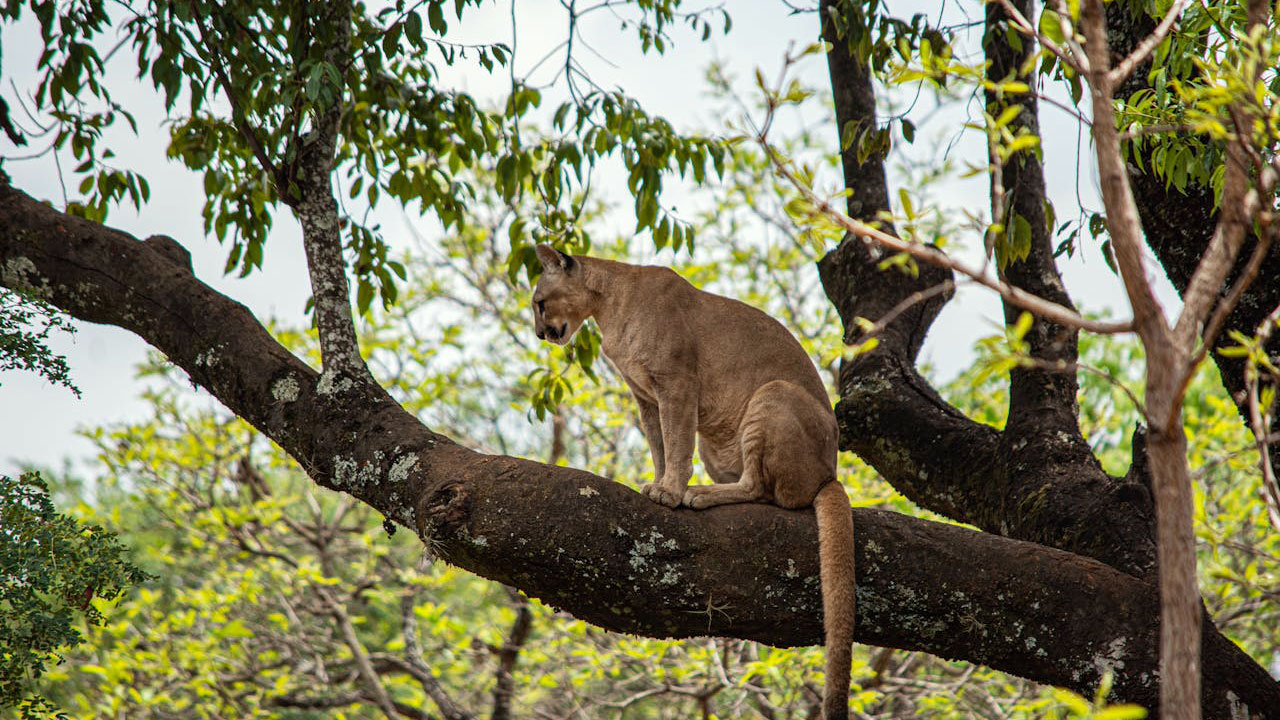
In a Reddit post, the camper said he and another person were camping when they spotted a mountain lion perched on a branch about 25 feet from their campsite. Not way off in the dark. Not across a canyon. Right there near camp.
That is the kind of sight that makes your brain get very quiet for a second.
Most people know mountain lions are around in certain parts of the country, but they are not something you expect to share a campsite with. They are built to move quietly, stay hidden, and see you long before you see them. So when one is sitting close enough to watch camp like it is deciding what to do next, the whole night changes.
The camper said they started yelling at it, trying to scare it away.
That is what people are usually told to do with a mountain lion. Make noise. Look big. Do not run. Do not turn your back. Make yourself seem like more trouble than you are worth. In plenty of encounters, that is enough. The cat slips off, the adrenaline fades, and everyone spends the rest of the night pretending they are relaxed.
But according to the post, this cat did not simply leave.
The camper said every time they yelled, it moved closer.
That is the detail that makes the story so unsettling. A mountain lion that backs away is scary, but at least it is giving you space. A mountain lion that moves closer when you try to scare it off feels like a different problem. Now you are not just trying to identify an animal. You are trying to figure out whether it is curious, hungry, sick, bold, or deciding if you are vulnerable.
And you have to do all that while standing in the dark at a campsite.
The poster seemed rattled enough to ask what they should do. That is understandable. Mountain lion advice sounds clear when you are reading it online at home. It feels a lot less simple when the animal is sitting 25 feet away and refusing to act scared.
The campsite itself probably started feeling useless as shelter. A tent is great for mosquitoes, wind, and a little privacy. It is not much comfort when a predator is close. You can zip the door shut, but you know good and well that thin fabric is not a wall. Sleeping suddenly becomes almost impossible because every little sound outside the tent sounds like paws.
That is the part people who have not camped in predator country may not fully understand. The fear is not always loud or dramatic. Sometimes it is just the knowledge that you are in a sleeping bag, on the ground, in the dark, and something with claws and teeth knows exactly where you are.
The camper’s instinct to yell made sense, but the cat’s response made the situation more confusing. Was it actually coming closer because of the yelling? Was it repositioning in the trees? Was it already hunting something nearby? Was it used to people and campsites? Had other campers fed it or left scraps before? There is no way to know from the post alone.
But from the camper’s side, it probably did not matter much. The only thing that mattered was that the cat was close and not acting like it wanted to leave.
That is when a person starts thinking through every option. Do we stay by the fire? Do we get in the car if there is one nearby? Do we pack up? Do we keep yelling? Do we throw rocks? Do we call a ranger? Do we risk walking away from camp? Do we stand there all night with flashlights pointed at the tree line?
None of those choices feel great.
Leaving can feel smart, but moving around in the dark while a mountain lion is close can feel risky. Staying can feel safer for a minute, until you remember the cat is still there. Yelling may help, unless it does not. And doing nothing feels like waiting for the animal to make the next choice.
That is why mountain lion encounters get under people’s skin so badly. Bears are scary too, but bears often make noise, knock things around, or give you a bigger visual target. A mountain lion can appear quietly, watch quietly, and make you feel like you are already late to noticing it.
The camper did notice it, though. That may have been the best thing going for him. Seeing the cat meant they could react, keep eyes on it, and avoid acting like prey. The worst mountain lion encounter is probably the one where you never know the animal is there until it is too late.
Still, seeing it did not make the situation easy. A mountain lion on a branch 25 feet from camp is not a cute wildlife sighting. It is a serious moment where the fun part of camping disappears, and everyone’s focus turns to staying together, staying upright, and making sure the animal does not get any more comfortable.
The camper went looking for advice because the usual “make noise and scare it off” plan did not seem to be working. And that is what makes the story feel real. Outdoors advice is useful, but real animals do not always read the script.
Commenters did not treat the mountain lion like a harmless visitor.
Several people told the camper to leave if they could do it safely. That was the simplest answer. A mountain lion that is hanging around camp and moving closer when yelled at is not the kind of animal most people want to test all night. Nobody gets extra credit for staying in a campsite that feels unsafe.
Others told him to contact a ranger, park staff, or wildlife officials if he was in an area where that was possible. A bold mountain lion near campsites can become a problem for more than one group of campers, especially if it has learned to associate people with food or easy opportunities. Wildlife officers need to know about that kind of behavior.
A lot of commenters repeated the standard advice: do not run, do not crouch, do not turn your back, stay together, make yourself look big, keep eye contact, and make noise. But they also understood that the poster was already trying to scare it off, and the cat was not responding the way people hope.
Food storage came up too. Commenters asked about food, trash, coolers, scraps, and anything else that could draw wildlife into camp. Even if a mountain lion is not after human food in the same way a bear or raccoon might be, campsites can attract prey animals, and messy camps can make wildlife bolder in general.
Some people suggested keeping a bright light on the cat and slowly backing toward a vehicle or safer area if one was available. Others mentioned bear spray as a useful tool in predator country, especially for campers who do not carry a firearm or do not want to rely on one in the dark.
There were also plenty of comments from people who said 25 feet was way too close for comfort. The branch detail made it worse, because a mountain lion above ground level can feel even harder to read. It is not walking away. It is watching from a perch.
The main message was clear: take it seriously, get out if you can, and report it. A mountain lion near camp is already enough to ruin a night. A mountain lion that keeps moving closer when people yell is not something to shrug off as a cool wildlife encounter.