Photo credit: Jimmy B Rodriguez/YouTube
Most pistol dots don’t “lose zero” because the glass forgot where it was. The usual failure is boring: screws that weren’t the right length, a plate that doesn’t fit tight, a mounting surface that isn’t flat, or a battery change that forced you to remove the optic and re-seat it slightly differently. If you want a carry dot that stays true, pick an optic with a proven housing and mount it like it matters.
These are the carry optics that have earned a reputation for staying locked in place through high round counts, heat cycles, and everyday carry abuse—when installed correctly and checked like serious gear.
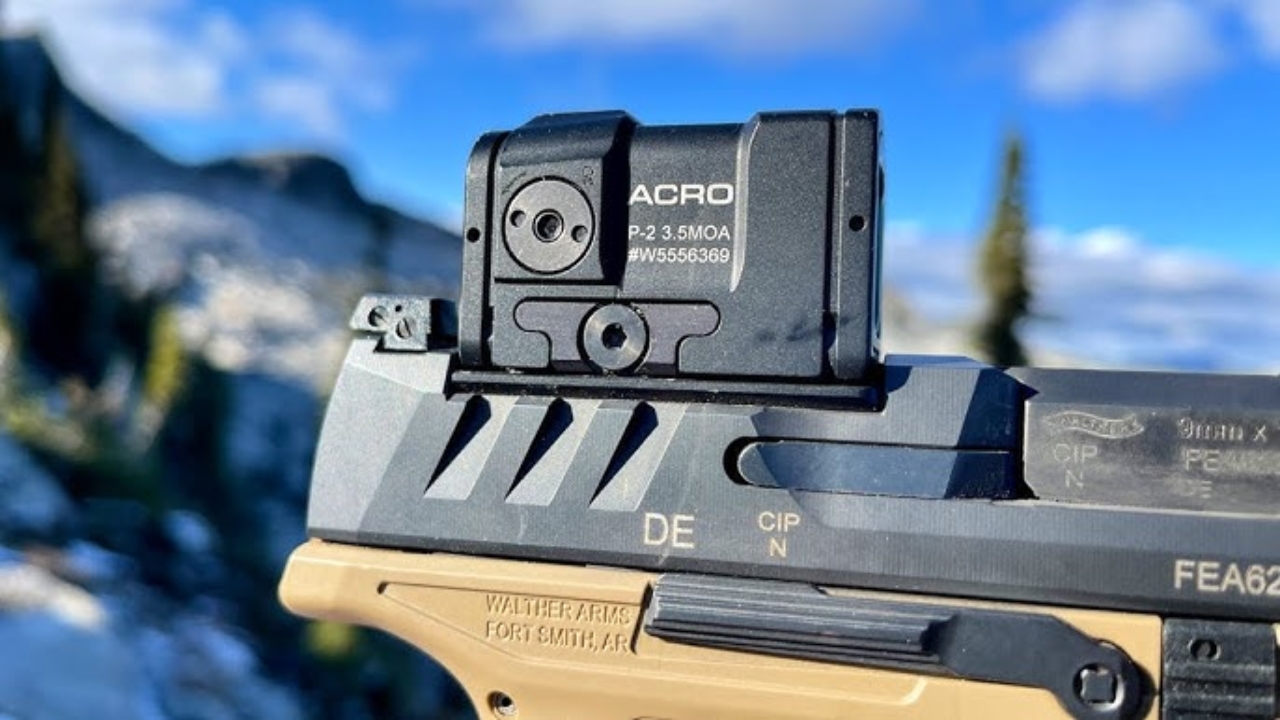
Aimpoint ACRO P-2
If you want a dot that shrugs off real use, the ACRO P-2 is one of the safest bets out there. The enclosed emitter means lint, rain, and sweat don’t turn into a fuzzy dot halfway through the week, and the boxy housing tends to take impacts without getting knocked out of alignment.
Where people get tripped up is mounting height and fit. The ACRO’s clamp system is solid, but it needs the right cut or plate that doesn’t flex. Get that part right and the P-2 is a “set it and forget it” optic that keeps zero through long training cycles.
Trijicon RMR Type 2
The RMR Type 2 is still the carry-dot standard for a reason: it survives being carried hard, shot hard, and bumped in ways that would kill a lot of optics. It’s open emitter, so you can get debris on the window, but when it comes to staying zeroed, the RMR’s track record is what people keep coming back to.
The big win is the footprint ecosystem. Tons of pistols, plates, and direct-mill options are built around it, which makes it easier to get a tight install. If you want a dot that’s been proven in the real world by a lot of shooters, this is the boring answer—and boring is good.
Trijicon RCR
The RCR is what you get when you want Trijicon durability but you’re done messing with open-emitter problems. Enclosed emitter, strong housing, and a design that’s built to live on a carry gun that gets sweat, rain, and pocket lint thrown at it day after day.
The other practical advantage is the battery setup. Anything that lets you service the optic without disturbing the mount reduces the chances of “I changed a battery and my zero wandered.” If your carry life is rough on gear, the RCR is a serious option.
Holosun 509T (X2)
The 509T is one of the tougher “hard-use” Holosuns, and a big reason is the titanium housing. It’s an enclosed emitter optic that handles grime well, and it’s common on carry/duty guns that see a lot of training rounds because people aren’t babying them.
The key with the 509T is using a quality mounting solution and not cutting corners on screws. When it’s installed correctly, it tends to keep zero through long round counts. When it’s installed sloppy, it’ll get blamed for what is really a plate or torque problem.
Steiner MPS
The MPS is another enclosed emitter dot that’s built like it expects to get smacked around. It has a rugged, duty-style feel, and it’s a popular choice for shooters who want protection around the window without going to an oversized optic.
Where the MPS can frustrate people is the interface. If your plate fit isn’t perfect, you can end up chasing “zero shift” that’s really the mount settling or flexing. Mounted correctly, it holds up. Mounted halfway, it can turn into a headache that makes you doubt the whole setup.
Holosun EPS
The EPS line is popular because it gives you an enclosed emitter in a size that makes sense on carry guns. It’s not as bulky as some duty dots, it’s easy to live with every day, and it plays well with a lot of modern carry pistols.
The reliability secret here is not pretending it’s indestructible. The EPS can hold zero through thousands of rounds when it’s mounted right and not abused like a hammer, but it still deserves a proper plate/cut and correct torque. Treat it like a carry optic, not a science experiment, and it’ll behave.
Holosun EPS Carry
EPS Carry is the version people choose when they want enclosed emitter on slim guns without turning the pistol into a brick. It’s a practical answer for smaller carry pistols where a bigger optic would feel awkward or print more.
Because it’s compact, your mounting details matter even more. A slightly off plate, slightly wrong screw length, or sloppy torque can show up sooner. But when the install is tight, it tends to stay put and keep zero through long practice cycles, which is exactly what an MSN reader wants to hear: it works, it’s manageable, and it’s not fragile.
Leupold DeltaPoint Pro
The DPP has been around long enough to have a real reputation, and it’s still a favorite for people who want a big window. A bigger window isn’t “tactical”—it’s practical, especially when you’re learning dots or shooting under stress and want fast pickup.
The downside is you have to mount it correctly and keep an eye on fasteners like you would with any carry optic. If you do, it holds zero well and stays consistent through high round counts. If you don’t, it becomes one of those optics people blame when the real culprit is the mounting stack.
Like The Avid Outdoorsman’s content? Subscribe to our newsletter so you never miss an article.
Here’s more from us: