A lot of folks treat a carry gun like a wallet: it’s just part of daily life. It rides on a belt, gets set on the nightstand at bedtime, and nobody gives it a second thought—until somebody else in the house brings up a past that changes the math.
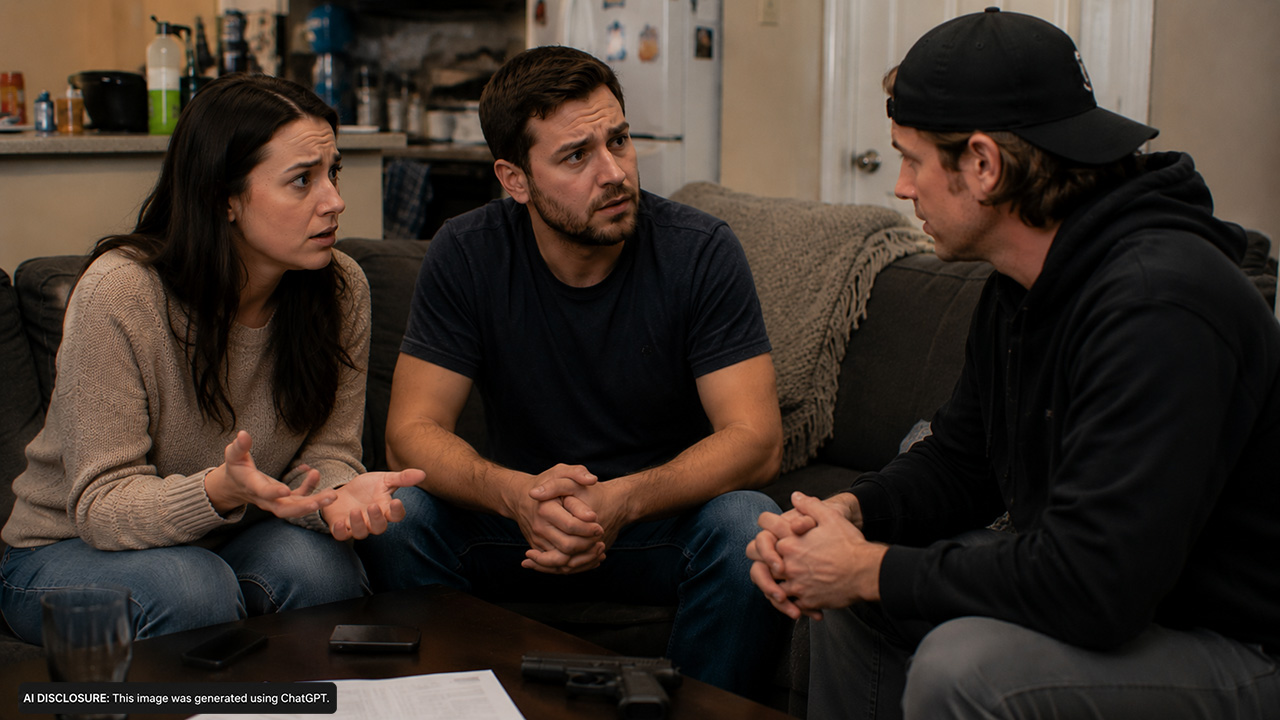
That’s exactly where one Tennessee couple found themselves, laid out in the original post. They’d legally purchased a handgun, had a carry permit, and lived alone until a family member moved in. Months later, the family member mentioned she “probably couldn’t buy one,” and the couple learned why.
The handgun was already part of the home routine
Before the family member moved in, the couple’s setup was simple: a legally owned handgun, commonly carried, and typically left on the nightstand when not on the hip. That’s a pretty normal rhythm for people who carry every day, especially in a home with only trusted adults.
But living arrangements matter. Once you add a roommate—especially one who’s “technically a tenant” even without a formal lease—the house stops being just “yours” in the practical sense. Shared space changes who can access what, and access is where both safety and legal exposure start to creep in.
A casual comment exposed a serious record
The turning point wasn’t a knock at the door or a background check. It was a conversation. The family member saw the handgun and said she probably couldn’t buy one, then explained she had a felony charge years earlier for drug possession with intent to sell cocaine.
The couple did what a lot of people would do in that moment: they went and looked up the record to see what they were really dealing with. What they found made the situation feel a whole lot heavier than a single old drug case.
The list of prior felonies changed the risk overnight
According to what they found, the family member’s record included two Class B felonies (drug-related), a Class D felony for a defaced firearm, and a Class Y felony involving firearms and drugs simultaneously. That combination isn’t just “trouble in the past.” It’s the kind of history that typically comes with strict, long-term firearm prohibitions.
From a common-sense outdoorsman’s perspective, that’s the moment you stop thinking about paperwork and start thinking about proximity and access. If a prohibited person can get their hands on your gun—whether intentionally or “just because it’s there”—you’ve got a problem that can go from quiet to life-changing fast.
Why “it’s my gun” doesn’t always keep you clear
The couple’s question was straightforward: can this hurt either of us, especially now that we know? They emphasized they owned the handgun legally and had it before the family member moved in. That helps, but it doesn’t erase the real issue: a prohibited person living where a firearm is readily accessible.
Even without getting deep into statute numbers, most gun owners understand the basic trap: if a felon has access or control over a firearm, it can be treated as unlawful possession. And depending on the facts, the owner can get pulled into it too—especially if authorities believe the gun was made available, left unsecured knowingly, or stored in a way that effectively gives the prohibited person control.
That’s why this isn’t just about who bought the pistol. It’s about whether the roommate can reasonably grab it from the nightstand, whether the roommate knows where it’s kept, and whether there are times the owner isn’t around.
In the real world, storage and boundaries are the whole ball game
When you live alone (or only with another lawful gun owner), leaving a handgun on the nightstand may feel normal. Add a roommate with serious felony history, and that same habit looks like a wide-open door. Not because anyone’s trying to do wrong—but because the firearm isn’t secured against access.
The practical fix, for most households, starts with tightening up storage immediately. A quick-access safe or lockbox that only lawful possessors can open is the kind of tool that keeps a routine defensive setup from turning into “easy access” for someone who can’t legally touch a gun. It also reduces the chance of a bad decision in a tense moment—arguments happen in shared homes, and stress makes people do dumb things.
There’s also the human side: setting clear rules. If someone with a record like that is living under your roof, you don’t “hint” about expectations. You make it plain: the gun isn’t to be handled, moved, or asked about, and it stays secured unless it’s under the direct control of the lawful owner.
What the couple seemed to be weighing next
The post makes it clear they weren’t looking to stir up trouble. They sounded like they were trying to figure out if they were already on the wrong side of the law just because the roommate existed in the same house as the handgun—and because they now knew about the felony record.
In a situation like this, there are usually only a few realistic paths: secure the firearm so the prohibited person has no access, change the living arrangement so the prohibited person isn’t in the home, or remove the firearm from the home entirely. Which one makes sense depends on the household and the relationship, but the “do nothing and hope it’s fine” option is the one that tends to age badly.
The couple also flagged something many people overlook: even without a lease, the family member is “technically a tenant.” That matters because if the living situation needs to change, it may not be as simple as tossing their stuff on the porch. The smartest move is usually to handle both sides—firearm access and housing—carefully and lawfully, not emotionally.
When you own guns long enough, you learn that most disasters don’t start with a criminal mastermind. They start with ordinary habits in the wrong circumstances. A carry gun on a nightstand feels normal—until the wrong person can reach it. In Tennessee or anywhere else, the safe play is to lock it up, set hard boundaries, and make sure your home defense plan doesn’t accidentally become someone else’s felony problem—or yours.
Like The Avid Outdoorsman’s content? Subscribe to our newsletter so you never miss an article.
Here’s more from us: