Photo credit: The Avid Outdoorsman
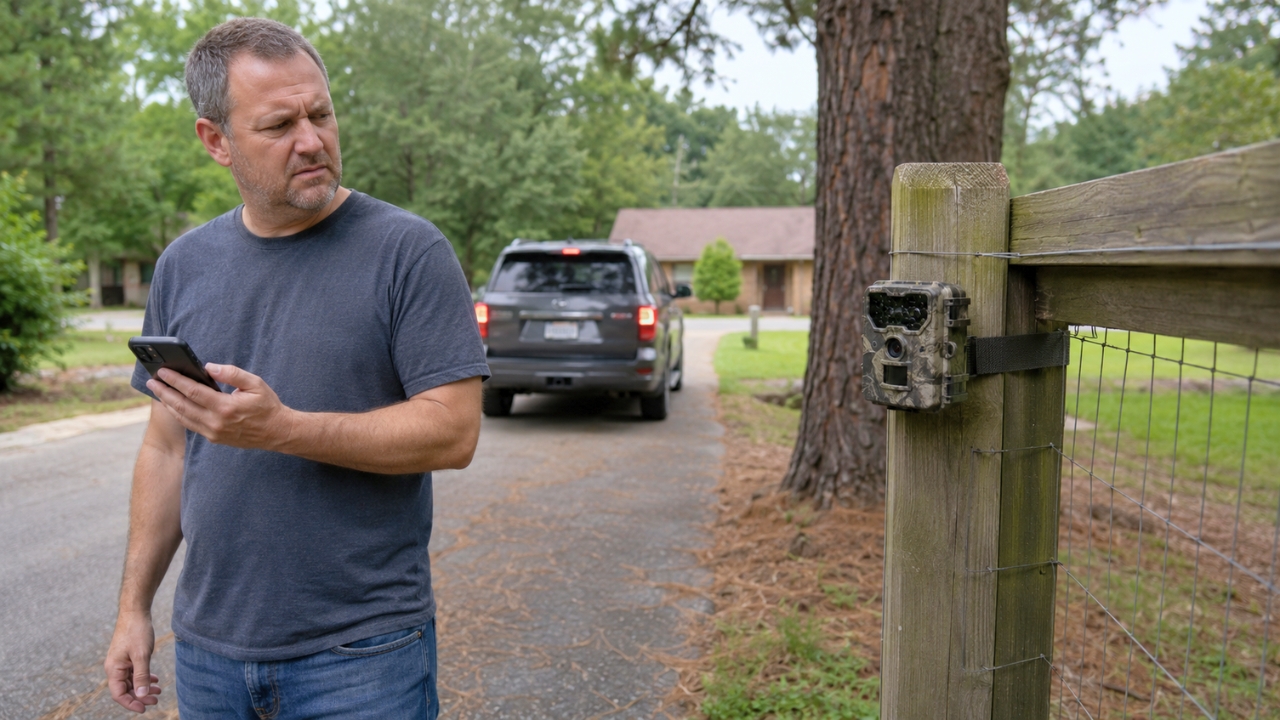
A homeowner said a neighbor’s trail camera was not just pointed at the woods or a fence line. It was allegedly aimed in a way that captured regular movement from the home, including trips in and out of the driveway.
According to the Reddit post, the homeowner believed the neighbor had positioned a trail camera so that it monitored activity around the house. The issue was not only that the camera existed. The concern was that it appeared to record or alert the neighbor whenever someone came or went.
That turned what might have been explained as a deer camera into a privacy dispute.
The homeowner described the situation on Reddit and asked whether it was legal for neighbors to aim trail cameras toward another person’s property: https://www.reddit.com/r/legaladvice/comments/1hbwk4b/is_it_legal_for_neighbors_to_aim_their_trail/
A trail camera feels different when it is aimed at people
Trail cameras are common in rural and suburban areas.
People use them to watch deer, catch trespassers, track predators, monitor driveways, or keep an eye on outbuildings. On their own property, that usually does not raise many eyebrows.
But the feeling changes when the camera appears to be pointed at someone else’s home.
A camera that captures a driveway can reveal a lot. It can show when people leave for work, when they come home, when children are outside, when visitors arrive, and when the house may be empty. Even if it is technically outside, that kind of monitoring can feel invasive.
That seemed to be the homeowner’s concern.
They were not simply upset that a neighbor owned a trail camera. They were bothered by where it appeared to be aimed and what it allowed the neighbor to know.
The neighbor may have claimed it was for wildlife
In many of these disputes, the explanation is predictable.
The neighbor says the camera is for deer, coyotes, trespassers, or general security. The homeowner says the camera is pointed too conveniently at their house, driveway, or yard to be harmless.
Both sides may insist their version is obvious.
That is what makes these situations so frustrating. A trail camera can have a legitimate use and still be positioned in a way that feels wrong to the person being recorded.
If the camera is on the neighbor’s property and capturing areas visible from that property, the legal question may not be simple. But the social question is much clearer.
Most people do not want to feel like their daily movements are being logged by the person next door.
That is especially true if the relationship is already tense.
Commenters focused on where the camera was and what it could see
Commenters generally treated the camera’s placement as the key issue.
If the camera was on the neighbor’s own property and aimed at an area visible from there, some commenters suggested the homeowner might have limited legal options. Outdoor areas, driveways, and front yards often do not carry the same privacy expectations as the inside of a home.
But others said the homeowner should document the situation, especially if the camera appeared to be intentionally aimed at windows, private spaces, or areas where people would reasonably expect privacy.
Commenters also suggested practical responses before escalating. That could mean talking to the neighbor, putting up privacy screening, adjusting lighting, installing fencing, or documenting the camera’s angle in case the issue became part of a larger harassment pattern.
The big warning was not to touch or damage the camera.
Even if it feels intrusive, destroying a neighbor’s property can turn the homeowner into the person with the legal problem.
The alerts made it feel more personal
What made this story stand out was the claim that the camera effectively notified the neighbor when people came and went.
That is different from a camera passively recording wildlife in the woods.
Modern trail cameras can send photos or alerts directly to a phone. That means a neighbor may not have to check an SD card later. They can know almost immediately when movement happens.
For a homeowner, that can feel less like wildlife monitoring and more like being watched.
Even if the camera catches deer too, the driveway alerts change the emotional tone of the situation. Nobody wants to wonder whether every trip to the mailbox, every grocery run, or every guest arrival is being sent to a neighbor’s phone.
That is why the dispute crossed from annoying to unsettling.
The safest answer was boundaries, not retaliation
A homeowner dealing with this kind of camera has to be careful.
The urge to block it, move it, or remove it can be strong. But if the camera is on the neighbor’s property, touching it could create a separate issue. The better path is usually to document what is happening and create more privacy from the homeowner’s own side.
That might mean putting up a fence panel, adding landscaping, changing the angle of outdoor lights, or installing the homeowner’s own cameras to document any pattern of harassment.
If the camera is aimed into private areas, or if the neighbor’s behavior goes beyond ordinary monitoring, then it may be worth contacting local authorities or an attorney.
But the first step is understanding the difference between a camera that feels rude and a camera that crosses a legal line.
For rural and suburban homeowners, this is the uncomfortable reality of cheap surveillance gear.
A trail camera may be sold for deer.
But depending on where it is pointed, it can turn into a neighbor problem very quickly.
Like The Avid Outdoorsman’s content? Subscribe to our newsletter so you never miss an article.
Here’s more from us: