Photo credit: AI-generated image created using ChatGPT. Illustrative only
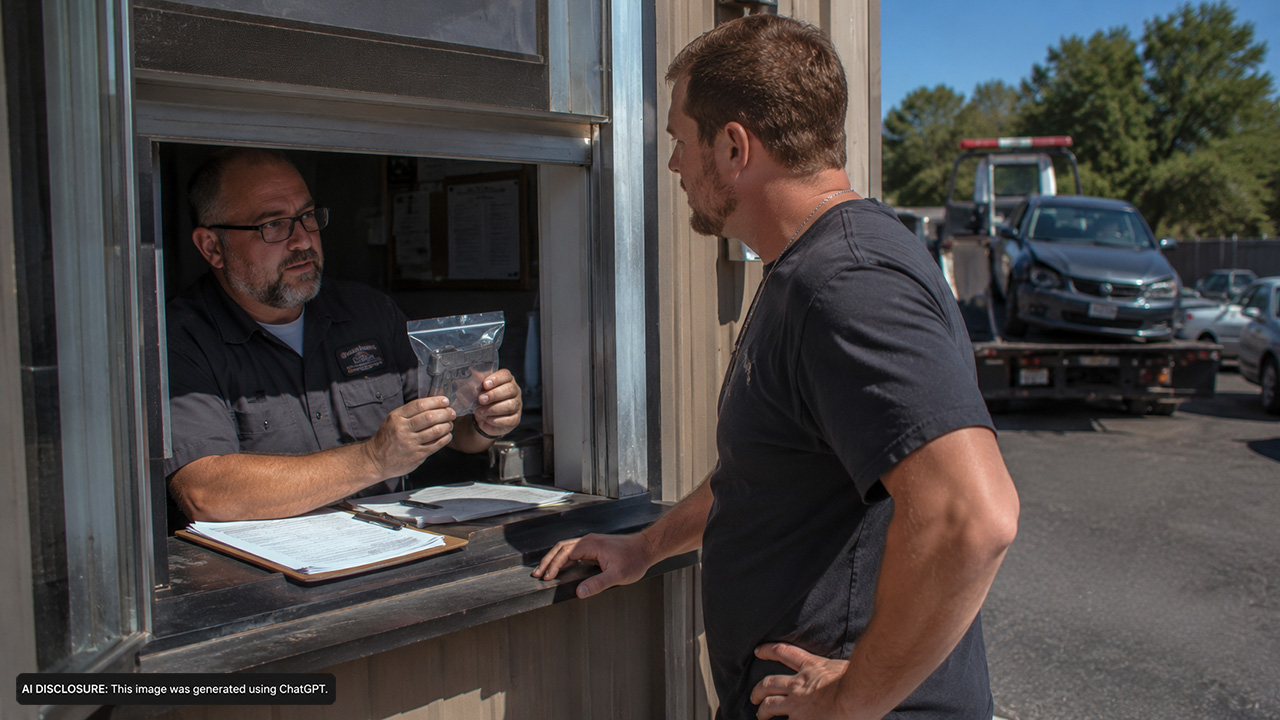
A wrecked vehicle, a tow truck, and one little .380 pistol can turn into a big headache in a hurry. That’s what one Texas gun owner is dealing with after a friend’s car was towed to an impound lot following an accident, and the wrecker yard discovered a handgun inside.
In the source post, the writer says his buddy had previously sold the .380 pistol to a friend. After the friend got into a wreck with “no police involvement,” the vehicle was towed to an impound lot. That’s when the impound lot reportedly located the firearm and then refused to hand it back over.
The tow yard found the pistol and changed the rules
From the way it’s described, the chain of events was pretty straightforward: the pistol was lawfully sold in a private transaction, the new owner had it in the vehicle, and then the vehicle ended up in impound after a crash. No officer took a report at the scene, and the gun didn’t go into an evidence locker.
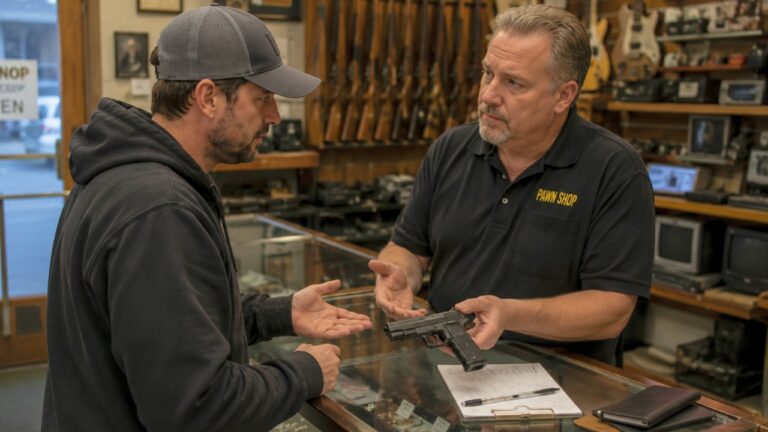
Instead, the tow/impound company ended up with it and allegedly decided they needed “proof of ownership” before releasing it—specifically, something tying the serial number to the original seller’s name. That’s the part that makes a lot of Texas gun folks shake their head, because private sales don’t typically come with a tidy paper trail that looks like a car title.
In Texas, “prove it” can be tougher than people think
The writer notes he used to sell guns at a large retail store and points out a practical reality: in Texas, there isn’t a state gun registry, and many lawful transfers—especially private sales—won’t produce paperwork that looks official enough to satisfy a suspicious third party.
Sure, a buyer might have a receipt if it was purchased from an FFL, maybe the original box with a label, maybe a bill of sale if the two people were smart enough to write one up. But plenty of folks don’t keep any of that forever, and even if they do, it may not list the serial number in a way an impound office wants.
Why an impound lot holding a gun is a safety issue, not just a paperwork issue
Most outdoorsmen understand why tow yards get nervous around firearms. An impound lot has employees coming and going, customers arguing over fees, vehicles being searched for valuables, and all kinds of liability floating around. A handgun sitting behind a counter isn’t the same thing as a pistol locked in a safe at home.
That said, the big concern in the post is the feeling that the wrecker company is acting like it can just keep the gun until it gets whatever documentation it wants. The writer even asks the question a lot of gun owners would ask: if a tow company finds a firearm in a vehicle, do they just keep it?
Even when nobody’s doing anything wrong, you can see how fast it becomes a mess. The rightful owner wants his property back. The impound lot doesn’t want to be responsible for handing a gun to the wrong person. And without law enforcement involvement up front, there’s no easy “here’s the case number” paper trail to lean on.
The “police release” angle and why it comes up
The headline angle here—being told a “police release” is required—fits the way these situations often play out in the real world. Businesses like tow yards and impound lots commonly lean on law enforcement as a backstop when something feels risky, even if the police weren’t involved in the original incident.
Sometimes that’s policy, sometimes it’s a misunderstanding, and sometimes it’s just a company trying to keep its people out of the line of fire. If the yard is worried about stolen guns, prohibited possessors, or a later claim that “you gave my firearm to someone else,” pushing it to a police release makes the decision somebody else’s problem.
The frustration, of course, is that the owner may feel like he’s being sent on a wild goose chase: the police weren’t called, the gun isn’t logged into evidence, and yet the business is treating it like it requires official clearance anyway.
What the gun owner and his buddy considered doing next
The writer doesn’t mince words about how it feels from their side. He says he thinks the wrecker company is “holding the gun hostage,” and he questions why the firearm isn’t in police custody if it’s being treated like something that requires official oversight.
His suggested next step was to tell the tow company to turn it over to law enforcement or they would call police and report that personal property was stolen out of the vehicle. That’s a strong move, and it shows how quickly this goes from “can I pick up my stuff?” to “is somebody unlawfully keeping my property?”
But it also hints at a reality gun owners should keep in mind: once you start using words like “stolen,” you’re inviting a formal investigation into a situation that may have started as a simple property dispute. If the firearm’s ownership chain is muddy—buddy sold it to friend, friend had it in a wrecked car, tow yard took possession—sorting it out may require calm documentation more than heat.
The lesson for gun owners: document the boring stuff before it matters
This is the kind of story that makes a guy want to go home and organize paperwork. Not because private sales are illegal—they aren’t, in the scenario described—but because a third party can still demand proof that you’re the rightful owner before handing over a firearm.
A simple bill of sale with make/model/serial number and both parties’ names can prevent a lot of trouble later. So can keeping the original purchase receipt from an FFL, taking a photo of the serial number for your records, and storing that information somewhere secure. None of that replaces safe handling and secure storage, but it can help when your property ends up in someone else’s possession—whether it’s an impound lot, a repair shop, or an insurance situation after a crash.
At the end of the day, a tow yard isn’t a gun safe, and it isn’t a courthouse either. When a firearm gets caught in the gears of an accident and an impound process, you want it handled safely and returned to the lawful owner—but you also want the handoff to be clean enough that nobody’s guessing. This situation is a good reminder that the “unimportant” paperwork is only unimportant until the day you really need it.
Like The Avid Outdoorsman’s content? Subscribe to our newsletter so you never miss an article.
Here’s more from us: