Photo credit: DejaVuDesigns/Shutterstock.com
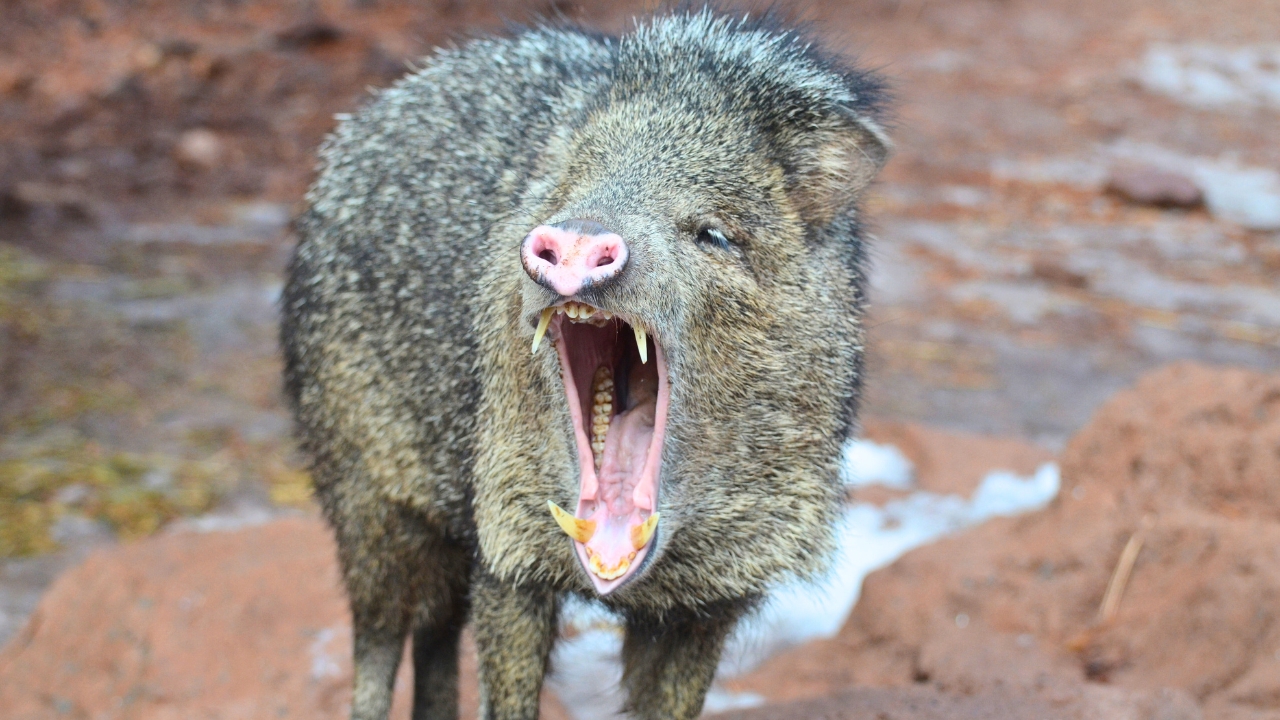
Javelinas may look small, but they’re tougher than folks give them credit for. Between their thick hide, stocky build, and tendency to run when hit, the wrong caliber can turn a simple hunt into a tracking nightmare. Just because a round works on varmints or target practice doesn’t mean it belongs in the desert brush chasing peccaries. If you’re heading out after javelina, here are ten rounds that are better left at home.
.22 LR

Plenty of people have taken game with a .22, but that doesn’t mean it’s a good idea for javelina. The round lacks the punch to reliably drop an animal that’s bigger and more durable than a rabbit or squirrel.
Unless you’ve got a perfect headshot at close range—and most hunters don’t—it’s just not enough gun. You risk wounding the animal and spending the rest of the day following blood trails through thick cactus.
.17 HMR

The .17 HMR is zippy and fun at the range, but its tiny bullet doesn’t carry enough energy for medium game. It’s designed for varmints like prairie dogs and groundhogs, not wild pigs with tough shoulders.
Even with good shot placement, expansion is limited, and penetration is shallow. A javelina hit in the vitals might still run a long way before going down—if it goes down at all.
.22 Magnum

The .22 Mag walks a fine line. While it’s stronger than the .22 LR, it’s still a rimfire round with limited energy. On paper, it looks tempting for small game, but it just doesn’t hit hard enough for peace of mind on javelina.
You might get away with it at close range with perfect placement, but it’s not a reliable stopper. If you care about a clean kill, move up to a proper centerfire option.
.25 ACP

This one shouldn’t even be a question, but here we are. The .25 ACP is a tiny handgun round meant for deep concealment—not taking game in the field. Its ballistics are poor, and expansion is nearly nonexistent.
Trying to drop a javelina with one is asking for a wounded animal and a lost hunt. You’re better off using harsh language—it might do more damage.
.380 ACP
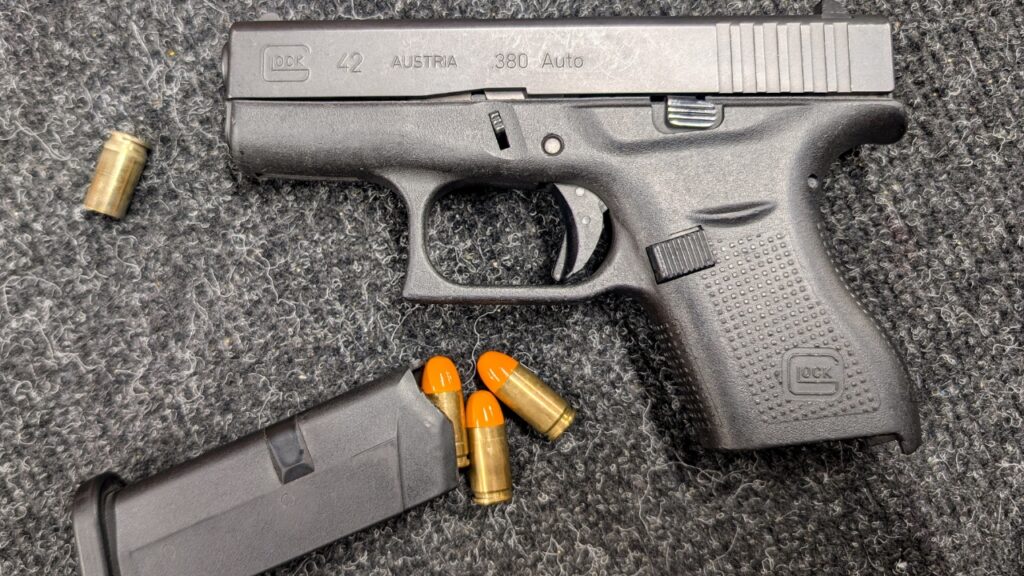
The .380 has a following in the concealed carry world, but that doesn’t mean it belongs on a hunt. Its slow-moving bullets don’t penetrate deep enough to reliably take out an animal that doesn’t always present ideal broadside shots.
It might look like it packs a punch on paper, but in real-world conditions, the .380 comes up short. Save it for self-defense and carry a proper hunting round instead.
9mm Luger

There’s no denying the 9mm is versatile, but it still wasn’t designed for hunting. Some folks might try it with +P ammo, but that doesn’t magically turn it into a game-stopper.
Unless you’re within spitting distance and hit the brain or spine, it just doesn’t deliver enough trauma. Javelina deserve better than hoping your carry ammo gets the job done.
.223 Remington (FMJ)

Before you get fired up, this one’s about FMJ ammo, not the caliber itself. The .223 can take javelina just fine with the right bullet, but a full metal jacket isn’t it.
FMJs tend to zip right through without expanding, which means less damage and more tracking. If you’re using .223, go with a proper hunting round that’s designed to open up and do its job.
.32 ACP

This old-school pocket pistol round has no business in the field. It’s slow, has minimal energy, and was never meant for anything tougher than paper or maybe an old milk jug.
Even if you manage a decent shot, it likely won’t penetrate enough to matter. The javelina might flinch, then keep running. You’re better off sticking to a rifle or a proper hunting pistol.
.410 Slugs

Yes, a .410 slug can kill a javelina. But “can” doesn’t mean “should.” The small size and limited payload mean you need to be extremely close and very accurate.
In brushy country where follow-up shots are tough, you don’t want to gamble on a marginal load. If you’re going with a shotgun, step up to a 20 or 12 gauge slug for more consistent results.
*This article was developed with AI-powered tools and has been carefully reviewed by our editors.