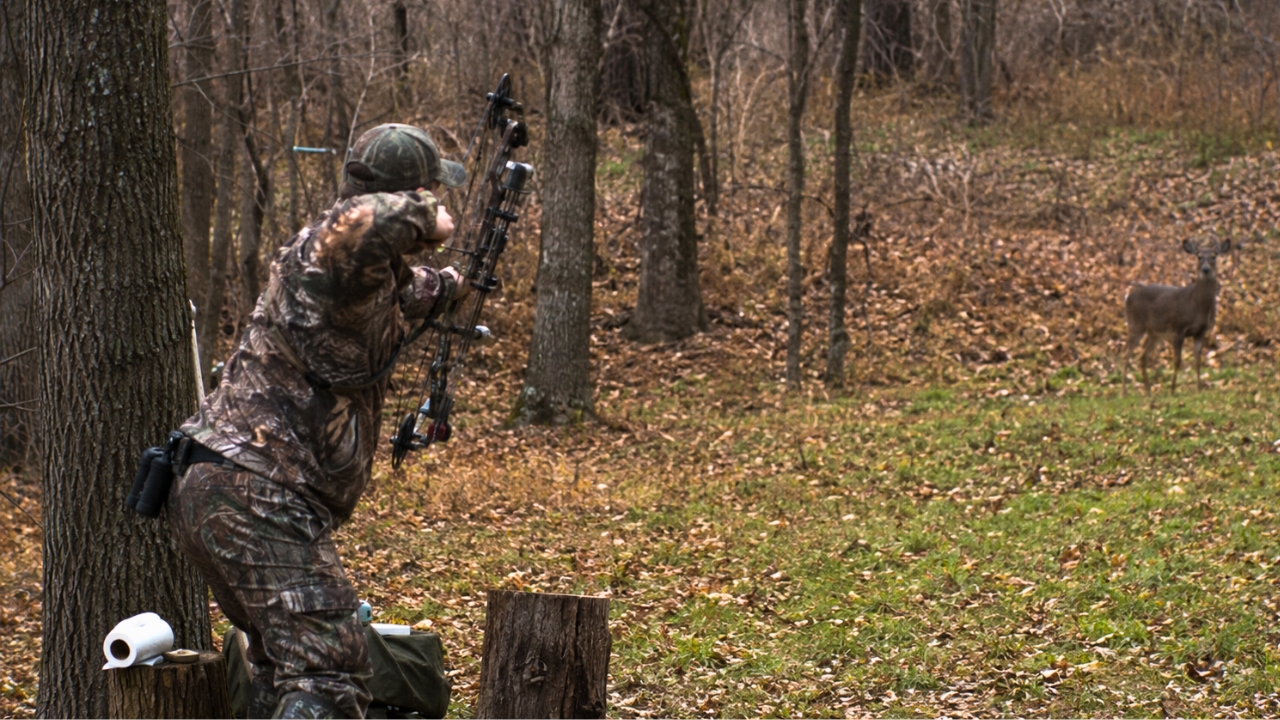
Photo credit: The Avid Outdoorsman
A landowner said a neighbor’s bow practice had turned into a property-line problem after arrows started crossing onto his side, leaving him unsure how to handle it without turning a bad situation into a full-blown neighbor fight.
The situation came from a Reddit post titled “How to deal with arrows being shot across property line?”. The poster said arrows were being shot across the property boundary, which immediately changed the issue from a mild neighbor annoyance into a safety concern.
Property-line disputes are already touchy when stands, cameras, dogs, or access trails are involved. But once projectiles start crossing the boundary, the whole conversation gets more serious. An arrow may not travel like a rifle round, but it is still capable of injuring a person, pet, livestock, or anyone else who happens to be on the wrong side of the line.
That was the part commenters kept circling back to. This was not only about whether the neighbor was being rude. It was about whether someone was practicing or shooting in a direction that allowed arrows to leave his property.
A person has a right to use his own land, but that right does not include sending arrows into someone else’s.
The Property Line Did Not Stop the Risk
A lot of people think about archery as quieter, slower, and less dramatic than gunfire. In some ways, that is true. But an arrow crossing onto neighboring land is still a serious problem.
Unlike a stray ball, an arrow can land with a broadhead, field point, or enough force to hurt someone badly. Even if the neighbor is only practicing with target points, the landowner has no way of knowing what might come over next or where it might land.
That uncertainty is what makes the situation so uncomfortable. The landowner may be walking the property, mowing, checking fence, working around animals, or letting kids or dogs outside. He should not have to wonder whether an arrow might suddenly come from the neighbor’s side.
The key safety rule in archery is not that different from firearms: know your target and what is beyond it. A proper backyard or rural archery setup needs a safe backstop and enough space to stop misses. If arrows are crossing a property line, the setup is not safe enough.
That is true even if the neighbor is not trying to cause trouble. Intent does not matter much once arrows are landing where they should not be.
Commenters Said to Start Calm, but Be Firm
A lot of commenters in situations like this usually recommend one calm conversation first, if it can be done safely.
The best version of that conversation is not yelling over the fence or accusing the neighbor of being reckless. It is a direct statement: arrows are crossing the property line, and it needs to stop. The neighbor may not realize how far the arrows are traveling, or he may not understand that his target angle is unsafe. A calm warning gives him a chance to fix it before authorities get involved.
But commenters also tend to draw a hard line here. This is not something to ignore for weeks. If the neighbor keeps shooting after being told arrows are crossing the line, the landowner has a much stronger case that the behavior is knowing and reckless.
That is why the tone matters. Start civil if possible, but make the boundary clear. “Please adjust your target and backstop” is neighborly. “You cannot keep sending arrows onto my property” is necessary.
The landowner does not have to prove the neighbor meant harm. He only has to make clear that it is unsafe and unacceptable.
Proof Matters Before the Situation Escalates
Several practical steps come up in these kinds of threads: collect the arrows, photograph where they landed, note the dates and times, and document the direction they appear to have come from.
That proof matters because without it, the situation can turn into a neighbor denying everything. If the landowner can show multiple arrows on his side of the line, especially with photos of the location and the property boundary, the conversation changes.
A camera may help too. If the neighbor is shooting regularly, a camera aimed at the area where arrows are landing could document the timing and pattern. The goal is not to spy on the neighbor’s yard. It is to protect the landowner’s side if the problem continues.
Keeping the arrows may also matter. If the issue goes to law enforcement, animal control, a game warden, or another local authority, physical evidence is better than a vague complaint.
That is especially true if the arrows land near a house, barn, driveway, livestock area, trail, or anywhere people regularly walk. The closer they are to daily activity, the harder it is to brush the issue off as harmless.
A Backstop Would Solve Most of the Problem
The simplest fix is also the one the neighbor should already have: a proper backstop.
Anyone shooting a bow at home needs to think beyond the target. Targets fail. Arrows miss. Releases go wrong. People misjudge distance. Wind, nerves, fatigue, or bad form can send an arrow where it was not intended. A safe setup accounts for that.
A good backstop might be a hillside, heavy-duty archery netting rated for the bow, a safe berm, or another setup that stops arrows even when the shooter misses the target. What does not work is aiming toward a property line and hoping every shot hits perfectly.
That is the part responsible archers understand. A backyard range should be built around the miss, not the perfect shot.
If the neighbor can move the target, change the shooting direction, add a proper backstop, or stop shooting in that area, the conflict may end quickly. But if he refuses, the landowner has every reason to treat it as more than a simple mistake.
Nobody should need luck to stand safely on their own property.
Calling Authorities May Be the Next Step
If a polite warning does not work, commenters usually suggest contacting local authorities.
Depending on where the property is located, that could mean the sheriff, local police, code enforcement, a game warden, or another agency. If the issue involves target practice rather than hunting, the sheriff or police may be the cleaner first call. If it is tied to hunting activity, a game warden may also be useful.
The point is not to overreact. The point is that projectiles crossing a property line are a safety issue. If the neighbor keeps shooting after being told what is happening, the landowner should not have to keep collecting arrows and hoping nobody gets hurt.
A report also creates a record. If something happens later, the landowner can show that this was not the first incident and that the neighbor had already been warned.
Most people would rather avoid involving law enforcement in a neighbor issue. But safety problems have a way of getting worse when they are handled only with hope.
Commenters treated the situation as a safety issue first and a neighbor issue second.
Many said the landowner should speak to the neighbor calmly, but directly. The neighbor may not realize arrows are crossing the line, and a simple conversation might be enough to get him to change the target direction or add a proper backstop.
Others said to document everything before and after that conversation. Photos of the arrows, where they landed, the property line, and any repeated incidents would matter if the problem continued. Several would likely recommend keeping the arrows instead of tossing them.
Some commenters pushed for calling authorities if the neighbor did not stop immediately. Their view was simple: once arrows are landing on another person’s property, the shooter has already failed to maintain a safe setup. If he refuses to fix it, the landowner should not keep handling it alone.
The most practical advice came down to a clear progression: document the arrows, talk to the neighbor if it feels safe, insist on a backstop or a different shooting direction, and call local authorities if it happens again.
For the landowner, this was not about being difficult or anti-archery. It was about being able to use his own property without worrying about arrows crossing the line. A neighbor can enjoy bow practice all he wants, but the arrows need to stay on his side.