Photo credit: The Avid Outdoorsman
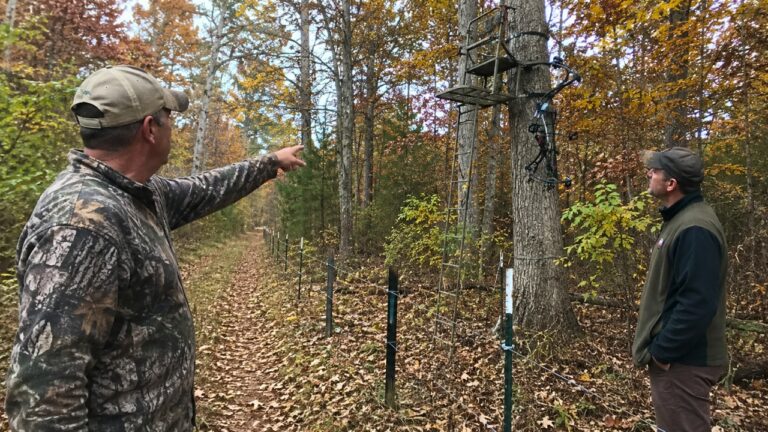
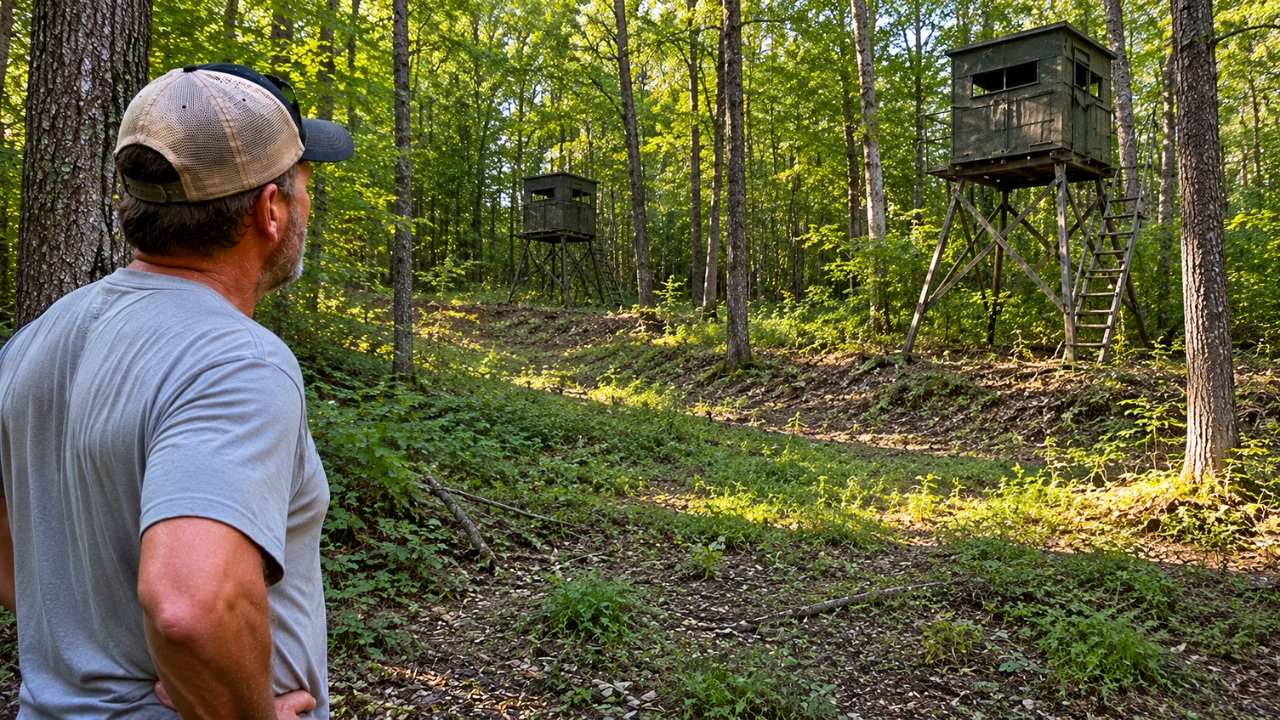
A landowner said he expected some normal boundary tension when a neighboring parcel was used for hunting, but the situation started feeling more serious once he noticed the stands were not only on the property line — they were facing directly toward his own land.
The landowner shared the situation in a Reddit post titled “My neighbours stands are on the property line and are facing directly into my property”. He explained that the neighboring hunting setup was close enough to the line to make him uncomfortable, especially because the stands appeared to be aimed toward his side.
That kind of situation hits a nerve for landowners because it sits in the messy space between legal and unsafe. A neighbor may be allowed to place a stand on his own property. He may even be allowed to hunt right up to the boundary if he stays on his side and follows the law. But from the other side of that same boundary, a stand pointed into your property can feel like a problem waiting to happen.
The concern is not only whether the neighbor plans to shoot across the line. It is also whether the shooter knows what is behind his target, whether bullets or arrows could cross the boundary, and whether anyone on the landowner’s property could be in the line of fire.
For a landowner, that is the part that is hard to ignore. A property line might show who owns what, but it does not stop a careless shot.
A Stand on the Line Can Be Legal and Still Cause Trouble
One of the hardest things about property-line hunting disputes is that “legal” does not always mean “comfortable.”
A hunter can set up on his own land and still make the neighbor uneasy. That is especially true when the stand faces the line, shooting lanes appear to point into another parcel, or the setup seems designed around deer movement coming from the neighboring property.
From the hunter’s side, he may see a practical stand location. If his property is narrow, if deer travel the edge, or if the best cover sits near the boundary, he may feel like he is only using the land he has. He may not think he is doing anything wrong.
From the landowner’s side, the same stand can look like an invitation for trouble. If a deer steps out on the wrong side of the line, will the hunter pass the shot? If a wounded animal runs across the boundary, will he ask for permission before following it? If the stand is truly aimed toward another property, what happens when someone misses?
Those questions matter before the season starts. Once someone is in the stand with a firearm, the conversation becomes more tense.
The landowner’s concern made sense because this was not a vague worry about hunters nearby. It was a specific worry about the direction of the stands and the property beyond them.
Commenters Focused on Proof, Not Assumptions
A lot of the advice in situations like this usually starts with the same reality check: a stand facing a certain direction does not prove someone has done anything wrong.
That may be frustrating, but it matters. A hunter may sit facing one way and shoot another. He may have the stand angled for comfort, wind, sun, tree shape, or right-handed shooting. What looks like “facing my property” from the outside may not fully show where the actual shooting lanes are.
That does not mean the landowner should ignore it. It means he needs proof before making accusations.
If the neighbor shoots across the line, enters the landowner’s property, tracks a deer without permission, or places bait or gear where it does not belong, that is one thing. But if the stands are technically on the neighbor’s side, the landowner has to tread carefully.
Commenters often recommend documenting the setup, marking the boundary clearly, and using cameras on the landowner’s side if there is concern about trespassing or unsafe activity. That way, if something actually crosses the line, the landowner has evidence rather than only suspicion.
It is not as satisfying as forcing the stands to move. But it is usually the cleaner option.
Safety Was the Strongest Argument
The landowner’s best concern was not jealousy over deer movement. It was safety.
If the stands were truly facing into his property, he had every reason to ask what direction shots were being taken. Nobody wants to walk, hunt, work, or let family move around on their own land while wondering whether a neighbor’s bullet could cross the line.
That is where the conversation should stay focused. Accusing a neighbor of poaching before anything happens can turn the situation hostile. Raising a calm safety concern is harder to dismiss.
A direct conversation could be as simple as saying, “I noticed the stands near the line, and from my side they look like they face into my property. I want to make sure we’re all clear on the boundary and safe shot directions before season.”
That kind of wording does not accuse the neighbor of planning to break the law. It gives him a chance to explain his setup and maybe adjust it if he realizes how it looks from the other side.
If the neighbor responds reasonably, the issue may be solved with a conversation. If he gets defensive, dismissive, or refuses to discuss safety at all, then the landowner has a better sense of what he is dealing with.
Either way, the first move should probably be calm, direct, and documented.
A Game Warden Could Help Clarify the Rules
When hunting setups get close to property lines, a game warden or conservation officer can sometimes help before the problem becomes active.
That does not always mean filing a formal complaint. The landowner can call and ask what the law says about stands on boundaries, shooting across property lines, recovery permission, and what kind of evidence would matter if a violation happens.
A warden may not be able to force the neighbor to move a legal stand. But the officer can explain what the landowner can do, what the neighbor cannot do, and how to handle the situation if shots cross the line or a deer is retrieved without permission.
That kind of information matters because property-line disputes can be full of assumptions. One person may believe a stand cannot be within a certain distance of a line. Another may believe any deer shot near the boundary is fair game. A third may think a wounded deer can always be retrieved without asking. The actual law may say something different.
Knowing the rules before the season helps the landowner respond calmly instead of guessing in the heat of the moment.
A warden may also recommend cameras, signs, or a written note to the neighbor if the concern is serious enough.
Signs and Cameras Can Keep the Boundary From Becoming a Debate
Clear boundary marking is one of the most practical steps in a situation like this.
If the property line is obvious, the neighbor has less room to claim confusion. No-trespassing signs, boundary paint where legal, and marked corners can help prevent arguments later. If someone crosses, the landowner can point to clear warnings.
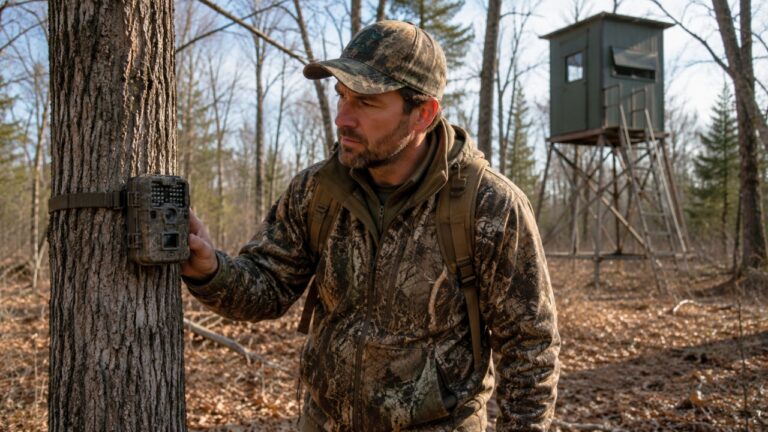
Cameras can also help, especially if they are placed on the landowner’s side and aimed at likely crossing points or areas where shots might be taken. The goal is not to spy on someone’s legal hunting. It is to document anything that crosses onto the landowner’s property.
A camera can show whether the neighbor is staying on his side. It can also capture if he crosses to retrieve game, cuts through, places gear, or otherwise treats the boundary like it does not matter.
That proof is useful if things escalate. Without it, the landowner may only have a gut feeling and a stand that looks suspicious.
With it, he can make a much stronger case if he needs to call a warden or sheriff.
Commenters generally understood why the landowner was uncomfortable, but many likely emphasized that the neighbor’s stands were not automatically illegal just because they were near the line or facing his property.
Some focused on the legal side. If the stands were on the neighbor’s land and the hunter stayed on his side, there may not be much anyone can do. A stand can look suspicious without proving a violation.
Others focused on safety. They agreed that if the stands appeared to be aimed into another property, the landowner had a valid reason to ask about shot direction and boundaries. The smart move would be a calm conversation, not an immediate accusation.
Several would recommend marking the property line clearly and placing cameras on the landowner’s side to document any trespass or unsafe behavior. A few would likely suggest calling a game warden for guidance before the season gets heated.
The strongest advice was to separate feelings from facts. The setup may feel wrong, and it may be poor neighbor etiquette, but the landowner needs proof of an actual violation before pushing it further.
For the landowner, the issue was simple: hunting next door is one thing, but stands facing directly into your property make it hard to relax. The best path was to mark the line, start a respectful conversation, and be ready to document anything that turns a bad feeling into a real safety or trespass problem.