Photo credit: The Avid Outdoorsman
The dove hunters were already dealing with enough movement in the sky.
That is the whole point of a dove field. You are watching birds cut across, trying to pick a clean shot, paying attention to where other hunters are set up, and making sure every swing and shot stays safe. There is a lot happening even when the hunt is going well.
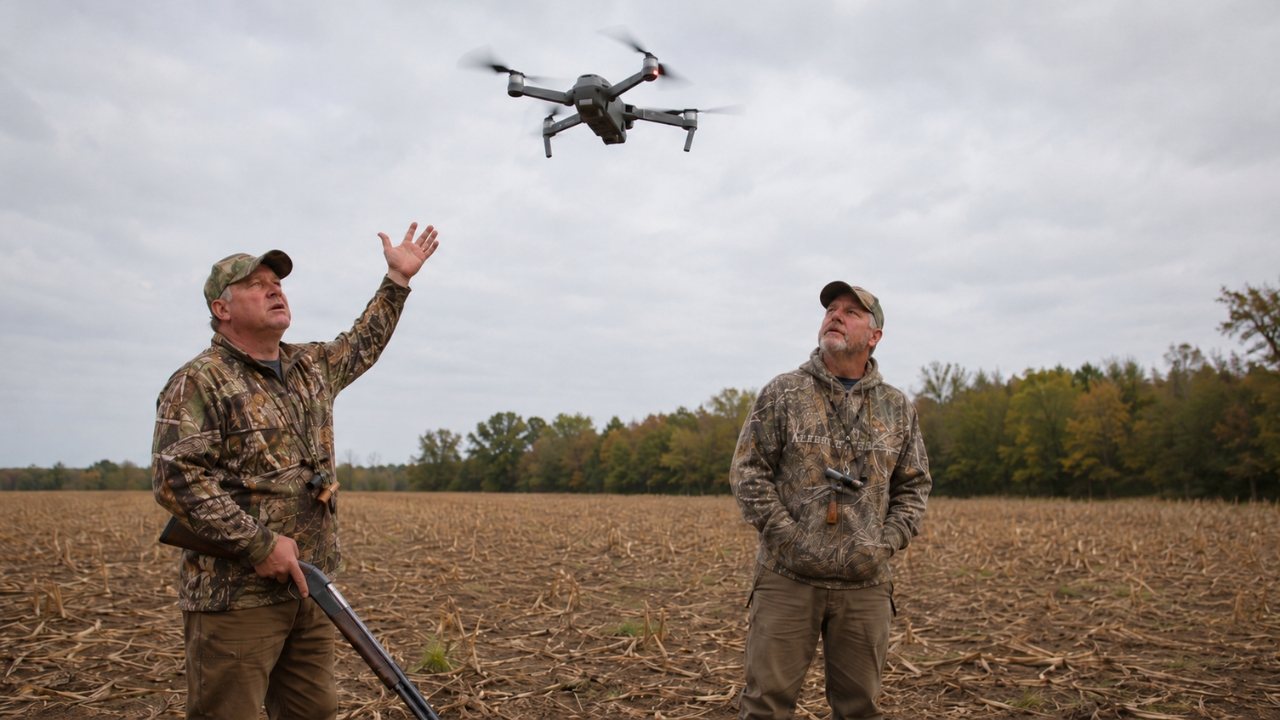
Then a drone started buzzing the field.
In a Reddit post, a hunter said a drone kept flying around while they were hunting doves. From the way he framed it, the thing was bothering them enough that he was close to shooting it.
That is where the story gets messy fast.
On one hand, it is easy to understand the frustration. Drones are loud in the most annoying way possible. They do not sound like normal woods or field noise. They whine, hover, dip, move, and hang around overhead like some oversized mosquito with a camera strapped to it. If one is buzzing a dove field, it can mess with the birds, distract hunters, and make the whole setup feel watched.
And if the drone operator knew people were hunting, it starts to feel less like innocent flying and more like interference.
That matters because hunting is not casual background activity. People are holding shotguns. Birds are moving. Hunters are tracking flight paths and watching safe zones. Dropping a drone into the middle of that creates distraction at the exact time everyone needs to be paying attention.
But shooting the drone is its own giant problem.
A lot of hunters have probably had that thought. A drone gets too close, ruins the hunt, and the first angry reaction is, “I could knock that thing right down.” In a dove field, where shotguns are already in hand and birds are already being shot out of the air, it may feel even more tempting.
But a drone is not a dove.
It is property. It may be regulated under aviation rules. The shot still has to go somewhere. And if the hunter fires at it, suddenly the whole story changes from “somebody annoyed us with a drone” to “a hunter shot down someone else’s aircraft or equipment.”
That is not a great legal place to stand.
The post hit that exact tension. The hunter seemed mad enough to consider it, but he also knew there might be consequences. That hesitation probably saved him a much worse headache. Because as satisfying as it might feel for about three seconds to watch an irritating drone fall out of the sky, the aftermath could be expensive, criminal, or both.
There is also the safety issue. Dove fields are usually shared spaces. Hunters may be spread around edges, rows, tree lines, tanks, or field corners. Firing at a drone means aiming upward or across an area where other people may be present. Shot travels. Pellets fall. Angles matter. A shot that feels harmless in the moment can still create risk.
And all of that is before you even get to the question of who was flying it.
Maybe it was a neighbor. Maybe it was a landowner checking something. Maybe it was some guy filming without realizing he was ruining a hunt. Maybe it was someone intentionally trying to harass hunters. Those are very different situations, and the right response depends on which one is true.
That is why the boring answer is usually the safest one: document it.
Record the drone if you can. Note the time, location, and how long it stayed. Try to identify where the operator is without turning it into a confrontation. If it appears intentional or repeated, call the game warden or local law enforcement. If the hunt is on private land, the landowner may need to be part of that call too.
That route is less satisfying than a shotgun, but it keeps the hunter from becoming the one in trouble.
The drone issue is only going to get more common. Hunters are used to dealing with people walking through, trucks driving by, dogs blowing out a field, or neighbors making noise at the worst possible time. Drones add a new layer because the person causing the disruption may be nowhere near the field. They can interfere from a distance and leave the hunters staring up at a machine instead of talking to a person.
That helpless feeling makes people angry.
Still, anger and a shotgun are a bad mix. If the drone operator was wrong, let the warden or proper agency deal with it. If the operator was clueless, a conversation may fix it. If the drone was truly harassing hunters, evidence matters more than a pile of broken plastic.
The hunter’s question was a good one because it caught the moment before a bad decision. He was close to shooting it. Reddit, predictably, had a lot to say about why that could make things worse.
Commenters mostly understood why the hunter was irritated, but they were quick to warn him not to shoot the drone.
Several people pointed out that a drone is not game. Even if it is buzzing a field and ruining the hunt, firing at it can create legal trouble. Some commenters mentioned aviation rules, property damage, and the general problem of shooting into the air at something that does not belong to you.
Others focused on hunter harassment. If the drone was being flown intentionally to disrupt the dove hunt, commenters said the hunter should document it and contact a game warden. In some places, interfering with a lawful hunt can be a serious issue, but proving intent matters.
A few people said the landowner should be involved if the hunt was on private land. A drone flying low over private property during a hunt may raise questions that the landowner is better positioned to handle, especially if the operator is a neighbor.
Some commenters also brought up safety. Dove hunting already involves multiple shooters watching angles. Adding a drone overhead is distracting, but shooting at that drone could put pellets where they do not belong. The cure could become worse than the problem.
The strongest advice was simple: do not blast it. Record it, report it, and let the right people handle it. A drone can ruin a hunt, but shooting one down can ruin a lot more than that.