Photo credit: Maciej Bledowski/Shutterstock.com
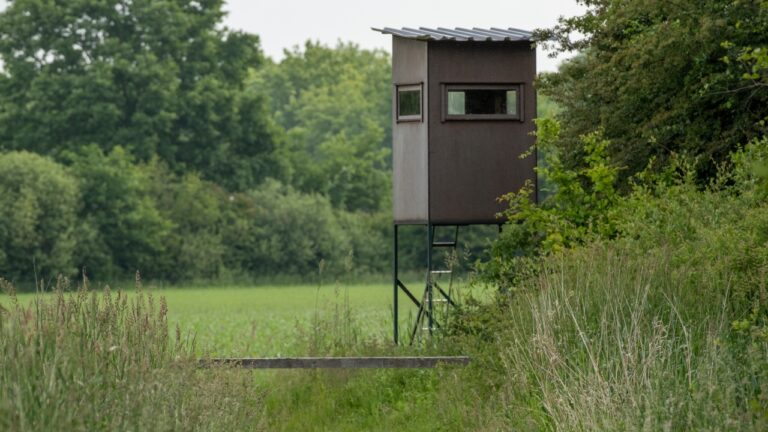
A hunter said he was sick and spending the day in a heated “Cadi Shack” overlooking his field when his dad walked the thicket along the east property line and found something that did not belong there.
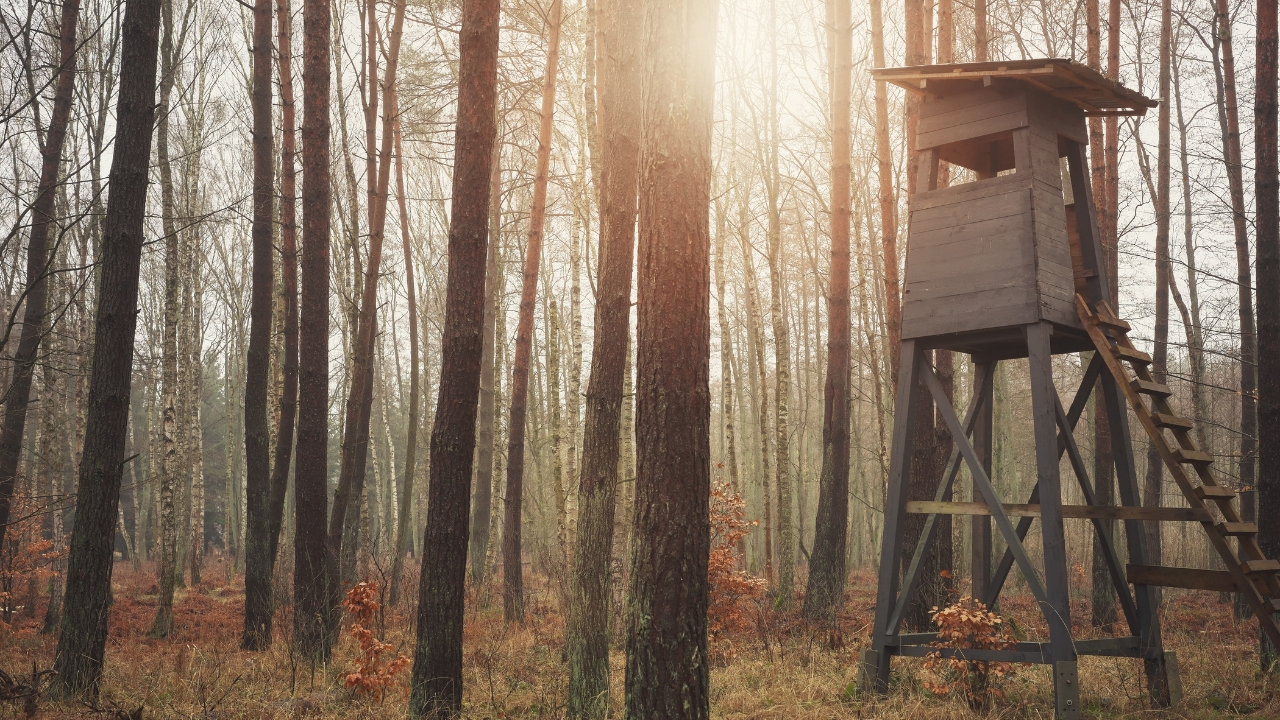
It was a deer stand.
Not one of theirs. Not something they had approved. Not even something tucked vaguely near the border where a person might argue they were confused. The hunter explained in a Reddit post that after his dad asked him about the stand, he got down and went to see it for himself.
That is when the situation got worse.
The neighbor — or at least whoever was using the land next door — had an ATV trail running right up to the stand. There was also a salt lick and a scent drip nearby, and the poster said neither one was legal where he lived. So now he was not only dealing with an unknown stand on his property. He was looking at a setup tied to illegal hunting practices right on the edge of his land.
His girlfriend told him not to start a war. Her suggestion was to put up a no-trespassing sign and leave a note on the seat of the stand instead of tearing it down immediately.
That was the problem in plain terms. The landowner was angry, and he had every reason to be. But this was not some random person he would never see again. This was connected to neighboring property, which meant anything he did could turn into a long-term neighbor feud. Rural property disputes have a way of lasting for years, especially when hunting, property lines, and pride all get mixed together.
The hunter was confused about why anyone would even need that spot. He said the guy already had a big permanent enclosed stand on his own side of the line, across his field. There was also another large enclosed stand farther south on a swamp area the two properties apparently shared half-and-half. From the poster’s point of view, the neighboring hunter already had places to sit. Crossing the property line to build or use another stand did not make sense.
At first, he thought he knew which neighbor was involved. Then he started checking county GIS records and realized the house tied to that land was not the house he thought. The trail appeared to lead toward one property, but the actual parcel information pointed somewhere else. That made the whole thing messier because now he was not even completely sure who to confront.
A friend helped him search possible property owners on Facebook, and the poster thought he may have figured out who it was. One profile photo showed a man with a bear that the poster said had tried to climb his own stand the year before. Another possible owner seemed much older and did not appear to be a hunter.
Still, he did not want to accuse the wrong person.
So he moved toward proof.
He said he put a camera near the setup, and then he checked coordinates from his dad’s Garmin against county GIS records. He also converted them into latitude and longitude because that was easier for him to work with. He understood that property line overlays can be imperfect, so he tried to verify the numbers carefully.
After checking the measurements, he said the stand appeared to be about 28 feet from both the north and east property lines. In practical terms, he said the stand was about 10 yards into his property.
That changed the situation for him. Before that, there was still some room for doubt. After checking the numbers, he felt confident enough that the stand was on his land and that he could confront the person with a solid understanding of the boundary.
He did not rush back in the dark to tear it down. He decided to wait and try to catch whoever was using it on camera first. That way, when he did confront someone, he would know he had the right person.
That was probably the smartest move, because the property line was only part of the issue. The salt lick and scent drip raised a separate concern. If illegal bait or attractants were found in connection with a stand on his land, he worried he could get tangled up in something he had nothing to do with. In one comment, he said if those items were on his side, he would definitely report them because he did not want to get caught with anything illegal.
He later clarified that the scent drip and salt lick were on the edge of the ATV trail, on the other side of the property line. But several commenters still warned him that because the stand itself was on his land and the attractants appeared tied to that stand, the whole thing could turn into a mess if a conservation officer got involved later and nobody had documented the truth.
The landowner’s frustration came through clearly. He and his family had been trying to use that thicket as a safe haven for deer, almost like a no-go zone. He said that may be why they had not noticed the stand sooner. Somebody else had slipped into that quiet corner and treated it like a place to build or hunt.
He was trying to decide how hard to push: take it down, leave a note, talk to the neighbor, call the game warden, or wait for the camera to identify the person first.
The answer was not simple because every option came with a downside. Tear it down, and he might start a feud. Leave it, and the person might keep using it. Call the game warden, and he could end up in the middle of an illegal baiting investigation. Confront the wrong neighbor, and now he had created a problem with someone who may not have done anything.
So he waited for proof, camera first.
Commenters were split between handling it quietly and reporting it right away.
Some told him that if it were only the stand, they would take it down, post the tree, and move on. But because a salt lick and scent drip were involved, several said he needed to call the game warden. Their concern was that illegal hunting activity near a stand on his property could come back on him if he ignored it.
Others said to stay civil first. A few recommended approaching the neighbor with something like, “I think your stand might be over the property line,” rather than opening with an accusation. The idea was to give the person a chance to fix it without turning the next 20 years into a property-line grudge match.
Several commenters suggested cameras. One told him to use a cellular trail camera so he would still get the photo if it was stolen. Another said to put two cameras watching each other, while someone else recommended mounting them above eye level and angled down.
A few commenters warned that GIS maps are not the same as a legal survey, so he needed to be sure before confronting anyone or removing anything. The poster replied that he had checked survey documentation and Garmin coordinates and believed the stand was about 10 yards over the line.
The most practical advice was to document everything before touching the stand: photos, coordinates, camera footage, property-line information, and signs. That way, if the person came back angry or if a warden got involved, the landowner would have a clean record showing what was found and where.